
长三角一体化

Search documents
加快布局 提升“五个中心”能级 市政协会议举行大会发言 委员围绕推进高质量发展等议题发表真知灼见
Jie Fang Ri Bao· 2026-02-05 01:52
Group 1: High-Quality Development Goals - Shanghai's primary goal during the "14th Five-Year Plan" is to achieve significant results in high-quality development, focusing on the real economy and effective investment in advanced manufacturing, knowledge-intensive services, and new infrastructure [2][3] - The city aims to enhance new growth drivers by accelerating the construction of a modern industrial system and promoting the transformation of traditional industries through intelligent upgrades [2][3] Group 2: Biopharmaceutical Industry - Shanghai plans to strengthen its core competitiveness in the biopharmaceutical sector by fostering collaboration between enterprises, universities, and research institutions to accelerate the industrialization of innovative drug and medical device research [7][8] - The city will support enterprises in transitioning from cost competition to quality competition through smart manufacturing and technological upgrades [7][8] Group 3: Cultural and Tourism Integration - The integration of culture, tourism, commerce, and exhibitions is seen as a key driver for enhancing consumer capacity and city image, with suggestions for optimizing the commercial value of top-tier IPs and improving both soft and hard infrastructure [5][6] - Shanghai is encouraged to support private enterprises in introducing world-class IP resources and developing a comprehensive consumer experience that includes various cultural and entertainment offerings [6] Group 4: Innovation Ecosystem - The city will continue to promote artificial intelligence innovation and deepen the "Mold Speed Space" initiative, focusing on creating a high-density ecosystem for innovation and encouraging collaboration among leading enterprises [9][10] - Investment in talent development is crucial, with proposals for establishing a research-oriented entrepreneur training mechanism to attract top talent to Shanghai [10] Group 5: Addressing Internal Competition - The issue of "involution" in competition is highlighted, with recommendations for forming cross-regional innovation alliances among leading enterprises to enhance innovation capabilities and shift from homogeneous competition to value-based competition [11][12] Group 6: Supporting Overseas Expansion - Shanghai is advised to accelerate the establishment of headquarters for overseas enterprises, leveraging its financial market and international connections to support businesses in their global expansion efforts [12][13] Group 7: Attracting International Digital Nomads - The emergence of international digital nomads presents an opportunity for Shanghai, which can leverage its advantages to create a conducive environment for remote workers [14][15] - Suggestions include establishing a one-stop service platform for international remote workers and creating a demonstration zone tailored to their needs, enhancing their experience and willingness to stay long-term [15]
温州铁投集团顺利发行浙江省首单长三角一体化绿色公司债券
Zheng Quan Ri Bao· 2026-02-04 05:37
(文章来源:证券日报) 温州铁投集团是温州市唯一承担城市轨道交通建设运营、资源开发、关联产业培育及技术研发等职能的 功能类国企。本期债券募集资金重点投向温州市市域铁路S3线一期工程,该项目为贯彻落实《长江三 角洲区域一体化发展规划纲要》战略部署实施的重点工程。项目建成后将与温州铁投集团运营的温州市 域铁路S1线、S2线共同形成总规模达150公里的市域铁路骨干网,对促进温州与长三角核心城市的区域 交通网络的一体化衔接以及产业协同发展发挥重要作用。同时,城市轨道交通体系的建成将便利市民快 捷出行、缓解地面交通压力,具备节能减排效益助力"双碳"目标实现。 温州铁投集团表示,未来,温州铁投集团将继续深入利用资本市场平台,为落实国家战略部署、助力区 域经济高质量发展贡献铁投力量。 本报讯近日,温州市铁路与轨道交通投资集团有限公司(以下简称"温州铁投集团")2026年面向专业投 资者非公开发行绿色公司债券(第一期)(长三角一体化)在上海证券交易所顺利发行。本期债券是浙 江省首单长三角一体化绿色公司债券,债券发行规模10亿元,期限15年(3年+3年+3年+3年+3年),票 面利率1.88%,由中信证券担任牵头主承销商及簿记 ...
刘小涛参加苏州代表团审议时强调当好中国式现代化江苏新实践排头兵
Xin Hua Ri Bao· 2026-02-04 00:29
2月3日下午,省人大代表、省长刘小涛来到他所在的苏州代表团,与代表们一起审议政府工作报 告。 苏州代表团气氛活跃、讨论热烈,范波、吴庆文、陈丽艳、陈羔、张伟、沈彬、陈文源、陈志明等 代表先后发言。大家一致认为,政府工作报告通篇贯穿习近平新时代中国特色社会主义思想,深入贯彻 习近平总书记对江苏工作重要讲话精神,充分体现党中央、国务院部署和省委工作要求,是一个求真务 实、开拓创新、催人奋进的好报告。代表们围绕产业发展、科技创新、对外开放、城市建设、沪苏同城 化、航道升级、乡村振兴、民生保障等提出了意见建议。刘小涛听取代表发言,并同大家深入讨论交 流,表示将认真梳理、逐条研究,把大家的真知灼见切实转化为推动高质量发展的实绩实效。 刘小涛说,苏州在江苏发展大局中的地位举足轻重,作为全省经济"压舱石"的作用更加凸显。"十 五五"时期是基本实现社会主义现代化夯实基础、全面发力的关键时期,要把深入学习贯彻习近平总书 记对江苏工作重要讲话精神作为贯穿全部工作的主线,全面落实省委十四届十次全会部署,聚焦落实总 书记赋予的使命担当,自觉把苏州发展放在现代化建设全局、全省高质量发展大局中思考和谋划,在中 国式现代化江苏新实践中当好 ...
合肥两条高速主线通车
Xin Lang Cai Jing· 2026-02-03 17:46
(来源:市场星报) 星报讯 记者从合肥市交通运输局获悉,从市交通运输局获悉,2月3日上午,滁州至合肥高速公路合肥 支线及G4222和县至襄阳高速公路肥西(丰乐)至舒城(千人桥)段两条高速主线通车。 滁州至合肥高速公路合肥支线作为连接G4001合肥绕城高速与滁合周高速合肥段的联络线,起于肥东县 众兴乡霞光村,止于元疃镇路集社区南,与滁合周高速路集枢纽无缝衔接,路线全长约13.94公里,按 双向六车道高速公路标准建设,设计时速120千米/时。通车后将有效缓解合肥绕城高速通行压力,构建 起合肥都市圈环线与绕城高速的快速转换通道,提升区域路网效率,增强合肥对北部区域的辐射带动能 力;同时完善合肥"两环十八射"高速路网布局,强化合肥与滁州、南京等城市互联互通,为长三角一体 化及合肥都市圈"1小时通勤圈"建设提供支撑。 G4222肥西(丰乐)至舒城(千人桥)段起于合肥市肥西县丰乐镇北侧,设丰乐枢纽互通立交,接已建 G3京台高速公路及拟建的和襄高速合肥烔炀至丰乐段,自东向西南延伸,终于合肥与六安市界丰乐 河,路线全长约10.11公里,按双向六车道高速公路标准建设,设计时速120千米/时。该项目是G9912合 肥都市圈环线的 ...
江苏第六座GDP万亿之城,还要再等等
3 6 Ke· 2026-02-03 02:13
2月2日,徐州市统计局发布2025年徐州市经济运行情况。 根据地区生产总值统一核算结果,2025年全市实现地区生产总值9957.22亿元,按不变价格计算,比上 年增长5.8%。这意味着,全力冲刺"万亿之城"的徐州,最终还是差了"一点"。 早在2021年,徐州"十四五"规划纲要就提出,"到2025年,地区生产总值突破1万亿元"。其后,这一目 标连续四年被写入徐州市政府工作报告。在2025年政府工作报告中,徐州明确提出:"朝着万亿级城市 快步迈进,将'十四五'规划蓝图变为现实。" 遗憾的是,徐州最终还是与这一目标擦肩而过。 对此,徐州市委书记宋乐伟此前在回应备受关注的"万亿"话题时谈到:"实事求是,顺其自然。"他还指 出,"不要纠结于这个数字,不能被数字所累",该怎么发展就怎么发展,要扎扎实实地发展。 面向"十五五",徐州的万亿目标大概率将在2026年实现,江苏也将迎来第六座GDP万亿之城。 但这对徐州来说还只是起点。徐州"十五五"规划建议提出,区域中心城市始终是徐州发展的最大优势和 最大潜力。 从三次产业结构来看,第一产业增加值792.46亿元,同比增长3.0%;第二产业增加值3656.29亿元,增 长3.5% ...
厅局长访谈:江苏“六纵六横”高铁网加速成网!未来出行将迎这些大变化
Yang Zi Wan Bao Wang· 2026-02-02 15:47
Core Viewpoint - The development of the "Six Vertical and Six Horizontal" high-speed railway network in Jiangsu is a key focus during the 14th Five-Year Plan period, aiming for comprehensive completion by 2035, which will significantly enhance connectivity and reshape the economic landscape of the region [1][6]. Group 1: Railway Network Development - The "Six Vertical" railways include coastal, Beijing-Nanjing (Hangzhou), central, Shandong-Suzhou-Anhui-Jiangxi, Yancheng-Hangzhou, and Hefei-Xinjiang corridors, while the "Six Horizontal" railways encompass land bridge, along the river, Shanghai-Nanjing, along the Huai River, Xuzhou-Yancheng, and Shanghai-Suzhou-Zhejiang-Anhui corridors [1]. - By 2030, Jiangsu's railway operating mileage is expected to reach 5,700 kilometers, with high-speed rail accounting for 3,600 kilometers and a high-speed rail coverage rate of 87% in counties and cities [1]. Group 2: Specific Projects and Construction - The Heshun high-speed railway, connecting Suqian and Suzhou, is a crucial link in the "Two Verticals and Two Horizontals" high-speed railway main corridors, covering 59 kilometers, with 45 kilometers in Jiangsu [2]. - Seven high-speed railways, including the North Jiangsu high-speed railway and Tongsu-Jiaoyang high-speed railway, are currently under construction, totaling over 1,100 kilometers [3]. Group 3: Technological Innovations and Challenges - The construction of the North Jiangsu high-speed railway involves the Chongtai Yangtze River tunnel, utilizing intelligent tunneling technology to navigate depths of up to 89 meters underwater [3]. - Digital intelligent management is being employed to address the complex geological conditions in Jiangsu, ensuring safety and quality in construction [5]. Group 4: Economic and Social Impact - By 2025, Jiangsu's railway passenger volume is projected to reach 327 million, a 4% increase year-on-year, facilitating convenient travel and enhancing regional connectivity [6]. - The high-speed rail network is expected to drive industrial shifts from southern Jiangsu to central and northern regions, fostering cross-regional collaboration in industries such as high-end manufacturing and biomedicine [6][7]. Group 5: Regional Integration and Future Outlook - Jiangsu is working on enhancing interconnectivity with neighboring provinces, including projects like the Suzhou to Shanghai intercity railway and the Nanjing to Hangzhou second channel [7]. - The "Six Vertical and Six Horizontal" high-speed railway network is set to transform Jiangsu's spatial and temporal dynamics, promoting a more vibrant and integrated regional economy [7].
长三角议事厅·周报|沪苏湖高铁跑出跨省成果转化加速度
Xin Lang Cai Jing· 2026-02-02 09:46
2026年伊始,长三角铁路建设交出亮眼"成绩单"。截至2025年底,区域铁路营业里程突破1.54万公里, 其中高铁里程攀升至8100余公里。作为长三角轨道交通网络的关键一环,沪苏湖高铁开通一周年以来, 累计安全运送旅客超3360万人次,日行列车从最初80对增至111.5对。这条将上海与湖州通行时间压缩 至半小时的"黄金走廊",不仅让"工作在上海,生活在湖州"的同城化图景照进现实,更打通了研发实验 室与工厂生产线的"极速对流"通道。 就在这个月,沪苏浙皖四地同步亮出产业转型"施工图":上海印发《支持先进制造业转型升级三年行动 方案(2026-2028年)》,苏、浙、皖则分别实施"人工智能+"行动、未来产业"星火计划"和智能机器人 专项。轨道交通的物理连接,正将四地政策规划焊接成一张紧密的产业协同网。 这种"时间折叠"效应,对于从实验室"0到1"走向生产线"1到10"的成果转化尤为关键。工艺参数的着 陆、试制的反复迭代、质量问题的现场闭环,绝非简单的图纸交接,而是充满了不确定性。视频会议或 许能高效传递信息,但永远无法替代研发专家与一线技工在产线的机器轰鸣声中的"即时碰撞",当场解 决问题的"在场感"。 当"必须 ...

31省份2025年GDP排名出炉:谁靠前?谁垫底?
Xin Lang Cai Jing· 2026-02-02 07:50
2025年31省份GDP排名出炉,重庆超越辽宁,西藏增速领跑全国,西部省份增长亮眼。辽宁增速垫底, 凸显东北转型挑战。江苏经济总量迫近广东,长三角一体化动能强劲 文|《财经》记者 孙颖妮 编辑 | 王延春 近日,31省份2025年经济"成绩单"全部出炉。从经济总量看,根据国内生产总值(GDP)由高至低排 列,经济前十强省份为:广东(145847亿元)、江苏(142351亿元)、山东(103197亿元)、浙江 (94545亿元)、四川(67665亿元)、河南(66633亿元)、湖北(62661亿元)、福建(60199亿 元)、上海(56709亿元)、湖南(55309亿元)。 | 2025年各省份GDP(亿元) | | | | | | | | | | --- | --- | --- | --- | --- | --- | --- | --- | --- | | | 排名 | 省份 | 2025 | 2024(修订前) | 2024(修订后) | 增量 | 名义增长 | 实际增长 | | | 全国 | | 1401879. 2 | 1349084 | 1348066. 2 | 53813 | 3.99% | 5. ...
一条高铁,打开皖东发展新天地
Huan Qiu Wang· 2026-02-02 03:53
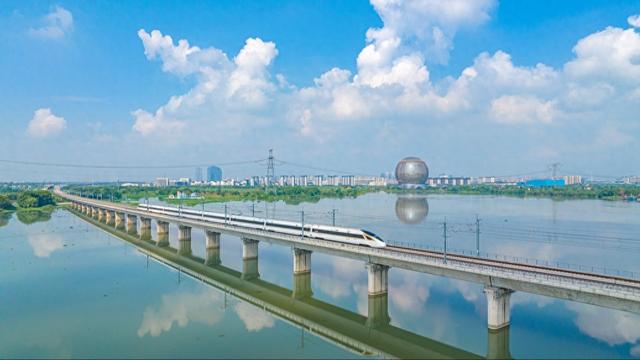
Core Insights - The Hefei-Xin High-Speed Railway's Hefei-Su segment has successfully transported over 150,000 passengers in its first month, averaging nearly 5,000 passengers daily, significantly enhancing regional connectivity and economic development [1][2] Group 1: Economic Impact - The railway has established five stations, creating a "1-3 hour transportation circle" connecting Hefei, Nanjing, and Shanghai, transforming the eastern Anhui region from a "provincial edge" to a "strategic node" [1] - The reduction in travel time has accelerated the flow of production factors, evidenced by nearly 10,000 passengers during peak travel days, including students, workers, investors, and tourists [1] Group 2: Industry Development - Local governments are leveraging the railway to convert "transit dividends" into "industrial dividends," with initiatives like transporting local products such as Tuo Lake crabs and developing themed tourism routes [2] - The integration of "railway + culture and tourism" and "railway + agriculture" is facilitating the transformation of passenger flow into commercial and financial flows, demonstrating the railway's potential as a lever for industrial upgrading and rural revitalization [2] Group 3: Regional Integration - The Hefei-Xin High-Speed Railway exemplifies the national strategy of Yangtze River Delta integration, showcasing a "feedback effect" where capital, passenger flow, and technology are shared and transferred towards eastern Anhui [2] - The railway promotes a model of regional cooperation where the flow of resources leads to a reduction in regional disparities, fostering a more integrated economic landscape [2]
长三角一体化筑牢发展压舱石
Jing Ji Ri Bao· 2026-02-01 22:12
Core Insights - The deep value of regional integration lies in breaking administrative barriers through institutional collaboration, transforming dispersed development potential into sustainable endogenous momentum [1] - The Yangtze River Delta integration has become a "ballast stone" for high-quality national development by innovating mechanisms, aggregating innovation, and sharing benefits with the public [1] Group 1: Policy and Mechanism Innovation - The core breakthrough of the Yangtze River Delta integration is the transition from policy-driven to system operation, guided by the "Yangtze River Delta Land Space Planning (2023-2035)" [1] - Initiatives like the G60 Science and Technology Innovation Corridor and the Shanghai-Nanjing Industrial Innovation Belt have established a coordination mechanism of "central-local linkage, provincial and municipal support, and regional collaboration" [1] - This shift has transformed regional development from "point-driven" to "whole-area collaboration," ultimately forming a stable and sustainable endogenous growth momentum [1] Group 2: Innovation and Industrial Collaboration - Collaborative innovation is the key to resilient growth in the Yangtze River Delta, exemplified by the efficient industrial ecosystem formed in the domestic large aircraft manufacturing sector [2] - The region is advancing from product export to "chain export" in the new energy vehicle sector, showcasing a shift from "dispersed innovation" to "collaborative innovation" [2] - By establishing technology transfer bases and cross-regional industrial alliances, the region promotes efficient interaction of innovation factors such as talent, technology, and capital, enhancing industrial competitiveness [2] Group 3: Social Welfare and Economic Development - Shared benefits for the public are a crucial support for the integration development of the Yangtze River Delta, aiming to ensure that development outcomes benefit all people [3] - Initiatives like cross-regional government services and interconnected transportation infrastructure translate collaborative development dividends into tangible life experiences for the public [3] - The integration also leverages the digital economy to upgrade traditional industries and foster emerging industries, leading to a qualitative change in resource allocation [3]