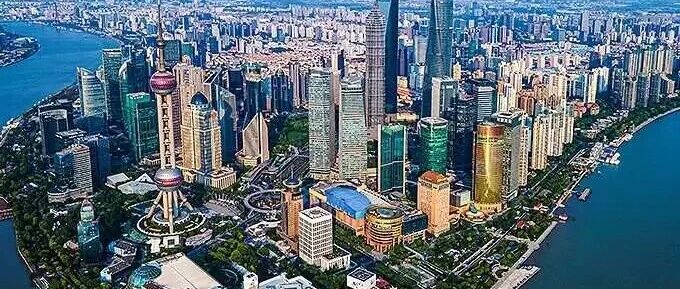
五个中心

Search documents
龚正市长在上海市第十六届人民代表大会第四次会议的政府工作报告
Jie Fang Ri Bao· 2026-02-09 01:28
Economic Performance - Shanghai's GDP reached 5.67 trillion yuan, growing by 5.4%, exceeding expectations [5] - The city's general public budget revenue was 850 billion yuan, an increase of 1.5% [5] - The average urban unemployment rate was 4.2% [5] Innovation and Industry Development - R&D expenditure accounted for approximately 4.5% of GDP [5] - The total output value of strategic emerging industries grew by 6.5%, making up 45% of the industrial output [5] - The three leading industries—integrated circuits, biomedicine, and artificial intelligence—surpassed 2 trillion yuan in scale [5] Foreign Trade and Investment - Total foreign trade reached 4.51 trillion yuan, with exports increasing by 10.8% [5] - Actual foreign investment was 16.06 billion USD, equivalent to 114.8 billion yuan [5] - The number of foreign-funded regional headquarters and R&D centers accelerated [5] Social Welfare and Living Standards - Per capita disposable income reached 92,000 yuan, growing by 4.1% [5] - PM2.5 annual average concentration decreased by 7.4% to 26.3 micrograms per cubic meter [5] - The city added 127 parks, achieving a total of 1,100 parks, with 89.4% open 24 hours [5] Urban Development and Infrastructure - Major engineering investments totaled 251 billion yuan, with fixed asset investment growing by 4.6% [8] - The total length of operational rail lines reached 906 kilometers [9] - 47 major industrial projects worth over 1 billion yuan commenced construction [9] Environmental and Ecological Initiatives - The city implemented significant measures for ecological protection, including the construction of five waste resource treatment facilities [15] - New photovoltaic installations reached 2.14 million kilowatts [15] - The city received international wetland city certification [15] Government and Administrative Improvements - The government improved the business environment with 58 reform measures [18] - Over 628 million services were provided to enterprises [18] - The "one-stop" service success rate exceeded 90% [18]
加快布局 提升“五个中心”能级 市政协会议举行大会发言 委员围绕推进高质量发展等议题发表真知灼见
Jie Fang Ri Bao· 2026-02-05 01:52
Group 1: High-Quality Development Goals - Shanghai's primary goal during the "14th Five-Year Plan" is to achieve significant results in high-quality development, focusing on the real economy and effective investment in advanced manufacturing, knowledge-intensive services, and new infrastructure [2][3] - The city aims to enhance new growth drivers by accelerating the construction of a modern industrial system and promoting the transformation of traditional industries through intelligent upgrades [2][3] Group 2: Biopharmaceutical Industry - Shanghai plans to strengthen its core competitiveness in the biopharmaceutical sector by fostering collaboration between enterprises, universities, and research institutions to accelerate the industrialization of innovative drug and medical device research [7][8] - The city will support enterprises in transitioning from cost competition to quality competition through smart manufacturing and technological upgrades [7][8] Group 3: Cultural and Tourism Integration - The integration of culture, tourism, commerce, and exhibitions is seen as a key driver for enhancing consumer capacity and city image, with suggestions for optimizing the commercial value of top-tier IPs and improving both soft and hard infrastructure [5][6] - Shanghai is encouraged to support private enterprises in introducing world-class IP resources and developing a comprehensive consumer experience that includes various cultural and entertainment offerings [6] Group 4: Innovation Ecosystem - The city will continue to promote artificial intelligence innovation and deepen the "Mold Speed Space" initiative, focusing on creating a high-density ecosystem for innovation and encouraging collaboration among leading enterprises [9][10] - Investment in talent development is crucial, with proposals for establishing a research-oriented entrepreneur training mechanism to attract top talent to Shanghai [10] Group 5: Addressing Internal Competition - The issue of "involution" in competition is highlighted, with recommendations for forming cross-regional innovation alliances among leading enterprises to enhance innovation capabilities and shift from homogeneous competition to value-based competition [11][12] Group 6: Supporting Overseas Expansion - Shanghai is advised to accelerate the establishment of headquarters for overseas enterprises, leveraging its financial market and international connections to support businesses in their global expansion efforts [12][13] Group 7: Attracting International Digital Nomads - The emergence of international digital nomads presents an opportunity for Shanghai, which can leverage its advantages to create a conducive environment for remote workers [14][15] - Suggestions include establishing a one-stop service platform for international remote workers and creating a demonstration zone tailored to their needs, enhancing their experience and willingness to stay long-term [15]
乘势而上 筑就城市核心竞争力 市人代会举行专题审议会 代表为“五个中心”建设积极建言献策
Jie Fang Ri Bao· 2026-02-05 01:52
Group 1: Five Centers Development - Representatives emphasized the need for mutual empowerment among the "Five Centers" to enhance urban capabilities and competitiveness, focusing on industrial ecology, business environment optimization, youth innovation, and talent cultivation [2] - Suggestions included building an AI service platform for universities and SMEs, and creating a public data platform for AI industry integration [2] - The cruise economy was highlighted as a significant consumer force, with a call to shift focus from "traffic competition" to "value creation" in the cruise industry [2] Group 2: Youth Development - There is a concern regarding the mismatch between academic education and industry needs, with proposals for reforming application-oriented professional credits and integrating vocational skills into academic systems [3] - Recommendations included involving industry experts in education and recognizing high-skilled talent equally with academic qualifications [3] Group 3: Innovation Ecosystem - The need for a robust innovation ecosystem was discussed, with calls for government support in building collaborative platforms between universities and enterprises [4] - The importance of high-quality incubators and their collaboration with government departments was emphasized to attract and nurture high-level talent and projects [4][5] Group 4: Cultural Development - The significance of high-quality cultural products in enhancing urban attractiveness was highlighted, with examples of successful cultural exhibitions [7] - Recommendations included focusing on digital cultural industries and supporting the development of core technologies to enhance cultural soft power [7][8] Group 5: Social Welfare and Employment - Discussions on improving social welfare included addressing the challenges faced by gig economy workers and enhancing legal protections and social security [9] - The need for a comprehensive long-term care insurance system was emphasized to meet the demands of an aging population [9][10] Group 6: Green Transition - The transition to a green and low-carbon economy was identified as crucial, with suggestions for developing green building industries and enhancing lifecycle assessments of urban projects [12] - Proposals included leveraging agricultural products as carbon trading assets to promote environmental sustainability [12] Group 7: Agricultural Modernization - The integration of urban and rural development was discussed, with calls for enhancing rural tourism and developing new business models in agriculture [14] - Recommendations included establishing a cross-departmental coordination system for rural revitalization and supporting leading enterprises in managing rural resources [14][15]
市政协委员分组讨论政府工作报告 经济和民生双重跨越来之不易 发展速度和城市温度可触可感
Jie Fang Ri Bao· 2026-02-05 01:52
Group 1 - The core viewpoint of the government work report highlights Shanghai's GDP reaching 5.67 trillion yuan, growing by 5.4%, which is better than expected [1] - The report emphasizes the importance of high-quality development and the construction of "five centers" in Shanghai, showcasing significant achievements in both economic and livelihood sectors [1] - The report indicates that Shanghai's three leading industries have surpassed 2 trillion yuan, reflecting the accelerated development of new productive forces [2] Group 2 - The report discusses the completion of 43.6 million square meters of old housing renovation, demonstrating a commitment to urban development and social governance [1] - The government aims to enhance key commercial districts such as Nanjing East Road and Lujiazui, suggesting a focus on improving local brand presence and international image [2] - Recommendations include strengthening the "research-oriented" transformation of top hospitals to foster medical innovation and improve grassroots healthcare capabilities [3]
持续提升“五个中心”能级,上海拿出了施工图
第一财经· 2026-02-04 06:35
Core Viewpoint - Shanghai aims to achieve a GDP growth rate of around 5% for 2025, with a focus on enhancing its status as an international economic, financial, trade, shipping, and technological innovation center [3][5][12]. Group 1: Economic Goals and Projections - The main expected economic targets for Shanghai in 2025 include a GDP growth of approximately 5%, a 2% increase in local public budget revenue, and R&D expenditure reaching 4.6% of GDP [3][12]. - The "15th Five-Year Plan" outlines an average annual GDP growth target of around 5%, with potential growth levels estimated between 4.6% and 5.2% [3][12]. Group 2: Development of the "Five Centers" - The report emphasizes the continuous enhancement of the "Five Centers," which include international economic, financial, trade, shipping, and technological innovation centers [5][7]. - Specific initiatives include supporting industries such as smart connected vehicles, marine economy, low-altitude economy, aerospace, and satellite internet [5][11]. Group 3: New Quality Productivity - The focus is on integrating technological and industrial innovation to foster new quality productivity, including accelerating the application of major technological achievements and promoting intelligent, green, and integrated industrial development [9][10]. - Shanghai's R&D expenditure as a percentage of GDP reached approximately 4.5% in 2025, with significant growth in key industries like integrated circuits, biomedicine, and artificial intelligence [9][10]. Group 4: Modern Industrial System - The "2+3+6+6" modern industrial system aims to establish a world-class high-end industrial cluster, with a focus on traditional industry transformation and the development of three leading industries: integrated circuits, biomedicine, and artificial intelligence [10][13]. - By 2030, the plan targets that the total output value of strategic emerging industries will account for over 50% of the total industrial output value [12][13]. Group 5: Future Industry Layout - The report highlights the importance of forward-looking layouts in future industries, including quantum technology, brain-computer interfaces, and bio-manufacturing, to enhance Shanghai's competitive edge [14][12]. - The establishment of a reasonable investment mechanism for manufacturing and the promotion of collaboration between industry, academia, and research in emerging fields are emphasized [14][13].

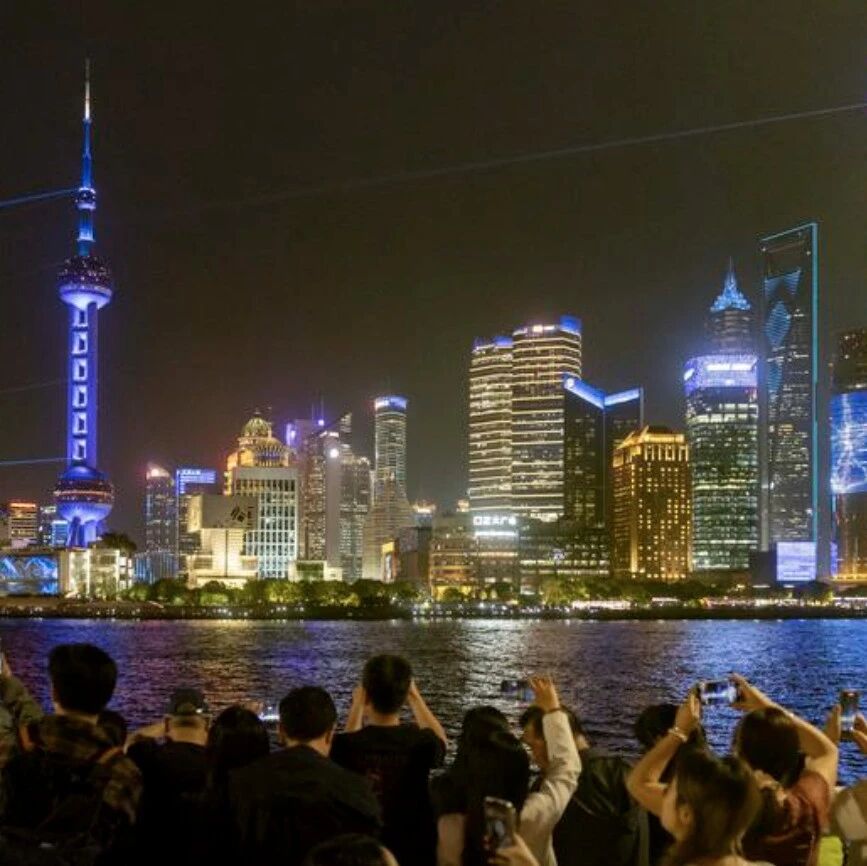
用好先行先试优势勇当标杆敢为闯将 陈吉宁参加浦东新区代表团审议 要求充分发扬敢打敢拼敢争先的“小老虎”精神
Jie Fang Ri Bao· 2026-02-04 02:02
Core Viewpoint - The article emphasizes the importance of implementing Xi Jinping's important speech during his visit to Shanghai, focusing on the transformation and upgrading of Pudong to contribute significantly to national development [1][3]. Group 1: Government Work Report and Planning - The government work report and the draft of the 15th Five-Year Plan are guided by Xi Jinping's thoughts, reflecting the city's strategic decisions for the current and future periods [3]. - The past year saw significant economic progress, with the city achieving its main economic and social development goals [3]. - Pudong has played a crucial role as a growth stabilizer and innovation engine, delivering impressive results in reform and development [3]. Group 2: Economic Development Strategies - The focus for the year is on unifying thoughts and actions with central government decisions, emphasizing high-quality transformation of plans into actionable results [4]. - There is a strong emphasis on expanding domestic demand, stimulating consumption, and enhancing investment to support manufacturing and service sectors [5]. - The need for a robust employment, enterprise, and market stabilization strategy is highlighted, along with optimizing the business environment [5]. Group 3: Innovation and Technology - Pudong is expected to leverage its advantages in innovation and technology, enhancing its role in strategic technology development and education [5]. - The article stresses the importance of improving the overall effectiveness of the Zhangjiang Science City and establishing a sound technology finance system [5]. Group 4: Reform and Open Policies - The article calls for the implementation of various reform and open policies, including enhancing the management of state-owned enterprises and promoting the development of industrial parks [6]. - There is a focus on utilizing the legal authority of Pudong to support high-level reform and opening-up initiatives [6]. Group 5: Urban Development and Public Services - The article emphasizes the need to prioritize livability and housing, accelerating the renovation of old neighborhoods and improving the rental housing supply system [7]. - It advocates for balanced development of public services such as education and healthcare, and enhancing community service facilities [7]. - The importance of risk management and safety in urban development is also highlighted, aiming to build a resilient and secure city [7].
持续提升“五个中心”能级 上海拿出了施工图
Xin Lang Cai Jing· 2026-02-03 16:43
Core Insights - Shanghai aims to achieve a GDP growth rate of around 5% for the year, with a focus on enhancing its economic and social development [2] - The "15th Five-Year Plan" outlines ambitious targets for the next five years, including an average annual GDP growth rate of approximately 5% and a significant increase in R&D expenditure [2][10] Economic Goals - The main economic targets for the year include a 5% GDP growth, a 2% increase in local public budget revenue, and R&D expenditure reaching 4.6% of GDP [2] - By 2030, the plan aims for R&D expenditure to exceed 5% of GDP and for the digital economy's core industries to account for over 20% of GDP [10][11] Development Strategies - The report emphasizes the enhancement of the "Five Centers" including international economic, financial, trade, shipping, and technological innovation centers [3] - Specific industries targeted for growth include smart and connected vehicles, marine economy, low-altitude economy, aerospace, and satellite internet [3][8] Technological Innovation - The focus on technological innovation includes deepening the integration of technology and industry, promoting smart, green, and integrated development [7] - The report highlights the importance of smart shipping and the legislative framework surrounding smart vessels, predicting a market size of 736 billion yuan for smart shipping in China by 2027 [4] Industrial Development - Shanghai's industrial strategy is structured around a "2+3+6+6" framework, focusing on traditional industry transformation and the development of three leading industries: integrated circuits, biomedicine, and artificial intelligence [8][11] - The plan aims to establish a modern industrial system that supports advanced manufacturing and maintains a reasonable proportion of manufacturing investment [12] Future Outlook - The report outlines the need for strong support from new economic drivers and the release of core functions of the "Five Centers" to achieve the targeted GDP growth [10] - Emphasis is placed on leveraging major projects and platforms to drive economic growth and industrial clustering [10][12]
持续提升“五个中心”能级,上海拿出了施工图
Di Yi Cai Jing Zi Xun· 2026-02-03 14:11
Core Insights - Shanghai aims to achieve a GDP growth rate of around 5% for the year, with a focus on enhancing its status as a global economic center and improving various sectors including finance, trade, and technology [2][3][10] Economic Goals - The expected GDP growth for Shanghai in 2025 is set at approximately 5%, with local public budget revenue projected to increase by 2% [2] - The "15th Five-Year Plan" outlines a target for average annual GDP growth of around 5% over the next five years, with potential growth levels estimated between 4.6% and 5.2% [2][10] Development Strategies - The report emphasizes the enhancement of the "Five Centers" including international economic, financial, trade, shipping, and technological innovation centers [3][5] - Key industries targeted for development include smart connected vehicles, marine economy, low-altitude economy, aerospace, and satellite internet [3][8] Technological Innovation - The report highlights the importance of integrating technological and industrial innovation to foster new productive forces, with a focus on accelerating the application of major scientific achievements [7][12] - Shanghai's R&D expenditure is expected to reach 4.6% of GDP, with significant growth in sectors like integrated circuits, biomedicine, and artificial intelligence [7][11] Future Industry Focus - The "2+3+6+6" modern industrial system aims to promote the digital and green transformation of traditional industries, develop three leading industries, and establish six emerging pillar industry clusters [8][12] - Future industries will include advanced manufacturing, future information, future materials, future energy, future space, and future health [12][13] Legislative and Regulatory Framework - The development of smart shipping is identified as a strategic direction, with a focus on legislative support for smart vessels to enhance China's competitive position in the international shipping system [4][10] - Recommendations include accelerating the establishment of standards in low-altitude economy sectors to improve Shanghai's regulatory influence [9][12]
东方时评: 凝聚共识 上海乘势而上再出发
Xin Lang Cai Jing· 2026-02-03 12:35
Economic Performance - Shanghai's GDP reached 5.67 trillion yuan, growing by 5.4% year-on-year, exceeding expectations and marking a steady rise from being the first "5 trillion city" in the country [1] - The total import and export volume reached 4.51 trillion yuan, with a growth of 5.6%, and exports increased by 10.8% [1] Industry Development - The three leading industries, integrated circuits, biomedicine, and artificial intelligence, surpassed a scale of 2 trillion yuan, indicating continuous optimization of the economic structure [1] Employment and Income - The per capita disposable income of residents reached 92,000 yuan, an increase of 4.1%, while the average urban unemployment rate was 4.2% [3] Future Goals and Plans - The GDP growth target for this year is set at around 5%, with local general public budget revenue expected to grow by 2% [5] - The report emphasizes the need to boost domestic demand and consumer spending, with plans to create 20 new integrated service consumption scenarios [5] Social Welfare Initiatives - Plans include the renovation of 200,000 square meters of old housing, the addition of 2,000 cognitive care beds, and the establishment of 200 local elderly care service stations [7] - A new round of child-friendly city initiatives and improvements in school meal quality are also set to be implemented [7] Long-term Vision - By 2035, Shanghai aims to double its per capita regional GDP compared to 2020, striving to become a globally influential modern socialist metropolis [11] - The current period is seen as a critical phase for transformation and upgrading, with the success of this year influencing future developments [9]
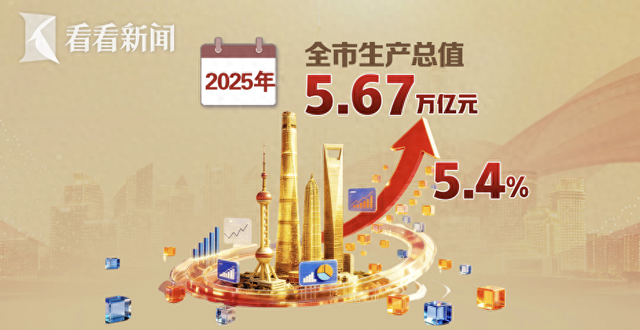
上海今年GDP目标增长5%:强化内需主导,全力稳外资外贸
第一财经· 2026-02-03 06:31
Core Viewpoint - Shanghai's economy is showing resilience with a GDP growth of 5.4% in 2025, exceeding expectations, and a clear target of 5% growth for 2026, emphasizing the importance of domestic demand and external trade stability [5][8]. Economic Performance - Shanghai's GDP reached 5.67 trillion yuan, with a growth rate of 5.4%, outperforming expectations [5]. - The total import and export volume reached 4.51 trillion yuan, growing by 5.6%, with exports increasing by 10.8% [5]. - Actual foreign investment amounted to 16.06 billion USD, equivalent to 114.8 billion yuan [5]. Foreign Trade and Investment - Shanghai's foreign trade achieved counter-cyclical growth, attributed to targeted policies and diversified trade partnerships, with imports and exports to ASEAN and Belt and Road countries growing by 10.4% and 12.1%, respectively [6]. - The city has implemented measures to support foreign investment, including a plan to encourage reinvestment by foreign enterprises and the establishment of foreign-funded projects in key sectors like new energy vehicles and biomedicine [6][11]. Future Economic Goals - The government aims for a GDP growth target of around 5% for 2026, focusing on enhancing domestic demand and integrating consumption and investment strategies [9]. - Plans include boosting consumption through various initiatives, such as enhancing service consumption and promoting tourism, while also stabilizing foreign trade and investment [10][11]. Five-Year Plan and Development Goals - The "15th Five-Year Plan" outlines ambitious goals for Shanghai, including doubling per capita GDP from 2020 levels by 2035 and achieving significant advancements in high-quality development and urban governance [13][14]. - The plan emphasizes the development of five centers: international economic, trade, shipping, financial, and technological innovation centers, with a focus on enhancing the service sector and fostering world-class enterprises [15][16]. Collaborative Development - The government stresses the importance of synergistic development among the five centers to enhance overall effectiveness and regional coordination [17].