合新高铁合泗段

Search documents
一条高铁,打开皖东发展新天地
Huan Qiu Wang· 2026-02-02 03:53
Core Insights - The Hefei-Xin High-Speed Railway's Hefei-Su segment has successfully transported over 150,000 passengers in its first month, averaging nearly 5,000 passengers daily, significantly enhancing regional connectivity and economic development [1][2] Group 1: Economic Impact - The railway has established five stations, creating a "1-3 hour transportation circle" connecting Hefei, Nanjing, and Shanghai, transforming the eastern Anhui region from a "provincial edge" to a "strategic node" [1] - The reduction in travel time has accelerated the flow of production factors, evidenced by nearly 10,000 passengers during peak travel days, including students, workers, investors, and tourists [1] Group 2: Industry Development - Local governments are leveraging the railway to convert "transit dividends" into "industrial dividends," with initiatives like transporting local products such as Tuo Lake crabs and developing themed tourism routes [2] - The integration of "railway + culture and tourism" and "railway + agriculture" is facilitating the transformation of passenger flow into commercial and financial flows, demonstrating the railway's potential as a lever for industrial upgrading and rural revitalization [2] Group 3: Regional Integration - The Hefei-Xin High-Speed Railway exemplifies the national strategy of Yangtze River Delta integration, showcasing a "feedback effect" where capital, passenger flow, and technology are shared and transferred towards eastern Anhui [2] - The railway promotes a model of regional cooperation where the flow of resources leads to a reduction in regional disparities, fostering a more integrated economic landscape [2]
合新高铁合泗段首月运送旅客逾15万人次
Xin Lang Cai Jing· 2026-01-30 17:41
Core Viewpoint - The opening of the Hefei-Xin High-Speed Railway (Hefei-Su segment) has significantly enhanced connectivity between the Yangtze River Delta and eastern Anhui, promoting economic opportunities in the region [2][3]. Group 1: Operational Impact - Over 150,000 passengers were safely transported along the line within the first month of operation [2]. - The railway line connects five stations: Hefei West, Dingyuan East, Mingguang West, Wuhua, and Sixian East, reshaping the transportation landscape in eastern Anhui [2]. - Initially, five pairs of scheduled trains operate daily, with plans to increase to eight pairs based on market demand and passenger flow changes in the first quarter of 2026 [2]. Group 2: Economic and Tourism Development - Local tourism departments have introduced policies to attract visitors, enhancing the integration of rail and tourism [3]. - Fivehe County is promoting its "Tuo Lake Crab" and "Wuhua Folk Songs" as key attractions, offering seasonal experiences for tourists [3]. - Dingyuan County is developing themed routes such as "Red Original Intention" and "Ling Shang Dingyuan" to enrich tourist experiences [3]. - Mingguang City is focusing on improving the quality and capacity of accommodation and dining along scenic routes [3]. Group 3: Passenger Services - Stations along the line have adjusted staff schedules during peak travel times to provide better services, including consultation, ticket changes, and assistance for key passengers [3]. - Coordination with local departments has been enhanced to increase the frequency of public transport connections to tourist attractions during busy periods [3].

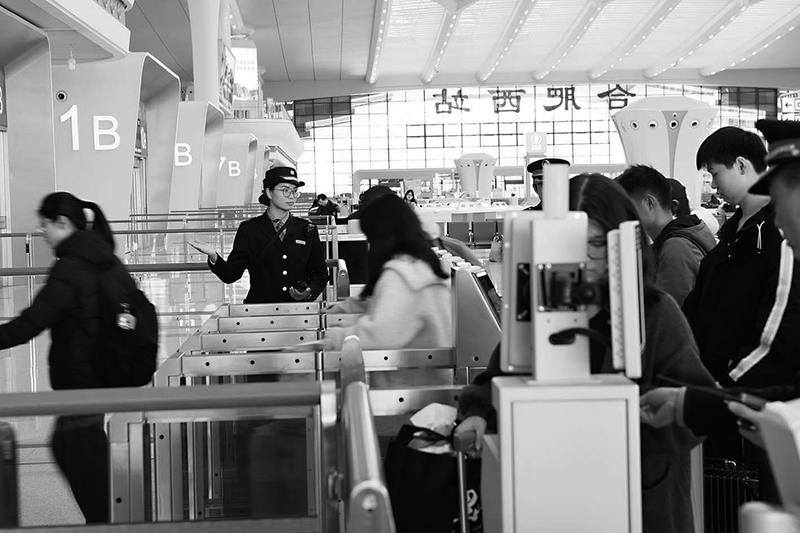
长三角议事厅·周报|杭衢高铁牵引“1小时都市圈”向西扩容
Xin Lang Cai Jing· 2026-01-06 07:56
Core Viewpoint - The opening of the Hangzhou-Qiuzhou High-Speed Railway significantly enhances connectivity in the Yangtze River Delta, reducing travel time between Qiuzhou and Hangzhou to as little as 73 minutes, thereby transforming regional collaboration and economic dynamics [1][3][4]. Group 1: Infrastructure Development - The Hangzhou-Qiuzhou High-Speed Railway spans approximately 131 kilometers with a design speed of 350 km/h, facilitating faster travel and improved accessibility [1]. - The railway connects Qiuzhou with the existing high-speed rail network, creating a dual-channel system that enhances travel efficiency between Zhejiang's western regions and Hangzhou [3][4]. - Initial operations will feature 12 daily trains, with plans to increase to 34 trains per day by the first quarter of 2026, making cross-city travel more routine [4]. Group 2: Economic Integration - The railway's opening marks a shift from administrative-driven "mountain-sea cooperation" to market-driven collaboration, allowing industries to connect based on comparative advantages rather than reliance on government initiatives [5]. - The establishment of the Qiuzhou Hai Chuang Park, which has attracted over 140 companies, exemplifies the integration of R&D and production capabilities between Qiuzhou and Hangzhou [5][6]. - Significant investments in lithium battery materials projects in Qiuzhou, totaling nearly 479 billion yuan, highlight the region's growing industrial capacity and its ability to support high-value manufacturing [6]. Group 3: Urban and Regional Development - The Hangzhou-Qiuzhou High-Speed Railway contributes to a new urban network in the Yangtze River Delta, evolving from simple point-to-point connections to a more integrated and sustainable commuting framework [7]. - By 2025, the total investment in the Yangtze River Delta railway construction is expected to exceed 600 billion yuan, with over 2,600 kilometers of new rail lines, enhancing the overall connectivity of the region [7]. - The railway facilitates a shift in the relationship between Qiuzhou and the core areas of the Yangtze River Delta, moving from mere connectivity to deeper integration and collaboration [8].
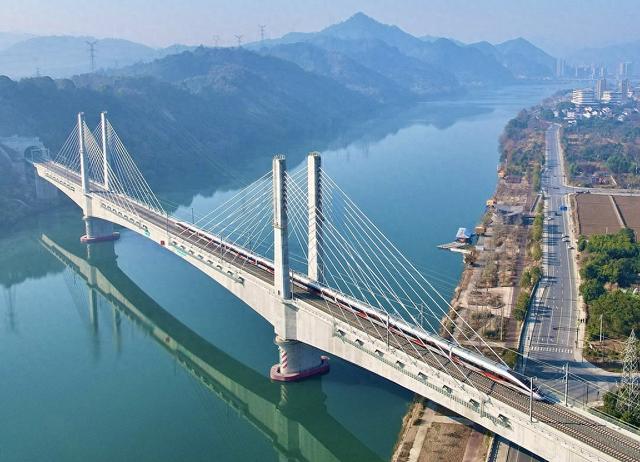
七条高铁开通!高铁第一省再度易主,湖北增量第一
3 6 Ke· 2025-12-31 03:00
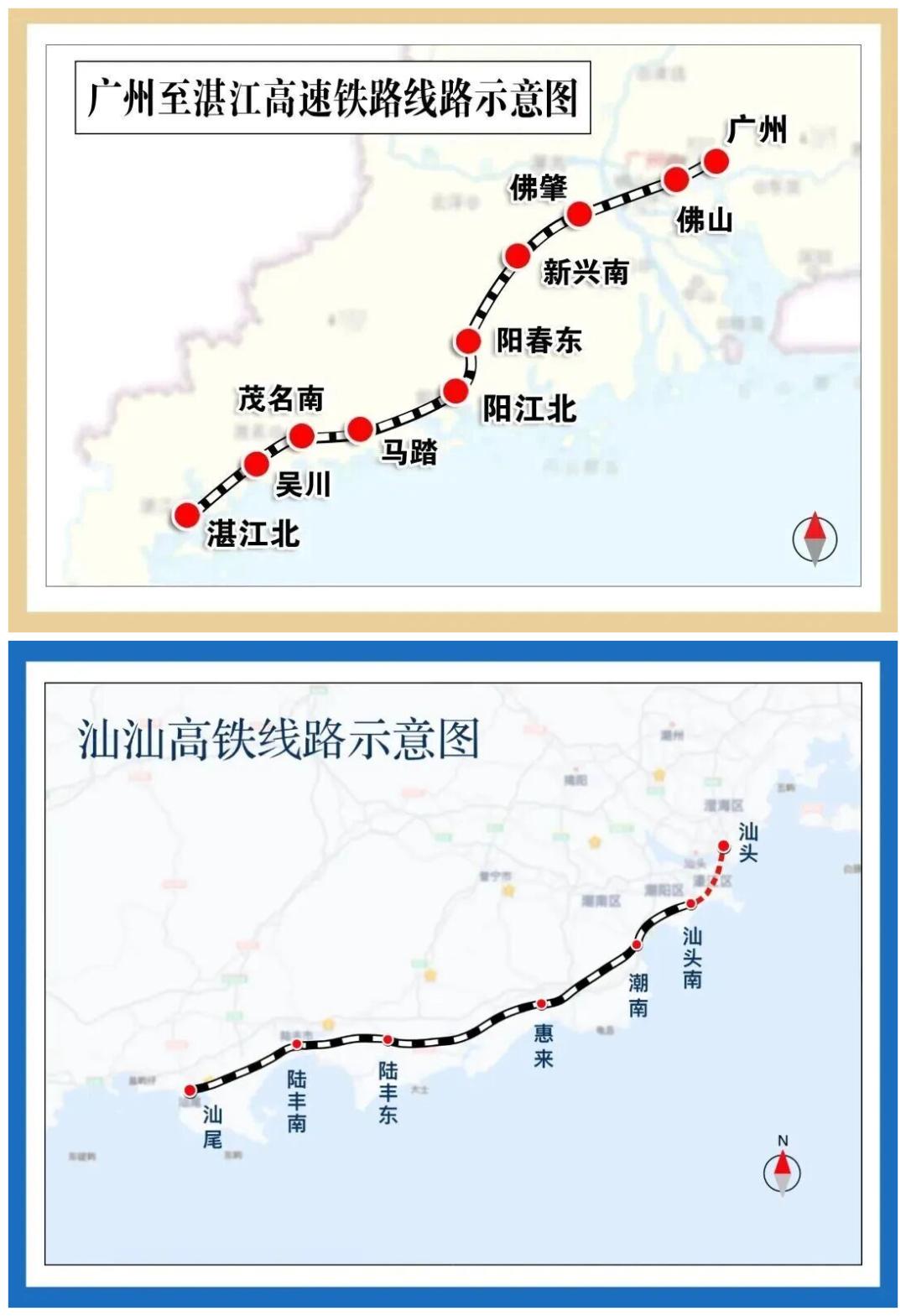
Core Insights - In the last ten days of December, seven high-speed rail lines were opened, marking a significant expansion of China's high-speed rail network [1][19][21] Group 1: New High-Speed Rail Openings - The Guangzhan High-Speed Rail and the Shanshan High-Speed Rail opened on December 22, significantly reducing travel time from Zhanjiang to Guangzhou from 2.5 hours to 1.5 hours [2] - The Baoyin High-Speed Rail's Baohui section opened on December 23, completing a total length of 519 kilometers, with a design speed of 250 km/h, connecting seven cities in Inner Mongolia to the national high-speed rail network [5] - The Wuyi High-Speed Rail, part of the East-West artery, opened on December 26, covering 314 kilometers at a speed of 350 km/h, reducing the commute time from Wuhan to Yichang to 69 minutes [7][10] - The Hangzhou-Qingzhou High-Speed Rail opened, covering 131 kilometers at a speed of 350 km/h, allowing travel from Quzhou West to Hangzhou West in 1 hour and 13 minutes [14] - The Xiyan High-Speed Rail, with a length of 299.8 kilometers and a design speed of 350 km/h, will reduce travel time from Xi'an to Yan'an from 2.5 hours to about 1 hour [15] - The Hefei-Xin High-Speed Rail's Hezi section opened on December 30, covering 198 kilometers with five new stations [17] Group 2: National High-Speed Rail Developments - By the end of 2025, a total of 12 new lines are expected to open, contributing to a national high-speed rail operating mileage exceeding 50,000 kilometers, achieving the "14th Five-Year Plan" goal [21][31] - Guangdong regained its position as the top province in high-speed rail mileage, surpassing Shandong with a total of 3,437 kilometers after adding approximately 421 kilometers in 2025 [23][25] - Hubei achieved the highest growth in high-speed rail mileage in 2025, adding 429 kilometers, which elevated its ranking from 13th to 5th nationally [27] - Inner Mongolia ranked third in growth with the opening of the Baoyin Railway's Baohui section, contributing 402 kilometers [28] - The total high-speed rail operating mileage in China is now the largest in the world, covering 97% of cities with populations over 500,000 and handling 80% of passenger traffic [22][21] Group 3: Future High-Speed Rail Plans - The national railway construction is set to continue aggressively, with plans to reach 180,000 kilometers of railway by 2030, including 60,000 kilometers of high-speed rail [36] - Major cities are actively planning and constructing new high-speed rail stations to enhance connectivity, with significant projects underway in cities like Zhengzhou, Shanghai, and Shenzhen [49][51]
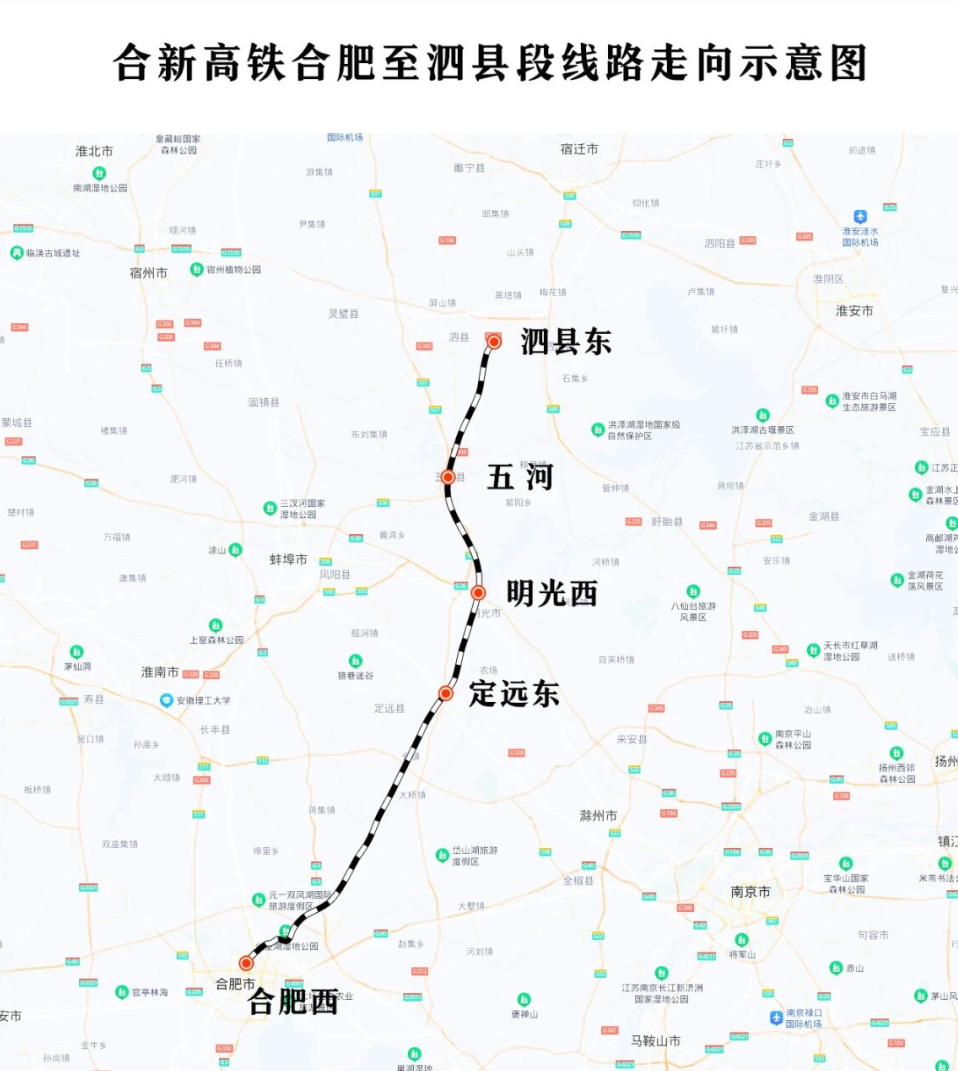
合新高铁合泗段开通运营
Xin Hua She· 2025-12-30 13:27
Core Viewpoint - The Hefei to Xinyi high-speed railway segment from Hefei to Sixian officially commenced operations, enhancing the transportation network between Hefei and the eastern Anhui region [1] Group 1: Project Details - The Hefei to Xinyi high-speed railway starts from Hefei West Station and connects to Xinyi East Station, covering a total length of approximately 335 kilometers with a design speed of 350 kilometers per hour [1] - The segment from Hefei to Sixian spans 198 kilometers and includes five newly constructed stations: Hefei West, Dingyuan East, Mingguang West, Wuhua, and Sixian East [1] - The fastest travel time from Hefei West Station to Sixian East Station is now only 1 hour and 18 minutes [1] Group 2: Regional Impact - The opening of the high-speed railway provides significant development opportunities for Sixian, which is recognized as a revolutionary old district and a gateway to northeastern Anhui [1] - Sixian is now part of the "one-hour commuting circle" from Hefei, reducing the physical distance to central cities in the Yangtze River Delta [1] - The project enhances the regional transportation network, facilitating travel for local residents and contributing to the development of the Yangtze River Economic Belt and the high-quality integration of the Yangtze River Delta [1]
时速350公里高铁今日开通!5座新车站开门迎客!
Xin Lang Cai Jing· 2025-12-30 10:50
Core Viewpoint - The Hefei to Xinyi High-Speed Railway segment from Hefei West Station to Sixian officially commenced operations, enhancing regional connectivity and transportation efficiency in Anhui province [1][8]. Group 1: Railway Operations - The Hefei to Xinyi High-Speed Railway segment, starting from Hefei West Station, spans a total length of 198 kilometers and includes five newly constructed stations: Hefei West, Dingyuan East, Mingguang West, Wuhe, and Sixian East [3]. - The G9500 train service marked the opening of this segment, with the first train departing at 9:18 AM, showcasing the modern infrastructure and technology of the new Hefei West Station [1][4][6]. Group 2: Economic and Social Impact - The opening of the high-speed railway is expected to significantly improve the investment environment in Wuhes County, allowing for easier access to the provincial capital Hefei and other major cities across the country [7]. - The railway's operation is anticipated to facilitate the development of the Yangtze River Economic Belt and contribute to the high-quality integration of the Yangtze River Delta region [8]. Group 3: Cultural Significance - The atmosphere on the inaugural train was lively, featuring performances of traditional Anhui opera and dance, highlighting the cultural richness of the region [7]. - The successful construction of the railway utilized green technologies, minimizing environmental impact and ensuring sustainable development [7].
长三角高铁营业里程突破8000公里
Xin Lang Cai Jing· 2025-12-30 06:40
Core Viewpoint - The Hefei to Xuzhou Xinyi High-Speed Railway (Hefei-Su segment) has officially opened, contributing to the expansion of the Yangtze River Delta high-speed rail network, which now exceeds 8,000 kilometers in operational mileage [1][2]. Group 1 - The Hefei-Su segment of the Hefei-Xinyi High-Speed Railway spans 198 kilometers and includes five newly constructed stations [1]. - The railway operates at a maximum speed of 350 kilometers per hour, enhancing regional connectivity and facilitating travel for local residents [2][3]. - The newly built Hefei West Station is the largest station on this segment, featuring 8 platforms and 18 tracks, with a total construction area of 340,000 square meters [3]. Group 2 - Hefei West Station connects multiple high-speed rail lines, including the Beijing-Hong Kong High-Speed Railway and the Hefei-Hangzhou High-Speed Railway, creating a new transportation hub in Hefei [3]. - The development of this railway segment is expected to promote the economic growth of the Yangtze River Economic Belt and support the high-quality development of the Yangtze River Delta integration [2][3].
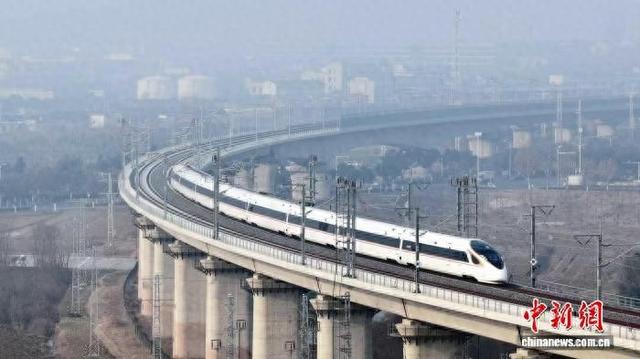
合肥至新沂高铁合肥至泗县段开通运营
Zhong Guo Jing Ji Wang· 2025-12-30 03:51
Core Viewpoint - The opening of the Hefei to Xinyi high-speed railway (Hefei to Suxian section) enhances transportation efficiency and stimulates regional economic development in eastern Anhui and Jiangsu provinces [1][2] Group 1: Project Overview - The Hefei to Xinyi high-speed railway spans approximately 335 kilometers with a design speed of 350 km/h, and the Hefei to Suxian section is 198 kilometers long [1] - The newly opened section connects Hefei West Station to Suxian East Station, with five new stations: Hefei West, Dingyuan East, Mingguang West, Wuhe, and Suxian East [1][2] Group 2: Operational Details - Initially, the railway will operate up to 10 daily high-speed trains, including 8 cross-line trains, with travel times of 32 minutes to Dingyuan East, 46 minutes to Mingguang West, 61 minutes to Wuhe, and 78 minutes to Suxian East [2] - A flexible and differentiated pricing mechanism will be implemented to cater to various passenger needs, with ticket prices available on the railway's official website [2] Group 3: Economic Impact - The completion of the Hefei to Suxian section marks the entry of cities like Mingguang, Wuhe, and Suxian into the high-speed rail era, improving regional transportation networks [2] - The project is expected to significantly contribute to the development of the Yangtze River Economic Belt and the high-quality integration of the Yangtze River Delta [2]
合肥至新沂高铁合肥至泗县段将于12月30日开通运营
Xin Lang Cai Jing· 2025-12-29 08:55
Core Viewpoint - The Hefei to Xinyi High-Speed Railway (Hefei to Suxian section) will commence operations on December 30, providing a new rapid passenger transport route between Hefei and the eastern Anhui region, thereby injecting new momentum into regional economic and social development [1][2]. Group 1: Project Overview - The Hefei to Xinyi High-Speed Railway spans approximately 335 kilometers, with a design speed of 350 km/h, and is being constructed in phases. The Hefei to Suxian section, which is set to open, covers 198 kilometers and includes five newly built stations [1][2]. - The railway crosses multiple water systems, and since the project's commencement in December 2021, the company has prioritized ecological considerations and green development throughout the planning and construction phases [1]. Group 2: Operational Details - Prior to the opening, the company conducted comprehensive testing and safety evaluations of the railway's various systems, ensuring compliance with safety and operational standards [2]. - Initially, the railway will operate up to 10 passenger trains daily, with travel times from Hefei West to the other stations ranging from 32 to 78 minutes [2]. - The pricing mechanism for tickets will be flexible and differentiated, catering to various passenger needs, with details available on the railway's official website [2]. Group 3: Economic Impact - The opening of the Hefei to Suxian section will integrate with the national high-speed rail network, enhancing the regional transportation structure and facilitating travel for local residents, which is significant for the development of the Yangtze River Economic Belt and the high-quality integration of the Yangtze River Delta [2].
杭衢高铁开通运营,长三角再添城际快线
Zhong Guo Jing Ying Bao· 2025-12-26 08:34
Core Viewpoint - The opening of the Hangzhou to Quzhou high-speed railway (Hangzhou-Quzhou High-speed Railway) on December 26, 2025, enhances the rapid transportation network in the Yangtze River Delta, creating a dual high-speed rail corridor between Hangzhou and Quzhou [1][2]. Group 1: High-speed Railway Developments - The Hangzhou-Quzhou High-speed Railway will operate at a maximum speed of 350 km/h, with 12 daily train services initially [1]. - The railway connects Hangzhou and Quzhou, forming a dual high-speed rail corridor with the existing Shanghai-Kunming high-speed railway [1][2]. - On the same day as the Hangzhou-Quzhou High-speed Railway's opening, two other high-speed rail lines were inaugurated: the Xi'an to Yan'an high-speed railway (299 km) and the Wuhan to Yichang section of the Hubei-Chongqing high-speed railway (314 km) [2]. Group 2: Future Plans and Investments - Several high-speed rail projects are expected to open by the end of 2025, including the Hefei West to Sixian East section of the Hefei-Xinjiang high-speed railway (208 km) and the Beijing-Tangshan intercity railway (150 km) [3]. - The "14th Five-Year Plan" aims for China's railway operating mileage to reach 165,000 km by the end of 2025, with high-speed rail mileage reaching 50,000 km [3]. - Railway fixed asset investment has reached historical highs, with 3,559 billion yuan invested in the first half of the year and 7,538 billion yuan in the first eleven months, marking a year-on-year increase of 5.9% [3].