
高校科技成果转化

Search documents
贯通高校科技成果转化全链路
Ren Min Ri Bao· 2025-09-15 06:29
Core Viewpoint - The establishment of regional technology transfer centers in universities is a strategic initiative to enhance the commercialization of scientific research and innovation, addressing existing challenges in technology transfer and fostering a more integrated innovation ecosystem [1][2][3][4] Group 1: Establishment of Technology Transfer Centers - The National Higher Education Regional Technology Transfer Center (Greater Bay Area) has been approved for construction, following the establishment of the first center in Jiangsu last year, focusing on fields like biomedicine and advanced materials [1] - The centers aim to create a "one-stop, full-chain" public transformation platform, driving innovation through a dual approach of "achievement transformation + talent cultivation" [1] Group 2: Policy Support for Technology Transfer - The creation of a "policy special zone" for technology transfer is proposed to enhance policy integration and support, ensuring that incentive policies are effectively implemented [2] - The management of job-related scientific achievements will be reformed to alleviate concerns about asset depreciation and loss for researchers [2] - Empowering researchers with ownership or long-term usage rights of their job-related scientific achievements is essential for fostering innovation [2] Group 3: Resource Support for Technology Transfer - Establishing physical spaces for technology transfer can leverage organized transformation and enhance innovation advantages [3] - Financial support mechanisms, such as specialized funds and long-term bonds, are necessary to meet the funding needs for technology transfer [3] - A comprehensive support system for technology transfer should be developed, including concept verification centers and pilot testing bases [3] Group 4: Capacity Building for Technology Transfer - Specialized service teams focused on technology transfer will provide comprehensive support for researchers and enterprises [4] - Building a professional talent pool for technology transfer is crucial, with initiatives to recruit specialists and enhance talent exchange mechanisms [4] - A full-process service system for technology transfer should be established, covering all stages from pre-transfer to post-transfer [4]
创新好成果如何加速走向“生产线”
Ren Min Ri Bao· 2025-09-15 02:13
Group 1 - The core viewpoint emphasizes the importance of transforming scientific and technological achievements from universities into practical productivity to foster new quality productivity [6][7] - The establishment of regional technology transfer centers aims to facilitate the conversion of academic innovations into market-ready products [7][10] - Various regions are implementing separate management systems for job-related scientific achievements, granting universities and research institutions more autonomy in managing their technological assets [10][12] Group 2 - A significant barrier to technology transfer is the complex asset management procedures and unclear ownership rights, which discourage researchers from pursuing commercialization [8][9] - The need for a robust incentive mechanism for researchers is highlighted, suggesting that technology transfer should be integrated into performance evaluations and promotions [11][12] - There is a mismatch between the outputs of academic research and the needs of enterprises, indicating a need for better alignment between research and market demands [12][13] Group 3 - The establishment of pilot programs to clarify intellectual property rights has shown promise in attracting significant investment for technology commercialization [9][10] - The lack of mid-stage testing platforms hinders the transition from laboratory research to market-ready products, necessitating increased support for these facilities [15][16] - Government initiatives are underway to promote the development of mid-stage testing service platforms, with specific targets set for the number of platforms by 2028 [17] Group 4 - The shortage of specialized talent in technology transfer is a critical issue, with calls for the development of a professional workforce capable of bridging the gap between research and industry [19][20] - Collaborative efforts between universities and external technology transfer platforms are essential for enhancing the effectiveness of technology commercialization [22][23] - Recommendations include establishing clear career paths and compensation structures for technology transfer professionals to attract and retain talent in this field [22][23]

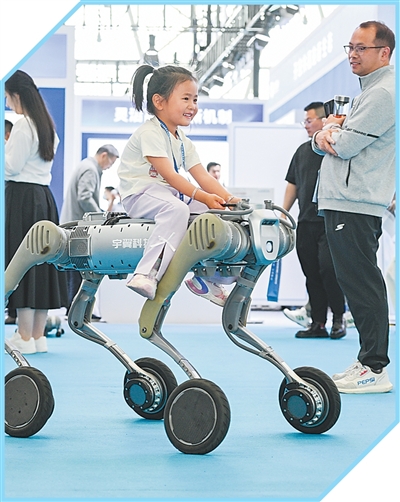
贯通高校科技成果转化全链路(创新谈)
Ren Min Ri Bao· 2025-09-14 22:03
Core Viewpoint - The establishment of regional technology transfer centers in universities is a strategic initiative aimed at enhancing the commercialization of scientific research and fostering innovation ecosystems in China [1][2]. Group 1: Establishment of Technology Transfer Centers - The National Regional Technology Transfer and Transformation Center (Greater Bay Area) has been approved for construction, following the launch of the first center in Jiangsu last September, focusing on fields like biomedicine and advanced materials [1]. - The centers aim to create a "one-stop, full-chain" public transformation platform, driving innovation through a dual approach of "results transformation + talent cultivation" [1]. Group 2: Policy Support for Technology Transfer - A focus on establishing a supportive policy environment for technology transfer is emphasized, including the creation of "policy special zones" to enhance the integration and effectiveness of incentive policies [2]. - The implementation of a separate management system for job-related scientific achievements is proposed to alleviate concerns regarding the risks of asset depreciation and loss [2]. Group 3: Resource Support for Technology Transfer - The construction of physical spaces for technology transfer is highlighted, leveraging regional industrial strengths to foster collaborative innovation and provide high-level technical support for industry development [3]. - Financial support mechanisms, such as specialized funds and long-term government bonds, are suggested to meet the funding needs for technology transfer [3]. Group 4: Capacity Building for Technology Transfer - The establishment of specialized service teams for technology transfer is recommended to provide comprehensive support for researchers and local enterprises [4]. - Enhancing the capabilities of professional talent in technology transfer is crucial, with suggestions for creating a specialized workforce and improving incentive systems for technology managers [4].
智启未来教育新图景 融合创新点亮全球合作舞台
Bei Jing Shang Bao· 2025-09-11 14:27
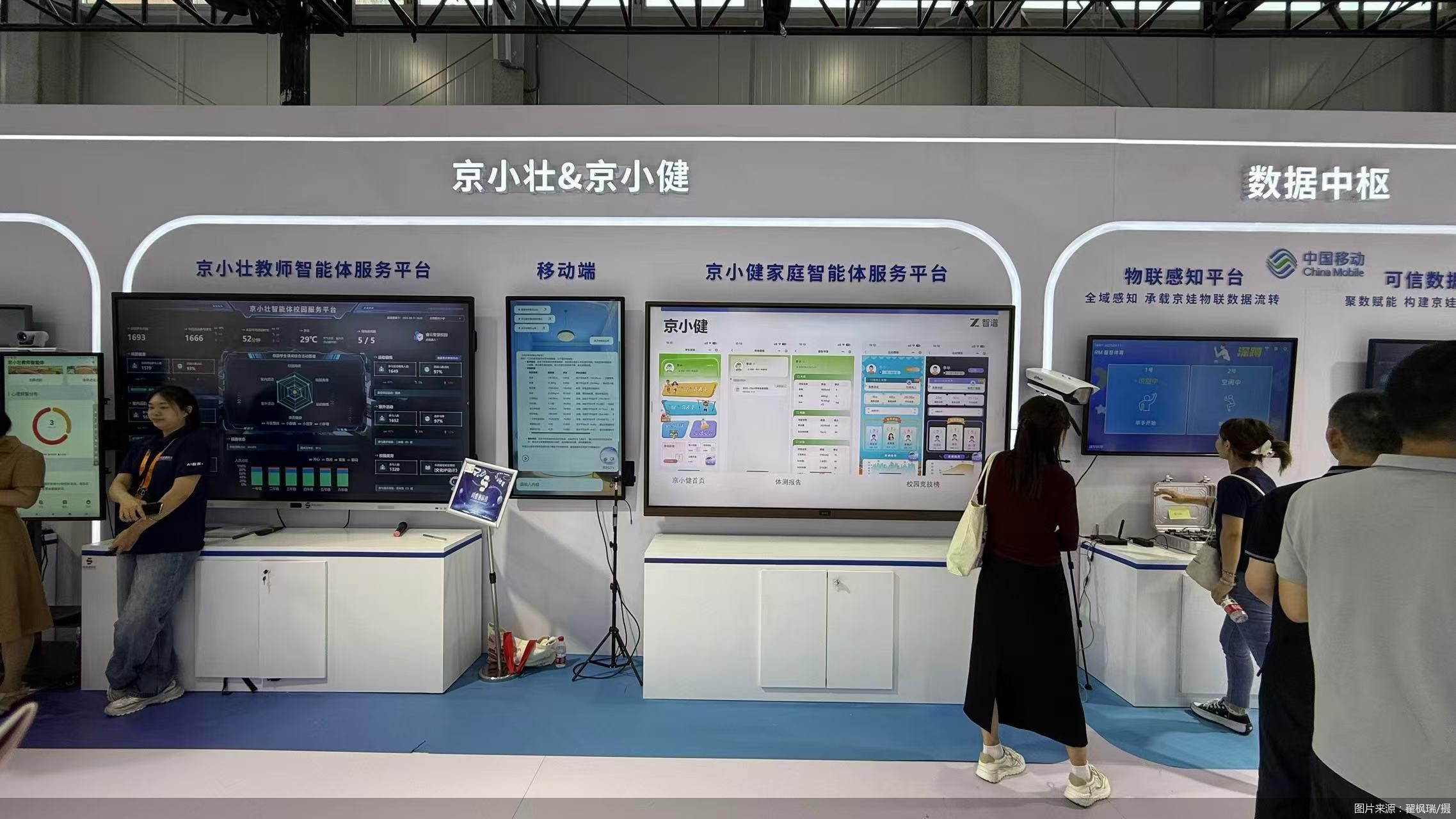
Core Insights - The 2025 China International Service Trade Fair (CIFTIS) is showcasing the education service sector with a focus on "AI education," "bilateral study abroad," and "university technology transfer" [1][4] Group 1: AI Education Innovations - The "AI Education+" section features innovative applications of artificial intelligence in education, making technology integration tangible and experiential [2] - The "京娃" series of virtual intelligent agents, including "京小健" and "京小壮," are presented as solutions for personalized health management and sports guidance for students [2] - AI-assisted learning tools are being developed, such as a multi-platform AI tutoring system that customizes learning experiences for individual students [3] Group 2: Bilateral Study Abroad and Resource Integration - The fair aims to create a "super bridge" for global educational resource integration and innovation transfer, enhancing bilateral educational trade [4] - The "留学北京" brand offers comprehensive services for international students, including recruitment, language training, and financial support [4] - The event features a dedicated area for technology transfer from universities to market applications, promoting regional economic development [5] Group 3: Forums and Collaborative Opportunities - A series of forums, including the AI Empowerment in Education Forum and the Bilateral Study Industry Cooperation Forum, are held to foster collaboration among educational institutions and businesses [6] - The "留学北京" service plan aims to provide opportunities for international students in China, promoting deeper integration of education and enterprise [6] - The fair has introduced specialized visitor routes to cater to different attendee needs, enhancing engagement and interaction [7]
2025服贸会|智启未来教育新图景 融合创新点亮全球合作舞台
Bei Jing Shang Bao· 2025-09-11 14:16
Core Insights - The 2025 China International Service Trade Fair (CIFTIS) is being held in Beijing, focusing on the theme "Intelligent Future, Integrated Innovation" in the education services sector [1] - The education services exhibition features 55 renowned domestic and international educational institutions and leading enterprises, showcasing cutting-edge achievements [1] Group 1: AI in Education - The "AI Education+" section is a major highlight, presenting innovative scenarios where AI is deeply integrated into education, making technology empowerment tangible [3] - The "Jingwa" series of virtual intelligent agents, launched by the Beijing Municipal Education Commission, includes products like "Jingxiaojian" and "Jingxiaozhuang," which provide personalized health management and sports guidance for students [3][4] - AI tutoring systems and comprehensive AI course resources are being developed, enabling personalized learning experiences for students across all educational stages [4] Group 2: Dual Study Abroad and Innovation Transfer - The exhibition aims to build a "super bridge" for global educational resource integration and the transformation of university innovation achievements, promoting bilateral development in education services trade [6] - The "Study Abroad Beijing" brand offers a one-stop solution for international students, covering various services from recruitment to financial support [7] - A dedicated area for technology transfer from universities focuses on integrating regional economic strengths with educational innovation, facilitating the commercialization of research outcomes [8] Group 3: Forums and Collaborative Opportunities - The exhibition features a series of authoritative forums and case studies, fostering a vibrant exchange platform for the global education community [9] - The "Study Abroad Beijing" service plan aims to create development opportunities for international students in China, enhancing the synergy between education internationalization and corporate globalization [9] - Five typical "Beijing Service" cases were released, showcasing collaborative innovation across state-owned enterprises, private companies, and public institutions [9] Group 4: Tailored Visitor Experiences - The exhibition has designed four specialized visitor routes to meet the diverse needs of attendees, including AI learning paths for students and teachers [10] - The event serves as a showcase for educational technology achievements and a platform for global educational resource integration and deep cooperation [10]
聚焦“AI教育+”——2025年服贸会教育专题五大亮点抢先看
Zhong Guo Jing Ji Wang· 2025-08-29 03:29
Group 1 - The 2025 China International Fair for Trade in Services (CIFTIS) will be held from September 10 to 14 in Beijing, focusing on education services with the theme "Intelligent Future, Integrated Innovation" [1] - The education exhibition will feature 55 well-known domestic and international institutions and leading enterprises, showcasing key areas such as "AI Education+", "Bilateral Study Abroad", and the transformation of university scientific achievements [1][2] - The exhibition will adopt an innovative "scenario experience + full-chain service" model, allowing attendees to engage with new educational service scenarios [1] Group 2 - Five major highlights of the education exhibition include: 1. Technology empowering educational innovation with a focus on the "AI Education+" section [2] 2. Close integration of universities and regional development, launching a technology transfer center [2] 3. Enhanced international collaboration through "Bilateral Study Abroad" initiatives [2] 4. Authoritative forums to discuss the future of education, including the AI Empowering Education Forum [2] 5. Showcasing exemplary "Beijing Services" cases to promote educational service innovation [2] Group 3 - China Mobile will unveil three major AI + education innovations, including the "New Map of Capital Education" and health management tools [3] - China Telecom will leverage a 1250P domestic computing power pool to enhance health data management for schools and parents [3] - New Oriental Education will present the latest products and services focused on "AI Empowered Teaching Aids" and "Bilateral Study Abroad" [3] - Yuanli Technology will focus on "AI + Education" products, showcasing AI literacy courses and their implementation across educational stages [3][4] Group 4 - Zhihui Huazhang Technology will launch new intelligent products aimed at personalized learning solutions during the fair [4] - Beijing Publishing Group will showcase various digital education products, including AI learning rooms and smart early education tools [4]
55家境内外机构参展 服贸会教育服务专题将聚焦“AI教育+”等领域
Zhong Guo Xin Wen Wang· 2025-08-28 14:34
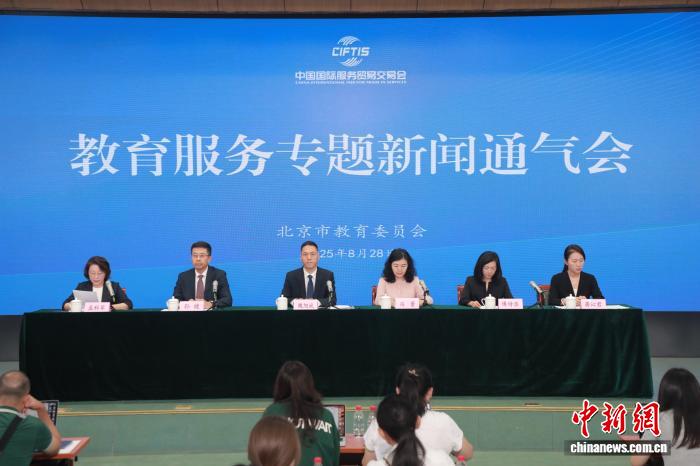
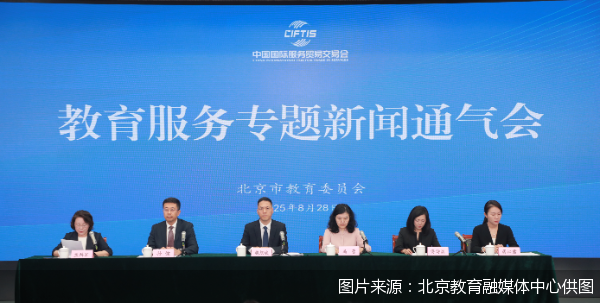
Group 1 - The 2025 China International Service Trade Fair will be held in Beijing from September 10 to 14, focusing on key areas such as "AI Education+", "Bilateral Study Abroad", and the transformation of university scientific achievements [1][3] - A total of 55 domestic and international institutions and leading enterprises will participate in the education service exhibition, showcasing cutting-edge results and benchmark practices in Beijing's education services [1][3] - The theme of the education service exhibition is "Intelligent Future, Integrated Innovation," featuring a new model of "scenario experience + full-chain service" to provide immersive experiences for attendees [3] Group 2 - The "AI Education+" section is expected to be a major highlight, with various innovative scenarios powered by artificial intelligence set to be displayed [3][4] - Starting from the autumn semester, AI general education will be fully implemented in all primary and secondary schools in Beijing, with a comprehensive AI curriculum resource package presented by institutions like Yuanli Technology and Beijing Normal University [3][4] - The exhibition will also showcase the "Jing Xiao Jian" and "Jing Xiao Zhuang," two virtual intelligent entities developed to support personalized student health and learning needs [4] Group 3 - The fair will feature a dedicated area for technology transfer and transformation centers from universities, promoting collaboration between universities and enterprises to accelerate the commercialization of scientific achievements [4][5] - Haidian District will focus on artificial intelligence, while Fangshan District will target the new energy storage sector, creating a closed-loop system for technology innovation, industry cultivation, application scenario promotion, and safety assurance [5] - The event aims to provide a "one-stop" service for innovation results, ensuring that technological achievements can be effectively showcased and quickly utilized [5]
2025年服贸会教育专题展开幕在即:首推专业观众服务、“AI教育+”成焦点
Bei Jing Shang Bao· 2025-08-28 11:28
Group 1 - The 2025 Education Service Trade Fair in Beijing focuses on "AI Education+" and "Bilateral Study Abroad," featuring 55 renowned institutions and enterprises [1] - The exhibition will showcase cutting-edge achievements and best practices in education services, with a dedicated area for AI education innovations [1][3] - The "Jingwa" intelligent series will be launched, including personalized health models and multifunctional smart solutions for schools [3] Group 2 - The "Bilateral Study Abroad" section aims to provide comprehensive services for international education, including language training and employment opportunities [5][6] - New Oriental Education will present a full-service process for study abroad, integrating resources for application consulting and cultural adaptation [6] - The fair will highlight collaborations with top Australian universities and various high-quality Sino-foreign cooperative education projects [6] Group 3 - The exhibition will promote technology transfer between universities and enterprises, focusing on regional advantages in AI and green energy [7] - Interactive experiences will be enhanced for attendees, with dedicated routes for students and educators to engage with AI resources [7]
“书架智慧”变“货架产品”
Su Zhou Ri Bao· 2025-08-27 23:01
Group 1 - The core viewpoint of the articles highlights the innovative efforts in Suzhou's entrepreneurial ecosystem, particularly focusing on the development of the antibiotic Anputaine by Professor Hong Yuzhi, which aims to address the challenges posed by "latent pathogens" in treating infectious diseases [1] - Several venture capital firms have approached Professor Hong Yuzhi to participate in the further research and commercialization of Anputaine, indicating strong interest and potential for rapid development in this area [1] - The "Huihu Small Leading" project, part of the broader "Huihu Innovation" support initiatives, has been instrumental in accelerating entrepreneurship in the Suzhou Industrial Park, with a simplified evaluation process for projects led by professors and recent graduates [2] Group 2 - The "Huihu Small Leading" initiative has shown significant results, with 8 out of 15 projects registered as companies within six months, demonstrating the effectiveness of the support provided [2] - The initiative aims to alleviate operational costs for early-stage projects and integrates social resources to foster the growth of technology projects, thereby enhancing the innovation ecosystem [2][3] - Various measures have been implemented to overcome barriers in the transformation of university research into marketable products, including adjustments in intellectual property rights and the expansion of support criteria for applicants [3][4]
记者手记:创新成果加速从“书架”走向“货架”,活力从何而来?
Xin Hua She· 2025-07-26 06:29
Core Insights - The transformation of scientific and technological achievements from "bookshelves" to "shelves" is gaining momentum in Hunan, with a projected growth of over 50% in both the number of technology contracts and transaction amounts in 2024 across 37 universities [1] Group 1: Evaluation Orientation - The evaluation criteria for researchers are shifting, encouraging them to actively promote their research outcomes to enterprises, which is a significant change from previous practices [2] - Hunan has implemented incentive measures in performance assessments and promotions to benefit researchers from the conversion of their achievements, fostering a culture of engagement with industry [2] - The average technology transfer cycle has been shortened by 60% in 2024, with a 120% year-on-year increase in the number of conversion projects at Changsha University of Science and Technology [2] Group 2: Demand Matching - A key challenge has been the mismatch between enterprise needs and university technological capabilities, which Hunan is addressing through initiatives that facilitate ongoing communication between universities and high-tech enterprises [3] - The "dual high" matching activities have been established to help researchers identify genuine industry needs, leading to a shift from merely selling technology to comprehensive collaboration [3] - Companies are now presenting specific technical demands at events, which has garnered significant interest from researchers [3] Group 3: Conversion Ecosystem - Hunan has introduced innovative mechanisms like "pay after use" to reduce the financial risks for enterprises when adopting new technologies, allowing for a more flexible payment structure [4] - This approach helps lower the trial and error costs for companies and revitalizes existing innovations from universities [4] Group 4: Comprehensive Support - Hunan is enhancing its innovation ecosystem through a combination of institutional reforms, financial support, and talent development initiatives, including the establishment of an angel investment fund and a technical manager training program [5] - The focus is on creating an open and active technology transfer service system to foster a favorable environment for the conversion of scientific achievements into productive forces [5]