6G网络

Search documents
2025 年通信理论与技术学术会议在无锡开幕
Zhong Guo Jing Ji Wang· 2025-08-19 01:35
Group 1 - The "2025 Communication Theory and Technology Academic Conference" was held in Wuxi, Jiangsu, with over 400 attendees from the communication field and nearly 30,000 online participants [1] - The conference featured keynote reports on various topics, including the challenges and advancements in 6G networks, IoT standards, and terahertz technology applications [2][3] - The conference provided a platform for cross-disciplinary communication and collaboration, focusing on innovative technologies and industry applications in the communication sector [4] Group 2 - Keynote presentations included topics such as multi-modal intelligent network environments, IoT standardization challenges, and advancements in terahertz communication technology [2][3] - The conference organized ten specialized forums covering various aspects of communication technology, facilitating academic exchanges and industry upgrades [4] - The event aimed to promote technological innovation, industry application, and business model innovation within the communication industry [4]
烽火通信空芯光纤工程化瓶颈获新突破
Zheng Quan Shi Bao Wang· 2025-08-14 02:05
Core Viewpoint - Fenghuo Communication (600498) has made significant progress in the engineering application of self-developed hollow core anti-resonant fiber (HC-ARF), addressing various engineering challenges and advancing towards large-scale application [1] Group 1: Technological Advancements - The company has conducted systematic research to tackle engineering challenges such as water vapor ingress, CO gas absorption peaks, and lightning strike tests for hollow core optical cables [1] - Relevant research findings have been published in journals like "Optics Journal" and "Optical Communication Research," indicating a commitment to advancing technology [1] Group 2: Future Prospects - Hollow core fiber is expected to reshape the global technological landscape in fields such as encrypted communication and 6G networks [1]

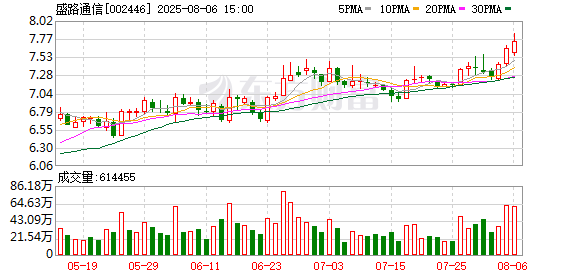
盛路通信:公司的微波/毫米波、有源相控阵技术是6G网络发展的关键技术之一
Zheng Quan Ri Bao· 2025-08-06 12:38
Group 1 - The core viewpoint of the article highlights that Shenglu Communication identifies its microwave/millimeter-wave and active phased array technology as key technologies for the development of 6G networks [2] - The company plans to leverage its advantages by conducting in-depth research and industrial application of these technologies, following the strategy of "space-based networking, ground network evolution, and interconnectivity between space and ground" [2]


“天算星座”二期正式启动
Ke Ji Ri Bao· 2025-05-18 23:26
Core Insights - The successful launch of the "Zhuque-2" rocket on May 17 marks the initiation of the second phase of the "Tiansuan Constellation" project, with the "Beiyou-2" and "Beiyou-3" satellites entering their designated orbits [1] Group 1: Project Overview - The "Tiansuan Constellation" is an open-source space computing experimental platform, with the second phase planning to launch a total of 24 satellites focusing on advanced fields such as space computing, 6G networks, and intelligent remote sensing [1] - The first batch of satellites in this phase, "Beiyou-2" and "Beiyou-3," were developed by Beijing University of Posts and Telecommunications in collaboration with Changsha Tianyi Research Institute [1] Group 2: Technological Innovations - The development team overcame key technological challenges related to the reliability of space servers, real-time capabilities of hyperspectral cameras, and the stability of laser communication systems in orbit [2] - Significant technological breakthroughs have enabled the satellites to possess deep payload integration and dynamic optimization capabilities, addressing issues such as unreliable computational supply, poor timeliness of remote sensing data, and limited communication bandwidth [2] Group 3: Future Developments - Following the launch, the satellites will conduct a series of frontier technology experiments in satellite internet, including inter-satellite high-capacity laser communication and dynamic tuning of satellite laser communication payload rates [2]
光莆股份(300632) - 厦门辖区上市公司2024年年报业绩说明会暨投资者网上集体接待日活动
2025-05-16 12:51
Group 1: Investor Relations and Company Overview - Xiamen Guangpu Electronics Co., Ltd. participated in the 2024 annual report performance briefing on May 15, 2025, to enhance interaction with investors [1] - The company emphasized its commitment to shareholder rights and market value performance through transparent information disclosure [2] Group 2: Business Operations and Market Strategy - The company focuses on core business operations, particularly in optical integrated sensor packaging and semiconductor optical applications, to enhance profitability and cash flow [2] - The company aims to establish a closed-loop industrial chain for optical integrated sensors, enhancing R&D investment and promoting integration of production, learning, and research [4] Group 3: Product Development and Market Applications - The company has developed a transparent antenna circuit board that can extend to 6G network applications and has established software development and information security departments [2] - The company’s optical health products, such as the "Xinyou Beauty Lamp," have various skincare benefits and are primarily sold through online platforms [3] Group 4: Capacity and Production Plans - The company’s sensor packaging capacity has reached 40KK/month, focusing on high-growth areas such as robotics, drones, and smart driving [8] - The company is dynamically adjusting production capacity for composite copper foil based on market demand and customer needs [3] Group 5: Strategic Partnerships and Investments - The company has invested in various funds and companies, with some planning to go public, including Zhongchuang Xinhang and Haichen Energy [3] - The Hong Kong operational center will serve as a hub for global business and investment mergers and acquisitions [7]

6G芯片,出现突破
半导体行业观察· 2025-03-16 03:06
Core Viewpoint - Terahertz waves are considered a powerful tool for fast data transmission in potential 6G networks, but practical implementation has proven challenging. A research team is working on a device that integrates terahertz waves onto a chip, bringing this technology closer to reality [1][3]. Group 1: Terahertz Wave Characteristics - Terahertz waves are located in the electromagnetic spectrum between microwaves and far-infrared light, typically ranging from 0.1 to 10 terahertz. They can penetrate many materials and transmit more information than radio waves, but their practical use is limited due to challenges such as absorption by water vapor and loss in common electronic materials like copper [1]. - The dielectric constant difference between silicon (11.9) and air (1) leads to significant signal loss when generating terahertz waves on a chip, as part of the wave is reflected at the interface [2]. Group 2: Innovative Solutions - Researchers at MIT have developed a method to enhance terahertz wave transmission by applying a specially patterned dielectric sheet on the back of the chip, which allows most waves to transmit rather than reflect. This approach achieves higher radiation power without the need for expensive silicon lenses [3]. - The system can generate radiation in the range of 232 to 260 gigahertz, utilizing a chip with high-power Intel transistors that have a breakdown voltage of 6.3 volts and a maximum frequency of 290 GHz, surpassing traditional CMOS transistors [3]. Group 3: Cost and Applications - The terahertz radiation device is low-cost and suitable for mass production, with potential applications in high-resolution radar imaging, broadband wireless transmission, and improved medical imaging [4]. Group 4: Challenges and Future Outlook - Key challenges include managing temperature and current density, as the circuits operate under extreme conditions that can shorten transistor lifespan. Scaling the system to larger CMOS arrays will require advanced thermal management solutions [5]. - Experts view this development as a breakthrough in high-frequency electronics, combining high output power, low cost, and compact integration. However, extending this performance to higher terahertz frequencies remains a challenge due to physical limitations such as transistor cutoff frequency and interconnect losses [5].