区域协调发展

Search documents
南北大动脉,“关键一环”将落地!
Zhong Guo Xin Wen Wang· 2025-10-31 01:48
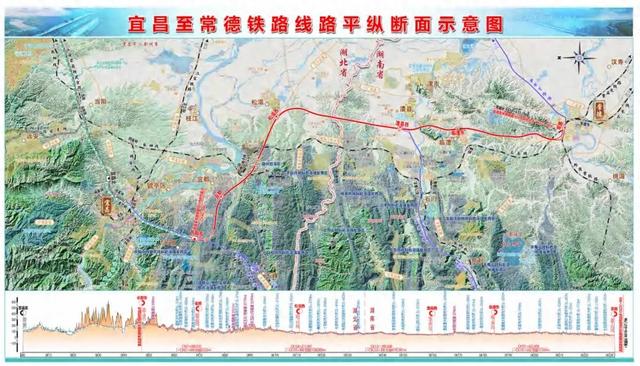
Core Points - The construction of the Yichang to Changde high-speed railway (Yichang High-speed Railway) is set to commence, with bidding planned to start in November 2025 [2][3] - The railway is a key segment of the "Eight Vertical and Eight Horizontal" high-speed rail network and is part of the transportation infrastructure priorities outlined in the "14th Five-Year Plan" for the development of the Yangtze River Middle Reaches Urban Agglomeration [4][9] Summary by Sections Project Overview - The Yichang to Changde high-speed railway will span approximately 234 kilometers, with a newly constructed section of about 184 kilometers designed for a speed of 350 kilometers per hour [4][9] - The project has received significant attention since at least 2018, with various proposals and suggestions from representatives and the public [7] Development Progress - The project faced delays due to planning adjustments, but significant progress has been made in 2023, including the approval of the feasibility study and environmental impact report [8] - The construction plan is a result of collaborative efforts between Hubei and Hunan provinces, with multiple rounds of discussions to finalize the route and construction timeline [8] Regional Impact - The Yichang High-speed Railway will enhance connectivity between cities in the Yangtze River Middle Reaches, reducing travel time from Yichang to Changde from approximately 3.5 hours to about 1.5 hours [9] - It will also facilitate quicker travel from Yichang to Changsha, cutting the time by nearly half compared to current routes [9] Strategic Importance - Yichang is positioned as a sub-central city in Hubei province, playing a crucial role in national strategies for the development of the Yangtze Economic Belt and the central region [11] - The railway will contribute to the formation of a regional comprehensive transportation and logistics hub in Changde, which is a significant node in the Yangtze Economic Belt [13] Future Developments - The Yichang High-speed Railway is part of a broader initiative to enhance the high-speed rail network in the region, with other projects also moving forward, such as the Changsha to Ganzhou high-speed railway [13] - The completion of the railway will connect various urban agglomerations and facilitate economic development across multiple regions, including potential extensions to the Guangdong-Hong Kong-Macao Greater Bay Area [14][15]

“十五五”区域战略兼顾南北方协调 首提拓展流域经济
2 1 Shi Ji Jing Ji Bao Dao· 2025-10-30 16:30
Core Points - The "15th Five-Year Plan" emphasizes regional coordinated development as an inherent requirement of Chinese-style modernization, proposing five key tasks to enhance regional development coordination and promote urbanization [1][2][3] Group 1: Regional Development Coordination - The plan highlights the need for coordinated development between eastern, central, western, and northern regions, marking the first time "north-south coordination" has been included in a five-year plan [1][2] - It aims to solidify the new pattern of western development, achieve breakthroughs in the revitalization of the northeast, accelerate the rise of the central region, and push the eastern region towards modernization [3][4] Group 2: Regional Linkage Development - The plan calls for the construction of cross-regional and cross-basin transportation corridors, enhancing infrastructure connectivity, and expanding the concept of "river basin economy," which is newly introduced in this plan [7][8] - It emphasizes that regional development should not only focus on reducing disparities but also on deep cooperation across various sectors, including industry, market, ecology, and infrastructure [7][9] Group 3: Urban Agglomeration Development - The plan stresses the importance of strengthening the coordinated development of key urban agglomerations, particularly the Yangtze River Middle Reaches urban agglomeration, to foster a new growth engine in the central region [10][11] - It introduces the modernization of governance in mega-cities and promotes urban agglomeration integration and metropolitan area synchronization as essential tasks for urbanization [11][12]
山东高速前三季度经营稳健 彰显高质量发展成色
Zhong Zheng Wang· 2025-10-30 14:27
Core Insights - Shandong Expressway reported a revenue of 16.841 billion yuan and a net profit of 2.619 billion yuan for Q3 2025, marking a year-on-year increase of 4.11% in net profit [1] - The company's asset scale reached 162.947 billion yuan, reflecting a year-on-year growth of 0.78% [1] Road and Bridge Operations - The company focuses on enhancing its core road assets, which are among the busiest in Shandong province, benefiting from the rapid growth in traffic volume due to national economic development [2] - Toll revenue (including tax) reached 7.877 billion yuan, a year-on-year increase of 4.08% [2] - The company implemented innovative operational models, saving approximately 4.41 million yuan in operational costs through the promotion of 21 groups of "non-station auxiliary stations" and 86 centralized toll station models [2] - The company achieved a 99.94% all-weather traffic rate by enhancing road safety and control measures [2] Engineering Construction - The company is systematically advancing key construction projects to enhance regional transportation networks and support high-quality economic development [3] - Significant progress has been made in core expansion projects, including the successful completion of the first phase of the Beijing-Taiwan Expressway Qiji section [3] - The Laiyang to Weifang section of the S16 Rongwei Expressway is undergoing fully enclosed construction, significantly improving construction efficiency [3] Compliance and Corporate Governance - Shandong Expressway emphasizes compliance in information disclosure, achieving an A-class rating from the Shanghai Stock Exchange for its disclosure practices for 2024-2025 [4] - The company has been recognized for its excellent performance in environmental, social, and governance (ESG) areas, ranking among the top 100 in market capitalization and holding an AA-level ESG rating in the transportation industry [4] - The company plans to introduce Anhui Expressway as a strategic investor to enhance service quality and operational efficiency [4] Future Outlook - The company aims to focus on high-quality development, aspiring to become a leading infrastructure investment and construction service provider in China [5] - The strategic goal includes integrating operations management, construction management, and investment across the industry chain to deliver stable long-term returns to shareholders and investors [5]

“十五五”区域战略兼顾南北方协调,首提拓展流域经济
2 1 Shi Ji Jing Ji Bao Dao· 2025-10-30 11:12
Core Insights - The "15th Five-Year Plan" emphasizes regional coordinated development as an intrinsic requirement of Chinese-style modernization, proposing five key tasks to enhance regional development coordination and promote urbanization [1][2][3] Group 1: Regional Development Coordination - The plan highlights the need for coordinated development between eastern, central, western, and northern regions, marking the first time "north-south coordination" is included in a five-year plan [1][2] - It aims to solidify the new pattern of western development, achieve breakthroughs in the revitalization of the northeast, accelerate the rise of the central region, and push the eastern region towards modernization [3][4] Group 2: Regional Linkage Development - The plan stresses the construction of cross-regional and cross-basin transportation corridors, enhancing regional infrastructure connectivity, and expanding the concept of "river basin economy," which is newly introduced [1][5][6] - It emphasizes that regional development should not only focus on reducing disparities but also on creating deep cooperation across industries, markets, ecology, and infrastructure [5][6] Group 3: Urban Agglomeration Development - The plan calls for strengthening the coordinated development of key urban agglomerations, particularly accelerating the development of the Yangtze River Middle Reaches urban agglomeration [1][8] - It identifies major urban clusters such as Beijing-Tianjin-Hebei, Yangtze River Delta, and Guangdong-Hong Kong-Macau Greater Bay Area as core engines for high-quality development, tasked with driving institutional innovation and industrial upgrades [8][9] Group 4: New Economic Models - The introduction of the "river basin economy" model aims to transform ecological construction into a source of local fiscal revenue and high-quality employment, indicating a shift towards a holistic development approach [7][8] - The plan also highlights the importance of modernizing governance in mega-cities and promoting urban integration and metropolitan area collaboration to enhance overall urban efficiency [9]
以“行”致远,山东高速前三季度经营稳健,彰显高质量发展成色
Quan Jing Wang· 2025-10-30 11:05
Core Insights - Shandong Hi-Speed Company reported a revenue of 16.841 billion and a net profit of 2.619 billion for Q3 2025, showing a year-on-year increase of 4.11% in net profit [1] - The company's asset scale reached 162.947 billion, reflecting a year-on-year growth of 0.78% [1] Group 1: Road and Bridge Operations - The company focuses on enhancing the quality of road and bridge operations, achieving a toll revenue (including tax) of 7.877 billion, which is a 4.08% increase year-on-year [2] - The company has implemented innovative operational models, saving 4.41 million in operational costs through the promotion of 21 "non-station auxiliary station" models and 86 centralized toll station models [2] - The company achieved a 99.94% all-weather traffic rate, ensuring road safety and smooth traffic flow [2] Group 2: Engineering Construction - The company is making steady progress in key engineering projects, contributing to the improvement of regional transportation networks [3] - Significant milestones include the completion of the first phase of the Beijing-Taiwan Expressway Qiji section and the full closure construction of the Laiyang to Weifang section of the S16 Rongwei Expressway [3] - The company has initiated a labor competition for the G220 Dongshen Line reconstruction project to accelerate construction efficiency [3] Group 3: Compliance and Corporate Governance - The company has received an A-class rating for information disclosure from the Shanghai Stock Exchange for 2024-2025, reflecting its commitment to timely and accurate information sharing [4] - Shandong Hi-Speed has been recognized for its outstanding performance in environmental, social, and governance (ESG) areas, ranking among the top 100 in market capitalization and achieving an AA WindESG rating [4] - The company plans to introduce Anhui Expressway as a strategic investor to enhance service quality and operational efficiency [4] Group 4: Future Development Goals - The company aims to focus on high-quality development, aspiring to become a leading infrastructure investment and construction service provider in China [5] - The strategic goal includes integrating operation management, construction management, and industrial chain investment to deliver stable returns to shareholders and investors [5]
盛阅春会见中国科学院控股有限公司董事长杨建华
Chang Jiang Ri Bao· 2025-10-30 00:26
Core Insights - The meeting between the Mayor of Wuhan and the Chairman of China National Science Holdings highlights the strategic importance of Wuhan in the national development framework, emphasizing the city's role in the Yangtze River middle reaches urban agglomeration [1][2] - The focus is on enhancing collaboration in areas such as industrial fund investment, core technology breakthroughs, and the transformation of scientific achievements to establish Wuhan as a national technology innovation hub [1][2] Group 1 - The Mayor of Wuhan expressed the city's commitment to accelerate the construction of a national central city and to develop five key centers, aligning with national directives for regional coordinated development [1] - China National Science Holdings recognizes Wuhan's advantages in education, transportation, industrial foundation, and ecological environment, indicating strong potential for high-quality development [2] - The collaboration aims to support the establishment of a nationally influential technology innovation center in Wuhan, with a focus on strategic emerging industries and future industries [2]
学习贯彻党的二十届四中全会精神 “十五五”任务书④丨优化区域经济布局 促进区域协调发展
He Nan Ri Bao· 2025-10-29 23:43
Group 1: Urban Development and Policy - The article emphasizes the importance of implementing a people-centered new urbanization strategy to promote high-quality urban development in Henan province, guided by the directives from the 20th National Congress of the Communist Party of China [2] - Key tasks include optimizing the modern urban system, integrating population, industry, and urban development, and establishing a coordinated development framework featuring a central city and surrounding areas [2][3] - The focus is on urban renewal actions, enhancing community construction, and improving urban infrastructure to create a resilient and livable modern city [3] Group 2: Real Estate and Housing - The government aims to promote high-quality development in the real estate sector by implementing policies tailored to local conditions, ensuring the construction of safe, comfortable, and green housing [3][4] - A comprehensive housing security system will be established, focusing on public rental housing and affordable housing to meet the basic needs of low-income groups [4] Group 3: Logistics and Economic Development - The article highlights the role of logistics companies, such as J&T Express, in enhancing supply chain efficiency for local businesses, particularly in the e-commerce sector [4] - The establishment of logistics hubs in cities like Shangqiu is aimed at supporting regional economic development, with significant investments in infrastructure to improve package processing capabilities [5][6] - The integration of postal and logistics services with local manufacturing industries is expected to drive economic growth, with projections indicating a substantial increase in package volume and industrial output [5][6]
12段话速览“十五五”时期发展重要着力点
Xin Hua She· 2025-10-29 14:52
Core Viewpoint - The article discusses the key strategies and focus areas outlined in the "15th Five-Year Plan" for China's economic and social development, emphasizing the importance of a modernized industrial system, technological innovation, and a strong domestic market as foundational elements for achieving Chinese-style modernization [1][3][8]. Industrial Development - A modernized industrial system is identified as the material and technological foundation for Chinese-style modernization, with a focus on developing the real economy, emphasizing intelligent, green, and integrated development, and constructing a manufacturing powerhouse [3]. Technological Innovation - Technological modernization is highlighted as essential for supporting Chinese-style modernization, with an emphasis on seizing opportunities from the new round of technological revolutions and enhancing the national innovation system to boost autonomous innovation capabilities [5][6]. Domestic Market - A strong domestic market is deemed a strategic support for Chinese-style modernization, advocating for the expansion of domestic demand and promoting a virtuous cycle between consumption and investment [7][8]. Economic System - A high-level socialist market economic system is considered crucial for ensuring the stability and quality of development, with a focus on improving the macroeconomic governance system [9][10]. Opening Up - The necessity of open cooperation and mutual benefit is emphasized, with plans to steadily expand institutional openness and maintain a multilateral trade system [11][12]. Rural Revitalization - The modernization of agriculture and rural areas is recognized as vital for the overall success of Chinese-style modernization, with a focus on addressing "three rural issues" and promoting urban-rural integration [14][15]. Regional Development - Coordinated regional development is seen as an inherent requirement, aiming to optimize the layout of productive forces and create a high-quality regional economic structure [16][17]. Cultural Development - Cultural prosperity is identified as an important marker of Chinese-style modernization, with a commitment to developing a socialist culture with strong ideological and international influence [18][19]. Social Welfare - The realization of people's aspirations for a better life is positioned as the starting point and goal of Chinese-style modernization, focusing on enhancing social welfare and addressing urgent public concerns [21][22]. Green Development - Green development is highlighted as a distinctive feature of Chinese-style modernization, promoting ecological safety and sustainable growth through carbon neutrality initiatives [23][24]. Security Development - The construction of a safe China is emphasized as a key component, advocating for a comprehensive national security approach and effective social governance [25][26]. National Defense - Strengthening national defense and military capabilities is framed as a strategic support for Chinese-style modernization, with a focus on modernizing the military and enhancing its operational capabilities [27][28].

一图速览“十五五”战略任务和重大举措
中汽协会数据· 2025-10-29 07:04
Group 1 - The article emphasizes the importance of building a modern industrial system to strengthen the foundation of the real economy [2] - It highlights the need to optimize and enhance traditional industries while fostering the growth of emerging and future industries [3][4] - The development of high-quality and efficient services is also a key focus [5] Group 2 - A modern infrastructure system is essential, along with accelerating high-level technological self-reliance and innovation [7] - The article stresses the importance of original innovation and key core technologies [9] - It advocates for deep integration of technological and industrial innovation [11] Group 3 - The construction of a strong domestic market is crucial, with efforts to boost consumption and expand effective investment [16][17][19] - The article calls for breaking down barriers to create a unified national market and enhancing the quality of economic development [21][23] Group 4 - The modernization of agriculture and rural areas is highlighted, focusing on improving agricultural production capacity and quality [25] - It discusses the importance of regional economic layout optimization and promoting coordinated regional development [25][26] Group 5 - The article emphasizes the need for cultural innovation and the development of the cultural industry to enhance the influence of Chinese civilization [26][28] - It also addresses the importance of improving public services and promoting common prosperity [28][29] Group 6 - The article outlines the goal of promoting high-quality development in real estate and advancing the construction of a healthy China [29] - It discusses the importance of achieving carbon peak and forming a green production and lifestyle [30] Group 7 - The modernization of national security systems and capabilities is crucial for building a safer China [30] - The article emphasizes the need for a comprehensive social governance system to achieve national defense modernization [31]

经济大省,再被“点名”
3 6 Ke· 2025-10-29 02:16
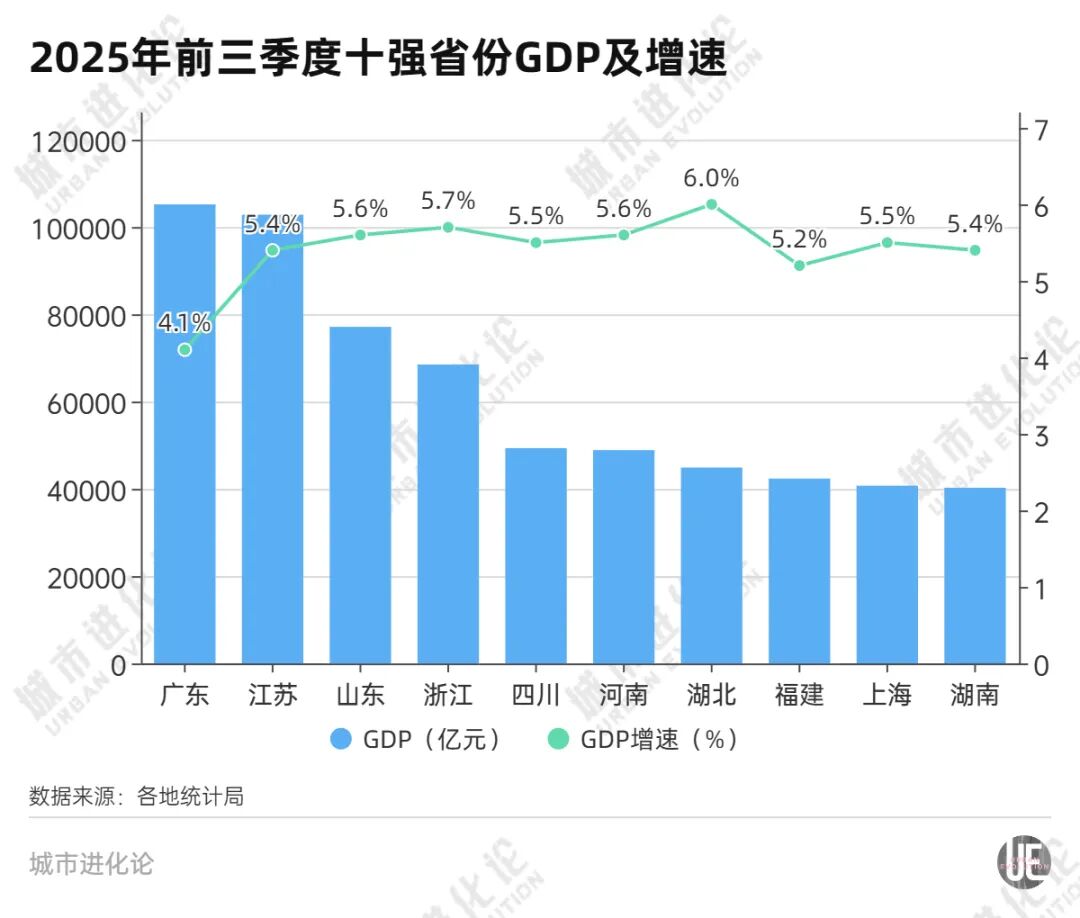
Core Viewpoint - The "Suggestions" from the Central Committee emphasize the importance of major economic provinces in driving national economic growth and stability, advocating for coordinated regional development and innovation enhancement. Group 1: Regional Development Coordination - The "Suggestions" propose solid efforts to promote a new pattern of development in the western regions, breakthroughs in the revitalization of the northeast, accelerated rise of central regions, and modernization in eastern regions [1] - It highlights the need to consolidate and enhance the high-quality development dynamics of the Beijing-Tianjin-Hebei, Yangtze River Delta, and Guangdong-Hong Kong-Macau Greater Bay Area [1] - Continuous promotion of the Yangtze River Economic Belt and ecological protection in the Yellow River Basin is also emphasized [1] Group 2: Importance of Major Economic Provinces - Major economic provinces are seen as the "ballast" for stabilizing the national economy and the "locomotive" for economic growth, with ten provinces projected to exceed a GDP of 5 trillion yuan in 2024, collectively accounting for 61% of the national economy [3] - These provinces host over 70% of the country's large-scale industrial enterprises and high-tech companies, serving as a "stabilizer" for industrial resilience and a source of new development [5] - The development trends of major economic provinces have significantly outperformed other regions, underscoring their critical role in supporting national economic stability [5] Group 3: Strategic Focus for Major Economic Provinces - The official guidelines during the National Two Sessions identified four key areas for major economic provinces to focus on: leading in technology and industrial innovation integration, advancing deep reforms and high-level openness, implementing national development strategies, and demonstrating common prosperity for all [6]