
制度型开放

Search documents
迎“封”起 贺新章
人民网-国际频道 原创稿· 2025-12-18 02:51
Group 1 - The Hainan Free Trade Port will officially start its full island closure operation on December 18, marking a significant step towards higher levels of openness and showcasing China's development model [2][3] - The construction of Hainan Free Trade Port is a major national strategy personally planned and promoted by President Xi Jinping, with key directives guiding its direction [3] - The closure will implement a policy characterized by "one line open, one line controlled, and free movement within the island," which is crucial for attracting global quality resources and supporting Hainan's innovative development [3] Group 2 - Hainan's geographical location connects the Pacific and Indian Oceans, backed by a large domestic market and facing Southeast Asian countries, providing multiple advantages for global trade [5] - The Haikou Revival City Internet Information Industry Park has over 10,000 enterprises and is projected to exceed 160 billion in revenue by 2024, benefiting from low tax rates and a simplified tax system [5] - The range of "zero tariff" products in the Sanya International Duty-Free City will expand from approximately 1,900 to about 6,600 items, enhancing procurement costs and product variety [5] Group 3 - The Yangpu International Container Port has established 59 domestic and international trade routes, creating an international shipping network that balances both [6] - The Hainan Free Trade Port is expected to attract more international talent and facilitate connections with the global market, enhancing its role as a bridge between Hainan and the world [7] - By 2025, a policy system focusing on trade and investment freedom will be established, aiming to make Hainan a new high ground for open economy by 2035 [8]
新思想引领新征程丨海南自贸港正式启动全岛封关 高水平对外开放迈出新步伐
Yang Guang Wang· 2025-12-18 02:47
在海南岛西北部的洋浦港,小铲滩码头数台高大的岸桥正在进行装卸作业,港内集装箱运输车沿着 既定路线穿梭往返。这里承接着海南岛超七成的进口货物量,是连接世界与中国市场的前沿门户。 作为海南自贸港的"样板间",洋浦港推出一系列通关创新举措,让国际船舶靠港离港效率大幅提 升。 洋浦边检站边防检查处处长谢锋:我们根据"无感通关"的要求,推出了保税燃油快速通关法,以及 洋浦港籍国际航行船舶一系列便利措施。我们将执勤点前移了9公里,在3个码头设立了3个执勤点,民 警24小时驻守,为船员办理上下船手续,提高了效率。 央广网北京12月18日消息(记者熊传刚 朱永 刘会民)据中央广播电视总台中国之声《新闻和报纸 摘要》报道,建设海南自由贸易港,是习近平总书记亲自谋划、亲自部署、亲自推动的改革开放重大举 措。习近平总书记强调,建设海南自由贸易港的战略目标,就是要把海南自由贸易港打造成为引领我国 新时代对外开放的重要门户。 自12月18日起,海南自贸港正式启动全岛封关。这是我国坚定不移扩大高水平对外开放、推动建设 开放型世界经济的标志性举措。随着自贸港建设扎实推进,海南迎来前所未有的发展机遇,宏伟蓝图正 一步步变为美好现实。 随着" ...
郑永年谈海南封关:第一步非常关键,必须走得稳、走得大胆
Bei Ke Cai Jing· 2025-12-18 02:41
Core Insights - The establishment of the Hainan Free Trade Port (FTP) marks a significant step in China's commitment to high-level opening-up and serves as a key platform for international cooperation and trade [8][11][12]. Group 1: Opportunities and Challenges - Hainan FTP is positioned as a high-standard open platform, aiming to align with international advanced rules and standards, particularly in the context of multilateralism and inclusive openness [9][12]. - The development of Hainan must integrate with the broader Chinese economy, particularly enhancing connections with major economic regions like the Pearl River Delta and Yangtze River Delta [13]. - Hainan's geographical advantages, especially its proximity to Southeast Asia, provide a unique opportunity for establishing trade links and attracting global resources [15]. Group 2: Policy Implementation and Reform - The central government views the FTP as a critical tool for preventing systemic risks, with the implementation of closure operations creating conditions for deeper reforms [23]. - There is a need for Hainan to adopt bold and radical reforms rather than minor adjustments, focusing on improving the business environment to attract talent and investment [25][26]. - The success of the FTP hinges on effective execution at the micro-level, addressing existing barriers and ensuring that policies translate into tangible benefits for businesses and individuals [31][33]. Group 3: Economic and Institutional Development - Hainan is expected to serve as a testing ground for national institutional modernization, with the potential to implement innovative policies that align with international standards in various sectors, including education and finance [24][26]. - The local government must learn to navigate the new environment and implement reforms that align with the strategic goals of the FTP [24]. - The ultimate success of Hainan's FTP will depend on its ability to attract and retain businesses, leveraging the unique policies granted by the central government [30].

智库·理论周刊丨赵忠秀:以系统性变革对接国际高标准经贸规则
Sou Hu Cai Jing· 2025-12-18 02:38
Core Viewpoint - China is undergoing a profound transformation from a flow-based opening to an institutional opening, which is a strategic upgrade to align with international high-standard economic and trade rules, fostering new advantages in international competition and cooperation [3][4]. Group 1: Strategic Importance of High-Standard Economic Rules - Aligning with high-standard international economic and trade rules is a strategic choice made by the Chinese leadership in response to significant global changes, marking a key step towards a new phase of high-level institutional opening [4]. - The 20th National Congress of the Communist Party of China emphasized the need to steadily expand institutional opening in terms of rules, regulations, management, and standards, which is crucial for enhancing China's role in global governance [4][5]. - The shift in global economic competition from traditional tariffs to institutional rules highlights the importance of high-standard economic rules in determining the allocation of high-end resources globally [4][5]. Group 2: Domestic and International Circulation - The domestic circulation provides strategic support for high-standard opening, while high-standard opening injects external momentum into domestic circulation, creating a dialectical unity [5][6]. - China's large-scale market demand allows it to participate more effectively in aligning with high-standard international economic rules, facilitating a transition from being a "rule taker" to a "rule maker" [5][6]. - Continuous improvement in technological innovation and the cultivation of new productive forces lay the foundation for aligning with international high-standard rules in emerging fields such as digital trade and service industry opening [5][6]. Group 3: Pathways for Institutional Opening - The transformation towards institutional opening involves three interconnected focus areas: rule alignment as the foundation, institutional opening as the core form, and modernization of governance capabilities as the fundamental guarantee [6][7]. - Rule alignment aims to achieve institutional compatibility, requiring proactive benchmarking against international high-standard rule systems, particularly in areas like intellectual property protection and digital economy [7]. - Institutional opening signifies a fundamental shift in the mode of opening, integrating international rules with domestic reforms to create a stable and credible open institutional environment [7][8]. Group 4: Governance and Security - Modernization of governance capabilities is essential for the effective implementation of rules and institutions, necessitating a shift in government functions towards post-event regulation and service optimization [8][9]. - The depth of opening correlates with the requirements for a modern security system, emphasizing the need for a multi-dimensional security framework covering supply chain safety, data governance, and financial stability [9]. - Achieving a dynamic balance between opening and security is crucial for ensuring the long-term success of institutional opening and maintaining strategic advantages in the evolving global economic landscape [9].

打造海南自贸港,彰显我国“稳扎稳打、步步为营”的智慧
Ren Min Ri Bao· 2025-12-18 01:43
Core Insights - The article emphasizes the importance of a steady and cautious approach in the development of Hainan Free Trade Port, highlighting the balance between opening up and maintaining control over key sectors [1][2][3][4] Group 1: Development Strategy - Hainan Free Trade Port aims to become a significant gateway for China's new era of opening up, showcasing confidence in expanding high-level openness and sharing opportunities with the world [1] - The strategy involves a phased approach, starting with pilot projects in specific areas before broader implementation, effectively reducing systemic risks and trial costs [2] Group 2: Regulatory Framework - The construction of Hainan Free Trade Port focuses on the liberalization and facilitation of trade and investment, aligning with international high-standard economic and trade rules while retaining regulatory control over critical sectors [3] - The implementation of a "first line open, second line controlled" model post-closure ensures a larger, safer, and more efficient opening [3] Group 3: Security and Quality Development - The port's development incorporates high-level security measures to ensure quality growth, such as controlled introduction of foreign species and monitoring systems for special access pharmaceuticals [4] - The article illustrates that as China opens up, it must also prioritize security, reflecting a distinctive mark of China's modernization process [4]
海南自贸港今日启动全岛封关
Xin Hua She· 2025-12-18 01:26
黄汉权表示,在投资和贸易方面,海南的政策优势会吸引全球资本进入旅游、教育等开放领域,同时构 建起"东南亚原料-海南加工-内地分销"的贸易路径,让海南成为衔接国内国际市场的枢纽,优化全国贸 易网络。 "金融领域,多功能自由贸易账户体系的完善,将拓宽跨境投融资渠道。"黄汉权表示,这既方便外资进 入中国市场,也为国内企业跨境投资提供便利,丰富我国利用外资和对外投资的模式。 "封关后海南自贸港将在数据跨境流动、知识产权保护等领域对接国际高标准经贸规则。"黄汉权说,其 积累的制度创新成果可向全国复制推广,推动国内深层次改革。 国家发展改革委宏观经济研究院院长黄汉权17日表示,12月18日海南自由贸易港正式启动全岛封关运 作,是我国从商品要素流动型开放向制度型开放转变的关键一步。 ...
海南今日正式封关
Di Yi Cai Jing Zi Xun· 2025-12-18 01:20
12月18日,海南自由贸易港(下称"海南自贸港")全岛封关运作正式启动。这是海南自贸港建设进程中 具有里程碑意义的大事,是中国坚定不移扩大高水平开放、推动建设开放型世界经济的标志性举措。 截至12月10日,海南全省有7080家主体预申报"零关税"进口货物享惠主体资格,通过审核5011家;全省 加工增值免关税政策试点企业136家,已实际开展业务的企业有54家。 而在"双15%"所得税优惠方面,目前海南鼓励类产业条目已扩至1100多个,涵盖生物医药、海上风电等 领域,符合条件企业可享15%企业所得税优惠;高端人才和紧缺人才个人所得税实际税负超15%部分免 征,且居住时间核算更趋人性化,合理离岛时间可计入居住天数。 封关后的海南将承担多重战略角色。北京大学苏剑教授近日指出,海南将成为引领新时代对外开放的重 要门户、促进国内国际双循环的战略枢纽、制度型开放的高地以及现代化产业体系的示范区。 对外经济贸易大学教授崔凡则指出,相较于传统优惠政策,海南的制度设计更注重稳定性和可预见性。 "封关后的第一年,相关政策如何落地执行对企业信心非常关键。"上述在海南建厂投资的企业相关负责 人对第一财经记者说。 打造海南自贸港始于20 ...
海南自贸港全岛封关意义非凡
Sou Hu Cai Jing· 2025-12-18 01:13
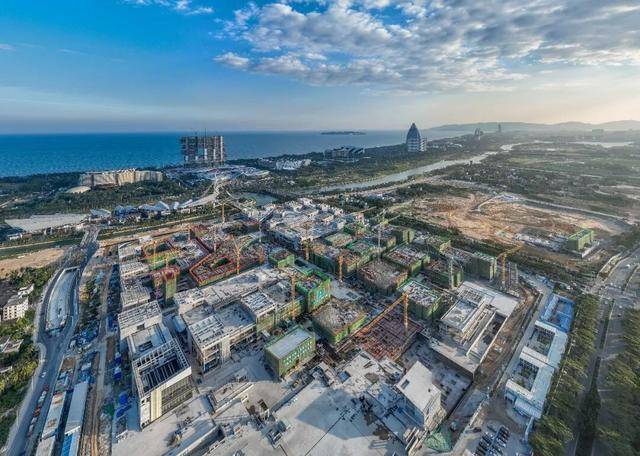
12月18日,在改革开放47周年这个特别有标志意义的日子,海南自由贸易港正式启动全岛封关。这是中 国改革开放精神的延续与升华,也是中国以开放创新实践,高质量应对全球变局,登高望远的再上层 楼,海内外为之瞩目。 2025年12月7日,三亚国际免税城三期项目建设现场。中新社记者 骆云飞 摄 海南自贸港全岛封关,至少有四方面的意义: 其一,它是中国在全球经济治理变局中的主动作为。在全球化遭遇逆流的背景下,海南自贸港建设本质 上是为全球经济合作提供中国方案。通过实施更高水平的制度型开放,透过海南探索、测试和完善一套 既符合中国国情、又能与国际高标准经贸规则相衔接的制度体系,为中国深度参与乃至引领未来全球经 济治理积累实践经验。 其二,它是中国构建新发展格局的战略支点。全岛封关后,海南自贸港通过"一线放开、二线管住"的制 度设计,将在国内国际两个市场、两种资源之间构建起高效连接的"转换器"。一方面,可更便利地引进 国际先进生产要素,服务国内产业升级;另一方面,内地产品和服务也可以通过海南这一跳板,更顺畅 地进入国际市场。 眺望未来,封关后的海南将高标准建设自贸港,推动中国开放模式从传统商品和要素流动型开放全面转 向制度 ...
中国制度型开放举措给各国企业带来多重机遇
Ren Min Ri Bao Hai Wai Ban· 2025-12-18 01:00
塞尔维亚国际政治经济研究所副所长伊沃娜·拉杰瓦茨日前接受记者专访时表示,以海南自由贸易港为 代表的中国制度型开放举措给各国企业发展带来多重机遇,为世界经济增长提供稳定预期。 拉杰瓦茨先后30多次到访中国,亲眼见证了中国的发展与变化。在她看来,中国在建立经济特区、自由 贸易区等方面的举措极具远见。例如,深圳作为中国经济特区的叙事起点、改革开放的时代地标,仅用 几十年时间就发展成为现代化国际都市。如今,海南自贸港也完全具备类似的潜力。 海南自贸港正式启动全岛封关,这是中国坚定不移扩大高水平对外开放、推动建设开放型世界经济的标 志性举措。拉杰瓦茨认为,封关运作的海南自贸港在旅游、服务贸易、数字经济、生物医药、美容与化 妆品等领域展现出多方面机遇,今后一定会吸引众多国家和地区的企业在此投资兴业。 拉杰瓦茨对中国在发展过程中展现出的智慧和活力赞不绝口。"中国政府致力于塑造有利的投资环境, 特别是通过设立自贸区、自贸港,吸引内外投资来激发市场活力、创造利润空间。" 拉杰瓦茨表示,海南自贸港封关运作是中国制度型开放的最新例证。在当前世界经济面临重重挑战的背 景下,中国坚持高水平对外开放体现了经济发展和治理理念的连续性与坚定 ...
怎么理解海南全岛封关?
Ren Min Ri Bao· 2025-12-18 00:53
稳扎稳打,打造开放门户 姜鹏翔 2025年12月18日,海南自由贸易港正式启动全岛封关,开放的中国迎来又一个重要历史时刻。 作为党中央着眼新时代全面深化改革开放作出的重大决策,建设海南自贸港,既关乎海南一域发展,也关乎我国改革 开放大局。从顺利开局到夯基垒土、成形起势,在习近平总书记亲自谋划、亲自部署、亲自推动下,海南自贸港活力 奔涌,政策制度体系初步建立,日益成为引领我国新时代对外开放的重要门户。 今日海南,正成为我国对外开放的新前沿、地区互利合作的新热土、推动经济全球化的新引擎。实践表明,以开放促 改革、促发展是我国现代化建设不断取得新成就的重要法宝。 封关不是封岛,而是进一步扩大开放的起点。既锚定战略目标不动摇,持续完善自贸港政策制度体系,稳步扩大制度 型开放;又敢作善为抓落实,着力打造具有海南特色和优势的现代化产业体系,定能把开放势能转化为高质量发展动 能,引领我国高水平对外开放迈上新台阶。 时间刻度上的"重逢",揭示继往开来的决心,蕴藏静水深流的力量。 1978年12月18日,党的十一届三中全会开启改革开放大幕。今年12月18日,海南自由贸易港正式启动全岛封关,潮流 之所向,山海不可挡。 海南,这片 ...
