
生成式人工智能

Search documents
上海新增9款已完成备案的生成式人工智能服务
Mei Ri Jing Ji Xin Wen· 2025-11-12 09:32
每经AI快讯,据"网信上海"公众号消息,截至11月12日,上海市新增9款已完成备案的生成式人工智能 服务,累计已完成115款生成式人工智能服务备案。 (文章来源:每日经济新闻) ...
Gamma 估值 21 亿美金了;“收购+AI 改造”传统软件,1 年多打造估值超 10 亿美金 AI 控股平台
投资实习所· 2025-11-12 05:53
Core Insights - Gamma has completed a $68 million Series B funding round led by a16z, with a valuation reaching $2.1 billion [1] - The company claims to have surpassed an ARR of $100 million, with over 70 million total users and more than 600,000 paying users, while maintaining a full-time team of only 52 [2] - Gamma aims to challenge major players in the presentation software market, specifically PowerPoint and Google Slides, by focusing on strategic investments and enterprise-level products [2] Funding and Valuation - Gamma's recent funding round was led by a16z, with participation from Accel and Uncork Capital, resulting in a valuation of $2.1 billion [1] - The company has been profitable and has not utilized previous funding, indicating a strong financial position [2] User Metrics and Market Position - Gamma's ARR has exceeded $100 million, with a user base of over 70 million and more than 600,000 paying users [2] - The average price for enterprise accounts is $480 per seat, highlighting a focus on B2B offerings [2] Product Development and Strategy - Gamma has successfully addressed the "blank page" problem through AI, enhancing user experience by focusing on individual use rather than real-time collaboration [3] - The company leverages the "IKEA effect" to balance automation with user autonomy, increasing user engagement and retention [3] Industry Trends - The next decade is expected to focus on AI-native creation tools, transforming how work is done and enhancing creativity [7] - Gamma's approach aligns with a broader trend of democratizing storytelling and idea exchange, similar to how AI programming has empowered non-developers [8] Competitive Landscape - Previous attempts in the AI PPT space, such as Tome, struggled due to a broad user focus and lack of product-market fit, contrasting with Gamma's targeted strategy [2] - The emergence of venture studio platforms that acquire and enhance traditional software with AI presents a competitive challenge, as seen with companies like Replit [8][9]


易鑫(02858)正式发布汽车金融行业首个Agentic大模型
智通财经网· 2025-11-12 05:31
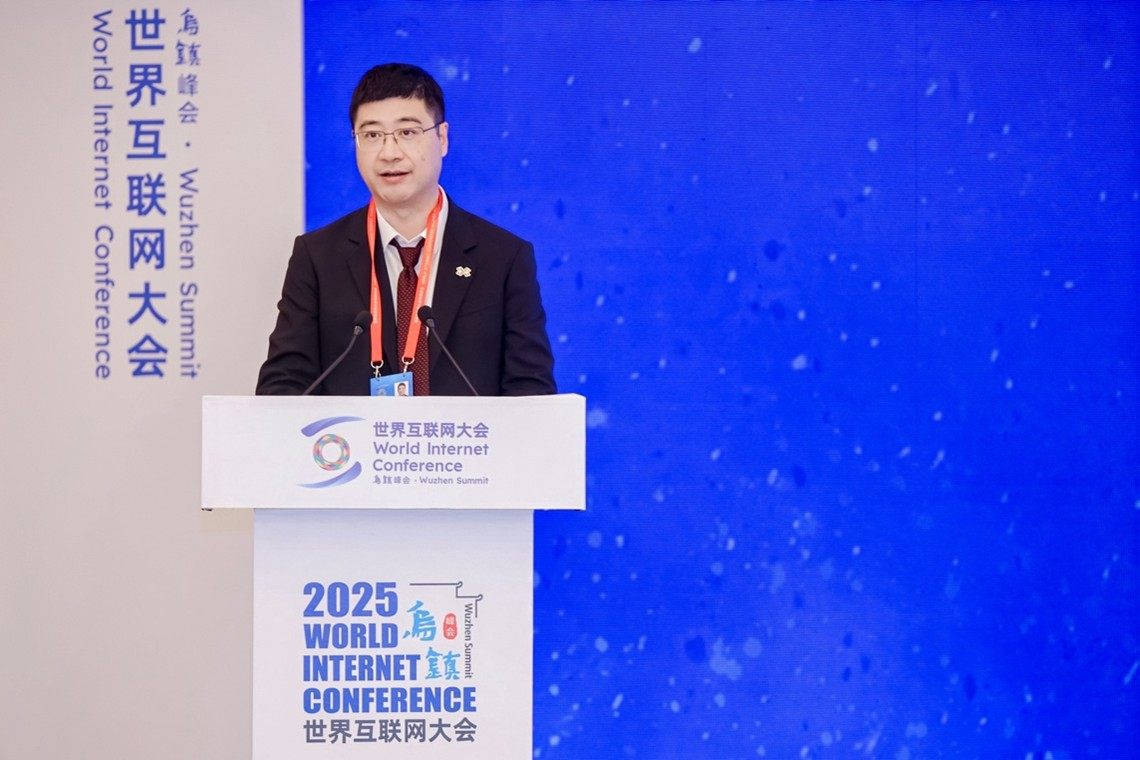
Core Insights - Yixin (02858) officially launched the automotive finance industry's first Agentic large model, XinMM-AM1, at the 2025 World Internet Conference, which is expected to drive the automotive finance sector into the next decade [1] Group 1: Model Specifications - The XinMM-AM1 model has approximately 30 billion parameters, with a response latency of less than 200ms, supporting real-time interaction with voice agents and achieving a throughput of 370 tokens/s per card, facilitating low-cost large-scale deployment [2] - The model is trained on over 15 trillion tokens of data, primarily sourced from Yixin's diverse and rich business scenarios, providing high representativeness and proprietary value [2] Group 2: Functional Capabilities - XinMM-AM1 serves as the "core brain" and dispatcher for the business, enabling full-channel interaction, multi-modal perception, global collaboration, and comprehensive security compliance, thus empowering the entire automotive finance business chain from customer acquisition to intelligent risk control [2] - The model significantly enhances risk control capabilities and business quality while improving the financing application approval rate, addressing the industry's challenges of long cycles, multiple interaction steps, and complex decision factors [2] Group 3: Company Positioning and Future Plans - Yixin is an AI-driven fintech platform with over 2 billion yuan invested in research and development [2] - In 2024, Yixin will become the first company in China's automotive finance sector to file for a generative AI large model, leading the large-scale application of AI across all business scenarios [2] - The launch of the Agentic large model will accelerate AI empowerment in the industry and continue to promote the construction of an intelligent automotive finance ecosystem [2]
早新闻|000333,超30亿元分红
Zheng Quan Shi Bao· 2025-11-11 23:56
Macro Trends - The Ministry of Commerce plans to introduce more detailed measures to boost consumption, expand institutional openness, and promote trade innovation and investment cooperation [1] - The Financial Regulatory Bureau emphasizes the need for effective risk prevention in key financial areas and strengthening overall financial regulation [2] - The People's Bank of China aims to enhance macroeconomic governance efficiency through counter-cyclical adjustments and maintaining a balance between growth and risk prevention [2] Company News - Midea Group announces a profit distribution plan for mid-2025, proposing a dividend of 5 yuan per share, totaling 3.448 billion yuan [4] - Yonggui Electric signs a framework cooperation agreement with Zhiyuan Robotics [4] - Unigroup Guowei's HBM products for special industry applications are still in the development stage [4] - Yue Wanniang's controlling shareholder plans to reduce holdings by up to 3.66% [4] - Yonghui Supermarket's chairman's concerted action party intends to reduce holdings by less than 1% [4] - Shangwei New Materials' embodied intelligent robot business is still in product development [4] - Energy National Zhen plans to repurchase shares worth 50 million to 100 million yuan for capital reduction [4] - Zhonggu Logistics' controlling shareholder plans to reduce holdings by up to 3% [4] - Rejing Bio plans to repurchase shares worth 100 million to 200 million yuan [4] Stock Performance - Anker Innovation plans to issue H-shares and list on the Hong Kong Stock Exchange [5] - Qin'an Co., Ltd.'s controlling shareholder intends to transfer 5% of the company's shares [5] - Furui Co., Ltd.'s subsidiary faces ongoing loss risks [5] - Bangji Technology plans to terminate a major asset restructuring [5] - China Oil Engineering wins a joint bid for a project worth approximately 3.003 billion yuan in Kazakhstan [5] - Moen Electric reports no significant changes in the recent operating environment [5] - Bertley has achieved domestic production for most of its products' chips [5]

美股三大股指收盘涨跌不一,英伟达跌近3%
Zhong Guo Zheng Quan Bao· 2025-11-11 23:40
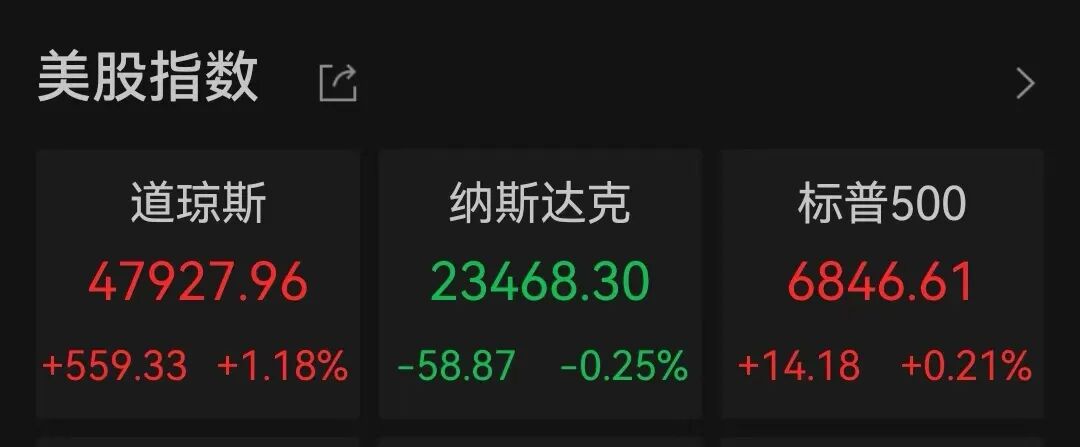
Market Performance - On November 11, U.S. stock indices closed mixed, with the Dow Jones up 1.18% at 47,927.96 points, the S&P 500 up 0.21% at 6,846.61 points, and the Nasdaq down 0.25% at 23,468.3 points [2][4] - The U.S. Technology Seven Index fell by 0.19%, with Nvidia down nearly 3% and Tesla down over 1% [4] Chinese Stocks - Chinese stocks showed mixed performance, with the Nasdaq Golden Dragon China Index down 0.06%. Notable movements included Xiaopeng Motors up nearly 8% and Hesai Technology down nearly 10% [4] Commodity Markets - International precious metal futures generally rose, with COMEX gold futures up 0.27% at $4,133.2 per ounce and COMEX silver futures up 1.52% at $51.075 per ounce [4] - Crude oil prices also increased, with light crude oil futures for December delivery up $0.91 to $61.04 per barrel (1.51% increase) and Brent crude for January delivery up $1.10 to $65.16 per barrel (1.72% increase) [4] Employment Data - According to ADP, the U.S. private sector saw an average weekly job loss of 11,250 positions for the four weeks ending October 25, indicating challenges in sustaining job growth in the latter half of the month [5] Legal Developments in AI - A Munich court ruled that OpenAI infringed on copyright by using lyrics from a German musician without authorization, which may set a significant precedent for copyright regulation of generative AI technologies in Europe [6]




611款生成式人工智能服务完成备案
Xin Hua She· 2025-11-11 13:33
新华社北京11月11日电 记者11月11日从国家网信办获悉,为促进生成式人工智能服务创新发展和规范 应用,网信部门会同有关部门按照《生成式人工智能服务管理暂行办法》要求,持续开展生成式人工智 能服务备案工作。截至今年11月1日,累计有611款生成式人工智能服务完成备案。 ...
北京市新增1款已完成备案的生成式人工智能服务
Zheng Quan Shi Bao Wang· 2025-11-11 13:18
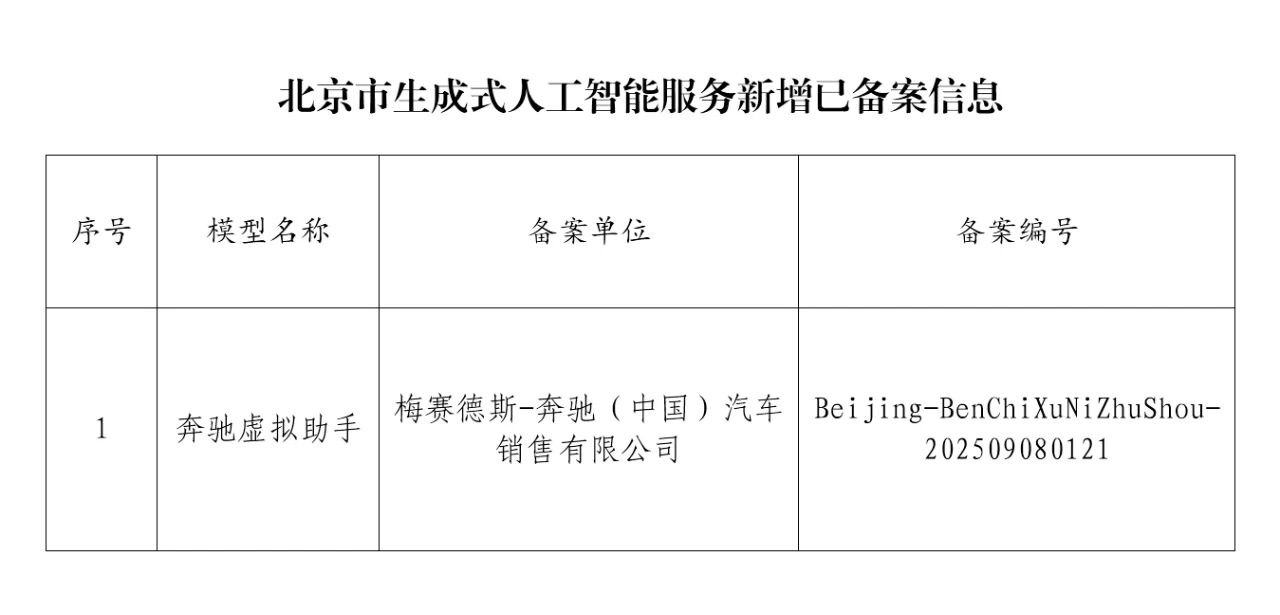
人民财讯11月11日电,据"网信北京"公众号消息,根据《生成式人工智能服务管理暂行办法》,截至2025年11月11日,北京市新增1款已完成备案的生成式 人工智能服务,累计已完成163款生成式人工智能服务备案。 | | | ...
国家网信办:截至11月1日累计611款生成式人工智能服务完成备案
Zhong Guo Xin Wen Wang· 2025-11-11 11:08
Core Points - The National Internet Information Office has completed the filing of 611 generative artificial intelligence services as of November 1 [1] - A total of 73 new generative AI services were filed, with 35 additional applications registered through local offices [1] - The filing process is part of the efforts to promote innovation and regulate the application of generative AI services [1] Summary by Categories - **Regulatory Developments** - The filing of generative AI services is conducted in accordance with the "Interim Measures for the Management of Generative AI Services" [1] - Local internet offices are responsible for registering generative AI applications that directly call upon filed model capabilities [1] - **Market Statistics** - As of November 1, 611 generative AI services have been filed, and 306 generative AI applications or functions have been registered [1] - The recent updates include 73 new filings and 35 new registrations [1]
新增73款生成式人工智能服务在国家网信办完成备案
Zheng Quan Shi Bao Wang· 2025-11-11 11:01
人民财讯11月11日电,据"网信中国"微信公众号消息,促进生成式人工智能服务创新发展和规范应用, 网信部门会同有关部门按照《生成式人工智能服务管理暂行办法》要求,持续开展生成式人工智能服务 备案工作。截至2025年11月1日,新增73款生成式人工智能服务在国家网信办完成备案,对于通过API 接口或其他方式直接调用已备案模型能力的生成式人工智能应用或功能,由地方网信办开展登记,本阶 段新增35款完成登记。截至11月1日,累计有611款生成式人工智能服务完成备案,306款生成式人工智 能应用或功能完成登记。 ...
福鑫数科完成5000万元Pre-A轮融资,加速医院迈入“AI驱动时代”
Cai Jing Wang· 2025-11-11 05:55
Core Insights - FusionAi, a provider of comprehensive AI solutions for healthcare, announced the completion of a 50 million RMB Pre-A round financing [1] - The financing round was led by Yuan Yi Capital, with additional investment from Changling Capital, and Guangyuan Capital served as the exclusive financial advisor [1] - Since the launch of its self-developed large model at the end of 2022, FusionAi has increased its R&D investment and launched an AI-generated electronic medical record system in May 2023, marking the application of generative AI in core hospital business processes [1]