生成式人工智能服务

Search documents
“养龙虾”集结令!开发者的科技狂欢来了
创业邦· 2026-03-09 10:15
Core Insights - The article highlights the rapid growth of the artificial intelligence (AI) industry in Shanghai, with 394 registered enterprises and a total industry scale exceeding 100 billion yuan, making it a significant driver of the city's GDP growth [3] - The 2026 Global Developer Pioneer Conference will take place from March 27 to 29 in Shanghai, featuring a variety of events aimed at showcasing AI applications and fostering innovation [3][7] Event Overview - The conference will include an opening ceremony focused on industry policy announcements and AI creator speeches, along with three major competitions, over 50 workshops, and more than 100 interactive experiences [3][4] - The competitions will target "super entrepreneurs" across various sectors such as digital entertainment, life health, digital finance, and intelligent manufacturing, exploring the limitless possibilities of AI [4][17] - Workshops will cover cutting-edge topics like AI4S, AI Coding, and multi-agent collaboration, providing a platform for deep dialogue between developers, enterprises, and investors [4][5] Interactive Experiences - Over 100 interactive experiences will be available, including innovation project roadshows and hands-on workshops, allowing participants to engage with real-world AI applications [5][6] - The event aims to create a unique ecosystem that emphasizes "extreme applications, extreme efficiency, and extreme implementation" in the AI-native era [5] Community Engagement - The conference will also feature social events like Developer Night and the OpenClaw Lobster Festival, fostering a relaxed atmosphere for networking and idea exchange [6] - The initiative aims to gather top global developers to explore the integration of cutting-edge technology with industry, positioning Shanghai as a global AI innovation hub [7]


北京新增3款已完成备案的生成式人工智能服务
Jin Rong Jie· 2026-02-10 08:38
Core Insights - The article highlights the implementation of the "Interim Measures for the Management of Generative Artificial Intelligence Services" in Beijing, which has led to the registration of new generative AI services [1] Group 1 - As of February 10, 2026, Beijing has added 3 new generative AI services that have completed registration [1] - The total number of generative AI services registered in Beijing has reached 215 [1]
AI“犯错” 谁来负责?
Yang Shi Xin Wen· 2026-01-31 19:46
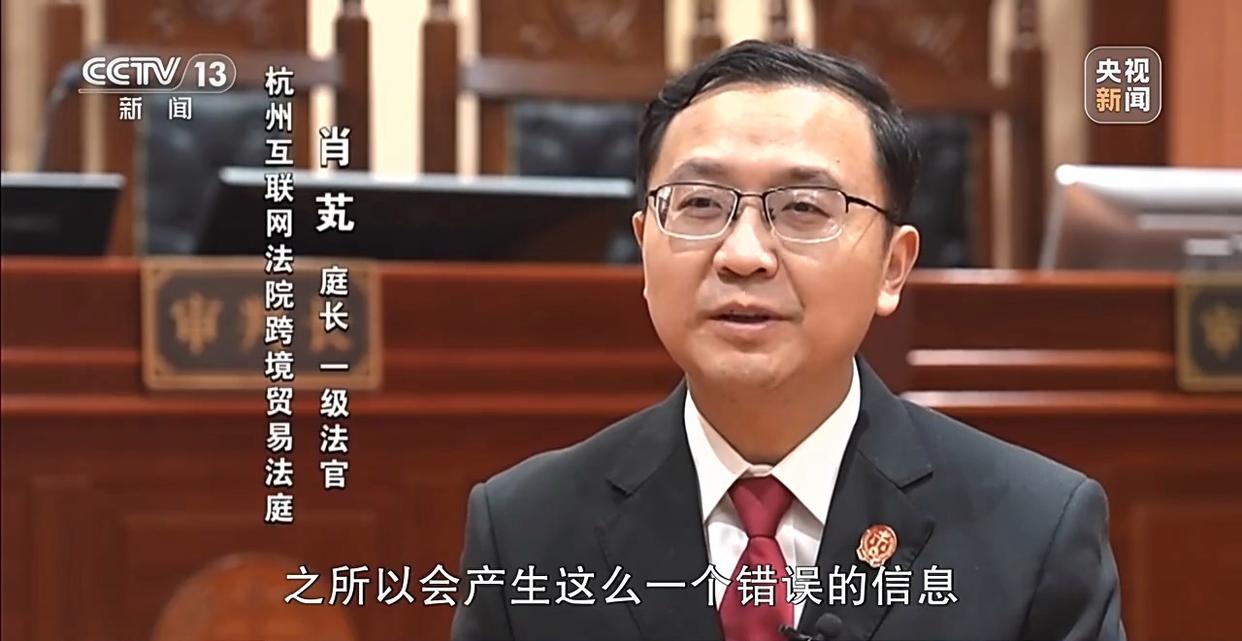
Group 1 - AI is increasingly integrated into various aspects of life and work, but it can make errors, leading to questions about accountability, especially in critical fields like healthcare and finance [1][11] - The case of Liang, who was misled by AI regarding a non-existent school, marks the first legal instance addressing AI's "hallucination" issue, raising questions about who is responsible for AI-generated misinformation [1][3] - The court determined that AI's compensation promise does not equate to the service provider's liability, categorizing AI-generated information as a service rather than a product, thus applying fault liability principles [5][7] Group 2 - In the medical field, the integration of AI raises concerns about misdiagnosis and the responsibility for errors, with experts emphasizing that AI should assist rather than replace human judgment [11][19] - The current legal framework does not clearly define AI's role in medical decision-making, leading to calls for regulations that clarify the responsibilities of doctors and AI developers [21][22] - The introduction of AI in healthcare is seen as a tool to enhance efficiency, but there are fears that over-reliance on AI could diminish the diagnostic skills of future medical professionals [15][17] Group 3 - In the automotive sector, the transition from L2 to L3 autonomous driving systems necessitates a reevaluation of liability, with current regulations still placing primary responsibility on human drivers [23][24] - As L3 systems are tested, the responsibility for accidents may shift to manufacturers under certain conditions, but drivers must remain vigilant and ready to take control [26][29] - The complexity of liability in L3 autonomous driving scenarios highlights the need for clear legal definitions and frameworks to address potential accidents involving AI systems [30][32]
综合算力大数据:河北江苏广东居前三
Di Yi Cai Jing· 2026-01-15 12:20
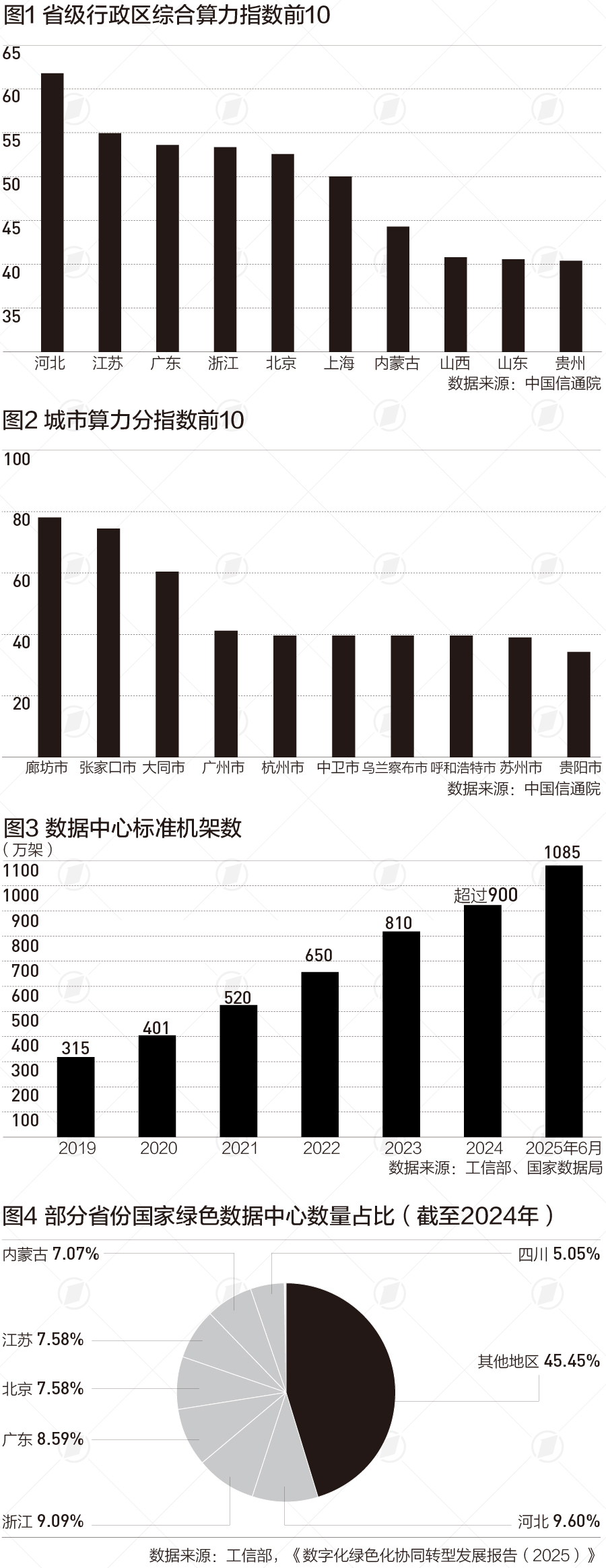
Group 1 - The core viewpoint of the articles highlights the rapid growth of China's artificial intelligence (AI) computing power market, which is expected to reach $25.9 billion by 2025, reflecting a year-on-year increase of 36.2% [3][1] - The Ministry of Industry and Information Technology and other departments have issued guidelines to strengthen AI computing power supply and promote the construction of a national integrated computing power network [1][22] - The "Blue Book" on comprehensive computing power index indicates that while progress has been made in China's computing power ecosystem, challenges such as uneven infrastructure and insufficient application depth remain [1][2] Group 2 - As of mid-2025, China has released 1,509 large models, accounting for approximately 40.2% of the global total of 3,755 [2] - The number of standard racks in data centers in China has increased from 3.15 million in 2019 to over 9 million by 2024, with a total of 10.85 million racks in use by mid-2025 [2][9] - The top provinces for standard racks in use are Hebei, Guangdong, and Jiangsu, each exceeding 600,000 racks [2] Group 3 - The global AI server market is projected to grow from $125.1 billion in 2024 to $158.7 billion in 2025, with generative AI servers expected to increase their market share from 29.6% in 2025 to 37.7% by 2028 [3] - The comprehensive computing power index ranks Hebei, Jiangsu, and Guangdong as the top three provinces, while cities like Langfang, Zhangjiakou, and Dalian lead in computing power sub-index [14][21] Group 4 - The national strategy to accelerate the construction of an integrated computing power network is leading to a more extensive distribution of computing resources beyond core regions [21] - The average Power Usage Effectiveness (PUE) of computing centers in China is 1.46, indicating progress in energy efficiency, although there is still significant room for improvement [21] - The implementation of the "Opinions" encourages the use of cloud computing services to quickly build intelligent infrastructure capabilities, reducing technology investment costs [22]
信心的种子,不怕任何冬寒
Ren Min Ri Bao· 2026-01-13 03:02
Group 1 - As of June 2025, there will be 161 million internet users aged 60 and above in China, indicating a significant growth potential for the silver economy and digital economy [1] - By November 2025, a total of 611 generative AI services will have completed registration, with 306 related applications or functions also registered, showcasing the rapid development of domestic AI models [1] - The new generation of digital technologies, including big data, cloud computing, AI, blockchain, and IoT, is continuously creating new industries, models, and driving forces, expanding the sources of development confidence [1] Group 2 - China's economy is undergoing a profound transformation in its growth dynamics, shifting from reliance on factor input and scale expansion to new productive forces that drive quality, efficiency, and power changes [2] - The potential of China's economy is being continuously released through regional coordinated development, rural revitalization, and the ongoing improvement of human capital quality [2] - The unique ecosystem formed by China's super-large market allows innovations to quickly achieve scale effects once they gain market recognition, as evidenced by the rapid growth of sectors like new energy vehicles and live-streaming commerce [2] Group 3 - Many Chinese entrepreneurs are building technological "moats" and enhancing value through persistent efforts, demonstrating that success comes from hard work and dedication [3] - The successful test flight of domestically produced high-bypass turbofan engines illustrates China's ability to overcome technological challenges and break through external constraints, reflecting a strong sense of confidence [3] - The 2025 Central Economic Work Conference emphasizes the importance of internal strengthening to address external challenges, advocating for strategic determination and a stable industrial system to navigate uncertainties [3]
MiniMax明日登陆港股!据悉柏基投资与GIC等机构押注48亿港元
Xin Lang Cai Jing· 2026-01-08 11:02
Core Viewpoint - MiniMax, a Chinese generative AI company, is set to debut on the Hong Kong Stock Exchange on January 9, with an IPO price of HKD 165 per share, raising approximately HKD 48.2 billion in total [1][3]. Group 1: IPO Details - The IPO has received unprecedented interest from global capital, with the retail portion in Hong Kong being oversubscribed by approximately 1209 times, and brokers lending over HKD 253.3 billion in margin [1][3]. - The international placement (excluding cornerstone investors) was oversubscribed by over 70 times, receiving more than 460 bids [1][3]. Group 2: Key Investors - Notable cornerstone investors include Baillie Gifford, Singapore's GIC, and 14 other institutions, securing approximately HKD 27.23 billion in shares [2][4]. - Other significant investors include Norway's central bank investment management and Schroders, with most shares for institutional investors being subscribed by global long-only investors and sovereign wealth funds [1][3]. Group 3: Market Context - MiniMax's main domestic competitor, Zhiyu AI, went public on January 8, with its public offering oversubscribed by over 1159 times, initially opening below its IPO price but later stabilizing and closing up over 13%, with a market capitalization exceeding HKD 57 billion [2][4]. - The performance of both companies is seen as a critical test for investors assessing whether Chinese AI firms can compete with international counterparts [2][4].
人工智能安全治理力量下沉至基层 一站式赋能企业
Nan Fang Du Shi Bao· 2026-01-06 23:10
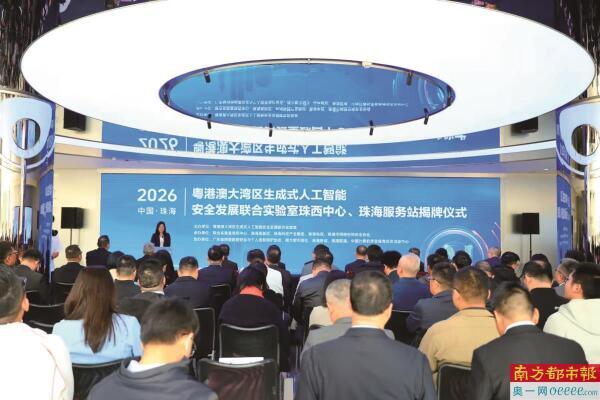
Core Insights - The Guangdong-Hong Kong-Macao Greater Bay Area has launched the Generative AI Safety Development Joint Laboratory, with a focus on enhancing AI safety and facilitating cross-border AI services [2][4][10]. Group 1: Event Overview - The Guangdong-Hong Kong-Macao Greater Bay Area Generative AI Safety Development Joint Laboratory's Futian Service Station was inaugurated alongside an AI overseas expansion seminar in Shenzhen [2][10]. - The event marked the beginning of APEC "China Year" with the theme "Seizing APEC Opportunities, Setting Sail for New Blue Oceans" [2]. Group 2: Regional Advantages - Zhuhai, as a key location due to its proximity to the Hong Kong-Zhuhai-Macao Bridge, is positioned to lead in the AI sector, ranking third in the province for generative AI model registrations [5][6]. - The establishment of the Zhuhai service station aims to leverage local advantages to create a cross-border AI safety service hub, reinforcing the security framework for the AI industry in the region [5][6]. Group 3: AI Safety Governance - Zhuhai has developed a comprehensive AI governance system characterized by policy guidance, technical breakthroughs, and enterprise aggregation, with a focus on safety [8]. - The joint laboratory has issued certificates to seven enterprises for generative AI model registrations, highlighting the region's commitment to fostering a safe AI environment [8]. Group 4: Strategic Focus Areas - The Zhuhai center and service station will concentrate on three main areas: strengthening cross-border safety collaboration, empowering the development of specialized industries, and building an open innovation ecosystem [9]. - Specific initiatives include exploring mutual recognition of AI regulatory rules between Guangdong and Macao, and establishing a platform for AI safety and industry scenario integration [9]. Group 5: AI Safety Trends - The joint laboratory released the "2026 Annual AI Safety Top Ten Trends" report, emphasizing the shift from passive protection to proactive governance in AI safety [14][18]. - Key trends identified include the acceleration of global AI compliance frameworks, the increasing complexity of attack methods, and the need for a full lifecycle governance approach to AI safety [15][16][18].
第二个“五万亿”工业大市 呼之欲出
Mei Ri Jing Ji Xin Wen· 2026-01-05 16:22
Core Viewpoint - Suzhou aims to achieve an industrial output value of 4.89 trillion yuan by 2025, with a target of surpassing 5 trillion yuan by 2026, marking a significant milestone in its industrial development [1] Group 1: Industrial Growth and AI Focus - Suzhou's industrial output has seen significant growth, with a focus on new industrialization and artificial intelligence (AI) as key drivers for future development [1][2] - The introduction of the "Ten Little Tigers" initiative highlights Suzhou's commitment to fostering AI enterprises, aiming to create a competitive environment similar to Hangzhou's "Six Little Dragons" [3][4] - Suzhou's strategy emphasizes leveraging its manufacturing strengths to develop AI applications tailored to specific industrial scenarios, aiming to become a leading "Smart Manufacturing City" [3][4] Group 2: Competitive Landscape and Challenges - The competition between Suzhou and Hangzhou in the AI sector is intensifying, with Hangzhou recently announcing 96 new tech companies, many of which are AI-related [2][3] - Suzhou's current standing in the generative AI field is limited, with only 4 out of 252 approved generative AI services registered by the end of 2024 [3] - The need for Suzhou to enhance its innovation capabilities and develop a complete industrial chain in AI is emphasized, particularly in the context of industrial internet applications [8][9] Group 3: Future Plans and Collaborations - By 2026, Suzhou plans to cultivate 150 industrial vertical models and establish 15 top-tier intelligent factories, aiming for an annual growth rate of over 20% in the smart economy sector [7] - The collaboration between Suzhou and Shanghai is seen as crucial for industrial innovation, shifting from a model of "Shanghai R&D + Suzhou manufacturing" to a more integrated approach [10][11] - The potential emergence of a super city formed by the collaboration of Shanghai and Suzhou could reshape the competitive dynamics with Shenzhen and other industrial cities [11]
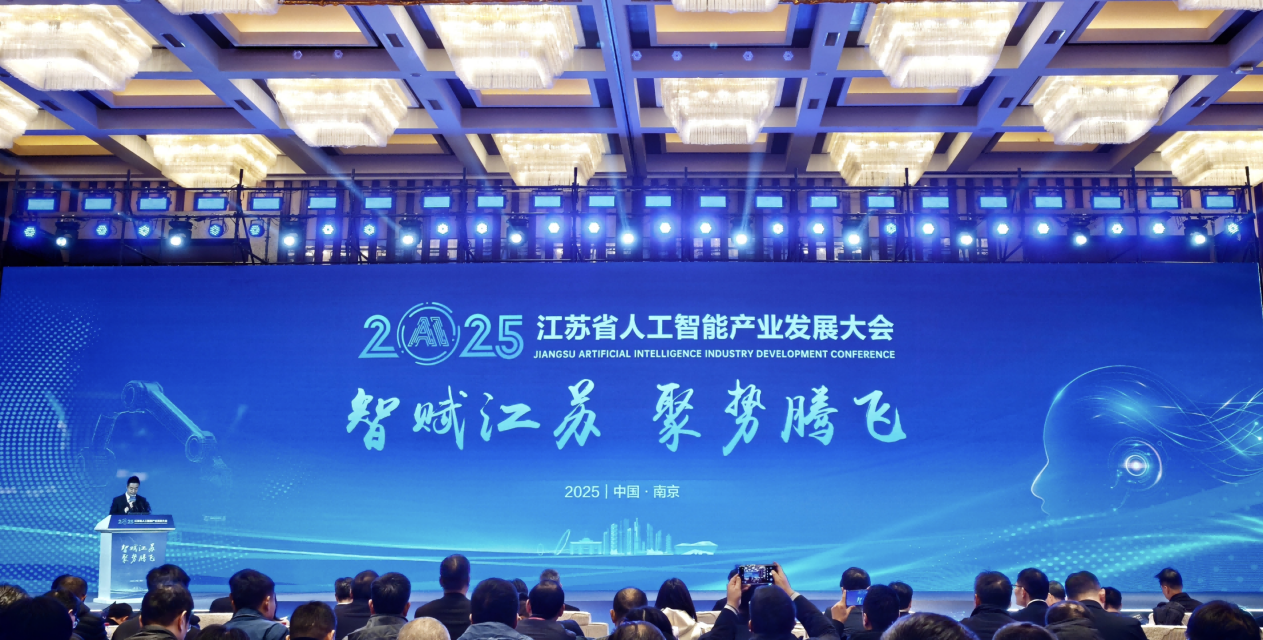
锚定产业实绩筑牢创新根基 江苏人工智能产业发展大会落地多项重磅举措
Zheng Quan Ri Bao· 2025-12-28 14:28
Core Insights - The 2025 Jiangsu Province Artificial Intelligence Industry Development Conference was held in Nanjing, focusing on the theme "Intelligent Empowerment of Jiangsu, Gathering Momentum for Takeoff" [1] Group 1: Policy Initiatives - Jiangsu Province introduced a series of policy measures aimed at promoting "Artificial Intelligence +", smart terminals, and AI-enabled new industrialization, forming a comprehensive policy "combination punch" to accelerate AI integration across various industries [3] - Nanjing City released a draft policy for accelerating the development of the "Artificial Intelligence + Software" industry, targeting the establishment of "the first city in the country for intelligent software industry" [3] Group 2: Industry Data and Achievements - Since November, Nanjing has registered 8 generative AI services, accounting for 62% of the total registrations in Jiangsu Province, with a cumulative total of 39 registrations, representing 61% of the province's total [3] - Nanjing's projects in the Jiangsu Province AI innovation showcase exceeded 50% in both provincial registrations and benchmark projects, positioning the city as a core engine for AI innovation in Jiangsu [3] Group 3: Key Platforms and Projects - Several important platforms and ecological projects supporting Jiangsu's AI industry were launched, including the Nanjing AI Application Pilot Base, which focuses on overcoming verification bottlenecks in the large-scale application of AI in manufacturing [4] - The China Academy of Information and Communications Technology's Jiangsu AI Innovation Platform aims to serve local industrial development needs while leveraging national-level research capabilities [4] - The National Chronic Disease Multi-modal High-Quality Data Set Construction Project focuses on AI model training for chronic diseases, aiming to build high-quality datasets [4] - A coalition was formed to support the development of the OPC community in Nanjing, providing one-stop services for personal entrepreneurs in AI [4]
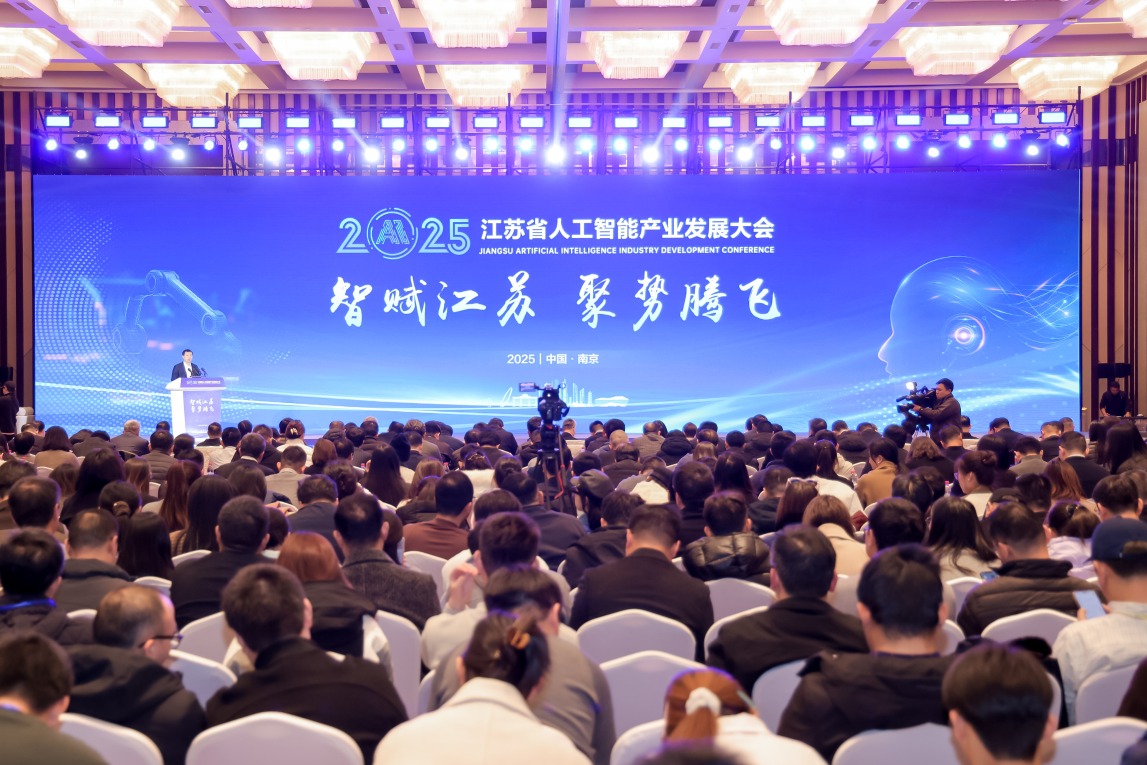
2025江苏省人工智能产业发展大会举行 以智赋能产业高质量发展
Xin Lang Cai Jing· 2025-12-28 03:54
Group 1 - The 2025 Jiangsu Province Artificial Intelligence Industry Development Conference was held in Nanjing, focusing on building a platform for communication and cooperation to promote innovation and integration in the AI industry [1][3] - A series of policies were released, including the "Artificial Intelligence+" action plan and implementation opinions for accelerating the development of AI terminal industries, forming a comprehensive policy support system [3][5] - Key platforms and ecological projects were launched, such as the Nanjing AI Application Pilot Base aimed at addressing verification bottlenecks in the large-scale application of AI in manufacturing [3][4] Group 2 - The conference showcased collaborative projects, including the launch of the Nanjing AI Ecological Collaborative Development Plan by the China Artificial Intelligence Industry Development Alliance [4] - New generative AI service registrations in Jiangsu were highlighted, with 8 new services registered since November, accounting for 62% of the province's total [4] - Jiangsu has integrated AI clusters into its "1650" industrial system, aiming to enhance innovation and application integration during the 14th Five-Year Plan period [5]