
全球治理倡议

Search documents
全球治理倡议推动国际社会共迎挑战
Jing Ji Ri Bao· 2025-10-17 21:58
10月16日,2025上合组织国家全球治理圆桌对话会在北京举行。来自上合组织成员国以及国际机构的代 表,围绕如何更好推进全球治理体系变革发展等话题展开讨论。与会嘉宾普遍表示,中方在上合组织天 津峰会上提出的全球治理倡议,为推动国际社会共迎挑战、构建更加公正合理的全球治理体系、携手迈 向人类命运共同体注入了澎湃动力。 上海合作组织秘书长叶尔梅克巴耶夫表示,上合组织天津峰会成果丰富,在安全、经济、人文交流等领 域都取得大量成果。中方提出的全球治理倡议在峰会上获得广泛的高度评价,得到各国元首及国际社会 积极响应。全球治理倡议与"上海精神"有许多契合之处,都强调要尊重国家主权和国际法,并倡导多边 主义。 联合国驻华协调员常启德表示,当前,世界正处于多边主义发展和国际合作的关键阶段,人类社会面临 数字鸿沟、气候变化、地缘政治风险等诸多挑战。全球治理倡议为国际社会共同应对挑战注入了新动 力。 "中国一直主张,国家无论大小、贫富,都是全球治理的共同参与者和受益者,这非常符合《联合国宪 章》宗旨,也符合一个公平公正全球体系的发展方向。中国一直是全球治理体系发展和改革的积极贡献 者,在南南合作、实现可持续发展目标、减贫、粮食安 ...
“全球治理倡议是对全人类的行动号召”
人民网-国际频道 原创稿· 2025-10-17 05:32
Core Viewpoint - Nicaragua's National Assembly unanimously passed a decree supporting the global governance initiative, reflecting the deepening strategic partnership between Nicaragua and China, and recognizing President Xi Jinping's contributions to world peace and development [1][2] Group 1: Global Governance Initiative - The global governance initiative emphasizes the principles of equality and sovereignty, asserting that all countries, regardless of size or economic power, should enjoy equal rights [1] - The initiative's five core concepts include upholding sovereign equality, adhering to international law, practicing multilateralism, advocating for a people-centered approach, and focusing on action-oriented outcomes [1] Group 2: China's Role and Contributions - China has demonstrated its commitment to global governance through concrete actions, particularly in addressing major issues like food security, public health, and climate change [2] - Nicaragua has engaged in various projects with China, including emergency disaster relief, public health, and agricultural development, which are expected to gain momentum from the global governance initiative [2] - The Chinese approach to global cooperation is characterized by a focus on welfare and progress, without imposing conditions or engaging in aggression [2] Group 3: Importance of Developing Countries - Developing countries, particularly in Latin America and the Caribbean, are seen as crucial players in implementing the global governance initiative, possessing significant growth potential and innovation capacity [2] - The initiative is anticipated to serve as a banner for uniting nations to combat poverty and firmly uphold sovereignty in the region [2]
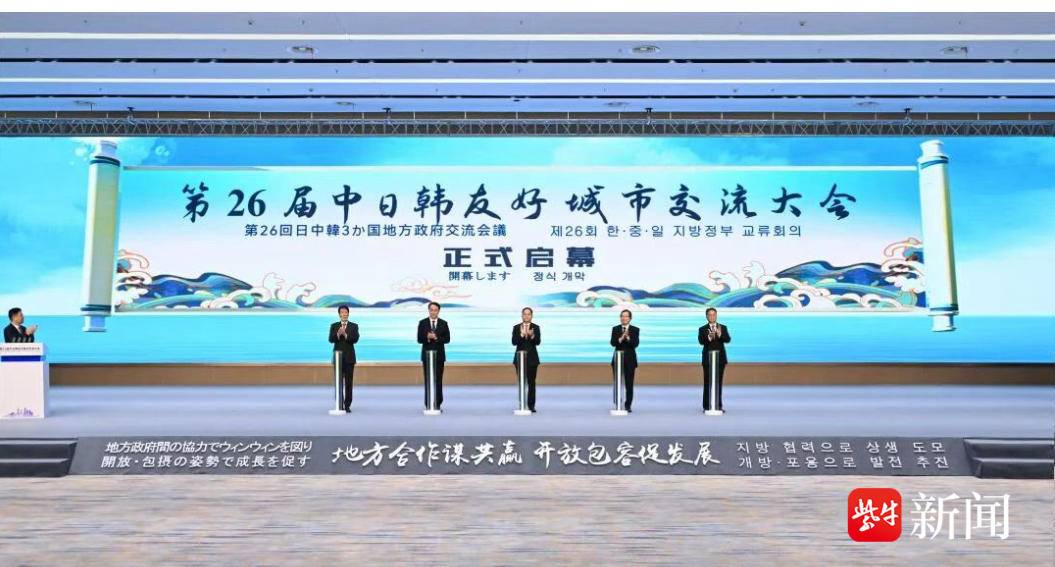
第26届中日韩友好城市交流大会在盐城举办,450名嘉宾共商地方合作与发展
Yang Zi Wan Bao Wang· 2025-10-17 02:02
Core Points - The 26th China-Japan-Korea Friendly Cities Exchange Conference was successfully held in Yancheng, Jiangsu Province, focusing on "local cooperation for win-win development" [1][3] - The conference gathered 450 guests from China, Japan, and South Korea, emphasizing the importance of local government exchanges and cooperation [1][4] Group 1 - Yang Wanming welcomed the attendees and highlighted the global challenges, mentioning Xi Jinping's initiatives that aim to inject certainty and stability into the world [3][4] - The conference serves as a platform to deepen economic cooperation, technological innovation, cultural exchanges, and sustainable development among the three countries [3][4] - The event is seen as an opportunity to enhance friendly exchanges and cooperation between Jiangsu and Japan/Korea, promoting mutual benefits and understanding [4][6] Group 2 - Various activities were conducted during the conference, including keynote speeches, thematic discussions, and case sharing, fostering open communication and collaboration [6] - Agreements were signed, including friendship city intention letters and tourism cooperation agreements, indicating a commitment to future collaboration [6] - The next conference is scheduled to be held in Himeji City, Hyogo Prefecture, Japan, in the following year [6]

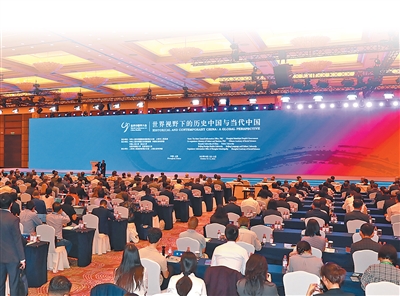
世界视野下的历史中国与当代中国
Ren Min Ri Bao· 2025-10-16 22:20
Group 1 - The theme of the conference emphasizes the importance of studying China from a global perspective, especially in the context of economic globalization and the current trend of de-globalization [1] - There is a need for dialogue between China and other countries to foster cooperation, as the role of the US in free trade is diminishing and international organizations are losing influence [1][2] - The unique role of China in strengthening political and economic ties is highlighted, particularly in the context of cooperation between Europe and China [1] Group 2 - The significance of understanding Chinese history and culture is stressed for fostering innovation and effective dialogue [4] - The development of Chinese studies is becoming increasingly important as China plays a key role in global economic growth, climate change, and governance [5] - The need for a deeper understanding of China's political system, particularly the role of the Communist Party, is emphasized for comprehending contemporary China [8] Group 3 - The importance of mutual understanding and cooperation between China and India is noted, particularly in technology and development [11] - China's approach to global governance is described as pragmatic and constructive, aiming for a balanced and win-win development vision [6][10] - The necessity for independent academic perspectives in studying China is highlighted, especially in the context of Western narratives [13][14]
四大全球倡议,迈向多极世界的清晰路线图(国际论坛)
Ren Min Ri Bao· 2025-10-16 22:15
Core Views - China actively participates in global governance with a constructive approach, promoting international order towards a direction that aligns with the common interests of humanity through four global initiatives [1][4] Group 1: Global Initiatives - The four global initiatives proposed by President Xi Jinping—Global Development Initiative, Global Security Initiative, Global Civilization Initiative, and Global Governance Initiative—represent a systematic response to global development and governance needs [2][3] - The Global Development Initiative focuses on narrowing the North-South gap and enhancing development investment to support the UN's 2030 Sustainable Development Goals [2] - The Global Security Initiative addresses global security challenges, advocating for the principle of indivisible security and a common security approach [2] - The Global Civilization Initiative promotes respect for cultural diversity and encourages exchanges among civilizations to foster human progress [2] - The Global Governance Initiative calls for increased representation and voice for developing countries in global governance, aiming to rectify imbalances in the traditional global governance system [2][3] Group 2: China's Role in Multilateral Cooperation - China plays a significant role in various multilateral cooperation mechanisms, providing practical support for the implementation of the four global initiatives [3] - In the BRICS cooperation framework, China collaborates with other countries to expand cooperation beyond economic realms into political security and cultural exchanges [3] - Within the Shanghai Cooperation Organization, China leads efforts to enhance cooperation and maintain stability in the Eurasian region [3] - As the largest trading partner of ASEAN, China deepens cooperation in trade, culture, and security, contributing to regional integration [3] - In Africa and the Middle East, China builds dialogue platforms and promotes infrastructure projects, contributing to local development [3] Group 3: Future Implications - The four global initiatives serve as a clear roadmap towards a multipolar world, reflecting China's growing economic strength and international influence [3] - These initiatives break the monopoly of a few countries in development, security, civilization, and governance, establishing these rights as common entitlements for all humanity [3] - As cooperation under these initiatives deepens, China is expected to play a more significant role in promoting global multipolarity and building a community with a shared future for mankind [4]
学习进行时丨一图速览习近平总书记提出的四大全球倡议
Xin Hua She· 2025-10-16 14:14
当今世界,和平赤字、发展赤字、安全赤字、治理赤字 有增无减。习近平总书记提出构建人类命运共同体和全球发 展倡议、全球安全倡议、全球文明倡议等,就是为了推动建 设一个更加美好的世界,为各国人民创造更加美好的生活。 图说 习近平总书记提出的 四大全球倡议 10月16日出版的第20期《求是》杂志发表习近平总书记 的重要文章《推动落实全球发展倡议、全球安全倡议、全球 文明倡议、全球治理倡议》。 全球发展倡议 WANNEWH 提出时间 | 第七十六届联合国大会一般性辩论 坚持共同、综合、合作、可持续的安全观 坚持尊重各国主权、领土完整 坚持遵守联合国宪章宗旨和原则 坚持重视各国合理安全关切 坚持通过对话协商以和平方式解决国家间 的分歧相争端 坚持统筹维护传统领域和非传统领域安全 全球文明倡议 2023年3月15日 提出时间 | 中国共产党与世界政党高层对话会 中国共产党与世界政党高层对话 CPC IN DIALOGUE WITH WORLD POLITICAL PARTIES HIGH-LEVEL MEETING 四个"共同倡导" o 上 中 2 2 2 2 1 2 1 2 0 2 0 2 0 2 0 2 0 2 0 ...

2025上合组织国家全球治理圆桌对话会举行
Zhong Guo Xin Wen Wang· 2025-10-16 13:15
Core Points - The 2025 Shanghai Cooperation Organization (SCO) Global Governance Roundtable Dialogue was held in Beijing, focusing on the theme of "Practicing Global Governance Initiatives and Building a Community with a Shared Future for Mankind" [1][2] - The dialogue emphasized three core topics: multilateralism, security mutual trust, and open win-win cooperation [1][2] Group 1: Dialogue Objectives - The dialogue serves as a practical implementation of the "Shanghai Spirit" and aims to enhance understanding and trust among SCO member states [1] - The SCO is committed to expanding the "cooperation map" of global governance, activating the "efficiency code" of global governance, and solidifying the "value foundation" of global governance through cultural exchanges [1] Group 2: Contributions and Initiatives - China's Special Representative for Eurasian Affairs, Sun Linjiang, highlighted the SCO's role in leading global initiatives and contributing to the construction of a community with a shared future for mankind [2] - The United Nations Resident Coordinator in China,常启德, noted that the upcoming 2024 UN Future Summit will outline a collective vision for strengthening global governance and rebuilding trust among nations [2] Group 3: Research and Reports - The Contemporary China and World Research Institute released a report titled "SCO as a Model for Practicing Global Governance Initiatives," showcasing the SCO's role in promoting multilateralism and supporting the UN's mission [2] - The report emphasizes the unique "SCO wisdom" and "SCO solutions" that contribute to global governance [2] Group 4: Dialogue Themes - Participants engaged in discussions on three subtopics: practicing multilateralism for a fairer global governance system, deepening security mutual trust for regional stability, and promoting inclusive development visions through open cooperation [3]
展望中吉关系:世代友好、共享繁荣、命运与共——专访中国驻吉尔吉斯斯坦大使刘江平
Zhong Guo Xin Wen Wang· 2025-10-16 12:45
中新网乌鲁木齐10月16日电 (贾志鹏 储旭 刘英 程勇)当前,在习近平主席和扎帕罗夫总统的战略引领 下,中吉关系处在历史最好时期,迎来前所未有的发展机遇。近日,中国驻吉尔吉斯斯坦大使刘江平接 受中新社记者专访,全面梳理了中吉新时代全面战略伙伴关系和两国各领域合作取得的突破性成就及面 临的广阔发展前景,指出"世代友好、共享繁荣、命运与共"是构建中吉命运共同体的核心内涵与美好未 来。 中国驻吉尔吉斯斯坦大使刘江 平。中国驻吉尔吉斯斯坦大使馆供图 中新社记者:刘江平大使,您好!在新时代全面战略伙伴关系背景下,近年来吉尔吉斯斯坦与我国在合 作交流方面取得了哪些突破性成就? 刘江平:近年来,在习近平主席和扎帕罗夫总统的战略引领下,中吉关系持续快速发展,各领域合作取 得丰硕成果,主要体现在四大方面: 一是政治关系明确新定位。2023年5月中国—中亚西安峰会期间,习近平主席同扎帕罗夫总统共同签署 并发表联合宣言,宣布中吉建立新时代全面战略伙伴关系,构建睦邻友好、共享繁荣的中吉命运共同 体。今年2月,扎帕罗夫总统对华进行国事访问,两国元首为中吉关系发展擘画了新蓝图,指明了新方 向。习近平主席同扎帕罗夫总统已七次会晤,两国总 ...
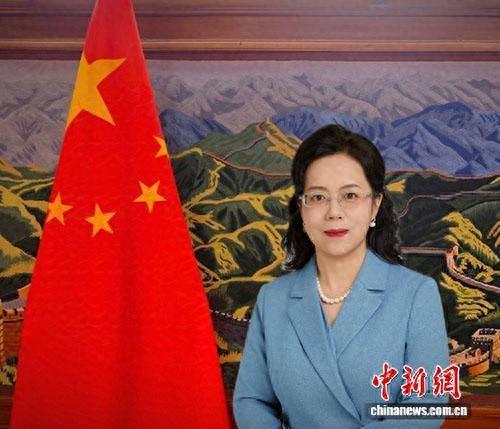
专访丨全球治理倡议对提升小国代表性具有积极意义——访波黑驻欧盟使团团长凯西奇
Xin Hua Wang· 2025-10-16 01:00
Core Viewpoint - The global governance initiative proposed by China positively impacts the representation of small countries, promotes international rule of law, and strengthens multilateralism [1][2] Group 1: International Law and Small Countries - The global governance initiative emphasizes adherence to international rule of law, which is appealing to many small and developing countries [1] - The current "rules-based order" primarily serves Western interests, particularly those of the United States, which creates pressure on small countries [1] - The initiative offers a viable solution for protecting the sovereignty and rights of small and vulnerable nations, aiming to alter the long-standing Western-dominated global system [1] Group 2: Multilateralism and Practical Solutions - A key highlight of the global governance initiative is its commitment to multilateralism, ensuring equal status for all countries regardless of wealth or size [2] - The effectiveness of global governance is contingent upon its ability to address real-world issues, contrasting with Western discussions that often lack practical application [2] - There is an expectation for the development of multilateral mechanisms, such as the BRICS cooperation framework, which can provide small countries with more economic and political space [2]
和平发展,中国贯通历史、现实、未来的坚定抉择
Ren Min Ri Bao· 2025-10-15 22:22
Core Viewpoint - China positions itself as a "stabilizing anchor" for global peace and development amidst a tumultuous international landscape, emphasizing its commitment to peaceful development and international order [1][2][6]. Historical Context - The historical perspective highlights that China's commitment to peace is rooted in its civilization, which has always valued harmony and stability, even during challenging times like the Anti-Japanese War [3][4]. - The lessons learned from a century of humiliation have reinforced China's resolve to maintain peace rather than succumb to a survival-of-the-fittest mentality [3]. Global Perspective - The global context underscores that the pursuit of peace and development is a common aspiration among nations, as evidenced by the collective response to historical challenges like World War II [4][5]. - China's vision of building a community with a shared future for humanity aligns with the global trend towards peace, development, and cooperation [4][5]. Diplomatic Strategy - Since the 18th National Congress of the Communist Party, China's foreign policy has consistently emphasized the importance of peaceful development and national rejuvenation [5][6]. - Despite global turbulence, China remains steadfast in its commitment to peaceful development, recognizing the historical trend of shared destiny among nations [5][6]. Economic Contributions - China's contribution to global economic growth remains significant, accounting for approximately 30% of the world's growth and establishing itself as a key trading partner for over 150 countries [6][10]. - The commitment to a peaceful development path not only expands China's modernization efforts but also injects sustained momentum into the global modernization process [6]. Future Vision - Looking ahead, China's initiatives, such as the new round of national contributions announced at the UN Climate Change Summit, reflect its commitment to global green transformation and sustainable development [8][12]. - The emphasis on multilateralism and cooperation in trade negotiations showcases China's dedication to building a fair and balanced global trade system [9][10]. Cultural Exchange and Governance - China's approach to promoting cultural exchange and mutual learning is seen as a means to build peace and friendship among nations, countering conflicts and misunderstandings [11][12]. - The advocacy for a more just and equitable global governance system is part of China's broader strategy to ensure lasting peace based on mutual respect and adherence to international law [12][13].