不可靠实体清单

Search documents
特朗普访华计划刚敲定,转头就抓捕六名中国人,中方反制已在路上
Sou Hu Cai Jing· 2025-07-03 12:53
Core Viewpoint - The article discusses the recent developments in US-China relations, particularly focusing on the timing of Trump's planned visit to China and the simultaneous arrest of Chinese citizens by the US Department of Justice, suggesting a strategic maneuver by the US amidst ongoing trade tensions [1][3]. Group 1: US-China Relations - Trump's visit to China was initially seen as a positive step for business relations, with a large delegation of CEOs expected to accompany him [1][3]. - The arrest of six Chinese citizens on charges related to funding North Korea's weapons program appears to be a calculated move by the US, undermining the diplomatic overtures [1][3][5]. - The article compares this situation to previous incidents, such as the Meng Wanzhou case, highlighting a pattern of the US engaging in diplomatic gestures while simultaneously taking aggressive actions [5][7]. Group 2: Economic Implications - The article emphasizes the intertwined nature of US-China trade, suggesting that extreme measures like a 500% tariff would be self-destructive for the US economy [7][10]. - Federal Reserve Chairman Jerome Powell indicated that the trade tensions and tariffs have complicated monetary policy, preventing interest rate cuts that could stimulate the economy [8][10]. - The US faces significant internal challenges, including inflation and economic slowdown, which may drive its aggressive foreign policy [10][11]. Group 3: Strategic Responses - China's diplomatic strategy, particularly Wang Yi's recent meetings in Europe, is portrayed as a counter to US efforts to isolate China in the Indo-Pacific region [11][13]. - The article suggests that China is leveraging its position by engaging with European leaders, thereby undermining US influence [11][13]. - China's potential use of tools like the "Unreliable Entity List" and export controls on rare earth elements is highlighted as a means to exert pressure on the US [13][19]. Group 4: Broader Context - The article argues that the current geopolitical landscape reflects a shift in power dynamics, with China adopting a more strategic and composed approach compared to the US's aggressive tactics [15][17]. - It posits that the ongoing competition is not just about trade but represents a clash of development philosophies, with China's cooperative model gaining traction [17][21]. - The narrative concludes that the US's attempts to maintain its hegemony through conflict are increasingly seen as outdated, while China's approach is viewed as more aligned with contemporary global cooperation [21].

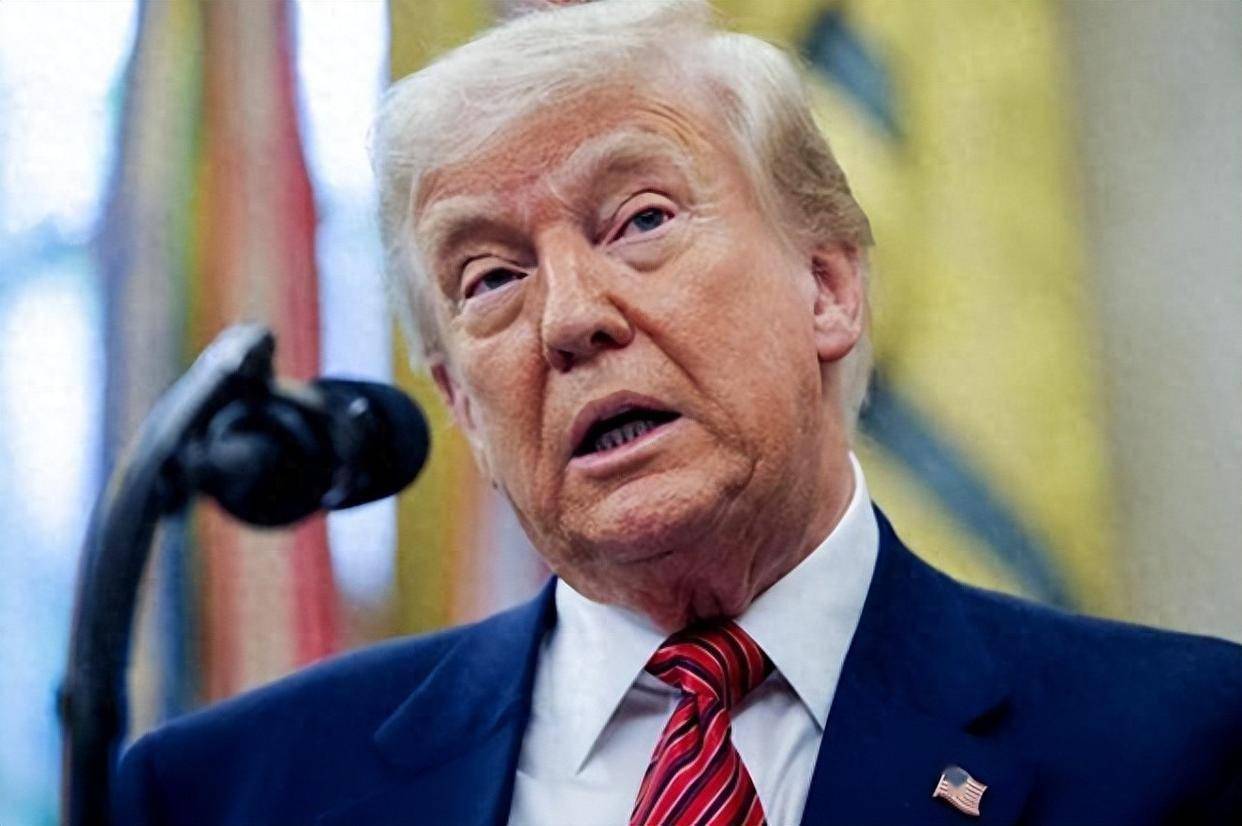
刚挂断中方电话,特朗普突然收到一则噩耗:1800万桶原油被拒之门外
Sou Hu Cai Jing· 2025-06-09 11:45
Core Viewpoint - The ongoing trade tensions between China and the United States have led to significant shifts in trade patterns, particularly in the oil sector, with China halting imports of U.S. crude oil for two consecutive months, resulting in the lowest U.S. crude oil export levels since 2020 [1][8]. Group 1: Trade Relations and Tariffs - The U.S.-China trade war began in 2018, initiated by the Trump administration's imposition of tariffs on $34 billion worth of Chinese goods, citing trade deficits and intellectual property concerns [1][3]. - China responded with tariffs ranging from 5% to 25% on U.S. products, significantly impacting U.S. agricultural exports, particularly soybeans [3]. - The trade conflict escalated with the U.S. targeting Chinese tech firms like Huawei, leading to further tariffs on $1.2 trillion and $1.8 trillion worth of Chinese goods [3][4]. Group 2: Economic Impact - The U.S. trade deficit has increased from $950.2 billion in 2018 to $1,211.75 billion in 2024, indicating that the tariffs have not achieved their intended goal of reducing the trade deficit [7]. - Over 90% of the tariff costs have been passed on to U.S. importers, downstream businesses, and consumers, leading to increased prices and living costs in the U.S. [7]. - Despite facing some export pressures, China has shown resilience by expanding domestic demand and diversifying trade partnerships, maintaining stable economic growth [7]. Group 3: Energy Sector Dynamics - The halt in U.S. crude oil imports by China is attributed to the U.S. tariff policies, which have diminished the price advantage of U.S. crude oil for China [8]. - The U.S. shale oil producers are projected to face losses of at least $10 billion due to the absence of the Chinese market, with U.S. crude oil exports dropping to 3.883 million barrels per day, a 4% decrease [8]. - China is actively seeking to diversify its energy imports, with agreements in place with Russia and Qatar to secure alternative oil and gas supplies [8]. Group 4: Global Economic Implications - The trade war has disrupted global supply chains, forcing multinational companies to reallocate resources and adjust production strategies, thereby increasing operational costs and risks [10]. - The unilateral actions by the U.S. have undermined the multilateral trade system, leading to slower progress in global trade negotiations and increasing trade disputes among nations [10]. - Some Southeast Asian countries have benefited from the trade war as they become alternative production bases for multinational companies, while those reliant on U.S.-China trade face economic slowdowns [10].

商务部就出口管制管控名单答记者问
证券时报· 2025-05-14 14:44
Group 1 - The core viewpoint of the article is that China will suspend measures against 17 U.S. entities listed in the unreliable entity list and 28 U.S. entities in the export control list for 90 days starting from May 14, 2025, as part of the consensus reached during the high-level economic talks between China and the U.S. [2][4] Group 2 - The unreliable entity list mechanism will prohibit the 17 U.S. entities from engaging in import and export activities related to China and from making new investments in China, effective from April 4 and 9, 2025 [2] - Domestic companies can apply to trade with the entities on the unreliable entity list, and the applications will be reviewed according to the relevant regulations [2] Group 3 - The export control list will prohibit exports of dual-use items to the 28 U.S. entities, with the same suspension of measures for 90 days starting from May 14, 2025 [4] - Exporters wishing to export dual-use items to these entities must submit applications to the Ministry of Commerce, which will review and approve compliant applications [4]

商务部回应!
21世纪经济报道· 2025-05-14 14:43
Group 1 - The Chinese government has decided to suspend measures related to the unreliable entity list for 90 days starting from May 14, 2025, affecting 17 US entities that were previously listed [1] - The suspension is part of the implementation of the consensus reached during the high-level economic and trade talks between China and the US [1] - Domestic companies in China can apply to conduct transactions with the listed entities, and the review process will be conducted according to the relevant regulations [1] Group 2 - The Chinese government will also suspend measures related to the export control list for 90 days starting from May 14, 2025, which includes 28 US entities that were previously restricted from receiving dual-use items [2] - Exporters wishing to export dual-use items to these entities must submit applications to the Ministry of Commerce, which will review them according to the relevant export control regulations [2] - The decision to suspend these measures aligns with the agreements made during the high-level economic and trade talks between China and the US [2]

商务部新闻发言人就暂停17家美国实体不可靠实体清单措施答记者问
news flash· 2025-05-14 14:07
Group 1 - The Chinese government has added 17 American entities to the unreliable entity list, effective April 4 and 9, 2025, prohibiting these companies from engaging in import and export activities related to China [1] - The inclusion in the unreliable entity list also restricts these companies from making new investments within China [1]
34%+50%→84%!中方强硬反制美国关税
凤凰网财经· 2025-04-09 14:11
来源:中国基金报 中国对美国的新一轮反制,来了! 01 强硬反制! 中方对原产于美国的所有进口商品再加征50%关税 美国东部时间4月8日,美方将此前宣布的对中国输美产品加征34%所谓"对等关税",进一步提高50%至84%。 国务院关税税则委员会今天发布公告,自4月10日12时01分起,调整《国务院关税税则委员会关于对原产于美国的进口商品加征关税的公告》(税委会公告 2025年第4号)规定的加征关税税率, 原产于美国的所有进口商品的加征关税税率由34%提高至84% 。 02 将12家美国实体列入出口管制管控名单 商务部今日发布公告,将12家美国实体列入出口管制管控名单,禁止向其出口两用物项: 1. 美国光子公司(American Photonics) 2. 诺沃特公司(Novotech, Inc.) 3. 埃科达因公司(Echodyne) 4. 马文工程公司(Marvin Engeering Company, Inc.) 5. 埃克索维拉公司(Exovera) 6. 特励达·布朗工程公司(Teledyne Brown Engineering, Inc.) 7. BRINC无人机公司(BRINC Drones, ...
商务部将护盾人工智能公司等6家美国企业列入不可靠实体清单
21世纪经济报道· 2025-04-09 11:43
Core Viewpoint - The Chinese Ministry of Commerce has announced the inclusion of six U.S. companies in the unreliable entity list due to their involvement in activities that harm China's national sovereignty, security, and development interests, particularly related to arms sales to Taiwan [1][3]. Group 1 - The six companies listed are Shield AI, Sierra Nevada Corporation, Cyberlux Corporation, Edge Autonomy Operations LLC, Group W, and Hudson Technologies [1]. - The measures taken against these companies include a ban on engaging in import and export activities related to China and a prohibition on new investments within China [1]. - The announcement is set to take effect on April 10, 2025, at 12:01 PM [2]. Group 2 - The Ministry of Commerce emphasized that the decision is based on laws such as the Foreign Trade Law, National Security Law, and Anti-Foreign Sanctions Law, and is aimed at holding these companies accountable for their actions [3]. - The Chinese government reassured that it welcomes law-abiding foreign enterprises to invest in China and aims to provide a stable, fair, and predictable business environment for compliant foreign companies [3].
五连发!商务部回应起诉美“对等关税”
21世纪经济报道· 2025-04-04 12:24
Group 1 - The Chinese government has filed a lawsuit against the U.S. in the WTO regarding the imposition of "reciprocal tariffs," claiming it violates WTO rules and undermines the multilateral trade system [2] - The Chinese government has added 11 U.S. companies to the "unreliable entity list" due to their military technology cooperation with Taiwan, which is seen as a threat to China's national security [3] - A total of 16 U.S. entities have been placed on an export control list to protect national security and fulfill international obligations, prohibiting the export of dual-use items to these entities [4] Group 2 - The Chinese government has implemented export controls on seven categories of medium and heavy rare earth materials, citing the need to safeguard national security and fulfill international obligations [5][6] - The Ministry of Commerce has initiated an industry competitiveness investigation into imported medical CT tubes, responding to domestic industry requests due to the adverse impact of imports on local production [7]

重磅官宣:对美加征34%关税!商务部、海关总署,六箭齐发!
券商中国· 2025-04-04 10:31
Core Viewpoint - The Chinese government has announced retaliatory measures against the U.S. for imposing "reciprocal tariffs" on Chinese goods, including a 34% tariff on all imports from the U.S. and various export controls on U.S. entities [1][2][9]. Tariff Measures - Starting from April 10, 2025, a 34% additional tariff will be imposed on all imports from the U.S. on top of the existing tariff rates [2][3]. - Existing tax exemption policies remain unchanged, and the new tariffs will not be waived [3]. Export Control Measures - The Chinese government has placed 16 U.S. entities on an export control list, prohibiting the export of dual-use items to these entities due to potential threats to national security [5][6]. - Export controls have been implemented on seven categories of rare earth materials, including samarium, gadolinium, and dysprosium, to safeguard national interests [7][8]. Legal and Regulatory Actions - China has filed a complaint with the World Trade Organization (WTO) against the U.S. for its "reciprocal tariffs," arguing that such actions violate international trade rules and harm the multilateral trade system [9]. - The Ministry of Commerce has initiated an investigation into the competitiveness of the domestic medical CT tube industry, responding to concerns about the impact of imports on local production [15][16]. Suspension of Import Qualifications - The General Administration of Customs has suspended the import qualifications of six U.S. companies due to health and safety concerns related to their products, including sorghum and poultry [10][11][13].

刚刚!中国,重磅出手!
21世纪经济报道· 2025-03-04 05:53
Core Viewpoint - The Chinese Ministry of Commerce has announced the inclusion of 15 American entities in an export control list, aimed at safeguarding national security and fulfilling international obligations regarding non-proliferation [2][3][5]. Export Control Measures - The Ministry of Commerce has prohibited the export of dual-use items to the 15 listed American entities, and any ongoing export activities must be halted immediately [3][5]. - In special circumstances where export is necessary, exporters must apply to the Ministry of Commerce for permission [4]. Unreliable Entity List - The Ministry has also placed 10 American companies on an unreliable entity list due to their involvement in arms sales to Taiwan, which is seen as a violation of China's sovereignty and security interests [8]. - The Chinese government emphasizes that it handles the unreliable entity list cautiously and only targets a small number of foreign entities that threaten national security [8]. Trade Disputes and Tariffs - In response to the U.S. imposing an additional 10% tariff on Chinese products, China has filed a complaint with the World Trade Organization (WTO), asserting that such unilateral measures violate WTO rules and undermine Sino-U.S. trade relations [9][10]. - The Chinese government has announced that starting from March 10, 2025, tariffs will be increased on certain imported goods from the U.S., including a 15% tariff on chicken, wheat, corn, and cotton, and a 10% tariff on sorghum, soybeans, pork, beef, seafood, fruits, vegetables, and dairy products [11].