产业数字化转型

Search documents
数字经济助力区域产业结构优化升级
Xin Hua Ri Bao· 2025-12-04 21:51
Core Viewpoint - The digital economy, driven by data resources and modern information networks, is significantly influencing regional resource allocation and production organization, providing new opportunities for innovative development of regional industrial structures [1] Group 1: Digital Infrastructure Development - Accelerating the construction of digital infrastructure is essential for optimizing and upgrading industrial structures, with a focus on enhancing information network facilities and increasing investment in digital infrastructure [2] - Emphasis on strengthening weak links in rural digital infrastructure to reduce communication disparities and lower costs associated with data transmission, storage, and transactions [2] Group 2: Support for Industrial Digital Transformation - The digital economy can create new industries and empower traditional ones, necessitating the integration of digital economy with traditional industries to enhance their internal driving force for optimization and upgrading [3] - Development of smart agriculture systems through IoT sensors and drones for real-time monitoring of crops and livestock, and utilizing blockchain technology for supply chain transparency [3] - Promotion of industrial internet platforms to facilitate data sharing and optimize production processes, particularly for small and medium enterprises [3] Group 3: Talent Development and Recruitment - The core of the digital economy is innovation, which relies on talent; thus, it is crucial to establish mechanisms for talent cultivation and recruitment aligned with regional industrial needs [4] - Implementation of educational programs focused on data science, software engineering, and cybersecurity, along with partnerships between educational institutions and industry leaders to enhance practical training [4] - Establishment of a digital talent database to facilitate the precise matching of talent with industry needs, particularly in strategic emerging industries [4] Group 4: Collaborative Development of Regional Digital Economies - Breaking down administrative barriers and promoting collaborative development of digital economies across regions is essential for optimizing industrial structures [5] - Development strategies should be tailored to regional characteristics, focusing on improving digital infrastructure in underdeveloped areas and transitioning economic growth models in central regions [5] Group 5: Data Resource Sharing Mechanisms - Establishing regional data sharing mechanisms and platforms to support cross-regional industrial collaboration and innovation is vital [6] - Emphasis on enhancing cybersecurity measures to protect data management and usage rights on these platforms [6] - The digital economy is seen as a new engine for optimizing and upgrading industrial structures, with various measures proposed to unlock the growth potential of regional economies [6]
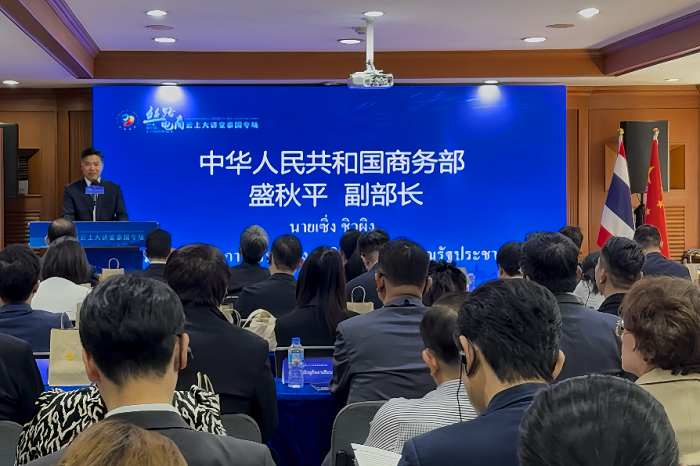
盛秋平副部长在曼谷出席“丝路电商”云上大讲堂泰国线下专场活动
Shang Wu Bu Wang Zhan· 2025-12-04 11:10
Core Viewpoint - The event "Silk Road E-commerce" online lecture series successfully held in Bangkok, Thailand, aims to enhance bilateral economic and trade cooperation between China and Thailand, focusing on e-commerce talent exchange and industry collaboration [2] Group 1: Event Overview - The event was attended by representatives from Thailand's Ministry of Commerce, Ministry of Digital Economy and Society, ASEAN Business Association, and over 60 small and medium-sized enterprises [2] - The initiative is part of the annual work plan to implement the China-Thailand E-commerce Cooperation Memorandum [2] Group 2: Key Statements - Vice Minister Sheng Qiuping emphasized the deepening practical cooperation in e-commerce between China and Thailand, noting that the online lecture series has been organized in Bangkok for two consecutive years [2] - China is willing to share its large e-commerce market with Thailand, promote digital transformation in industries, and enhance digital talent training [2] Group 3: Educational Content - Instructors from Guangxi International Business Vocational Technical College and major e-commerce platforms provided lectures on digital cross-border models for Thai SMEs and foreign trade product promotion [2] - The event saw enthusiastic interaction, with nearly 40 Thai companies reaching preliminary cooperation intentions with Chinese e-commerce platforms [2]

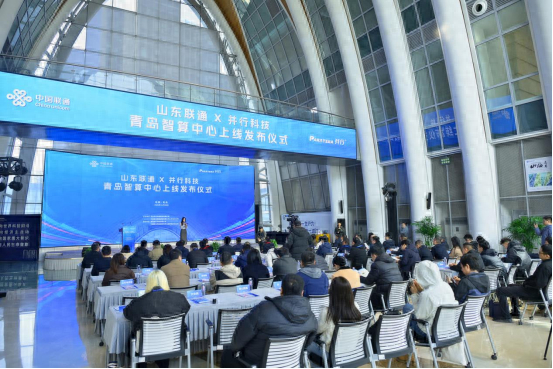
打造算力服务新标杆——山东联通与并行科技青岛智算中心正式上线
Xin Lang Cai Jing· 2025-12-04 08:15
Core Insights - The Qingdao Intelligent Computing Center was launched in a significant event held in Qingdao, showcasing collaboration among government, enterprises, and academia in the field of computing power services [2][4] - The center is positioned as a strategic-level artificial intelligence infrastructure aimed at fostering a model of cooperation between government and enterprises, injecting new momentum into the regional digital economy [4] Group 1 - The center features a "3000-card high-performance GPU computing resource pool," providing robust computing support for research and enterprise development, with a technical advantage of 1ms ultra-low latency in the Jiaodong Peninsula [6] - The launch event included a demonstration of the computing resource pool and discussions on local enterprise computing power incentives and government subsidy policies [6] - Qingdao Unicom and Parallel Technology have jointly donated computing power to Ocean University of China for marine observation data processing and climate model development, supporting marine research and talent cultivation [6] Group 2 - The successful launch of the event not only showcased the service capabilities of Qingdao Intelligent Computing Center but also established a solid bridge for collaboration among government, enterprises, and academia [8] - Qingdao Unicom and Parallel Technology plan to continue enhancing the local computing infrastructure network, providing better networks, more efficient computing power, and attentive services to drive industrial digital transformation in Qingdao and the province [8]
山东移动烟台分公司:以数字通信之力护航中国团餐产业发展大会
Qi Lu Wan Bao· 2025-12-04 02:05
针对会展中心的主会场、分会场、展览区及签到区等重点区域,烟台移动提前完成了网络覆盖盲区的排 查与信号优化工作,并同步调配了核心网、传输网资源,预留了充足的网络带宽,为大会的顺利进行提 供了有力保障。为应对大会期间可能出现的集中通信流量峰值,烟台移动采取了"硬件升级+实时监 控"的双重举措。一方面,对八角湾国际会展中心及周边区域的基站设备进行了全面巡检与维护,更换 了老化部件,优化了天线方位角与下倾角,并在人流密集区域增设了临时通信设备,实现了网络容量扩 容30%以上,充分满足了参会人员高速上网、视频通话及文件传输等需求。另一方面,保障团队实行全 天候值守,运用智能监控平台实时监测网络运行状态,动态跟踪网络流量、信号强度等指标,一旦发现 异常立即启动应急响应机制,确保问题得到及时处置。 近日,第十一届中国团餐产业发展大会在烟台黄渤海新区八角湾国际会展中心举行。作为国内团餐行业 的顶级盛会,吸引了全国各地的行业精英、企业代表、专家学者及产业链上下游合作伙伴齐聚一堂,共 同探讨团餐产业的创新升级、绿色发展及数字化转型之路。面对大会期间参会人群及多场平行论坛同步 进行所带来的高负荷通信需求,山东移动烟台分公司(以下简 ...
甘肃天水:“跨境电商”助力农特产品顺利“出海”
Sou Hu Cai Jing· 2025-12-03 13:16
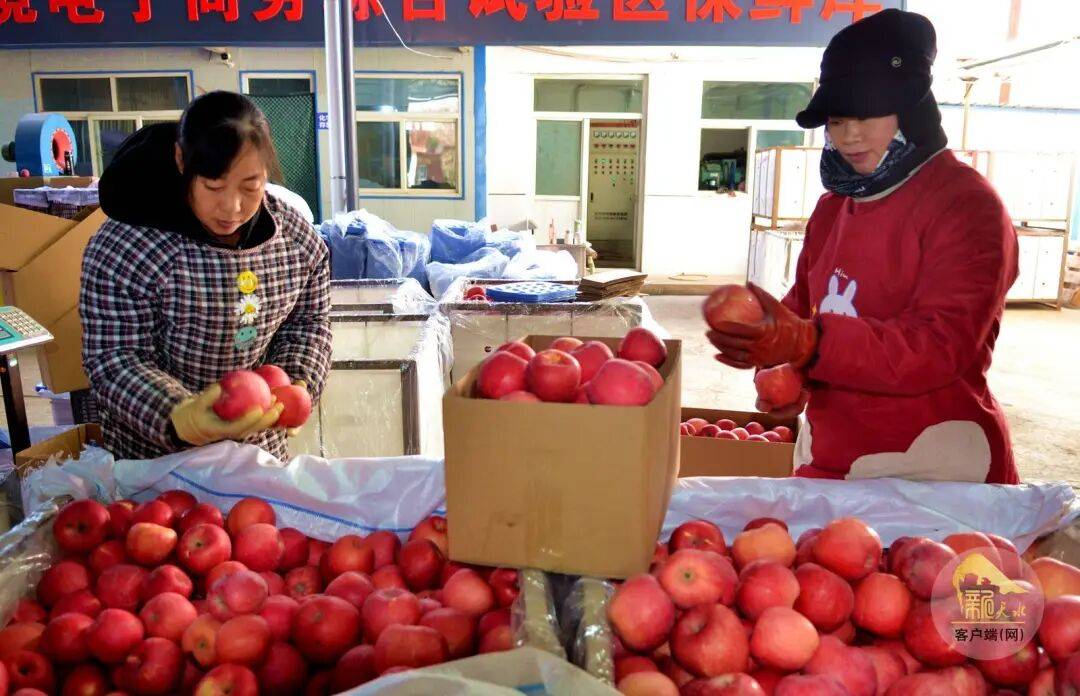
Core Insights - The China (Tianshui) Cross-Border E-Commerce Comprehensive Pilot Zone is enhancing its logistics capabilities by utilizing temperature-controlled storage for exporting high-quality Fuji apples to Vietnam, with a shipment of 1,800 pieces weighing 25,000 kilograms [1] - The pilot zone has attracted various domestic and international cross-border e-commerce platforms and service enterprises, establishing itself as a significant hub for regional cross-border e-commerce [3] - The zone operates six standardized cold storage facilities with a total capacity of 900,000 kilograms, facilitating efficient logistics and trade processes [3] Industry Developments - During the 14th Five-Year Plan period, the region is accelerating the digital transformation of industries, achieving a paperless process for customs clearance and tax refunds for 129 enterprises, and establishing a multi-park model to enhance logistics for local agricultural products [4] - Tianshui has established stable trade relations with 23 countries, projecting a transaction volume exceeding 400 million yuan in 2024, with a 23.72% year-on-year increase in import and export volume reaching 285 million yuan from January to September 2025 [4] - The pilot zone's influence is evident in Qin'an County, where exports reached 300 million yuan in the first ten months of the year, with cross-border e-commerce exports contributing 150 million yuan, marking a significant growth point for foreign trade [6] Future Outlook - The local government aims to deepen the construction of the cross-border e-commerce pilot zone, enhance policy guidance, and expand the foreign trade entity base, promoting the integration of domestic and foreign trade [6] - The focus will be on leveraging local industrial advantages to improve the core competitiveness of export products, ensuring that more regional specialties are marketed globally through cross-border e-commerce [6]

让“天水味”乘“金丝带”走向世界
Sou Hu Cai Jing· 2025-12-02 12:42
冷链托举"天水味" 跨境电商通全球 —— 中国(天水)跨境电商综试区 激活外贸新动能 "我们将持续深化跨境电商综试区建设,强化政策引领作用,不断拓展外贸主体队伍,大力推动内外贸融合发展。"秦安县商务局副局长王启东表示,秦安 县将立足本地产业优势,进一步提升出口产品核心竞争力,让更多承载着地域特色的"天水味道",通过跨境电商这座"黄金桥梁",走向世界舞台、香飘全 球市场。(天水融媒记者 柴琪 张文都) 来源:天水融媒 天水大洲跨境电商综合服务有限公司作为综试区运营主体,充分挖掘本地电商基础、产业特色与区位优势,以"跨境电商+产业带"模式为抓手,培育壮大 市场主体,构建贸易便利、监管规范的电商通道,实现物流成本降低与运输效率提升的双重突破。 "'十四五'期间,我们推动产业数字化转型提速,线上平台实现通关、退税全流程无纸化,129户入驻企业享受'一点接入、数据共享'便利;线下构建'一城 多园'格局,配套冷链物流与孵化园,让天水农特产品出海之路更顺畅。"公司经理李智介绍,自去年以来,天水借助大数据精准对接国际市场需求,已与 23个国家建立稳定经贸联系,2024年交易额超4亿元,2025年1至9月进出口额达2.85亿元 ...
沙堆镇政企携手江门联通共探产业数字化转型新路径
Xin Lang Cai Jing· 2025-12-02 12:05
Core Insights - The collaboration between the government of Shadui Town and local entrepreneurs aims to accelerate the digital and intelligent transformation of local industries through the "Hundred Million Thousand Project" [2][7] - The event focused on how central enterprises' digital technology can empower high-quality local industrial development [2][7] Group 1: Event Overview - A delegation from Shadui Town visited Jiangmen Unicom for in-depth discussions and inspections, emphasizing the implementation of the "Hundred Million Thousand Project" [2][7] - The delegation toured Jiangmen Unicom's digital exhibition hall, gaining insights into innovations in the industrial internet sector, including the "Digital Government" platform and various AI and IoT applications [2][7] Group 2: Industry Needs and Solutions - Shadui Town's representatives highlighted the need for digital transformation in manufacturing, agriculture, and services [5][10] - Jiangmen Unicom presented customized solutions leveraging 5G and industrial internet to enhance production efficiency and reduce IT costs [5][10] - Specific recommendations included deploying 5G+AR remote quality inspection systems for manufacturing and implementing smart management platforms for traditional parks [5][10] Group 3: Future Collaboration - Entrepreneurs expressed high regard for Jiangmen Unicom's innovative practices in digital government and industrial AI, viewing them as well-suited to their digital transformation needs [5][10] - The delegation aims to convert collaboration intentions into concrete projects, fostering deep integration of digital technology with local industries [5][10][11] - The event established an efficient communication bridge among government, central enterprises, and businesses, accelerating the region's digital transformation [6][11]


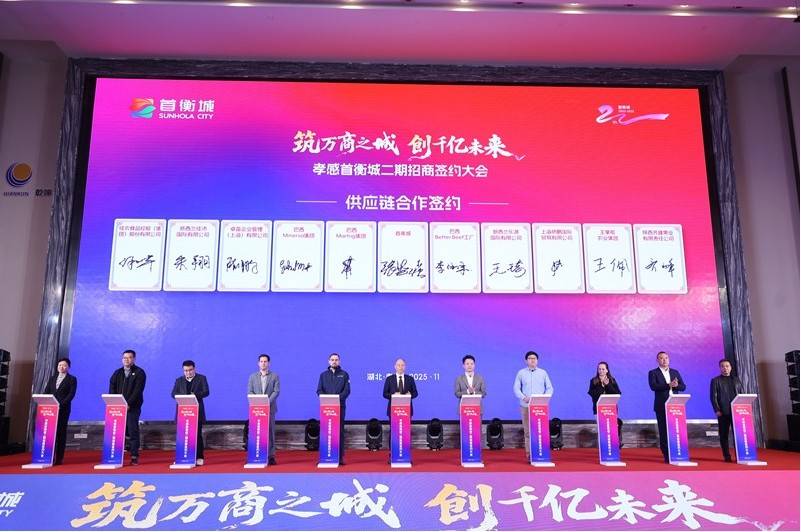
新增50万吨智慧冷链,孝感首衡城二期项目招商签约落地
Bei Ke Cai Jing· 2025-12-02 03:36
Core Insights - The "Xiaogan Shouheng City Phase II Investment Signing Conference" was held in Xiaogan, Hubei, resulting in five partnerships covering the entire agricultural product circulation chain [1] - The project will expand the existing cold chain storage capacity from 150,000 tons to 650,000 tons, establishing the largest smart cold chain hub in Central China [1] - The initiative aims to create a billion-level industrial cluster by integrating trading, processing, logistics, exhibitions, and e-commerce, potentially generating 100,000 jobs [1] Summary by Sections Project Overview - Xiaogan Shouheng City Phase II will add 500,000 tons of cold chain storage to the existing 150,000 tons, forming a total of 650,000 tons [1] - The project will enable one-hour fresh food delivery to the Wuhan metropolitan area [1] - It will also establish a one-stop food processing base, increasing product value by 3-5 times [1] Partnerships and Collaborations - Five groups of partnerships were formed, including 10 leading cold chain and processing companies to strengthen the industry foundation [1] - Ten banks will provide customized financing services to address the financing challenges faced by small and medium-sized enterprises [1] - International collaborations with companies from Singapore, Brazil, and New Zealand will enhance the global supply chain network [1] Technological Advancements - The Xiaogan government signed an agreement with Shouheng Group to establish an AI computing center focused on agricultural products [2] - The AI center aims to reduce circulation losses by 15%-20% and shift traditional decision-making to intelligent decision-making [2] Economic Impact - The first phase of the project achieved a trading volume of 10 million tons and a trading value of 100 billion yuan within two years [2] - The project has attracted over 3,000 merchants and offers more than 1,000 agricultural product varieties, benefiting nearly 20,000 farmers with an average annual income increase of 50,000-80,000 yuan [2]
孝感首衡城达成多项战略合作 打造千亿级产业集群
Sou Hu Cai Jing· 2025-12-01 06:01
Core Insights - The signing ceremony for the second phase of the Xiaogan Shouheng City招商 was held on November 28, showcasing the upgrade of the Central China agricultural product trading hub with highlights including the establishment of an AI computing center and the signing of five major agreements [2][3] - The first phase of Shouheng City achieved a "double thousand" milestone with a cumulative trading volume of 10 million tons and a trading value of 100 billion yuan, significantly compressing the conventional industry cultivation cycle by 5-8 years [2] - The project aims to create a national first agricultural "three rural" large model through AI integration, which is expected to reduce circulation losses by 15-20% and shift traditional agricultural product circulation from experience-based to intelligent decision-making [3] Summary by Sections Project Overview - The second phase of Shouheng City aims for high-quality development across the entire industry chain, building on the first phase's 150,000 tons of cold chain storage with an additional 500,000 tons, creating the largest smart cold chain hub in Central China [3] - The project will facilitate one-hour fresh food delivery within the Wuhan metropolitan area and establish a one-stop food processing base, enhancing product added value by 3-5 times [3] Economic Impact - The project is expected to create 100,000 jobs and form a trillion-level industrial cluster integrating trading, processing, logistics, exhibitions, and e-commerce [3] - It will contribute to Xiaogan's development as a sub-center city of the Wuhan metropolitan area and support the high-quality development of China's agricultural product circulation [3] Partnerships and Collaborations - The signing ceremony included partnerships with 10 leading cold chain and processing companies, 10 banks providing customized financing services, and international collaborations with companies from Singapore, Brazil, and New Zealand to build a global supply chain network [2][3] - Seven core production areas were awarded as "excellent promotion markets," enhancing direct access from production areas to markets [2]
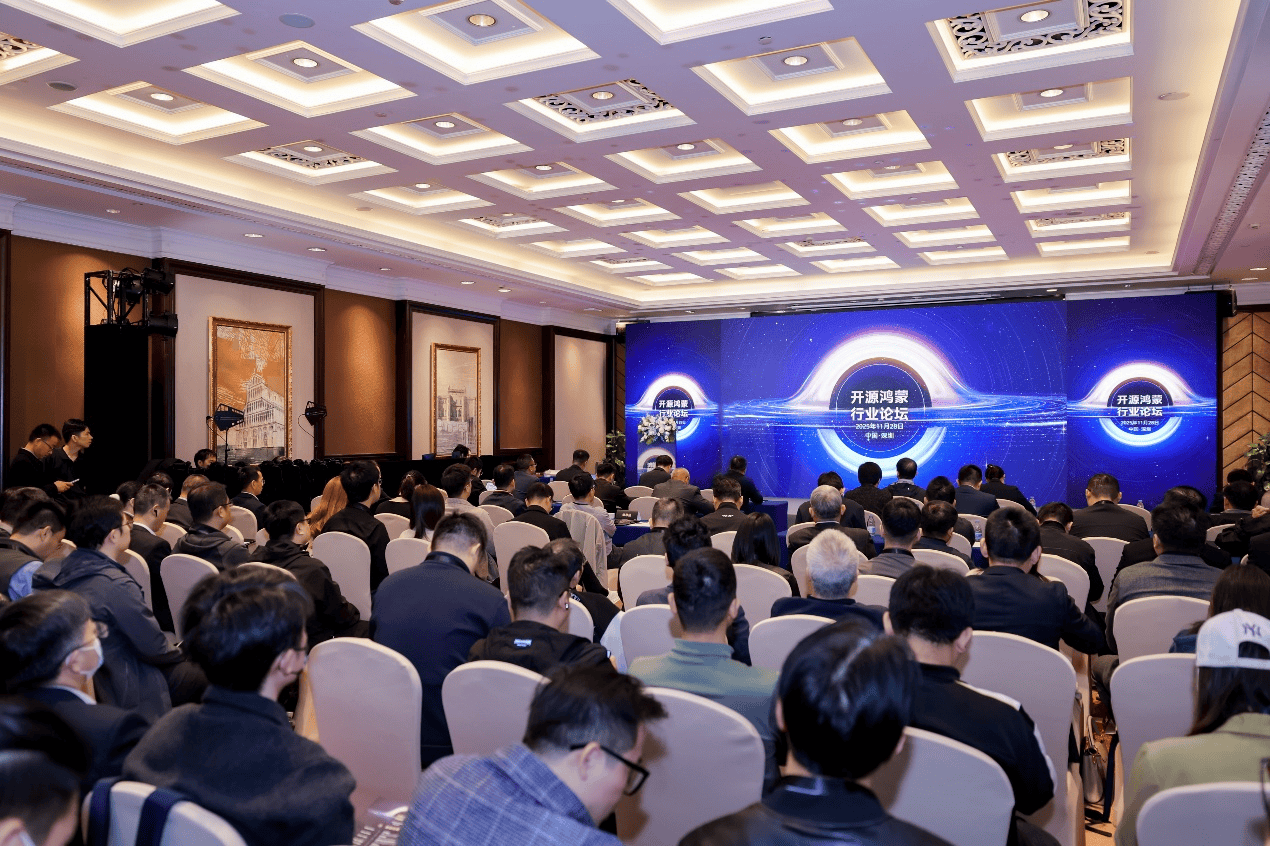
携手共绘千行百业新蓝图 开源鸿蒙行业论坛成功举办
Sou Hu Cai Jing· 2025-12-01 05:07
Core Insights - The OpenHarmony Industry Forum held on November 28 in Shenzhen focused on the practical applications of OpenHarmony across various sectors including transportation, healthcare, home, construction, and industry, with industry leaders gathering to outline a new blueprint for innovation and development [1] Group 1: OpenHarmony Development and Ecosystem - OpenHarmony has gathered over 9,700 contributors and more than 70 co-construction units, with code exceeding 130 million lines and over 1,400 products passing compatibility tests, covering sectors such as finance, transportation, education, and healthcare [3][7] - The project has iterated through 10 versions, achieving basic usability in key domestic industries, and aims to enhance its software framework and SDK ecosystem to improve user experience [7][9] - The forum highlighted the establishment of a strong ecosystem for OpenHarmony, emphasizing collaboration among leading enterprises to build a digital foundation for various industries [11] Group 2: Industry Applications and Innovations - In the smart home sector, China Mobile's IoT products based on OpenHarmony have launched in Guangdong, aiming for a "ten-hundred-thousand" development goal over three years [9] - The "Traffic Jiahong" operating system presented by Jiadu Technology aims to standardize device interconnectivity and enhance intelligent business collaboration for urban transportation [9] - OpenHarmony is being utilized in healthcare solutions, with implementations in hospitals like Shandong University Qilu Hospital, improving nurse efficiency and patient experience through device interoperability [10] - The "Kanghong OS" solution for the elderly care industry aims to provide personalized and convenient services, showcasing OpenHarmony's adaptability in various scenarios [10] - In construction, Huawei has released multiple scenario-based solutions using OpenHarmony's architecture, focusing on access control, energy efficiency, and security [10] - The industrial sector is leveraging OpenHarmony for digital upgrades, enhancing operational efficiency and data value through seamless device collaboration [10]