
数字人才培养

Search documents
快手公益发布“帮帮学堂”计划,将投入千万资金、30亿流量助力数字人才培养
智通财经网· 2026-02-09 07:02
Core Insights - Kuaishou Public Welfare has launched the "Help Help Academy" plan, investing 10 million in funding and 3 billion in traffic, focusing on "short video + live streaming + AI" to enhance digital skills [1][5] - The "Help Help Academy" is an upgrade from the "Happy Lecture Hall" project, which has reached over 50 counties and helped nearly 2 million people acquire digital skills by 2025 [1][2] Group 1 - The "Help Help Academy" aims to provide systematic training, hardware donations, traffic support, and teacher training to empower individuals in the digital age [1][5] - The initiative targets various groups, including rural streamers, women, seniors, youth entrepreneurs, and people with disabilities, to promote digital skills and drive talent revitalization [1][5] - The project has been recognized with multiple awards, including "Top 10 Excellent Cases of New Media Public Welfare 2024" and "Best Poverty Alleviation Case" [4] Group 2 - The upgraded plan will enhance the curriculum and project model, offering a comprehensive training system that includes online and offline courses, benefiting diverse groups [5][8] - The "Help Help Academy" will also introduce a new project to empower vocational schools with short video and live streaming courses, addressing the mismatch between educational content and market demand [8] - The initiative aims to bridge the digital divide and inject new momentum into regional economic development by enhancing digital skills for employment and entrepreneurship [8]




保定莲池区:培育电商达人 赋能数字经济
Sou Hu Cai Jing· 2026-01-19 19:05
Core Insights - The training program aims to enhance e-commerce skills among local talents in Lianchi District, aligning with the digital economy development strategy [2][4] - The initiative marks the beginning of the 2026 digital talent cultivation plan in Lianchi District, focusing on practical and efficient training [2] Training Program Details - The training features a comprehensive curriculum covering e-commerce platform recognition, KOC/KOL definitions, and practical skills [2] - Experienced instructors utilize successful case studies to explain KOC marketing logic and provide hands-on guidance in short video production techniques [2] - An interactive teaching approach is employed, allowing participants to create short videos and apply learned skills to promote local products [2] Follow-up Support Mechanism - A multi-dimensional tracking service mechanism is established to ensure long-term training effectiveness, including supply chain support and professional mentorship [2] - The program aims to foster deep collaboration between participants and state-owned e-commerce platforms [2] Future Plans - Lianchi District plans to continue optimizing training content and formats based on local industry needs, contributing to high-quality economic development [4]

五部门推进数字人才培养 职业教育如何跑出“加速度”
Zhong Guo Jing Ji Wang· 2026-01-14 00:03
Core Viewpoint - Digital talent is a key factor in the competition of the digital economy era, with a significant talent gap projected to exceed 30 million by the end of 2025 in China [1][5]. Group 1: Policy and Framework - The National Development and Reform Commission and other departments issued an opinion to strengthen the construction of data-related disciplines and digital talent teams, focusing on four dimensions: discipline construction, vocational education, academic research, and collaboration between industry and academia [1]. - The opinion emphasizes deepening the integration of industry and education, aiming to cultivate application-oriented and skilled talents who can transform data elements into real productivity [1][4]. Group 2: Industry-Education Integration - Vocational education is highlighted for its focus on practical skills, with schools encouraged to collaborate with data enterprises to develop educational programs and training bases [2][3]. - In Zhejiang, the digital economy has seen continuous double-digit growth for 11 years, with vocational schools adapting their curricula to meet industry needs, thus enhancing student employability [2]. Group 3: Challenges and Solutions - Despite initial successes in industry-education integration, the rapid evolution of digital technology poses challenges in aligning talent training with industry needs [4]. - Suggestions include establishing a national industry vocational education teaching guidance committee to better predict talent demand and adapt educational offerings accordingly [5]. Group 4: Curriculum Development - The opinion calls for the development of digital courses based on real application scenarios and the creation of practical teaching materials to meet operational needs [5]. - Schools are encouraged to continuously update their curricula to include emerging topics such as AI, ensuring alignment with industry standards and job market requirements [3][4].
山东省职业技术教育学会杜德昌:产教融合 培养数字人才
Qi Lu Wan Bao· 2026-01-13 08:34
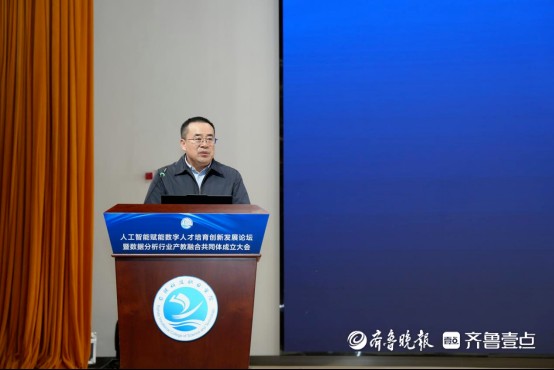
Core Viewpoint - The establishment of the data analysis industry education-industry integration community in Shandong Province is a significant step towards addressing the challenges in digital talent cultivation and enhancing the quality of vocational education to support the digital economy and artificial intelligence development [1][4]. Group 1: Current Challenges in Digital Talent Cultivation - There is a prominent structural contradiction between supply and demand, with traditional talent cultivation systems lagging behind, resulting in a gap between graduates' capabilities and enterprise needs [3]. - The depth of education-industry integration is insufficient, characterized by a "school hot, enterprise cold" phenomenon and loose cooperation, indicating a need to stimulate enterprise participation [3]. - Educational resources are unevenly distributed, leading to imbalances in the allocation of quality courses, training platforms, and dual-qualified teachers across regions and institutions [3]. - The educational ecosystem is not yet mature, requiring further exploration and practice in the deep integration of AI technology with teaching management and innovative applications of intelligent tools [3]. Group 2: Recommendations for Future Development - Emphasize a demand-oriented approach by deepening the connection mechanisms, dynamically assessing talent needs, and promoting enterprise involvement in the entire talent cultivation process to achieve "zero distance" between talent development and job requirements [4]. - Focus on competency-based education by promoting teaching reforms, constructing modular course systems, integrating cutting-edge technologies, and exploring new models of "AI + education" to enhance teachers' digital teaching capabilities [4]. - Foster resource sharing by creating practical platforms, encouraging member units to co-build training bases and resource libraries, and facilitating the flow and value addition of quality resources [4]. - Innovate cooperation models by establishing a tangible operational mechanism, deepening interest connections, and improving organizational structures and incentive mechanisms to ensure the sustainable development of the community [4].
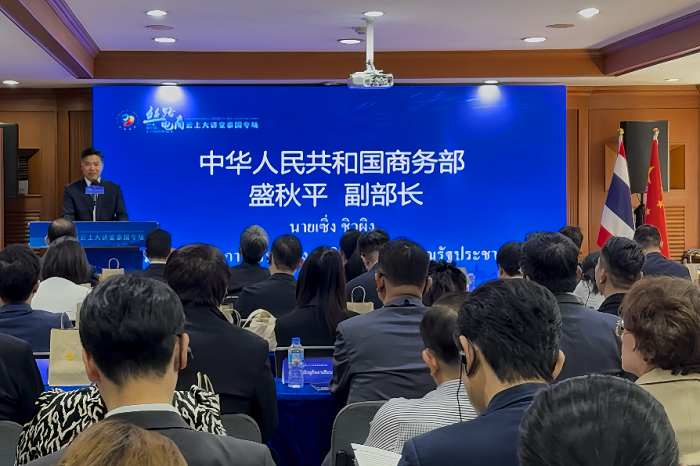
盛秋平副部长在曼谷出席“丝路电商”云上大讲堂泰国线下专场活动
Shang Wu Bu Wang Zhan· 2025-12-04 11:10
Core Viewpoint - The event "Silk Road E-commerce" online lecture series successfully held in Bangkok, Thailand, aims to enhance bilateral economic and trade cooperation between China and Thailand, focusing on e-commerce talent exchange and industry collaboration [2] Group 1: Event Overview - The event was attended by representatives from Thailand's Ministry of Commerce, Ministry of Digital Economy and Society, ASEAN Business Association, and over 60 small and medium-sized enterprises [2] - The initiative is part of the annual work plan to implement the China-Thailand E-commerce Cooperation Memorandum [2] Group 2: Key Statements - Vice Minister Sheng Qiuping emphasized the deepening practical cooperation in e-commerce between China and Thailand, noting that the online lecture series has been organized in Bangkok for two consecutive years [2] - China is willing to share its large e-commerce market with Thailand, promote digital transformation in industries, and enhance digital talent training [2] Group 3: Educational Content - Instructors from Guangxi International Business Vocational Technical College and major e-commerce platforms provided lectures on digital cross-border models for Thai SMEs and foreign trade product promotion [2] - The event saw enthusiastic interaction, with nearly 40 Thai companies reaching preliminary cooperation intentions with Chinese e-commerce platforms [2]
12项举措出台!数字人才培养迎来新支撑
Bei Jing Shang Bao· 2025-12-02 12:57
Core Viewpoint - The release of the "Opinions" by five major departments aims to strengthen the construction of data element disciplines and digital talent teams, providing comprehensive support for the development of the digital economy and promoting high-quality growth in this sector [2][3]. Group 1: Talent Development Initiatives - The "Opinions" propose 12 measures to enhance the construction of data-related disciplines and digital talent teams, focusing on integrating education, research, and industry needs [2][3]. - There is an emphasis on optimizing discipline settings, encouraging universities to establish data science and digital economy programs, and adjusting vocational education based on industry demands [3][4]. - The initiative supports the establishment of digital colleges within comprehensive universities and encourages specialized institutions to develop programs in areas like digital trade, data security, and health data management [4]. Group 2: Trends in Digital Talent Training - The current trends in digital talent training include accelerated interdisciplinary integration, a stronger emphasis on practical skills, and regional specialization in talent development [4][5]. - The focus is shifting from single-discipline training to a "data + profession" approach, enhancing hands-on capabilities to reduce the adaptation period for talent entering the workforce [4][5]. - Regions with active economies are encouraged to cultivate talents in digital marketing and planning to meet specific market needs [4]. Group 3: Research and Innovation - The "Opinions" call for accelerated research in key areas such as data marketization, data rights, and emerging technologies like AI and blockchain, aiming to establish a robust theoretical and policy framework for data elements [5][6]. - There is a push for collaboration between academia and industry to foster innovation, with enterprises taking a leading role in identifying technical needs and implementing solutions [6]. - The initiative encourages the development of application scenarios to enhance the synergy between education, research, and industry, promoting the cultivation of innovative and practical digital talent [6].

分层分类、微专业、动态调整 多举措夯实数字人才培养 构建深度融合人才生态
Yang Shi Wang· 2025-12-02 09:44
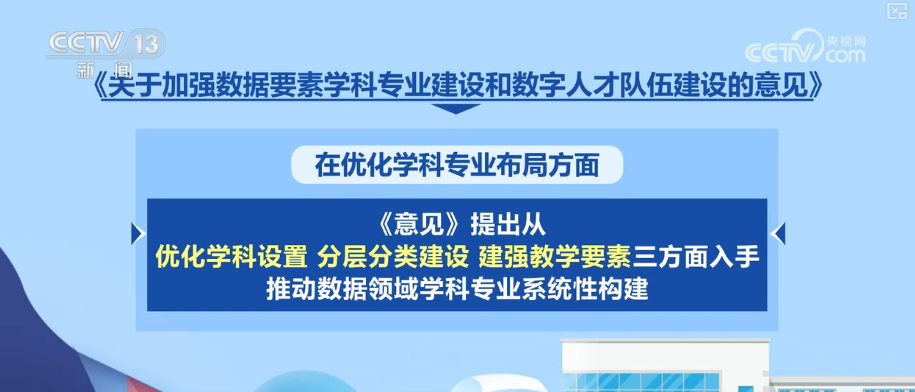
Core Viewpoint - The issuance of the "Opinions" by five government departments marks a significant step towards addressing the shortage of digital talent in China, aiming for systematic, professional, and high-quality development in this area [8]. Group 1: Optimization of Academic and Professional Layout - The "Opinions" propose three approaches to optimize the academic structure: improving subject settings, building a tiered and categorized system, and strengthening teaching elements to systematically construct disciplines related to data [3]. Group 2: Promoting Deep Integration of Industry, Academia, and Research - The "Opinions" emphasize the use of application scenarios as a vehicle to promote deep integration among industry, academia, and research, thereby maximizing the value of talent cultivation [5]. Group 3: Deepening Industry-Education Integration and Vocational Education Reform - The "Opinions" focus on building an ecosystem for industry-education integration, reforming education and teaching, and developing course resources to address the disconnect between learning and application, thus bridging the final gap in talent development [6][15]. Group 4: Supporting Higher Education Institutions - The "Opinions" support comprehensive universities in establishing digital colleges and integrating relevant academic resources, as well as encouraging specialized institutions to enhance their programs in data technology, data analysis, and digital arts [11]. Group 5: Development of Micro Majors - The "Opinions" advocate for universities to offer "micro majors" that meet the urgent knowledge and skill requirements of the data industry, such as digital trade and digital media arts, fostering a collaborative innovation system led by enterprises [13]. Group 6: Addressing the Skills Gap in Vocational Education - The "Opinions" encourage vocational colleges to add data-related programs to address the skills gap, focusing on areas like data collection, cleaning, annotation, and operation, in response to market demands [16]. Group 7: Building a Comprehensive Ecosystem - The "Opinions" propose a complete ecosystem integrating academic disciplines, vocational education, academic research, and industry-academia-research collaboration, aiming to resolve the disconnect between learning and application through a three-integration mechanism [18].
智启未来·人工智能技术前沿论坛暨第十届华为ICT大赛山西站路演在山西大学成功举办
Sou Hu Cai Jing· 2025-10-14 09:25
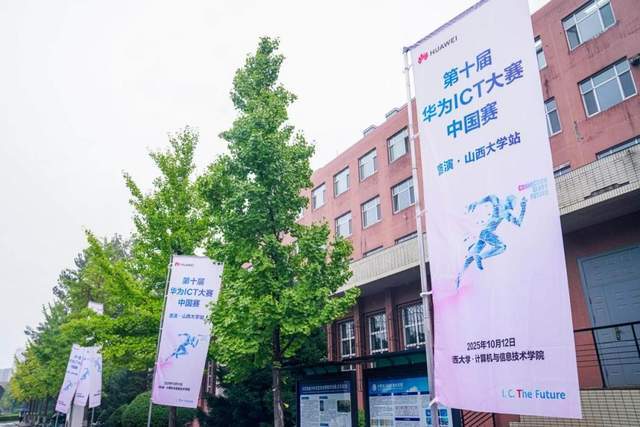
Core Points - The event "Intelligent Future: AI Technology Frontier Forum and the 10th Huawei ICT Competition Roadshow" was successfully held at Shanxi University, attracting over 200 faculty and students [1] - The competition aims to open doors for students towards their future career dreams and emphasizes the importance of practical experience in education [3] Group 1: Event Overview - The event featured speeches from key figures, including the Vice Dean of the School of Computer and Information Technology, who highlighted the significance of the competition in fostering a competitive atmosphere [7] - The Dean of the School, Cao Fuyuan, welcomed Huawei's initiative and discussed the integration of competitions into the graduate recommendation evaluation process, showcasing the school's achievements in national competitions [7] - Huawei's Deputy Minister of Industry Development and Ecology praised Shanxi University's contributions in big data and AI, emphasizing the growing demand for digital talent [9] Group 2: Competition Details - The 10th Huawei ICT Competition is themed "Connect, Honor, Future" and includes multiple technical tracks to provide a platform for innovation and practical experience for students [9] - The competition has seen significant growth, with the previous edition involving 1,618 participating institutions and over 140,000 registered students, culminating in 458 teams reaching the national finals [13] - New competition formats have been introduced, including programming contests and teaching competitions for educators, enhancing the overall structure of the event [13] Group 3: Student Engagement - The event included interactive sessions where students actively engaged with questions about competition rules and team formation, indicating strong interest in participation [15] - A student shared personal experiences from the previous competition, highlighting teamwork, self-learning, and problem-solving as key aspects of preparation [25] - The event concluded with a call for students to embrace challenges and strive for excellence, reinforcing the spirit of innovation and leadership in the intelligent era [27] Group 4: Broader Impact - The Huawei ICT Competition has been recognized as a top-tier event in the ICT field, aiming to enhance students' knowledge, practical skills, and innovative spirit [31] - Since its inception in 2015, the competition's influence has expanded, becoming part of the national college student competition project list and a key partner of UNESCO's Global Skills Academy [31]
2025数博会:26场交流活动超300位精英 擘画全球数字经济“新图景”
Zhong Guo Xin Wen Wang· 2025-08-26 06:37
Core Viewpoint - The 2025 China International Big Data Industry Expo (2025 Data Expo) will commence on August 28 in Guiyang, focusing on the theme "Data Aggregates Industrial Momentum to Ignite New Development Chapters" and aims to gather over 300 data industry elites for in-depth discussions on global digital economy development [1][2]. Group 1 - The 2025 Data Expo will feature 26 exchange activities, with an expected attendance of around 8,000 participants [1][2]. - The event will emphasize the market-oriented reform of data elements and will integrate efforts in building a digital China, digital economy, and digital society [2][3]. - Key areas of focus include digital economy, data elements, data infrastructure, digital government, and international cooperation, aiming to release the value of data elements and explore paths for digital industry upgrades [2][3]. Group 2 - Various activities will include discussions on "High-Quality Data Sets," "Digital Government," "Computing Power for Intelligent Future," and "Public Data Development and Utilization," sharing best practices in digital government construction and data security governance [2][3]. - Guiyang and Gui'an will leverage their advantages as a computing power hub, inviting representatives and experts to discuss cutting-edge technology innovations and financial digital transformation [3]. - The expo is expected to release 64 key industry standards and typical case studies, providing valuable references for companies' strategic layouts and technological innovations [3][4].
山东聚焦市场需求加快培育数字人才
Da Zhong Ri Bao· 2025-08-01 01:04
Core Viewpoint - Shandong province is focusing on cultivating digital talent to support the digital economy, aiming to train over 3,000 digital technology engineers in the next three years [1][3]. Group 1: Digital Talent Development - Digital talent is considered the core support for the digital economy, with over 3.1 million individuals having obtained digital technology-related professional titles and 239,000 digital vocational skill certificates issued [2]. - The province has organized 51 advanced training sessions in digital technology, training over 1,500 high-level and urgently needed digital talents [2][3]. - A total of 3,800 digital technology engineers have been trained in the past three years, with ongoing efforts to enhance the digital skills of the workforce [2][3]. Group 2: Recruitment and Collaboration - Shandong is actively recruiting national-level leading talents in the digital field, with over 20 recommended for national talent projects and five receiving special government allowances [3]. - The province has organized recruitment activities that attracted over 140 digital industry talents and established intentions to recruit 103 postdoctoral candidates [3]. Group 3: Educational Institutions' Role - Universities are the main battleground for digital talent cultivation, with institutions like Ocean University of China introducing new programs in artificial intelligence and data science [4]. - The university has achieved significant technological advancements, such as a new marine drug discovery system that improved prediction accuracy from below 20% to over 70% [4]. Group 4: Competitions and Innovation - The first Shandong Province Digital Engineer Innovation and Creativity Competition will be held, inviting global participation and offering policy support for winning projects [4]. - The competition aims to promote high-quality digital projects and attract outstanding digital talents to Shandong [4].