新质生产力发展

Search documents
北京:2025年第二批北京市建设一流大学科技园项目开始申报
仪器信息网· 2025-11-04 09:08
Core Viewpoint - The Beijing Municipal Science and Technology Commission and the Management Committee of Zhongguancun Science Park have initiated the application process for the second batch of projects to support the construction of first-class university science parks in 2025 [1][3]. Group 1: Project Objectives and Support - The notification aims to enhance the connection between university science parks and their respective universities and districts, improve management and operational mechanisms, and build high-level operational teams [4]. - The initiative focuses on promoting the transformation of university scientific achievements, accelerating the cultivation of innovative entrepreneurial talents and enterprises, and developing new productive forces [4]. Group 2: Application Details - The applicants are investment construction or operation units of university science parks located within Beijing [5]. - The support will be provided in the form of pre-allocated subsidies, with a maximum funding of 50% of the total project investment, capped at 50 million yuan [6]. - The funding structure includes up to 20 million yuan in the first year and up to 15 million yuan in the second and third years, contingent on performance assessments [6]. Group 3: Application Timeline - The application system will open for online submissions on November 1, 2025, at 14:00, and will close on November 6, 2025, at 10:00 [7].


改革重塑资本市场生态
Bei Jing Shang Bao· 2025-10-28 16:40
Group 1 - The core viewpoint emphasizes the ongoing reforms in China's capital market, particularly focusing on the A-share market's evolution and the introduction of new policies aimed at enhancing investor protection and optimizing the entry of qualified foreign investors [1][2][4] - The A-share market has grown significantly, surpassing a total market capitalization of 100 trillion yuan, reflecting a stable growth trajectory driven by reforms [1] - The introduction of the registration-based IPO system has accelerated the reform effects, leading to more precise sector positioning and broader pathways for companies to go public [1][2] Group 2 - The focus on serving new productive forces is highlighted as a key aspect of capital market reform, with policies like the "Sixteen Articles on Technology" and "Eight Articles on the Sci-Tech Innovation Board" supporting high-quality tech companies [2] - The market is moving away from a strict "profit-only" evaluation, with a new emphasis on the technological content of companies as a key assessment criterion [2] - The daily trading volume in the A-share market has stabilized at around 2 trillion yuan, indicating a robust influx of long-term capital [2] Group 3 - Recent measures have been introduced to strengthen the protection of small and medium investors throughout the entire process from issuance to daily trading and delisting [3] - There is a growing awareness among listed companies to give back to investors through stable and frequent dividends, as well as share buybacks, enhancing investor satisfaction [3] - The regulatory environment has become more stringent, with a focus on improving the quality of listed companies and combating various forms of market misconduct [3]
高效服务现代化产业体系建设和新质生产力发展
Zheng Quan Ri Bao· 2025-10-28 00:07
Core Viewpoint - The 2025 Financial Street Forum emphasizes the achievements of China's economic and financial development during the 14th Five-Year Plan period, highlighting the commitment to high-quality financial development and risk prevention under the leadership of the central government [1][2]. Group 1: Economic and Financial Development - The focus is on enhancing the adaptability of the financial sector to better support sustainable economic and social development. This includes promoting a new financial service model that balances direct and indirect financing, investment in goods and people, and aligns financing terms with industrial development [1]. - The aim is to effectively support the construction of a modern industrial system and new productive forces, contributing to a new development pattern and ensuring that financial services are equitable and beneficial to the public [1]. Group 2: Reform and Opening Up - There is a strong commitment to deepening reforms and expanding openness in the financial sector to enhance its dynamism and vitality. This involves addressing issues through supply-side structural reforms and improving the layout of financial institutions [2]. - The goal is to achieve new progress in the construction of a modern financial institution system and elevate the quality and resilience of the financial industry, while also expanding the level of openness [2]. Group 3: Financial Development and Security - The strategy includes better coordination between financial development and security, ensuring that risk prevention remains a top priority. This involves actively adapting to changes and maintaining a solid foundation to prevent systemic financial risks [2]. - There is an emphasis on enhancing regulatory effectiveness and collaborating to strengthen the global financial safety net [2].
金融监管总局局长李云泽: 加快推进金融强国建设
Zhong Guo Zheng Quan Bao· 2025-10-27 21:15
Core Viewpoint - The Financial Regulatory Administration emphasizes the importance of high-quality financial development and risk prevention during the "14th Five-Year Plan" period, aiming to contribute significantly to the modernization of socialism in the "15th Five-Year Plan" period [1] Group 1: Financial Development Goals - The Financial Regulatory Administration aims to enhance economic and financial adaptability to promote sustainable and healthy economic development [1] - There is a commitment to deepen reforms and expand openness in the financial sector to boost development momentum and vitality [2] - The focus will be on coordinating financial development and security to ensure a new development pattern is supported by a new security framework [2] Group 2: New Financial Service Models - The administration plans to create a new financial service model that balances direct and indirect financing, investment in goods and people, and aligns financing terms with industrial development [2] - Emphasis will be placed on supporting major strategies, key areas, and weak links to achieve qualitative and reasonable quantitative economic growth [2] - The focus will be on modernizing the industrial system and fostering new productive forces through financial resources, particularly in intelligent, green, and integrated sectors [2] Group 3: Risk Prevention Responsibilities - The Financial Regulatory Administration will prioritize risk prevention and maintain a firm stance against systemic financial risks [3] - Efforts will be made to consolidate risk disposal achievements and facilitate the restructuring of small and medium financial institutions [3] - There will be an acceleration in establishing financing systems that align with new real estate development models to help mitigate local government debt risks [3]
国家金融监督管理总局党委书记、局长李云泽:高效服务现代化产业体系建设和新质生产力发展
Zheng Quan Ri Bao· 2025-10-27 17:17
Core Viewpoint - The 2025 Financial Street Forum emphasizes the achievements of China's economic and financial development during the 14th Five-Year Plan period, highlighting the commitment to high-quality financial development and risk prevention efforts [1][2]. Group 1: Economic and Financial Development - The financial sector aims to enhance economic and financial adaptability to promote sustainable and healthy economic development [1]. - A new financial service model will be established, focusing on the synergy between direct and indirect financing, balancing investments in goods and people, aligning financing terms with industrial development, and linking domestic and international markets [1]. - The goal is to support major strategies, key areas, and weak links, contributing to qualitative improvements and reasonable quantitative growth in the economy [1]. Group 2: Reform and Opening Up - There is a commitment to deepen reforms and expand openness in the financial sector to enhance development momentum and vitality [2]. - The focus will be on problem-oriented approaches to further promote structural reforms in financial supply, improving institutional layout, and enhancing development quality and resilience [2]. - The aim is to achieve new progress in the construction of a modern financial institution system and elevate the international influence of the financial industry [2]. Group 3: Financial Development and Security - The financial sector will prioritize risk prevention to ensure a new development pattern, maintaining a firm stance against systemic financial risks [2]. - Efforts will be made to enhance financial regulatory effectiveness and build a robust risk prevention framework [2]. - Collaboration will be sought to strengthen the global financial security network [2].
李云泽:为传统产业优化提升、新兴产业和未来产业培育壮大提供更多金融资源
Zhong Guo Xin Wen Wang· 2025-10-27 13:23
Core Viewpoint - The focus is on enhancing financial resources for traditional industries, nurturing emerging industries, and fostering future industries to support sustainable economic development [1][2] Group 1: Financial Service Model - The new financial service model aims to create synergy between direct and indirect financing, balancing investments in goods and people, aligning financing terms with industry development, and linking domestic and international markets [1] - Emphasis on supporting major strategies, key areas, and weak links to achieve qualitative and quantitative economic growth [1] Group 2: Modern Financial Institutions - Progress in building a modern financial institution system is highlighted, encouraging institutions of various types and sizes to find their positioning and focus on their core businesses [2] - The goal is to achieve differentiated development and a diverse, orderly, and sustainable financial ecosystem [2] - There is a push for high-quality industry development and the establishment of a modern financial enterprise system with Chinese characteristics [2]
金融监管总局局长李云泽:高效服务现代化产业体系建设和新质生产力发展
Zhong Guo Jing Ying Bao· 2025-10-27 13:12
Core Insights - The National Financial Regulatory Administration emphasizes the significant achievements in China's economic and social development during the "14th Five-Year Plan" period, highlighting the solid steps taken towards high-quality financial development and the important progress made in preventing and mitigating financial risks [1] Group 1 - The financial regulatory authority aims to enhance economic and financial adaptability to better promote sustainable and healthy economic and social development [1] - A new financial service model will be established, focusing on the synergy between direct and indirect financing, balancing investments in physical assets and human capital, aligning financing terms with industrial development, and linking domestic and international markets [1] - Support will be strengthened for major strategies, key areas, and weak links to facilitate qualitative improvements and reasonable quantitative growth in the economy [1] Group 2 - Financial services will efficiently support the construction of a modern industrial system and the development of new productive forces, with a focus on intelligent, green, and integrated directions [2] - Financial resources will be provided to optimize and enhance traditional industries while nurturing and expanding emerging and future industries [2] - Policies will be improved to support long-term capital investment in hard technology, reinforcing comprehensive financial guarantees throughout the investment cycle [2] - The strategy of expanding domestic demand will be emphasized, with a focus on strengthening funding for major projects to boost consumption [2] - Trade financing and export credit insurance services will be optimized to accelerate the integration of domestic and international trade, enhancing the domestic and international dual circulation [2]
2025金融街论坛|李云泽:推动构建直接融资与间接融资协同等金融服务新模式
Bei Jing Shang Bao· 2025-10-27 11:23
Core Viewpoint - The National Financial Regulatory Administration aims to establish a new financial service model that balances direct and indirect financing, focusing on both investment in goods and people, while aligning financing terms with industrial development and enhancing domestic and international market integration [1] Group 1: Financial Service Model - The new model will emphasize collaboration between direct and indirect financing [1] - It will prioritize investment in both physical goods and human capital [1] - The model aims to match financing terms with the needs of industrial development [1] Group 2: Support for Strategic Areas - The administration will strengthen support for major strategies, key sectors, and weak links in the economy [1] - There will be a focus on enhancing the modern industrial system and developing new productive forces [1] - Financial resources will be directed towards optimizing traditional industries and nurturing emerging and future industries [1] Group 3: Technological and Industrial Innovation - The emphasis will be on high-level technological self-reliance and strengthening policies for long-term capital investment in hard technology [1] - Comprehensive financial support will be enhanced throughout the entire investment cycle [1] - The integration of technological and industrial innovation will be promoted [1] Group 4: Domestic Demand and Trade - The strategy will focus on expanding domestic demand as a key basis for economic growth [1] - There will be an emphasis on strengthening funding supply for major projects to boost consumption [1] - Trade financing and export credit insurance will be optimized to facilitate the integration of domestic and international trade [1]

湖南出台省直管土地资产处置办法 “沉睡”土地加速转化发展活水
Zhong Guo Xin Wen Wang· 2025-10-20 14:09
Core Points - The Hunan Provincial Government has approved the "Hunan Province Directly Managed Land Asset Disposal Measures," marking a new phase in the standardized and systematic management of land asset disposal in Hunan [1][2] - The implementation of these measures aims to transform "sleeping" land resources into active development assets, contributing to the provincial fiscal revenue and supporting key projects [1] Group 1 - The new measures have led to the development of customized disposal plans for 208 batches and 190 units, resulting in the activation of 27,000 acres of land and a demonstrated asset value exceeding 23.3 billion yuan, generating 3.56 billion yuan for provincial finances [1] - The previous land disposal policies were fragmented and ineffective, necessitating a comprehensive regulatory framework to clarify responsibilities and streamline procedures [1][2] Group 2 - The measures establish six disposal methods, including retention allocation, transfer, capital contribution, leasing, recovery, and a five-year transition policy, providing a clear "policy toolbox" for enterprises and institutions [2] - The new framework supports state-owned enterprises in revitalizing land assets through capital contributions and allows eligible projects to benefit from a five-year transition policy, enhancing operational flexibility [2] - An online management loop has been created to improve approval efficiency and service effectiveness, encompassing the entire process from application to implementation [2]
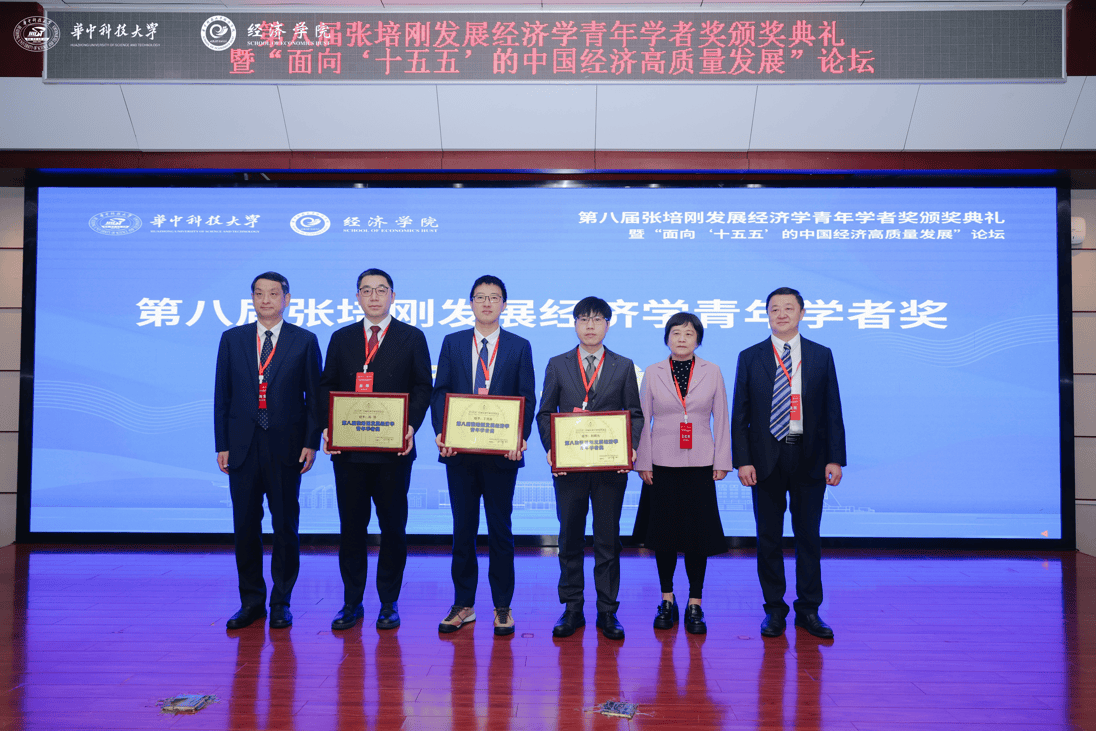
第八届张培刚发展经济学青年学者奖在汉揭晓
Sou Hu Cai Jing· 2025-10-20 13:58
Group 1 - The eighth Zhang Peigang Development Economics Young Scholar Award was presented to three young scholars: Ding Haoyuan from Shanghai University of Finance and Economics, Liu Xiaoguang from Renmin University of China, and Zhou Zhen from Tsinghua University [1] - The event included a forum focused on "High-Quality Economic Development Facing the 14th Five-Year Plan," aiming to gather academic consensus and expand research perspectives on major issues in China's modernization process [3] - The forum emphasized the importance of the 14th Five-Year Plan as a critical phase for China's modernization, encouraging discussions on new productive forces and regional economic collaboration [3] Group 2 - The Zhang Peigang Development Economics Research Foundation aims to support young scholars and contribute to the study of development economics, particularly in the context of new technological changes and international rule transformations [3] - A series of forums were held to discuss "High-Quality Economic Development Facing the 14th Five-Year Plan," with a focus on rural revitalization and common prosperity [4] - The discussions aimed to explore new paths for rural development within the framework of China's modernization process [4]