AI治理

Search documents
瞭望 | 盯紧AI失控风险
Xin Hua She· 2025-11-10 08:27
Core Viewpoint - The article emphasizes the urgent need to establish a resilient and inclusive intelligent society amidst the explosive growth of computing power and the inherent risks associated with AI, particularly the potential for AI to become uncontrollable [1][2]. Group 1: AI Control Risks - Experts, including Geoffrey Hinton, estimate the probability of AI becoming completely uncontrollable to be between 10% and 20% [2]. - The rapid evolution of AI systems, driven by intense competition among companies and nations, often lacks adequate consideration of potential consequences [2]. - There is a consensus among many professionals that the risk of AI losing control is a real concern, necessitating serious attention [2]. Group 2: Regulatory Challenges - The article identifies three main challenges contributing to the risk of AI losing control: lagging regulatory mechanisms, deficits in collaborative governance, and insufficient safety measures [3]. - Regulatory policies struggle to keep pace with the rapid technological advancements, as seen with the swift release of competing AI models following OpenAI's GPT-4 [3]. - The lack of international consensus on AI governance, highlighted by the refusal of some countries to sign collaborative agreements, exacerbates the regulatory challenges [3][4]. Group 3: Safety and Governance Improvements - Experts advocate for a shift towards agile governance that supports the healthy and sustainable development of AI [6]. - Recommendations include updating governance frameworks, enhancing communication between regulators and stakeholders, and adopting flexible regulatory measures [6][7]. - There is a call for improved risk assessment and management mechanisms for large AI models, as well as clearer definitions of rights and responsibilities for AI developers and users [7][8]. Group 4: Global Collaboration - Addressing the risks of AI control requires global cooperation, yet there is currently a lack of effective communication among leading AI companies [8]. - Strengthening bilateral dialogues, particularly between the US and China, and implementing existing international agreements on AI governance are essential steps [8].

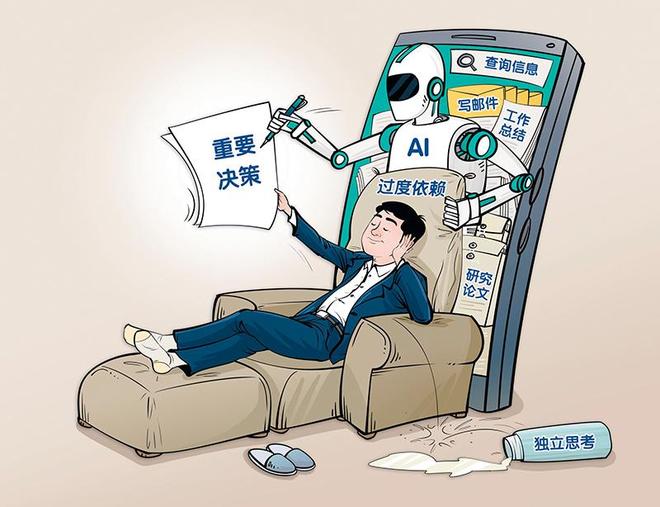
OpenAI内斗法律证词曝光;“人工智能教父”直言:科技巨头需要裁员才能从AI中获利丨AIGC日报
创业邦· 2025-11-03 02:28
Group 1 - OpenAI's former chief scientist Ilya Sutskever submitted a 52-page memo revealing internal conflicts leading to the dismissal of Sam Altman, accusing him of "persistent lying and misleading behavior," which eroded the board's trust [2] - The board discussed a potential merger with competitor Anthropic and considered appointing Anthropic's founder Dario Amodei as CEO, marking a significant internal crisis [2] - The ongoing legal case involving Elon Musk and OpenAI is expected to provide critical insights into AI governance and regulatory policies, as internal documents are becoming key historical records [2] Group 2 - Microsoft CEO Satya Nadella highlighted that the shortage of power supply in data centers is hindering the expansion of AI computing capabilities, resulting in many AI chips remaining unused in warehouses [2] - Geoffrey Hinton, known as the "father of AI," warned that tech giants may need to lay off workers to profit from AI, as companies are betting on AI to replace human labor for significant profit margins [2] - Google CEO Sundar Pichai confirmed that the next-generation AI model, Gemini 3, is set to be released in 2025, indicating ongoing advancements in AI technology [2]

伊利亚为马斯克诉OpenAI案出庭10小时质询,首次披露惊人内幕
Tai Mei Ti A P P· 2025-11-02 02:46
Core Insights - The recent court testimony by Ilya Sutskever, co-founder and former chief scientist of OpenAI, has provided a detailed account of the decision to remove CEO Sam Altman, marking a significant moment in the ongoing legal battle involving Elon Musk and OpenAI [4][6] - Sutskever's testimony accuses Altman of a "persistent pattern of lying," which has led to a breakdown of trust between the board and the CEO, highlighting governance issues within OpenAI [4][7] - The board's consideration of a merger with Anthropic and appointing Dario Amodei as CEO indicates a drastic shift in strategy during a crisis, emphasizing the competitive landscape between OpenAI and Anthropic [5][6] Governance and Trust Issues - Sutskever's claims suggest that the core issue in the OpenAI crisis is not merely a difference in AI vision but a complete collapse of governance and trust structures [7] - The testimony has transformed previous speculations about a lack of transparency into formal legal evidence, reinforcing concerns about the board's ability to oversee the CEO effectively [4][6] Legal Proceedings and Evidence - The emergence of the "Brockman memo" as a critical document in the case may further illuminate the governance narrative of OpenAI from 2019 to 2023, pending its alignment with other evidence [6][7] - The ongoing legal proceedings are expected to reveal more internal documents and communications, which will serve as essential historical records for understanding AI governance and regulatory policies [7]

【环时深度】1.5万亿承诺后,硅谷白宫的关系变了多少?
Huan Qiu Wang· 2025-10-19 23:05
Group 1 - Major tech CEOs from Silicon Valley made a total investment commitment of $1.5 trillion during a White House dinner in September [1][2] - Apple announced an increase in its investment in U.S. manufacturing to $600 billion over four years, focusing on supply chain and high-end manufacturing [3] - Meta plans to invest significantly in building data centers and infrastructure in the U.S., with projected spending reaching $66 to $72 billion by 2025 [4] Group 2 - Microsoft expects to invest around $800 billion globally in AI data centers by fiscal year 2025, with over half of that investment in the U.S. [5] - Google announced a $25 billion investment over the next two years for building more data centers and AI infrastructure in the U.S. [4] - The investments from these tech giants are primarily directed towards foundational projects such as data centers, fiber networks, and clean energy [5] Group 3 - The relationship between the White House and Silicon Valley has evolved from friction to closer cooperation, impacting the tech industry and political landscape [6] - Tech companies are seeking support from the government on various issues, including energy access, talent acquisition, and regulatory clarity [7][8] - The tightening of U.S. immigration policies may lead tech companies to hire more foreign employees outside the U.S. [11] Group 4 - The evolving relationship between the White House and Silicon Valley is expected to reshape the global tech landscape, with implications for international business and political dynamics [12] - Concerns have been raised about the ability of the U.S. to attract top talent and lead in AI development due to policy uncertainties [10][12] - The political influence of Silicon Valley is likely to increase, making it a significant force in U.S. politics [12]




全文|《AI智能体的崛起》作者佩塔尔·拉达尼列夫:AI或缩小数字鸿沟,全球共识是治理关键
Xin Lang Zheng Quan· 2025-10-17 04:27
Core Insights - The 2025 Sustainable Global Leaders Conference is set to take place from October 16 to 18 in Shanghai, focusing on global action, innovation, and sustainable growth [5][6] - Petar Radanliev emphasizes the dual potential of AI to bridge the global digital divide while also risking increased inequality if monopolized by wealthy nations [2][3] Group 1: AI Governance and Global Development - Radanliev argues that AI can integrate knowledge from around the world to provide equal learning opportunities in resource-scarce regions like Africa [2] - He highlights the current lack of consensus in global AI governance, exacerbated by geopolitical competition, which hinders the establishment of unified standards [2][13] - The need for transparency and safety in AI governance is crucial, suggesting the creation of an "AI material list" to clarify data elements and sources [2][12] Group 2: Human Oversight and Collaboration - Radanliev stresses the importance of maintaining human oversight in AI development to prevent technology from becoming uncontrollable [3][12] - He calls for global collaboration over technological monopolization, advocating for AI to be a common tool for humanity to reduce the digital divide and promote sustainable development [3][12] Group 3: Conference Details and Participation - The conference is co-hosted by the World Green Design Organization and Sina Group, with support from the Shanghai Huangpu District Government [5][6] - Approximately 500 prominent guests, including Nobel laureates and leaders from Fortune 500 companies, will participate in discussions covering nearly 50 topics related to sustainable development [6]
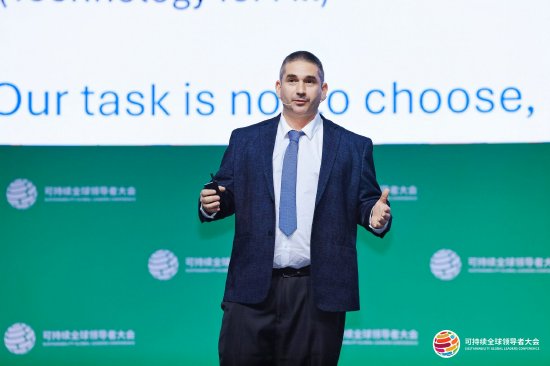
《AI智能体的崛起》作者佩塔尔·拉达尼列夫:AI治理刻不容缓,安全应贯穿开发全流程
Xin Lang Zheng Quan· 2025-10-17 04:20
Group 1 - The 2025 Sustainable Global Leaders Conference will be held from October 16 to 18 in Shanghai, focusing on global action, innovation, and sustainable growth [6] - Petar Radanliev, a prominent figure in AI research, highlighted the dual nature of AI development, emphasizing both its potential benefits and inherent risks [1][2] - The conference aims to gather around 500 influential guests, including international leaders, Nobel laureates, and executives from Fortune 500 companies, to discuss nearly 50 topics related to sustainability [6] Group 2 - Radanliev pointed out that many companies prioritize development over security, which can lead to a loss of user trust and ultimately harm business [2] - He stressed the importance of proactive security measures in AI development, advocating for the integration of safety protocols from the design phase [2] - The conference will explore various subfields, including energy and carbon neutrality, green finance, sustainable consumption, and technology for public good [6]
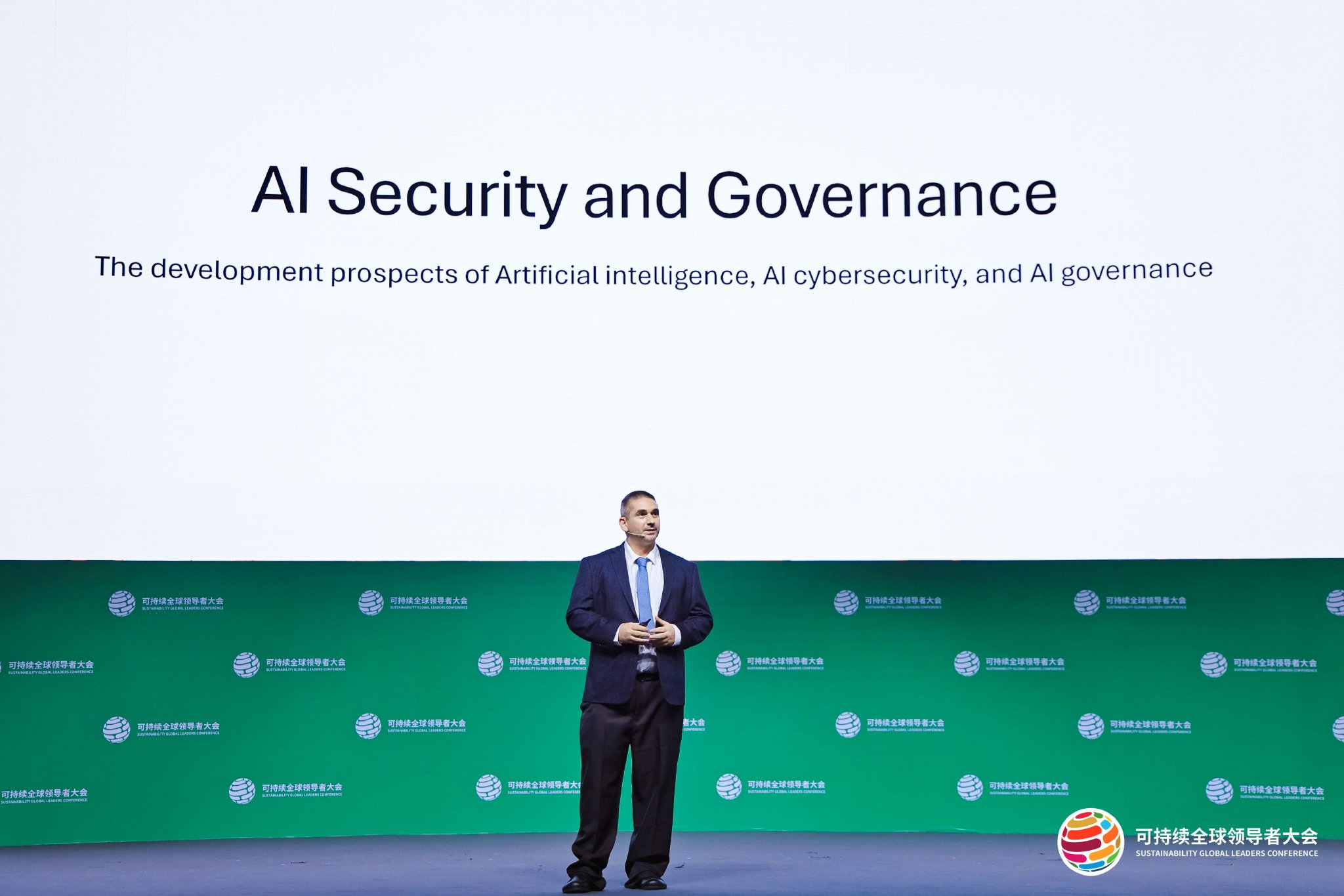
香港金管局公布生成式AI沙盒名单,蚂蚁数科入选技术合作伙伴
Xin Lang Ke Ji· 2025-10-16 06:05
Group 1 - The Hong Kong Monetary Authority (HKMA) and Hong Kong Cyberport Management Company announced the second phase of the generative AI sandbox, featuring 20 banks and 14 technology partners with 27 use cases, including Ant Group as a key technology provider [1] - The second phase of the sandbox focuses on enhancing AI governance, employing "AI against AI" strategies for automated governance monitoring of AI-generated content, improving system accuracy and consistency [1] - Fubon Bank (Hong Kong) will collaborate with Alibaba Cloud, Ant Group, and Weitou Zhikong to explore an AI assistant for a personalized, secure, and interactive mobile banking experience, enhancing financial service accessibility and promoting financial inclusion [1] Group 2 - Ant Group's ZOLOZ will provide AI risk control solutions for Hong Kong financial institutions, utilizing AI facial recognition and document verification to defend against deepfake attacks and batch account opening fraud, achieving a 99.9% accuracy rate in identification [2] - The AI risk control solutions will offer lightweight integration and continuous evolution for digital banks, effectively improving risk control efficiency and reducing labor costs [2]
香港金管局第二期GenAI沙盒参与者名单公布
Xin Hua Cai Jing· 2025-10-15 14:17
Core Insights - The Hong Kong Monetary Authority (HKMA) and Hong Kong Cyberport Management Company announced the participants for the second phase of the Generative Artificial Intelligence (GenAI) sandbox [1] - The second phase focuses on enhancing AI governance, with multiple use cases employing an "AI against AI" strategy for automated quality detection of AI-generated content [1] - The initiative aims to address the increasing risks of deepfake fraud by providing a testing ground for innovative defense mechanisms [1] Group 1 - The second phase of the GenAI sandbox includes 27 use cases from 20 banks and 14 technology partners, such as Ant Bank (Hong Kong), Bank of China (Hong Kong), and Alibaba Cloud [1] - HKMA's Vice President, Yuen Kwok-hang, stated that the second phase marks an important step towards safer and more robust AI applications, reflecting the industry's consensus on the transformative potential of AI [1] - Participants are expected to begin accessing the dedicated platform at the Cyberport AI Supercomputing Center later this year, with technical testing anticipated to start in early 2026 [1]
香港金管局公布第二期GenA.I.沙盒参与者名单 进一步推动负责任AI应用
智通财经网· 2025-10-15 08:10
Core Insights - The Hong Kong Monetary Authority (HKMA) and Hong Kong Cyberport Management Company announced the participant list for the second phase of the Generative AI (GenA.I.) sandbox, marking a shift from exploring AI possibilities to promoting safe and reliable AI applications [1][2] - A total of 27 use cases from 20 banks and 14 technology partners were invited to participate in the second phase, selected from over 60 proposals based on innovation level, technical complexity, and potential industry value [1] - The second phase focuses on enhancing AI governance, with several use cases employing AI-to-AI strategies for automated quality detection of AI-generated content, aiming to improve system accuracy and consistency [1] - The sandbox also serves as a testing ground for developing innovative defense mechanisms against deepfake fraud, with participants using AI for simulated attack and defense testing to strengthen systems against sophisticated digital scams [1] - HKMA's Vice President emphasized that the second phase of the GenA.I. sandbox represents a significant step towards safer and more robust AI applications, reflecting the transformative potential of AI in the industry [1] Industry Developments - Participants will begin accessing the dedicated platform at the Cyberport AI Supercomputing Center later this year, with technical testing expected to commence in early 2026 [2] - The HKMA will continue to leverage the GenA.I. sandbox to share best practices with the industry, promoting the responsible application of AI technology in the financial sector [2]
将形成全球粤语语料库高地
Nan Fang Du Shi Bao· 2025-09-15 23:10
Core Viewpoint - The establishment of the Guangdong-Hong Kong-Macao Greater Bay Area Generative AI Security Development Joint Laboratory aims to create a high-quality Cantonese corpus and promote the safe development of generative AI through a collaborative model integrating government, industry, academia, research, and application [2][4][8] Group 1: Role and Significance of the Joint Laboratory - The Joint Laboratory will enhance the AI industry ecosystem in the Greater Bay Area by integrating resources from Guangdong, Hong Kong, and Macau, improving efficiency in resource allocation [4] - It serves as a platform to address common challenges in generative AI security development and promotes collaborative governance across the three regions [4][5] - The laboratory aims to provide practical experience for international AI governance by exploring a unique model for generative AI security development under the "One Country, Two Systems, Three Legal Domains" framework [4] Group 2: Challenges in AI Governance - The Greater Bay Area faces challenges in cross-border governance due to differing regulatory frameworks between mainland China and Hong Kong, necessitating cooperation on AI governance principles and risk classification [5] - The laboratory is positioned to facilitate communication and research collaboration to develop AI governance solutions that can be implemented at the policy level [5] Group 3: Development of Safety Standards - Establishing a localized safety standard system for AI is a key task for the Joint Laboratory, focusing on sectors like education, healthcare, and finance [5] - The laboratory will prioritize the development of practical standards for AI safety classification and grading, considering the unique industrial structure of the Greater Bay Area [5] Group 4: Construction of a High-Quality Cantonese Corpus - The Joint Laboratory will focus on building a secure and high-quality Cantonese corpus, which is crucial for the effectiveness of generative AI in language processing [6][7] - A centralized approach to corpus construction will reduce compliance costs for enterprises and enhance the development of generative AI in the Greater Bay Area [6][8] - The laboratory will leverage existing resources and establish a mechanism for resource sharing among various stakeholders to improve the quality and capacity of the Cantonese corpus [7]