
AI Infra

Search documents
腾讯云智算三大核心升级 推动AI Infra从“支撑”向“引擎”跨越
Sou Hu Cai Jing· 2025-09-17 11:51
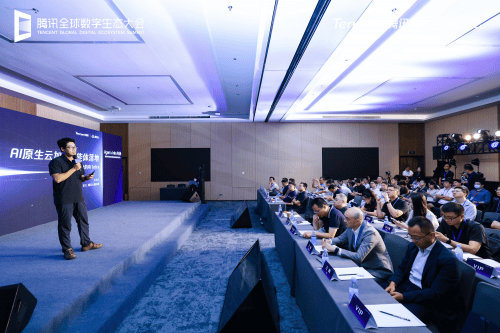
Core Insights - Tencent Cloud is focusing on the theme of "Intelligent Agent-Driven Cloud Infrastructure Leap Upgrade" at the Global Digital Ecosystem Conference, highlighting advancements in AI-native cloud architecture and security systems [1][3] - The company announced a significant upgrade to its cloud computing infrastructure, integrating Agent Infra solutions and Cloud Mate services to support the transition of Agentic AI from experimental to production-level applications [1][6] Group 1: Infrastructure and Technology Advancements - Tencent Cloud's Vice President Li Li stated that the number of enterprises deploying Agents will double in the next two years, with GenAI-related IaaS spending expected to grow by 192% [3] - The infrastructure must provide faster inference efficiency, flexible tool integration, reliable system support, and automated service capabilities to meet the surging demand for cloud computing [3][6] - The cloud computing capabilities have been significantly enhanced, achieving a 17-fold increase in model startup speed and reducing large-scale service expansion time from 10 minutes to 34 seconds [5][6] Group 2: Security and Operational Efficiency - A new Agent Runtime solution has been launched, integrating five key components to provide a robust infrastructure for intelligent agents, achieving millisecond-level startup times and supporting hundreds of thousands of concurrent instances [6] - The Cloud Mate service has automated governance and risk management processes, achieving a 95% interception rate for risky SQL queries and reducing troubleshooting time from 30 hours to as fast as 3 minutes [6][7] Group 3: Industry Collaboration and Insights - A joint report by IDC and Tencent Cloud analyzes the evolution of AI Infra, providing a comprehensive guide for enterprises in various sectors, including transportation, manufacturing, education, and healthcare [8] - The conference featured participation from various industry representatives, discussing technological breakthroughs and practical applications in AI infrastructure [8][9] Group 4: Future Outlook - Tencent Cloud aims to transition cloud computing from a "resource era" to an "intelligent service era," emphasizing the need for self-aware, self-decision-making, and self-optimizing capabilities in future cloud infrastructures [9]


LLM开源2.0大洗牌:60个出局,39个上桌,AI Coding疯魔,TensorFlow已死
3 6 Ke· 2025-09-17 08:57
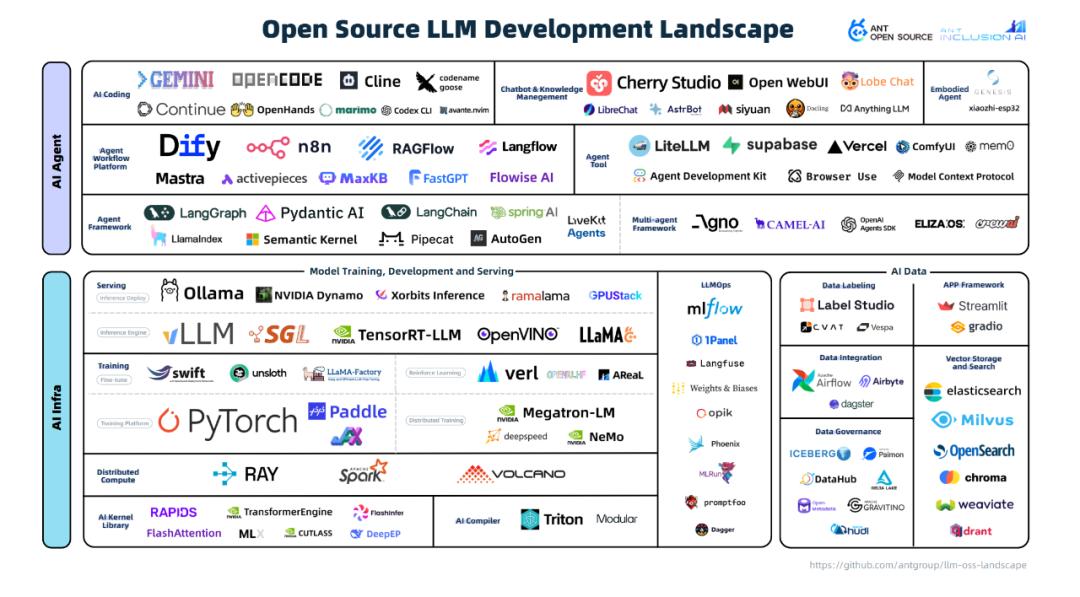
Core Insights - Ant Group's open-source team unveiled the 2.0 version of the "2025 Large Model Open Source Development Ecosystem Panorama" at the Shanghai Bund Conference, showcasing significant changes in the open-source landscape [2][4][10] Group 1: Ecosystem Changes - The updated panorama includes 114 projects, a decrease of 21 from the previous version, with 39 new projects and 60 projects that have exited the stage, including notable ones like TensorFlow, which has been overtaken by PyTorch [4][5] - The overall trend indicates a significant reshuffling within the ecosystem, with a median age of only 30 months for projects, highlighting a youthful and rapidly evolving environment [5][10] - Since the "GPT moment" in October 2022, 62% of the projects have emerged, indicating a dynamic influx of new entrants and exits [5][10] Group 2: Project Performance - The top ten most active open-source projects reflect a focus on AI, LLM, Agent, and Data, indicating the primary areas of interest within the ecosystem [7][9] - The classification framework has evolved from broad categories to more specific segments, including AI Agent, AI Infra, and AI Data, emphasizing the shift towards an "agent-centric" era [10][19] Group 3: Contributions by Region - Among 366,521 developers, the US and China contribute over 55%, with the US leading at 37.41% [10][12] - In specific areas, the US shows a significant advantage in AI Infra and AI Data, with contributions of 43.39% and 35.76% respectively, compared to China's 22.03% and 21.5% [12][14] Group 4: Methodological Evolution - The methodology for selecting projects has shifted from a known starting point to a broader approach that captures high-activity projects, increasing the threshold for inclusion [15][18] - The new methodology aligns with Ant Group's goal of providing insights for internal decision-making and guidance for the open-source community [15][18] Group 5: AI Agent Developments - The AI Agent category has evolved into a structured system with various specialized tools, indicating a transition from chaotic growth to systematic differentiation [19][21] - AI Coding has expanded its capabilities, covering the entire development lifecycle and supporting multimodal and context-aware functionalities [23][27] Group 6: Market Trends - The report predicts significant commercial potential in AI Coding, with new revenue models emerging from subscription services and value-added features [24][27] - Chatbot applications have seen a peak but are now stabilizing, with a shift towards integrating knowledge management for long-term productivity [28][30] Group 7: Infrastructure and Operations - The Model Serving segment remains a key battleground, with high-performance cloud inference solutions like vLLM and SGLang leading the way [42][45] - LLMOps is rapidly growing, focusing on the full lifecycle management of models, emphasizing stability and observability [50][52] Group 8: Data Ecosystem - The AI Data sector appears stable, with many projects originating from the AI 1.0 era, but is facing challenges in innovation and engagement [58][60] - The evolution of data infrastructure is anticipated, moving from static repositories to dynamic systems that provide real-time insights for models [60][61] Group 9: Open Source Dynamics - A trend towards customized open-source licenses is emerging, allowing for more control and flexibility in commercial negotiations [62][63] - The landscape of open-source projects is being challenged, with some projects operating under restrictive licenses, raising questions about the definition of "open source" [62][63] Group 10: Competitive Landscape - The competitive landscape is marked by a divergence between open-source and closed-source models, with Chinese projects flourishing while Western firms tighten their open-source strategies [67][68] - The introduction of MoE architectures and advancements in reasoning capabilities are becoming standard features in new models, indicating a shift in focus from scale to reasoning [69][70]
“GPU计算资源越来越异构”,腾讯全面适配主流国产芯片
Di Yi Cai Jing· 2025-09-16 04:11
Core Viewpoint - The article highlights the advancements in domestic chip performance and the strategic focus of Tencent on enhancing AI computing power through a heterogeneous computing platform that integrates various chip resources [1][3]. Group 1: Chip Performance and Strategy - Tencent Cloud is leveraging a heterogeneous computing platform to provide AI computing power, which is fully compatible with mainstream domestic chips [1]. - The application ratio of domestic GPU chips is expected to increase by 2025, as cloud vendors maintain a diversified strategy for computing chips, including self-developed and domestic chip testing [3]. - Tencent's management emphasizes the importance of both imported and domestic chips, noting that some domestic chips can effectively handle smaller model inference tasks [3]. Group 2: Efficiency and Capital Expenditure - Tencent has made significant capital expenditures, totaling 83.1 billion yuan from Q4 of last year to Q2 of this year, to rapidly build computing power for self-developed products and client services [4]. - The company has invested heavily in optimizing computing efficiency, with improvements in various areas such as storage and communication, which can enhance operational efficiency significantly [4]. - The upgrade of AI infrastructure is expected to accelerate the large-scale deployment of intelligent agents, with rapid iterations in technology paradigms related to inference in the open-source community [4].
“类比移动互联网,AI正处于2011年前后的拐点”
投中网· 2025-09-15 06:26
Core Viewpoint - The article discusses the current state and future potential of the AI industry, emphasizing the rapid technological changes and the uncertainty surrounding AI applications and entrepreneurship. It raises questions about whether early entrepreneurs can build a competitive edge or if they risk becoming obsolete due to fast-evolving technologies [2]. Group 1: AI Industry Development - The AI core industry in Haidian District is projected to exceed 280 billion yuan in 2024, with an annual growth rate of 30%, accounting for 80% of the city's total and one-fourth of the national total [3]. - Haidian District has the highest concentration of top AI talent and laboratory resources in China, supported by various government initiatives to foster AI development [3]. Group 2: Investment Timing and Strategy - Early investment in AI applications is deemed advantageous, with a focus on identifying when technologies will mature. The current period is likened to the mobile internet boom around 2011-2012 [4]. - Entrepreneurs are encouraged to act quickly once a direction is determined, as the market is rapidly evolving and the cost of market education is decreasing [5]. Group 3: Demand and Market Dynamics - Investors and entrepreneurs agree on the importance of distinguishing between genuine and artificial demand, advocating for solutions that enhance efficiency rather than creating unnecessary AI applications [7]. - The demand for AI applications is categorized into three types: cost reduction for businesses, new value experiences for individuals, and innovative human-computer interactions [8]. Group 4: Commercialization Challenges - There is a clear divide in opinions regarding whether to focus on B2B or B2C markets, with B2B models seen as more mature and having clearer customer payment logic [12]. - The challenges of monetizing C2C applications are highlighted, with a consensus that achieving product-market fit (PMF) is crucial for success [14]. Group 5: Globalization and Market Expansion - A notable trend is the early globalization of AI startups, with many companies choosing to target international markets from inception [16]. - Chinese companies are making significant strides in the global AI market, particularly in the field of embodied intelligence, with a focus on expanding overseas customer bases [18]. Group 6: Incubation Trends - Investment firms are increasingly engaging in incubation, with various models being adopted to support startups through funding and resources [20]. - The importance of exit strategies in the investment ecosystem is emphasized, with recommendations for entrepreneurs to align with industry funds for better resource access [21].

中国工业与中小市值企业:2025 年上半年业绩后,下半年的哑铃型投资组合-China Industrials and SMID_ Barbell Baskets for 2H25E Post 1H25 Results
2025-09-15 01:49
Summary of Key Points from the Conference Call Industry Overview - **Industry**: China Industrials - **Outlook**: The industrial sector in China is facing a challenging trajectory in 2H25, with persistent macro headwinds and a cautious outlook due to muted demand and external risks, particularly from US tariffs [10][11][24][25]. Core Insights 1. **Earnings Performance**: In 1H25, 39% of companies reported earnings beats, a notable increase from 20% in 2H24, indicating improved performance against lower expectations [1]. 2. **Manufacturing Activity**: The Manufacturing PMI fell below 50 during Apr-Aug 2025, reflecting weak domestic consumption and cooling export orders [11][12]. 3. **Corporate Profits**: Industrial profits declined by 1.7% year-on-year to RMB 4 trillion (approximately USD 559 billion) in 7M25, with a slight recovery noted in July due to government measures [14]. 4. **Capex Intentions**: There is a significant contraction in Japan's machine tool orders to China, indicating a risk-off sentiment among manufacturers [16][20]. 5. **Destocking Cycle**: The destocking phase is nearing an end, but restocking is not yet in sight, as businesses await improved demand and profit margins [21]. Investment Strategies Barbell Strategy - **High-Risk Basket**: Focus on sectors like AI infrastructure, factory automation, and humanoid robots. Key picks include: - **AI Infra**: Kingboard Laminates (KBL), Shengyi Technology (SYTECH), Han's CNC [26][27]. - **Factory Automation**: Wuxi Lead, UBTECH, Hengli Hydraulic [43][46]. - **Low-Risk Basket**: Emphasize infrastructure and export sectors, with a preference for: - **China Infrastructure**: CRRC, Lesso, China State Construction International (CSCI) [5][61]. - **Export**: Techtronic, Shenzhou, Stella, focusing on high dividend yields [5]. Key Company Insights 1. **Kingboard Laminates (KBL)**: Reported 1H25 earnings growth of 28% to HKD 933 million, with expectations of improved gross margins in 2H25 due to price increases [28][29]. 2. **Shengyi Technology (SYTECH)**: Anticipates a 10-15% increase in shipments of AI-related materials, with ongoing expansion plans [33][34]. 3. **Wuxi Lead**: Expected to benefit from an EV battery capex cycle turnaround, with new orders projected to exceed previous guidance [47][48]. 4. **UBTECH**: Revised delivery guidance for humanoid robots upwards, indicating strong demand in the auto and electronics sectors [52][53]. 5. **CRRC**: Upgraded to Buy due to strong earnings and increased high-speed rail tenders, with a target price raised to HKD 7.30 [62][64]. Additional Considerations - **Policy Response**: The effectiveness of government policies in stimulating demand remains uncertain, with a need for decisive action to restore private sector confidence [24]. - **Market Sentiment**: The overall sentiment in the industrial sector is cautious, with a preference for companies with strong balance sheets and exposure to structural growth themes [25]. This summary encapsulates the key points discussed in the conference call, highlighting the current state of the China industrial sector, investment strategies, and specific company insights.


中邮证券:AI时代重估云价值 把握AI Infra投资机遇
Zhi Tong Cai Jing· 2025-09-11 06:49
Core Viewpoint - The demand for computing power infrastructure is expanding due to the explosion of AI model requirements and the intelligent transformation across various industries, creating multi-layered investment opportunities in cloud computing, AI+Data, AI Agents, and AI computing power [1] Company Performance - Oracle's first fiscal quarter results showed mixed performance with revenue of $14.93 billion (up 12% year-on-year, below the expected $15.03 billion) and adjusted earnings per share of $1.47 (slightly below the expected $1.48) [1] - Oracle's cloud business experienced strong growth, with total cloud revenue of $7.2 billion (up 28% in dollars, 27% at constant currency), including IaaS revenue of $3.3 billion (up 55%) and SaaS revenue of $3.8 billion (up 11%) [1] - The company expects its cloud infrastructure business to grow by 77% this fiscal year, reaching $18 billion, with projected revenues for the next four years significantly exceeding previous expectations [1] Remaining Performance Obligations - Oracle's remaining performance obligations reached $455 billion, a year-on-year increase of 359%, with a significant contract signed with OpenAI valued at approximately $30 billion [2] - The CEO indicated that new multi-billion dollar contracts are expected to be signed in the coming months, potentially pushing remaining performance obligations over $500 billion [2] Market Demand Trends - Coreweave is experiencing a surge in demand for computing power, with long-term contracts becoming the norm as clients' needs have expanded from thousands to millions of GPUs [3] - The company has integrated approximately 2.2 GW of capacity, with 900 MW expected to be operational by the end of the year, indicating a supply-demand imbalance in computing power infrastructure [3] Capital Expenditure Trends - Major global cloud service providers (CSPs) are increasing capital expenditures, with Microsoft, Google, Meta, and Amazon raising their spending forecasts for AI infrastructure and data center expansions [4] - Microsoft plans to increase its capital expenditure to over $30 billion in FY2026, while Google has raised its capex to $85 billion for 2025 [4] - In China, companies like Alibaba and Tencent are also ramping up investments in AI and cloud infrastructure, with Alibaba's CEO indicating that the next three years will see more investment than the past decade combined [5] Investment Targets - Suggested investment targets include companies in cloud computing such as Kingsoft Cloud, Alibaba, and Tencent [7] - For AI+Data, companies like StarRing Technology and DaMeng Data are highlighted [8] - In the AI Agent sector, companies like Dingjie Zhizhi and Vision Source are recommended [8] - For AI computing power, companies such as Cambricon and Inspur Information are noted as potential investment opportunities [9]
App 工厂 BS 14 亿美金现金收购一家上市公司,又一 AI Infra 月收入长了 40 倍
投资实习所· 2025-09-11 05:37
Group 1: Bending Spoons Acquisitions - Bending Spoons (BS) acquired Brightcove for $233 million in cash and subsequently privatized it [1] - BS has now acquired Vimeo for $1.38 billion in cash, indicating a shift towards acquiring larger, previously high-valued public companies [2][3] - The CEO of BS, Luca Ferrari, stated their intention to indefinitely own and operate acquired companies, with plans for significant investments in key markets and product areas post-acquisition [3] Group 2: Mercor's Growth in AI Recruitment - Mercor, an AI recruitment platform, achieved a valuation of $2 billion after a $100 million Series B funding round and has reached an annualized revenue of $450 million, reflecting a 4.5x growth in just six months [5] - Major clients of Mercor include Google, Amazon, Meta, Microsoft, OpenAI, and NVIDIA, positioning it as a strong competitor to Scale AI and Surge [5] - Mercor's CEO clarified that their annual recurring revenue (ARR) exceeds $450 million, although this figure is akin to gross merchandise volume (GMV) and does not account for downstream fees [6] Group 3: AI Industry Trends - The AI industry is experiencing explosive growth, as evidenced by the rapid revenue increases of companies like Mercor and others in the AI coding sector [7] - There is ongoing debate within the industry regarding revenue calculation methods, particularly concerning the costs associated with large models [7] - Another AI infrastructure product has seen a 40-fold increase in monthly revenue, indicating a strong demand for AI applications and services [8]

AI时代重估云价值,把握AIInfra投资机遇
China Post Securities· 2025-09-10 09:29
Industry Investment Rating - The investment rating for the industry is "Outperform the Market" and is maintained [1] Core Insights - The report highlights a significant growth in AI-driven cloud business, with Oracle's cloud revenue reaching $7.2 billion, a year-on-year increase of 28% [4] - The demand for computing power infrastructure is expected to continue expanding due to the explosion of AI model requirements and the intelligent transformation across various industries [9] - Major cloud service providers are increasing their capital expenditures significantly, with Microsoft planning to raise its capex to over $30 billion in FY2026 [6] Summary by Sections Industry Overview - The closing index for the industry is 5267.07, with a 52-week high of 5841.52 and a low of 2855.49 [1] Performance of Relative Indices - The report indicates a relative performance trend of the computing industry compared to the CSI 300 index, showing fluctuations over the specified periods [3] Recent Developments - Oracle's first fiscal quarter revenue was $14.93 billion, with a cloud business revenue of $7.2 billion, reflecting a 28% increase year-on-year [4] - Coreweave is experiencing a surge in demand for computing power, with a current capacity of approximately 2.2GW and a significant increase in long-term contracts [5] Capital Expenditure Trends - Major international players like Microsoft, Google, Amazon, and Meta are increasing their capital expenditures, with Microsoft planning $24.2 billion for Q2 FY2025, a 27% year-on-year increase [6] - In China, companies like Alibaba and Tencent are also ramping up their investments in AI and cloud infrastructure, with Baidu's capex reaching 3.8 billion yuan, a 79.41% year-on-year increase [8] Investment Recommendations - The report suggests focusing on various sectors including cloud computing, AI and data, AI agents, and AI computing power, with specific companies highlighted for potential investment opportunities [9]
想要「版本」超车,Agent 需要怎样的「Environment」?
机器之心· 2025-09-06 07:00
Core Viewpoint - The article discusses the recent transformation of AI startup you.com from a search engine to an AI infrastructure company following a $100 million Series C funding round. This shift aligns with the "product-driven infrastructure" strategy and reflects a broader trend of commercializing Agentic AI from laboratory settings [1]. Group 1: Agent Environment and Its Evolution - The focus of artificial intelligence is shifting from content creation to goal-driven, autonomous Agentic AI, driven by rapid advancements in the field [4]. - AI agents are expected to become the new interface for human-computer interaction, allowing users to issue commands in natural language without needing to write code [5]. - Companies like Cursor, Bolt, and Mercor have achieved significant revenue growth by leveraging unique intelligent agent products [6]. Group 2: Development of Agent Environment - The development of a suitable "Agent Environment" is crucial for modern intelligent applications, balancing the need for freedom in code execution with security and isolation [7]. - Companies like E2B and Modal Labs are providing secure, isolated cloud environments (sandboxes) for running AI-generated code [7]. - The concept of Agent Environment can be traced back to reinforcement learning, where it serves as a simulated space for training agents through trial and error [8]. Group 3: Real-World Application and Safety - As LLM-based agents advance, the requirements for their environments are evolving from training spaces to operational zones, necessitating safe access to real-world tools [9]. - Different types of agents require distinct environments, such as physical environments for robots and digital environments for virtual assistants [10].

重视AIInfra,算力、云、数据库实现链路突破
China Post Securities· 2025-09-02 05:53
Industry Investment Rating - The industry investment rating is "Outperform the Market" and is maintained [1] Core Viewpoints - The report emphasizes the growth potential of AI infrastructure, predicting the market could reach USD 171.21 billion by 2029, with a CAGR of 20.12% from 2024 to 2029 [4] - Major cloud providers are significantly increasing their investments in infrastructure, with Alibaba Cloud planning to invest over CNY 380 billion in the next three years [4] - The demand for AI and data solutions is surging, as evidenced by Snowflake's financial performance, which exceeded expectations with a 32% year-on-year revenue increase [6] Summary by Relevant Sections Industry Basic Situation - The closing index is 5786.18, with a 52-week high of 5841.52 and a low of 2844.68 [1] Relative Index Performance - The relative performance of the computer industry shows fluctuations, with a notable increase of 96% from September 2024 to August 2025 [3] Recent Research Reports - The report highlights the strategic focus on AI infrastructure, addressing challenges such as computational bottlenecks and data silos, which are critical in the era of large models [4] - Companies like Tencent Cloud and SenseTime are also expanding their infrastructure capabilities, with Tencent planning new data centers in the Middle East and Indonesia [5] Investment Recommendations - Suggested companies for investment include those in cloud computing such as Deepin Technology and Kingsoft Cloud, as well as AI-related firms like XH Technology and DaMeng Data [7][8]