
液冷技术

Search documents
牛股川润股份上半年营收增长25.08% 液冷系统子公司业绩大涨
Zheng Quan Shi Bao Wang· 2025-08-19 13:32
Core Viewpoint - Chuanrun Co., Ltd. (002272) reported significant growth in revenue and a reduction in net loss for the first half of 2025, driven by its expanding new energy business and improved management practices [1][2] Financial Performance - The company achieved operating revenue of 804 million yuan, a year-on-year increase of 25.08% [1] - Net profit was -23.57 million yuan, representing a year-on-year reduction in loss of 58.35% [1] - Net cash flow from operating activities was 1.41 million yuan, up 101.19% year-on-year [1] Business Development - Chuanrun Co., Ltd. focuses on high-end energy equipment and industrial services, leveraging "fluid control technology + intelligent energy equipment" to create a comprehensive energy ecosystem [1] - The company has developed over 20 projects related to the "source-network-load-storage" integrated energy system [1] Subsidiary Performance - Chuanrun Hydraulic, a wholly-owned subsidiary, reported revenue of 510 million yuan and a net profit of 23.13 million yuan, up from 389 million yuan and 10.53 million yuan respectively in the previous year [2] - The growth in the subsidiary's performance is a key contributor to the overall revenue and profit increase of Chuanrun Co., Ltd. [2] Market Trends - The liquid cooling technology is expected to see a market penetration rate increase to 45% by 2025, driven by rising demand in data centers due to advancements in artificial intelligence [3] - The Chinese liquid cooling data center market is projected to grow at a compound annual growth rate of 59% from 2023 to 2027, potentially exceeding 100 billion yuan by 2027 [3] Strategic Partnerships - Chuanrun Co., Ltd. signed a strategic cooperation agreement with Xiangjiang Technology to advance liquid cooling technology for data centers [2] Stock Market Performance - Chuanrun Co., Ltd.'s stock price has surged over 130% since mid-April, with the stock hitting the daily limit for three consecutive trading days from August 15 to 19 [3] - Major institutional investors, including JPMorgan Chase and Morgan Stanley, have increased their holdings in the company [3]

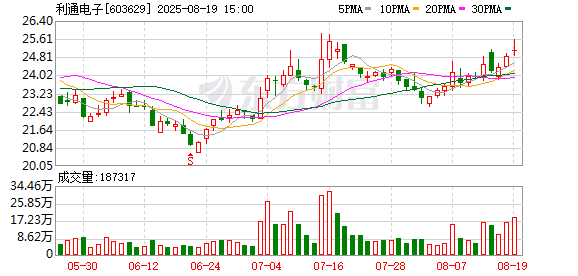
利通电子:公司在液冷产品研发方面与超聚变建立了战略合作关系,并对相关产品进行论证与研讨
Mei Ri Jing Ji Xin Wen· 2025-08-19 11:51
每经AI快讯,有投资者在投资者互动平台提问:2024年5月公司与超聚变数字技术有限公司签署《战略 合作协议》约定共同打造国内 GPU 设备生产供应链并全力推动液冷 GPU 设备的联合开发实验,烦请详 细介绍下该战略合作协议的情况(液冷GPU设备),谢谢! 利通电子(603629.SH)8月19日在投资者互动平台表示,公司在液冷产品研发方面与超聚变建立了战 略合作关系,并对相关产品进行论证与研讨。这种合作是公司对未来新产品探索工作的一部分,有很大 的不确定性。 (文章来源:每日经济新闻) ...


液冷服务器概念持续升温,产业链公司加速布局
Zheng Quan Zhi Xing· 2025-08-19 08:34
Group 1: Market Growth and Trends - The liquid cooling server market in China is expected to reach $2.37 billion in 2024, with a year-on-year growth of 67% [1] - The compound annual growth rate (CAGR) for the liquid cooling server market in China from 2024 to 2029 is projected to be 46.8%, potentially exceeding $16.2 billion by 2029 [1] - The global liquid cooling market is anticipated to grow from $1.96 billion in 2024 to $2.84 billion in 2025, reflecting a growth rate of 44.9% [2] Group 2: Technological Advancements and Energy Efficiency - Liquid cooling technology is transitioning from an optional solution to a necessary one due to increasing performance demands and energy efficiency [3] - The PUE (Power Usage Effectiveness) can be reduced to below 1.2 with liquid cooling solutions, aligning with national goals for energy efficiency in data centers [3] Group 3: Capital Market Performance - Several liquid cooling-related stocks have seen significant price increases, with some stocks rising over 100% in the last 60 days [4] - Companies like Inveck and Feilong have reported substantial revenue growth, with Inveck achieving a revenue of $2.573 billion, a 50.25% increase year-on-year [4][5] Group 4: Company Strategies and Innovations - Inveck has launched a comprehensive liquid cooling solution covering all aspects from manufacturing to delivery, ensuring risk-free operation [6] - Feilong is expanding its production capacity to 1.2 million units annually and is actively entering overseas markets [7] - Feirong is increasing R&D investments in high-performance cooling technologies to meet customer demands [7]




国海证券:英伟达架构升级推动液冷发展 国内本土企业相关优势明显
智通财经网· 2025-08-19 07:49
Core Insights - The upgrade of Nvidia's architecture is driving the development of liquid cooling solutions, with the GB300 liquid cooling system covering over 80% of high-power components, and the Rubin architecture Kyber rack expected to achieve 100% liquid cooling by 2027 [1] - The demand for GPU liquid cooling is significantly increasing, with the GPU liquid cooling market projected to reach 80 billion yuan by 2026 [2] - ASIC cooling presents high gross margin potential, with a surge in ASIC chip shipments expected in 2026, driven by major tech companies like Google, Meta, and Amazon [3] - Chinese companies are positioned to become industry leaders in the liquid cooling sector, with several firms already making significant advancements [4] Liquid Cooling Market Dynamics - The four main components of the cold plate liquid cooling solution (cold plate, CDU, UQD, Manifold) account for over 90% of the total value of the GB200 NVL72 cooling solution [2] - The GB300 system will increase the number of cold plates used from 54 in GB200 to 126 in GB300, indicating a significant rise in component demand [2] ASIC Chip Market Outlook - Google has fully adopted liquid cooling for its TPU clusters, achieving a GW-level operational scale with high availability [3] - Expected shipments of Google TPUs will reach between 1.5 million to 2 million units by 2025, with Meta and Amazon also planning substantial ASIC chip releases [3] Growth Potential for Chinese Companies - Companies like Qihong Technology and Shuguang Digital Innovation are making strides in the liquid cooling supply chain and commercial deployment [4] - Other firms such as Yingweike and Feirongda are also establishing themselves as key players in the liquid cooling market, with innovative products and successful partnerships [4] Investment Recommendations - The performance boost from Nvidia's Blackwell architecture necessitates liquid cooling solutions, while the customization of ASIC chips is expected to enhance profit margins [5] - The growth of the cooling industry is anticipated as GB200/GB300 systems continue to expand and ASIC servers are introduced [5]


南都电源(300068.SZ):公司锂电储能产品均已使用液冷技术
Ge Long Hui· 2025-08-19 07:22
Group 1 - The core viewpoint is that liquid cooling technology has become an inevitable trend in the industry due to increasing demands for heat dissipation efficiency, power density, and space utilization in data centers and energy storage systems [1] - The company has implemented liquid cooling technology in all of its lithium battery energy storage products [1]

宜通世纪(300310.SZ):公司目前不涉及液冷技术及相关业务
Ge Long Hui· 2025-08-19 07:22
Core Viewpoint - Yitong Century (300310.SZ) is currently not involved in liquid cooling technology and related businesses [1] Company Summary - Yitong Century has clarified its position on liquid cooling technology, stating that it does not engage in this area [1]

祥鑫科技(002965.SZ):目前公司为超聚变、华鲲振宇、中兴康讯等公司供应液冷服务器相关的产品
Ge Long Hui· 2025-08-19 07:15
Core Viewpoint - The company, Xiangxin Technology, is leveraging its liquid cooling and refrigerant direct cooling technologies across various sectors, including computing power services, electric vehicle battery systems, and data centers [1] Group 1: Technology Applications - The company's liquid cooling and refrigerant direct cooling technologies are applicable in fields such as computing power servers, electric vehicle power batteries, motor control systems, industrial energy storage systems, IDC data centers, and low-altitude unmanned aerial vehicles [1] - Current clients include Super Fusion, Huakun Zhenyu, and ZTE Kangxun, for whom the company supplies liquid cooling server-related products [1] Group 2: Electric Vehicle Battery Products - The company supplies various components for electric vehicle power batteries, including liquid cooling plates, box covers, trays, end plates, and bottom protective plates [1] - Notable clients for these products include C customers, B customers, Guoxuan High-Tech, Yiwei Lithium Energy, Zhengli New Energy, Funeng Technology, Xinwangda, Yuanjing Power, Weirui (Geely), Hive, and Ruipu Lanjun [1] Group 3: Recent Project Developments - In May 2024, the company received a project development notification from a leading domestic flying car manufacturer, confirming its role as a supplier for battery lower box assemblies and liquid cooling plates [1] - In October 2024, the company was awarded a project bid notification from a leading digital energy client, establishing it as the supplier for wind and liquid cooling supercharging station assemblies and structural components, with a project lifecycle of 1-2 years and an expected total sales amount of RMB 300-400 million [1]

高澜股份(300499.SZ):已实现液冷关键设备的自主研发与生产
Ge Long Hui· 2025-08-19 07:10
Core Viewpoint - The company has achieved independent research and production of key liquid cooling equipment, indicating a significant advancement in its technological capabilities [1] Group 1: Product Development - The company's data center liquid cooling products include server liquid cooling plates, fluid connection components, various models and heat exchange forms of CDU, multiple sizes and power ratings of TANK, pumps, and heat exchange units [1] Group 2: Supply Chain Strategy - To optimize supply chain efficiency and meet diverse customer demands, the company will consider customer needs and its own production capabilities when deciding on the self-manufacturing or outsourcing of related components [1]

申万宏源:液冷渗透趋势显著 关注上游冷却介质投资机遇
智通财经网· 2025-08-19 06:40
Core Viewpoint - Immersion liquid cooling is a promising solution for high power density scenarios in data centers, with potential market opportunities driven by increasing demand for cooling solutions due to rising power densities from AI and 5G applications [1][2][4][6]. Group 1: Liquid Cooling Technology - Liquid cooling technology is essential for addressing heat dissipation challenges in data centers, especially with the increasing power density of AI servers, which can reach 2000-3000W compared to traditional servers at 300W-1000W [2]. - The current mainstream cooling solution is cold plate liquid cooling, which primarily uses water and ethylene glycol as cooling mediums, accounting for approximately 70% of the liquid cooling market [3]. - Two types of cold plate liquid cooling exist: single-phase (no phase change) and two-phase (with phase change), with the latter offering higher cooling efficiency suitable for higher power densities [3]. Group 2: Immersion Liquid Cooling - Immersion liquid cooling is more efficient than traditional cold plate systems, utilizing non-conductive cooling liquids to dissipate heat through convection and phase change [4]. - Single-phase immersion cooling is currently favored due to lower deployment costs and reduced risk of coolant spillage, while two-phase immersion cooling, although more efficient, faces challenges in cost and technology maturity [4]. Group 3: Market Potential and Demand - The International Energy Agency (IEA) predicts that global data center installed capacity will reach 114.3 GW by 2025, with annual additions ranging from 9 GW to 24 GW between 2024 and 2030, leading to a potential demand for 40,000 tons of fluorinated liquids [6]. - The estimated market space for immersion cooling solutions, based on a fluorinated liquid price of 250,000 CNY per ton, is approximately 10 billion CNY [6]. Group 4: Key Players and Recommendations - Companies in the fluorinated liquid space, such as Dongyangguang (600673.SH), Juhua Co. (600160.SH), and Yonghe Co. (605020.SH), are recommended for investment due to the growth potential in the cooling medium market [7][8].

祥鑫科技:目前公司的算力服务器液冷模组、液冷结构件等产品可应用于算力服务器冷却
Mei Ri Jing Ji Xin Wen· 2025-08-19 01:17
Group 1 - The company has expertise in thermal management systems and liquid cooling technology, enabling it to provide customized cooling solutions based on client needs [1] - The company's liquid cooling modules and structural components for computing servers are specifically designed for cooling applications, such as GPU cooling [1] - The company has already supplied relevant products to leading clients in the market and is continuously exploring market opportunities related to liquid cooling products [1]