
科技成果转化

Search documents
山东省发展改革委发布民营经济高质量发展典型案例之济南:强化企业科创主体地位 激发民营经济创新动能
Zhong Guo Fa Zhan Wang· 2025-10-22 15:00
Core Insights - Jinan City has focused on key aspects of the innovation chain, enhancing the role of enterprises as innovation subjects, and has been recognized as a "National Technology Achievement Transfer and Transformation Demonstration Zone" and a pilot city for "Science and Technology Innovation China" [1] Group 1: Strengthening Technological Innovation - The city aims to enhance the sensitivity of enterprises to technological revolutions and industrial changes, guiding them to focus on R&D tasks [2] - A total of 115 incubation platforms have been established, including 15 national-level technology business incubators, with 9,165 technology-based SMEs currently in the city [3] - In 2024, the city plans to secure provincial financial support of 15.135 million yuan for "small to high" initiatives and 24.918 million yuan for enterprise R&D [3] Group 2: Addressing Enterprise Needs - The city has created a demand list for key technology issues, successfully addressing 78 out of 91 technology innovation demands in 2024 [4] - Collaboration among industry, academia, and research institutions has led to the successful implementation of 8 provincial major technology demonstration projects and 75 major technology innovation projects [5] Group 3: Supporting Enterprises as Key Players - The city encourages leading technology enterprises to establish high-level R&D institutions, resulting in 20 national key laboratories and 126 provincial key laboratories [7] - A total of 894 industry innovation platforms have been cultivated, with 6,412 technology innovation projects implemented in Shandong Province [8] - The city has initiated pilot projects for technology brokers, leading to the establishment of 10 broker teams and 20 industrialization projects [9] Group 4: Enhancing the Innovation Ecosystem - Jinan City is promoting the integration of technology, finance, and industry, with a focus on technology transfer, enterprise financing, and industrial promotion [10] - The city has organized 9 technology transfer events, resulting in 106 signed technology transfer projects and 69 roadshow projects [11] - In 2024, the total value of technology contracts reached 926.08 billion yuan, maintaining the highest total in the province for six consecutive years [11] Group 5: Promoting Industrial Transformation - The city has developed three major industries: new generation information technology (650 billion yuan), intelligent manufacturing and high-end equipment (500 billion yuan), and biomedicine (170 billion yuan) [13] - High-tech industries account for over 59% of the total industrial output value, indicating a dual enhancement of enterprise innovation and industrial development quality [13]
天津出台政策促科技成果转化
Xin Hua She· 2025-10-22 10:47
Core Viewpoint - Tianjin's government has introduced new policies to promote the transformation of scientific and technological achievements from laboratories to production lines, addressing barriers between research institutions and small to medium enterprises [1] Group 1: Policy Initiatives - The "Pay After Use" model aims to facilitate collaboration between universities and small enterprises, allowing for more effective technology transfer [1] - The Tianjin Municipal Science and Technology Bureau has released the "Implementation Measures for Promoting the 'Pay After Use' Model" and "Guidelines for Due Diligence and Liability Exemption in Technology Transfer" [1] Group 2: Financial Support and Risk Mitigation - The new policies include flexible payment models such as one-time buyout licenses, phased payments, and profit-sharing based on sales, shifting focus from pre-transaction concerns to collaborative efforts during and after the transfer [1] - Various financial instruments have been introduced to share risks associated with technology transfer, including insurance products like "Patent Implementation Failure Cost Loss Insurance" and "Comprehensive Insurance for Technology Transfer" [1] Group 3: Regulatory Framework - The guidelines clarify that researchers can engage in technology transfer activities without facing liability for mistakes, provided they adhere to legal regulations and institutional rules [1]
专注科技成果转化 上海心聚策源一期创投基金规模4.5亿元
Zheng Quan Shi Bao Wang· 2025-10-22 07:39
Core Insights - The Shanghai Xinju Ceyuan Phase I Venture Capital Fund focuses on the transformation of scientific and technological achievements from universities and research institutions [1] - The fund has a total scale of 450 million yuan and aims to invest in high-end manufacturing, new materials, new energy, integrated circuits, biomedicine, artificial intelligence, quantum technology, and synthetic biology [1][2] - The fund represents a new exploration of city-district collaboration and regional cooperation, involving multiple stakeholders including Shanghai Guotou Company and the Xinjiang Production and Construction Corps [1][2] City-District Collaboration - Shanghai Guotou Company leverages its expertise in project discovery, value assessment, and capital empowerment to identify promising tech innovation seeds [2] - Jing'an District will provide physical space and ecosystem support for seed companies, facilitating seamless integration of capital and services [2] Regional Cooperation - The fund is seen as a new exploration of "East-West linkage" for industrial co-prosperity, aiming to create a collaborative development model of "Shanghai R&D + Xinjiang production + global market" [2] - Shanghai's advanced technologies in chemical and modern agriculture can be scaled and industrialized in Xinjiang, utilizing the region's abundant raw materials and energy resources [2] - Among the 11 signed companies, one in the chemical sector plans to establish its R&D center in Shanghai while leveraging Xinjiang's application scenarios for its operations [2]
京蒙协作再结硕果呼伦贝尔人才科创中心在北京启动
Nei Meng Gu Ri Bao· 2025-10-22 01:21
Core Points - The Hohhot Talent Sci-Tech Innovation Center (Beijing) was officially launched on October 20, marking a significant step for Hohhot in integrating into the Beijing-Tianjin-Hebei coordinated development strategy [1][2] - The center aims to leverage Beijing's technological advantages and Hohhot's industrial characteristics to create a demand-driven, market-oriented mechanism for technology transfer [1] - The center will enhance flexible talent recruitment models and improve service support systems to inject continuous intellectual support and innovative momentum into the modernization of Hohhot [1] Summary by Sections - **Launch and Purpose** - The center serves as an important platform for deepening cooperation between Beijing and Inner Mongolia, facilitating the integration of high-quality sci-tech resources [1][2] - **Collaboration and Agreements** - During the launch event, various research institutions and enterprises, including the Wang Hanzhong Academy team and Hohhot Academy, engaged in discussions and signed multiple cooperation agreements [1] - The Hohhot Agricultural Science Research Institute signed agreements with several seed companies, indicating a focus on agricultural innovation [1] - **Technological Achievements** - Eight technological achievements in the fields of medicine and agriculture were announced, showcasing the center's initial success in promoting technology transfer and industry collaboration [1]
懂服务的科创园区有“人缘”(科技自立自强·科创新空间)
Ren Min Ri Bao· 2025-10-21 22:39
Core Insights - The Keda Silicon Valley innovation and entrepreneurship platform has gathered over 7,000 technology-based companies and innovation service institutions, along with more than 70,000 entrepreneurial talents in just over three years since its establishment [3][5] - The platform provides a gradient cultivation matrix based on different growth stages of companies, addresses space challenges for entrepreneurs, and builds bridges for scenario matching, thus facilitating the transformation of scientific achievements from "shelf" to "market" [3][8] - The platform has attracted significant projects, such as the smart flying car project led by Tsinghua University's team, which chose to establish its headquarters in Hefei due to the city's talent pool and industrial resources [3][5] Company Support and Services - Keda Silicon Valley offers comprehensive support for startups, including assistance with company registration, funding applications, and connecting with potential clients [5][6] - The platform has seen over 2,500 new technology-based companies settle in, with a significant concentration of biomanufacturing and artificial intelligence firms in Hefei [3][4] - Specific examples include Feynman Technology, which received nearly 10 million yuan in funding from Meihua Venture Capital, enabling them to enhance their production capabilities and secure large orders [6][8] Innovation and Market Application - Companies like Zhidi Gancheng have successfully transitioned their technologies from the lab to market applications, particularly in the transportation infrastructure sector [7][8] - The collaboration between Keda Silicon Valley and local enterprises has led to the successful testing and implementation of new technologies, such as distributed fiber optic vibration/sound monitoring devices [7][8] - The innovation ecosystem is continuously optimized, with initiatives aimed at early detection, publication, and transformation of significant scientific achievements, thereby supporting more entrepreneurs in realizing their dreams [8][9]

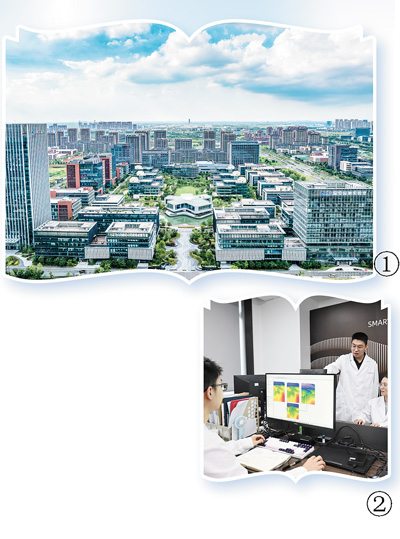
科大硅谷累计集聚各类创新创业人才超7万名 懂服务的科创园区有“人缘”(科技自立自强·科创新空间)
Ren Min Ri Bao· 2025-10-21 21:46
Core Insights - The Keda Silicon Valley innovation and entrepreneurship platform has attracted over 7,000 technology-based companies and more than 70,000 innovative talents in just over three years since its establishment [1][2] - The platform provides a gradient cultivation matrix tailored to different stages of company growth, addressing challenges such as space and resource allocation, and facilitating the transformation of scientific achievements into marketable products [1][6] Group 1: Company Development Support - Keda Silicon Valley has seen over 2,500 new technology-based companies settle in, with approximately 50% of Hefei's biomanufacturing and aerospace information companies located there [2][3] - The platform offers comprehensive support, including funding opportunities through A-class talent policies and connections to financing institutions for startups [3][5] - Companies like Anhui Mengshi Aviation Technology have benefited from Keda Silicon Valley's proactive service, which anticipates and addresses their needs at each stage of development [3][4] Group 2: Innovation and Market Application - Feynman Technology, initially focused on high-end equipment services, has successfully transitioned to product development with the help of nearly 10 million yuan in funding from Meihua Venture Capital [5][6] - The company has developed multiple non-inflatable tire products for various vehicle types, significantly accelerating its research and development process [5][6] - The introduction of new technologies, such as distributed fiber optic vibration/sound monitoring devices by Zhidi Sensing, has enabled practical applications in traffic infrastructure, enhancing operational efficiency and safety [6][7] Group 3: Ecosystem and Future Prospects - Keda Silicon Valley is actively building a multi-layered, diversified service system to optimize the innovation ecosystem, facilitating early detection, publication, and transformation of significant scientific achievements [6][7] - The collaboration between companies and Keda Silicon Valley is fostering deeper partnerships and enhancing the application of new technologies, paving the way for future advancements in various sectors [6][7]

科技成果如何从实验室走向生产线?首都产业一线科技人才现身说法
Xin Jing Bao· 2025-10-21 12:19
Core Insights - The event highlighted the importance of collaboration among enterprises, industry chains, and government policies to drive innovation and overcome technological bottlenecks in key sectors [1][2][4] Group 1: Industry Collaboration - The event featured leaders from various sectors, including integrated circuits, new energy vehicles, and equipment manufacturing, who shared their experiences in translating research outcomes into production [1][2] - The Beijing Integrated Circuit Industry-Education Integration Base serves as a collaborative platform for academia and industry, focusing on technology development, talent cultivation, and achievement transformation [1][2] Group 2: Practical Experiences - Industry leaders shared their journeys in overcoming technical challenges, emphasizing the need for a collaborative ecosystem rather than isolated efforts [2][3] - The development of domestic memory chips was highlighted as a strategic move in the semiconductor industry, showcasing advancements in manufacturing capabilities and equipment performance [2] Group 3: Youth Engagement - The event encouraged students and industry workers to engage in practical learning and to understand the significance of their contributions to national development [4][5] - Young scholars expressed their commitment to contributing to the semiconductor industry, recognizing the importance of aligning personal aspirations with national needs [6]
青海省高质量发展政府投资基金招GP
FOFWEEKLY· 2025-10-21 10:00
Core Viewpoint - Qinghai Province is launching a market-oriented sub-fund application guide for its high-quality development government investment fund, with a total scale of 5 billion yuan and an initial capital of 1.5 billion yuan already in place [1] Investment Focus and Direction - The fund aims to support key industries in Qinghai, focusing on the unique resource endowment of the province, promoting the upgrade of salt lake industries, optimizing industrial layout, and enhancing resource utilization [2] - It will support the energy revolution, develop a clean energy industry chain, and establish a national energy storage development demonstration zone [2] - The fund will also promote zero-carbon industry development, new power system development, technological innovation, and the establishment of national-level tourism and organic agricultural enterprises [2] - At least 70% of the fund's investments will be directed towards sub-funds supporting the "Four Places" construction [2] Types of Sub-Funds - Sub-funds are categorized into major (special) sub-funds, regional sub-funds, and market-oriented sub-funds [3] - Major sub-funds are established according to the directives of the Qinghai Provincial Party Committee and government [3] - Regional sub-funds operate through market mechanisms, focusing on cooperation with local parks and cities to achieve coordinated regional development [3] - Market-oriented sub-funds are initiated by professional fund managers in collaboration with social capital, targeting key supported industries and areas [3]

招商银行南京分行:打造金融赋能科技成果转化的“招行样本”
Sou Hu Cai Jing· 2025-10-21 07:22
Core Insights - The article emphasizes the critical role of fintech in supporting technological development, highlighting the proactive measures taken by China Merchants Bank's Nanjing branch to promote innovation and facilitate a "technology-industry-finance" cycle [1][11] Innovation-Driven Initiatives - The Nanjing branch has introduced the "Talent Loan for Innovation," a specialized online credit product aimed at supporting technology-driven small and medium enterprises, providing up to 5 million yuan in unsecured loans [2][3] - A specific case is mentioned where a chip research institute received a 2 million yuan loan within one working day, showcasing the efficiency and responsiveness of the bank's services [2][3] Policy Response - The article discusses the relaxation of merger loan regulations by the National Financial Regulatory Administration, allowing banks to provide up to 80% of the funding for controlling mergers, up from 60% [4][5] - China Merchants Bank has actively trained its branches to implement these new policies, ensuring compliance and risk management while facilitating mergers for technology companies [4][5][6] Institutional Leadership - The Nanjing branch has established a "six specialized mechanisms" to enhance its fintech services, focusing on increasing dedicated personnel and resources to better serve technology enterprises [7][9] - The branch has been recognized as an excellent fintech branch for two consecutive years, reflecting its commitment to supporting technological innovation [7] Service Optimization - The Nanjing branch has launched the "Innovation Loan" product, which has provided nearly 900 million yuan in credit to over 100 technology enterprises as of June [10] - Collaborations with data platforms have improved service accuracy, and the bank has implemented advanced risk monitoring systems to prevent misuse of funds [10]

从“190”的积累到“111”的激增——破解丹徒科技赋能经济高质量发展的“创新密码”
Zhen Jiang Ri Bao· 2025-10-20 23:39
日前,一则数据令人振奋:截至目前,丹徒区有高新技术企业总数190家;而今年,新申报高新技 术企业数量达到111家。 从"190"的多年积累到"111"的当年激增,这组看似简单的数字背后,涌动的是丹徒区以科技创新为 引擎,驱动经济结构优化、能级跃升的澎湃动能。它不仅是一份亮眼的"成绩单",也是观察丹徒高质量 发展路径的一个绝佳窗口,更是破解丹徒区科技赋能经济高质量发展"创新密码"的关键路径。 科技成果转化是科技创新的"最后一公里","转什么""谁来转""怎么转"决定了科技创新的成败。丹 徒区聚焦技术合同成交额核心指标,强化服务保障与人才培育双轮驱动,从政策支持、协同机制、要素 市场建设等多维度发力,提高技术交易活跃度,提升科技成果转化质效。 为提升技术市场服务专业化水平,区科技局组织人员参加2025年技术合同认定登记培训班,夯实政 策理解与业务实操能力;选派人员参与中级技术经理人(镇江专场)培训,培育兼具技术识别与市场运 营能力的复合型人才;组织人员参加全市科技成果转化能力提升专项培训班,推动形成"技术供给-需求 对接-落地转化"闭环。 高企培育提质增效 激活创新主体动能 高新技术企业代表着一个国家或地区的创新 ...