内外贸一体化

Search documents
坚持对外开放,推动多领域合作共赢——着力推进全年经济工作八大重点任务④(稳中求进、提质增效 实现“十五五”良好开局)
Ren Min Ri Bao· 2026-01-08 02:07
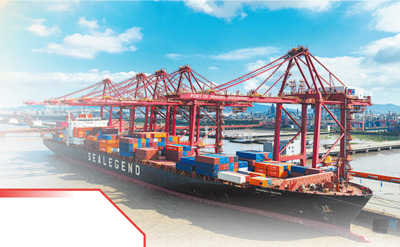
Core Viewpoint - China is committed to expanding high-level opening-up to promote trade and investment liberalization, aiming to share development opportunities with the world and inject positive energy into global development [8][10]. Group 1: High-Level Opening-Up - The central economic work meeting emphasizes the importance of better coordinating domestic economic work and international economic and trade struggles [8]. - Xi Jinping highlighted China's role as a major contributor to global economic growth and stability, reinforcing the commitment to high-level opening-up [8]. - By 2026, the international economic and trade landscape will undergo significant restructuring, necessitating a rational and dialectical analysis of the complex external environment [8]. Group 2: Institutional Opening-Up - Institutional opening-up focuses on aligning international rules, regulations, management, and standards, which is crucial for overcoming systemic barriers and creating new competitive advantages [10]. - The establishment of free trade pilot zones and free trade ports serves as key platforms for testing institutional opening-up initiatives [10]. - The Hainan Free Trade Port, launched in December 2025, is positioned as a significant gateway for high-level opening-up, providing a stable and efficient platform for cooperation [10][11]. Group 3: Foreign Trade Quality Improvement - In the first 11 months of 2025, China's total goods trade reached 41.21 trillion yuan, with a year-on-year growth of 3.6% [12]. - The central economic work meeting outlined strategies for promoting integrated development of trade and investment, as well as domestic and international markets [12]. - Emphasis is placed on enhancing service trade, digital trade, and green trade to cultivate new growth drivers in foreign trade [13][14]. Group 4: Comprehensive Cooperation - In November 2025, a special train carrying photovoltaic glass boards from Jiangsu to Laos demonstrated the efficiency of rail transport, reducing transit time by nearly half compared to traditional sea transport [15]. - China aims to expand its opening-up to promote cooperation and win-win outcomes across broader fields and deeper levels [15]. - The first China International Import Expo showcased innovative products, highlighting the importance of creating a transparent and stable environment for foreign investment [16]. Group 5: Belt and Road Initiative - In the first 11 months of 2025, China's trade with Belt and Road countries reached 21.33 trillion yuan, reflecting a year-on-year increase of 6% [17]. - Strengthening strategic alignment and enhancing infrastructure connectivity are essential for optimizing international economic cooperation [17]. - The focus is on signing more regional and bilateral trade and investment agreements to expand new spaces for win-win development [18].

稳中求进、提质增效 实现“十五五”良好开局|坚持对外开放,推动多领域合作共赢
Ren Min Ri Bao· 2026-01-08 01:47
Group 1: High-Level Opening Up - The core viewpoint emphasizes that expanding high-level opening up is crucial for promoting reform and development amidst changing global dynamics [1] - China aims to enhance trade and investment liberalization and facilitation, sharing development opportunities with the world [1] - The 2025 Central Economic Work Conference highlighted the need to better coordinate domestic economic work with international trade struggles [1] Group 2: Institutional Opening Up - Institutional opening up is identified as a key direction for expanding openness, focusing on aligning with international high-standard economic and trade rules [2] - The establishment of Free Trade Zones (FTZs) serves as a testing ground for institutional opening up, contributing significantly to foreign investment and trade [2] Group 3: Foreign Trade Quality Improvement - In 2025, China's total goods trade value reached 41.21 trillion yuan, reflecting a year-on-year growth of 3.6% [6] - The strategy for enhancing foreign trade quality includes promoting trade-investment integration and domestic-international trade integration [7][9] Group 4: Service Trade and New Growth Drivers - The development of service trade is emphasized, with a focus on innovation to increase its share in total foreign trade [11] - The government plans to support cities in the eastern and central regions to develop high-end service outsourcing businesses [11] Group 5: Belt and Road Initiative - In the first eleven months of 2025, trade with Belt and Road countries reached 21.33 trillion yuan, marking a 6% increase [14] - The strategy involves enhancing infrastructure connectivity and deepening cooperation with Belt and Road countries [14] Group 6: Trade Agreements Expansion - China is actively expanding its network of high-standard Free Trade Agreements (FTAs), having signed 24 agreements with 31 countries and regions [15] - The focus is on leveraging multilateral platforms to accelerate the signing of regional and bilateral trade investment agreements [15]

坚持对外开放,推动多领域合作共赢(稳中求进、提质增效 实现“十五五”良好开局)
Ren Min Ri Bao· 2026-01-08 01:21
Group 1: Economic Strategy and International Trade - The core viewpoint emphasizes the importance of expanding high-level opening-up as a key strategy for reform and development in the context of changing global dynamics [1] - China aims to better coordinate domestic economic work with international trade struggles, highlighting the need for a strategic approach to external challenges [1] - The central economic work meeting has set a clear direction for promoting trade and investment integration, as well as the integration of domestic and international markets [5][6] Group 2: Institutional Opening and Free Trade Zones - Institutional opening is identified as a critical direction for expanding openness, focusing on aligning international rules and standards [2][3] - The establishment of free trade zones and ports serves as a testing ground for institutional opening, contributing significantly to foreign investment and trade [3] - The Hainan Free Trade Port is highlighted as a key platform for high-standard trade rules and efficient customs models, enhancing China's institutional opening efforts [3][4] Group 3: Foreign Trade Quality Improvement - China's foreign trade has shown resilience, with a total import and export value of 41.21 trillion yuan, reflecting a year-on-year growth of 3.6% in the first eleven months of 2025 [5] - The focus is on promoting service trade, digital trade, and green trade to cultivate new growth drivers in foreign trade [9] - The integration of trade and investment is emphasized as a strategic response to global economic changes, fostering a virtuous cycle of investment and trade [7] Group 4: Belt and Road Initiative and International Cooperation - The Belt and Road Initiative is framed as a collaborative effort, with trade volume with participating countries reaching 21.33 trillion yuan, a 6% increase year-on-year [12] - Strengthening strategic connections and infrastructure links with Belt and Road countries is essential for expanding international economic cooperation [12] - The initiative aims to enhance mutual trust and benefit among participating nations, promoting a comprehensive and interconnected network [12] Group 5: Trade Agreements and Market Expansion - China is actively expanding its network of high-standard free trade agreements, having signed 24 agreements with 31 countries and regions [13] - The focus is on leveraging multilateral platforms to accelerate the signing of regional and bilateral trade investment agreements [13] - The goal is to implement zero-tariff measures for 100% of products for 53 African countries, showcasing a flexible approach to trade agreements [13]
坚持对外开放,推动多领域合作共赢(稳中求进、提质增效 实现“十五五”良好开局) ——着力推进全年经济工作八大重点任务④
Ren Min Ri Bao· 2026-01-07 22:27
Group 1: Core Views - Expanding high-level opening-up is a crucial strategy for promoting reform and development in the context of changing international dynamics [1] - China aims to enhance trade and investment liberalization and facilitation, sharing development opportunities with the world [1] - The focus on high-level opening-up is essential for navigating uncertainties in international competition [1] Group 2: Institutional Opening - Institutional opening is identified as a key direction for expanding openness, emphasizing alignment with international rules and standards [2] - This approach aims to address deep-seated institutional barriers and create new competitive advantages [2] Group 3: Free Trade Zones and Ports - Free trade zones and ports serve as critical platforms for institutional opening, with significant contributions to foreign investment and trade [3] - The Hainan Free Trade Port is highlighted as a model for high-standard trade rules and efficient customs practices [3] Group 4: Foreign Trade Quality Improvement - Foreign trade is recognized as a vital engine for economic growth, with a total import and export value of 41.21 trillion yuan, reflecting a 3.6% year-on-year increase [5] - The strategy for enhancing foreign trade quality includes promoting trade-investment integration and domestic-international market integration [5][8] Group 5: Service Trade Development - The development of service trade is emphasized, with a focus on increasing its share in total foreign trade, which currently lags behind the global average [8] - Support for cities in eastern and central-western regions to develop high-end service outsourcing is part of the strategy to foster new growth points [8] Group 6: Belt and Road Initiative - Trade with Belt and Road countries reached 21.33 trillion yuan, marking a 6% increase, indicating the importance of this initiative for expanding international economic cooperation [11] - Strengthening strategic connections and infrastructure links with Belt and Road countries is essential for optimizing international trade strategies [11] Group 7: Trade Agreements - Expanding a high-standard free trade zone network is a key measure for advancing higher levels of opening-up [13] - China has signed 24 free trade agreements with 31 countries and regions, aiming to accelerate the process of regional and bilateral trade agreements [13]
比往年更早、更猛!外贸大省组团出海今年加码
Di Yi Cai Jing· 2026-01-07 12:25
Group 1 - The Zhejiang Province's "Thousand Teams and Ten Thousand Enterprises" initiative aims to organize over 2,000 groups and support more than 20,000 companies in expanding overseas markets, targeting a goal of 100 billion yuan in intended orders [1] - In January 2026, the number of outbound groups from Zhejiang increased by nearly 20% compared to the same period in 2025, indicating a stronger push for international market engagement [1] - The leather industry in Haining is set to participate in international exhibitions, marking a strategic shift towards export, with plans to attend events in Russia, Dubai, France, Australia, and South Korea [2][3] Group 2 - The Zhejiang Province achieved over 1.8 trillion yuan in intended orders through overseas exhibitions in 2025, with total import and export values exceeding 5 trillion yuan, reflecting a 5.3% year-on-year growth [2] - The local wool sweater industry in Jiaxing plans to double the number of exhibitions attended in 2026, with exports growing by 16.63% in the first ten months of the previous year [4] - Companies are increasingly focusing on sales and compliance in international trade, moving from passive to proactive engagement in overseas markets [5] Group 3 - The textile industry is diversifying its product offerings, moving from home decor to apparel and high-end fabrics, which has led to a 20% increase in the variety of exhibitions attended [3][4] - The establishment of overseas warehouses and display centers in key markets like Moscow and Seoul is part of a strategy to enhance logistics and market reach [3] - The government is expected to play a crucial role in integrating resources and providing support to help companies navigate the challenges of international trade [5][6] Group 4 - Companies are adapting to rising operational costs by leveraging technology and innovation to improve efficiency and reduce expenses [7] - The focus on cultivating high-end talent and enhancing innovation capabilities is essential for traditional industries to remain competitive [8] - The ongoing geopolitical tensions and trade barriers are prompting companies to explore new markets while maintaining a strong presence in traditional ones [6][7]
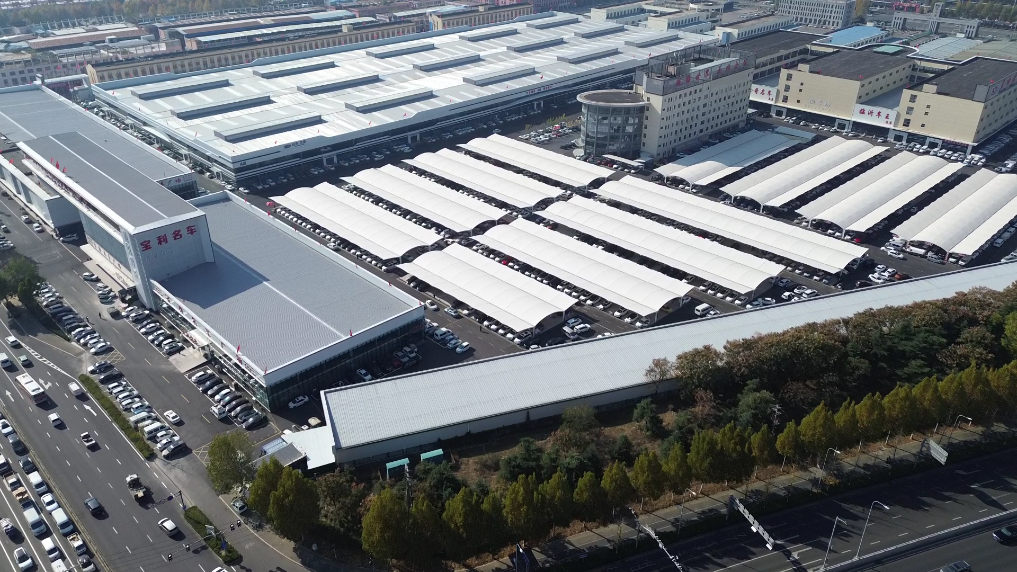
一“城”连中外——山东临沂商城国际化一线观察
Xin Lang Cai Jing· 2026-01-07 08:59
Core Insights - Linyi Market has evolved from a small stall to a modern commercial logistics city, becoming the largest professional market cluster in China with extensive logistics coverage, facilitating international trade [1][2] Group 1: Market Development - Linyi Market has hosted 90 foreign business events from January to November 2025, attracting 44,500 international merchants, a 47.85% increase year-on-year, with an intended transaction volume of 23.67 billion yuan [2] - The market achieved a total transaction volume of 646.51 billion yuan and a logistics total of 1,011.96 billion yuan during the same period, reflecting year-on-year growth of 6.3% and 8.8% respectively [2] Group 2: International Trade Initiatives - The "Hundred Groups and Thousand Enterprises: Market Going Global" initiative has been launched to explore international markets through various methods, including government-business partnerships and exhibitions [3] - Linyi's North China International Automobile City has begun operations, exporting an average of 900 vehicles monthly to over 20 countries and regions, indicating strong international demand for Chinese vehicles [3] Group 3: Retail Expansion - Haoduo Bao Supply Chain Co., Ltd. is promoting a new retail model overseas, offering comprehensive support for international partners, including product sourcing and operational training [3] - The company has opened four direct "1000 Kwanza Stores" in Angola since October 2025, generating daily revenues exceeding 200,000 yuan, showcasing the effectiveness of their "whole store going global" model [4] Group 4: Logistics Infrastructure - Linyi has established itself as a national hub for international road transport, with significant reductions in customs clearance times and transportation costs, exemplified by the TIR road transport to Moscow taking less than 10 days [5] - The city is the first in China to implement three major centers for international road transport, enhancing its logistics capabilities and expanding its business reach to countries like Russia and Kazakhstan [5] Group 5: Future Development Strategy - The Shandong Provincial Government has initiated a strategy to transition Linyi Market from a national to a global trading hub, emphasizing internationalization and digitalization as key drivers for high-quality development [5]
挑大梁 再出发|锻造“投资江苏”金招牌,打造高水平对外开放新高地
Xin Lang Cai Jing· 2026-01-06 17:29
Core Viewpoint - The article emphasizes the importance of expanding high-level opening-up, promoting integrated trade and investment, and enhancing cooperation in various fields to achieve win-win outcomes in foreign trade and investment. Group 1: Company Developments - Samsung Electronics has begun mass production of ultrasound machines at its Suzhou factory, marking a significant reinvestment to embrace China's high-level opening-up opportunities [1][3] - Samsung Madison, a subsidiary focused on high-end ultrasound diagnostic equipment, is transitioning from importing complete machines to assembling them locally in Suzhou, aligning with China's push for domestic production in the medical device sector [3] - The Suzhou factory has become Samsung's only overseas home appliance R&D center, showcasing a complete capability from R&D to high-end manufacturing [3] Group 2: Operational Efficiency - The production efficiency at Samsung's Suzhou factory is highlighted, with refrigerators being produced every 16 seconds and washing machines in under 10 seconds, supported by a robust local supply chain [3][5] - The proximity of the Suzhou Industrial Park to the Suzhou Port enhances logistics efficiency, allowing for lower transportation costs and environmental benefits, which is a competitive advantage for Samsung [5] Group 3: Investment and Economic Environment - The Suzhou Industrial Park is a key area for cross-border investment in China, having attracted over 5,200 foreign projects and utilized more than $42 billion in foreign capital [6] - The park has become a hub for multinational companies, with 79 provincial-level headquarters, representing nearly 20% of the province's total [6] - Jiangsu province is actively promoting trade and investment integration, aiming to stabilize foreign trade and attract foreign investment through various initiatives and events [7][9]
一“城”连中外
Xin Lang Cai Jing· 2026-01-05 20:49
Core Viewpoint - Linyi Market has evolved into a significant international trade hub, facilitating global commerce and logistics, with a focus on integrating domestic and foreign trade [1][2]. Group 1: Market Development - Linyi Market has transformed from a small stall market to the largest professional wholesale market cluster in China, attracting thousands of international merchants annually [1][2]. - In 2025, Linyi Market hosted 90 foreign merchant events, with 44,500 international buyers visiting, marking a 47.85% year-on-year increase, resulting in an intended transaction volume of 23.67 billion yuan [2]. - The market achieved a total transaction volume of 646.51 billion yuan and a logistics total of 1,011.96 billion yuan in the same period, with year-on-year growth of 6.3% and 8.8% respectively [2]. Group 2: International Expansion - The "Hundred Groups and Thousand Enterprises: Market Going Global" initiative has been launched to explore international markets through various methods, including government-business collaborations and exhibitions [3]. - Linyi's North China International Auto City has begun operations, exporting an average of 900 vehicles monthly to over 20 countries and regions, indicating strong international demand for Chinese vehicles [3]. - Local businesses are adopting new export models, such as the "two-yuan store" concept, which offers high-value, one-stop shopping experiences to overseas partners [3][4]. Group 3: Logistics and Infrastructure - Linyi has established itself as a national center for international road transport, significantly reducing customs clearance times and transportation costs [5]. - The city has become the first in China to implement three major logistics centers, enhancing its capabilities in international road transport [5]. - The provincial government is supporting Linyi Market's transition from a national to a global trading hub, emphasizing internationalization and digitalization as key growth strategies [5].
临沂商城出海服务站暨临沂-胡志明组货拼柜专线正式启动
Qi Lu Wan Bao· 2026-01-05 15:26
Core Viewpoint - The launch of the Linyi Mall's outbound service station and the Linyi-Ho Chi Minh group cargo consolidation line marks a significant step in establishing a comprehensive outbound service system, enhancing trade integration and cooperation with countries along the Belt and Road Initiative [1][2]. Group 1: Outbound Service System - The outbound service system consists of domestic service stations providing comprehensive pre-export services and overseas stations handling local customs clearance and distribution, creating an efficient service chain from Linyi to overseas terminals [1]. - The first Linyi-Ho Chi Minh cargo consolidation line utilizes a market procurement trade pilot policy, achieving "direct consolidation and fixed pricing," which effectively reduces cargo loss and delays, ensuring stable logistics costs and timeliness [1][2]. Group 2: Logistics Efficiency and Cost Reduction - The overall logistics costs are expected to decrease by approximately 20%, with time efficiency improving by over 30%, allowing for customs clearance in Vietnam within 10-12 days [2]. - The first shipment, valued at 200,000 RMB, is expected to arrive in Ho Chi Minh City in 10 days, showcasing the improved logistics control and flexibility for small and medium enterprises [1][2]. Group 3: International Expansion - Linyi Mall's internationalization efforts are accelerating, with 39 overseas malls and warehouses established in the core area of Lanshan, and over 2,900 enterprises expected to expand internationally in 2025 [3]. - In the first 11 months of 2025, Lanshan Mall's market transaction volume reached 4,463.44 billion RMB, with total logistics exceeding 7,273.61 billion RMB, and foreign trade import and export volume increasing by 8.9% year-on-year [3].
高质量发展地方亮点丨一“城”连中外——山东临沂商城国际化一线观察
Xin Hua Wang· 2026-01-04 14:20
Core Viewpoint - Linyi Mall has transformed from a small market to a modern commercial logistics city, becoming a significant international trade hub with a focus on digitalization and globalization [1][2]. Group 1: Development of Linyi Mall - Linyi Mall has evolved into the largest professional market cluster in China, attracting thousands of international merchants annually for trade and cooperation [1][2]. - In 2025, Linyi Mall hosted 90 international business events, with 44,500 international merchants visiting, marking a 47.85% increase year-on-year, resulting in an intended transaction volume of 23.67 billion yuan [2]. - The market transaction volume reached 646.51 billion yuan, and the logistics total volume was 1,011.96 billion yuan, with year-on-year growth of 6.3% and 8.8% respectively [2]. Group 2: International Trade Expansion - The "Hundred Groups and Thousand Enterprises" initiative has been launched to explore international markets, utilizing various methods such as government-business partnerships and exhibitions [3]. - Linyi's North China International Auto City has begun operations, exporting an average of 900 vehicles monthly to over 20 countries and regions, indicating strong international demand for Chinese vehicles [3]. Group 3: New Business Models - Local businesses are exploring new "going global" models, such as the "two-yuan store" concept, which offers high-value, one-stop shopping experiences to overseas partners [5]. - In Angola, the "1000 Kwanza Store" model has opened four stores, generating daily revenues exceeding 200,000 yuan, demonstrating the effectiveness of the "whole store going abroad" approach [6]. Group 4: Logistics and Transportation - Linyi has established itself as a national leader in international road transport, with significant reductions in customs time and costs due to the TIR (Transports Internationaux Routiers) agreement [6]. - The city is the first in China to host three major centers for international road transport, enhancing its logistics capabilities and covering countries like Russia and Kazakhstan [6]. Group 5: Future Development Plans - The Shandong provincial government is promoting Linyi Mall's transition from a national to a global trading hub, emphasizing internationalization and digitalization as key growth strategies [9].