多智能体协作

Search documents
喝点VC|BV百度风投:数据治理即生产力,现在是Data Agent的时刻
Z Potentials· 2025-07-30 03:37
Core Insights - The article emphasizes the transformative role of Data Agents in the era of Generative AI, highlighting their ability to compress the data lifecycle into a rapid "data → insight → action" loop, achieving over 60% efficiency gains and significant cost savings in the millions of dollars [3][4][10]. Industry Trends - Data Agents redefine "Data" as any digital asset that can be accessed and utilized in real-time, moving away from traditional static databases [5][7]. - The global data volume is projected to reach 149 ZB in 2024 and exceed 181 ZB in 2025, with approximately 80% being unstructured data that requires immediate structuring for algorithmic use [5][7]. - Generative AI is expected to contribute an additional $2.6 to $4.4 trillion in value annually, with nearly 75% of this value coming from functions heavily reliant on structured data [5][7]. Data Agent Definition and Functionality - Data Agents are AI entities that automate the entire data lifecycle, capable of planning, executing, and verifying tasks based on natural language inputs [7][8]. - They are positioned as core infrastructure rather than mere BI tools, directly impacting business KPIs and productivity [7][8]. Efficiency Gains and Market Acceptance - Early adopters of Data Agents have reported productivity increases of over 60% and annual savings of millions of dollars [7][8]. - The cost of LLM inference has dramatically decreased from $60 per million tokens to $0.06, indicating a significant technological shift [10][13]. - AI search and query traffic in the U.S. has reached 5.6%, reflecting a growing acceptance of natural language interactions for structured answers [13][14]. Market Demand and Investment Trends - The demand for Data Agents has surged, with a 900% increase in global search interest for "AI agent" and a tripling of investment in the AI Agent sector, reaching $3.8 billion in 2024 [45][46]. - Major acquisitions by companies like Databricks and Snowflake indicate a strong focus on data-driven AI platforms [13][14]. Development Stages of Data Agents - The evolution of Data Agents is expected to occur in three stages: 1. Human-led with AI empowerment, transforming data interaction and decision-making processes [36][37]. 2. Scenario-driven applications that allow for rapid development of customized systems based on existing data [38][40]. 3. Autonomous intelligence where Data Agents manage data collection, governance, and analysis, acting as a digital COO [41][42]. Conclusion and Future Outlook - The current landscape presents a unique opportunity for Data Agents to become the default interface for digital work, akin to the Office suite in the 1990s [45][46]. - The integration of Data Agents into business processes is anticipated to enhance organizational efficiency and responsiveness, marking a significant shift in how data is utilized across industries [48][49].


Multi-Agent 协作兴起,RAG 注定只是过渡方案?
机器之心· 2025-07-19 01:31
Group 1: Core Insights - The AI memory system is evolving from Retrieval-Augmented Generation (RAG) to a multi-level state dynamic evolution, enabling agents to retain experiences and manage memory dynamically [1][2]. - Various AI memory projects have emerged, transitioning from short-term responses to long-term interactions, thereby enhancing agents with "sustained experience" capabilities [2][3]. - MemoryOS introduces a hierarchical storage architecture that categorizes dialogue memory into short-term, medium-term, and long-term layers, facilitating dynamic migration and updates through FIFO and segmented paging mechanisms [2][3]. - MemGPT adopts an operating system approach, treating fixed-length context as "main memory" and utilizing paging to manage large document analysis and multi-turn conversations [2][3]. - Commercial platforms like ChatGPT Memory operate using RAG, retrieving user-relevant information through vector indexing to enhance memory of user preferences and historical data [2][3]. Group 2: Challenges Facing AI Memory - AI memory systems face several challenges, including static storage limitations, chaotic multi-modal and multi-agent collaboration, retrieval expansion conflicts, and weak privacy control [4][5]. - The need for hierarchical and state filtering mechanisms is critical, as well as the ability to manage enterprise-level multi-tasking and permissions effectively [4][5]. - These challenges not only test the flexibility of the technical architecture but also drive the evolution of memory systems towards being more intelligent, secure, and efficient [4][5].

AI Day直播 | LangCoop:自动驾驶首次以“人类语言”的范式思考
自动驾驶之心· 2025-07-18 10:32
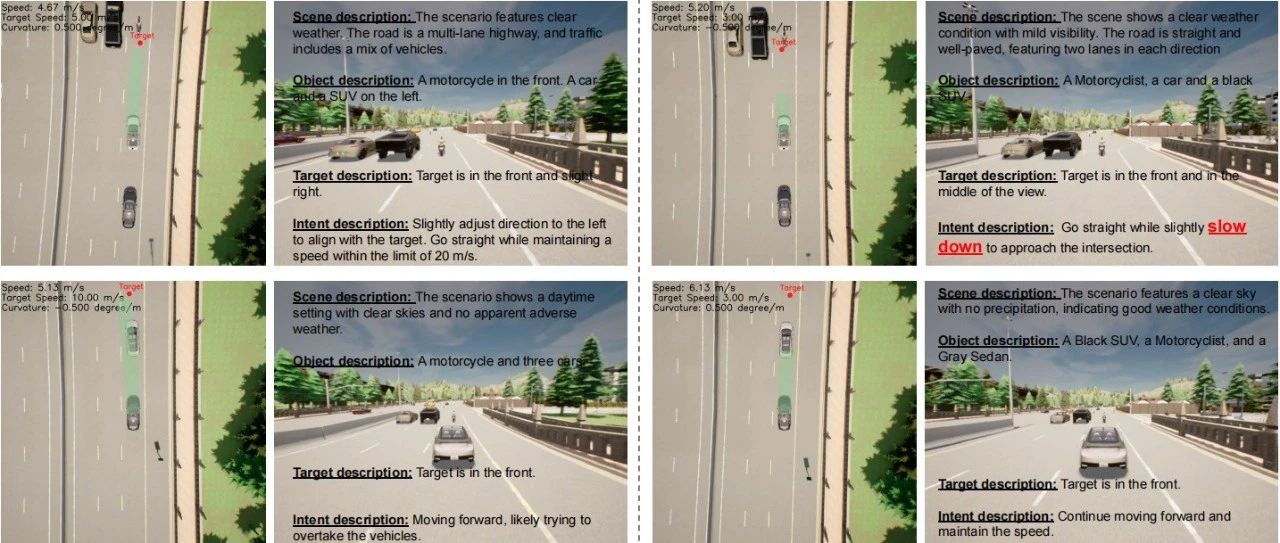
Core Viewpoint - The article discusses the potential of multi-agent collaboration in autonomous driving, highlighting the introduction of LangCoop, a new paradigm that utilizes natural language for communication between agents, significantly reducing bandwidth requirements while maintaining competitive driving performance [3][4]. Group 1: Multi-Agent Collaboration - Multi-agent collaboration enhances information sharing among interconnected agents, improving safety, reliability, and maneuverability in autonomous driving systems [3]. - Current communication methods face limitations such as high bandwidth demands, heterogeneity of agents, and information loss [3]. Group 2: LangCoop Innovations - LangCoop introduces two key innovations for collaborative driving using natural language as a compact and expressive communication medium [3]. - Experiments conducted in the CARLA simulation environment demonstrate that LangCoop achieves up to a 96% reduction in communication bandwidth compared to image-based communication, with each message being less than 2KB [3]. Group 3: Additional Resources - The article provides links to the research paper titled "LangCoop: Collaborative Driving with Language" and additional resources for further exploration of the topic [4][5].
Google截胡Windsurf,布局AI编程
Haitong Securities International· 2025-07-16 04:31
Investment Rating - The report does not explicitly provide an investment rating for the industry or specific companies involved. Core Insights - The AI coding startup Windsurf, initially close to being acquired by OpenAI for $3 billion, opted to join Google DeepMind, focusing on agentic coding. Google executed a soft acquisition through non-exclusive technology licensing and talent absorption, with the deal valued at approximately $2.4 billion [1][2][8]. - Windsurf's core product, Agent IDE, is designed for multi-agent AI collaboration, highlighting the increasing importance of integrated development environments in AI programming [3][9]. - The competitive landscape has shifted, with platform risks escalating as independent AI tool providers face survival pressures. Windsurf's experience illustrates the dilemma of maintaining neutrality versus aligning with dominant platforms for resource support [4][10][11]. Summary by Sections Event - Windsurf was close to being acquired by OpenAI for $3 billion but chose to join Google DeepMind instead, focusing on agentic coding. Google did not acquire equity but engaged in a soft acquisition through technology licensing and talent absorption [1][2][8]. Commentary - The failed acquisition by OpenAI was primarily due to concerns over IP access rights granted to Microsoft, which raised fears within Windsurf's leadership about losing control over their core technology. This led to the collapse of the deal, allowing Google to seize the opportunity [2][8][10]. Product Overview - Windsurf's flagship product, Agent IDE, facilitates multi-agent AI collaboration, supporting task delegation, shared context, and persistent state management among AI agents [3][14]. Industry Implications - The situation faced by Windsurf reflects a broader trend in the AI industry where independent toolmakers must decide between maintaining platform neutrality or aligning with larger ecosystems for better resource access. This consolidation may accelerate standardization and innovation in AI development [11][12].

走进“大国重器”心脏!IRCTC 2025重磅参观——齐二机床产线深度开放日
机器人圈· 2025-07-14 13:51
Core Viewpoint - The article emphasizes the importance of integrating intelligent robotics technology with high-end equipment manufacturing, highlighting an upcoming event aimed at fostering collaboration between academia, industry, and research institutions [1]. Group 1: Company Overview - Qiqihar Second Machine Tool (Group) Co., Ltd. is a key enterprise in China's machinery industry, established during the "First Five-Year Plan" period, and has developed into a renowned production base for heavy machine tools and forging equipment [2]. - The company has produced over 60,000 various machine tools since its inception, including more than 1,000 heavy cutting machine tools and forging machinery, filling over 100 national gaps and providing critical equipment for foundational industries and national defense [2]. Group 2: Product and Technology Focus - The company specializes in heavy and super-heavy machine tools, with a product output rate of 80% in these categories, and ranks first in the domestic industry for heavy cutting machine tool output [3]. - Key products include CNC floor milling and boring machines, CNC gantry milling and boring machines, CNC vertical lathes, and large CNC special machines, showcasing advanced engineering applications of robotics and multi-agent collaboration [3][5]. Group 3: Event Details - The event on July 24, 2025, will include a visit to a national-level intelligent manufacturing demonstration workshop, showcasing the assembly line of the TK6963 ultra-heavy CNC milling and boring machine, which has a lifting capacity of 200 tons [4]. - The technical team will present three major collaboration directions: high-precision robotic operations for heavy machine assembly, development of multi-modal online detection systems for large workpieces, and domestic substitution solutions for core components of high-end equipment [6]. Group 4: Registration Information - Registration fees for the conference vary by participant type, with students paying 1,500 yuan, ordinary participants 2,800 yuan, corporate representatives 3,800 yuan, and members of the "Robot Technology and Application" council 2,100 yuan [7]. - Participants must register by July 21, 2025, and the registration fee includes meals and conference materials, while accommodation and transportation costs are to be borne by the participants [10].

还在纠结是否入门大模型?别人已经发了第一篇顶会!
自动驾驶之心· 2025-07-14 06:20
Core Viewpoint - The article discusses the evolving landscape of large models in autonomous driving, highlighting the focus on lightweight solutions, hardware adaptation, knowledge distillation, and advanced reasoning paradigms like CoT and VLA+ reinforcement learning as key areas for future development [1][2]. Group 1: Course Introduction - The course aims to explore cutting-edge optimization methods for large models, focusing on parameter-efficient computation, dynamic knowledge expansion, and complex reasoning [2]. - It addresses the core challenges in model optimization, including pruning, quantization, retrieval-augmented generation (RAG), and advanced reasoning paradigms [3]. Group 2: Problems Addressed by the Course - The course provides a systematic understanding of large model knowledge, helping students build a coherent theoretical framework [3]. - It assists students in combining theoretical knowledge with practical coding skills, enabling them to replicate research papers and develop new models [3]. - The course offers guidance on writing and submitting academic papers, addressing common challenges faced by students [3]. Group 3: Enrollment Information - The course limits enrollment to 6-8 students per session [4]. - It targets individuals with a background in deep learning or machine learning, familiarity with Python, and a passion for research [6]. Group 4: Course Outcomes - Participants will gain insights into classic and cutting-edge papers in the field, enhancing their understanding of key algorithms and principles [9]. - The course includes a structured approach to writing and revising academic papers, culminating in the production of a draft [9]. Group 5: Course Structure - The course spans 12 weeks of online group research followed by 2 weeks of paper guidance and a 10-week maintenance period [9]. - It covers various topics, including model pruning, quantization, and advanced reasoning techniques, with a focus on practical applications [19].

马斯克发布“地球最强AI模型”Grok 4:横扫所有榜单,在“人类最终测试”超越人类博士”!
AI科技大本营· 2025-07-10 07:14
Core Viewpoint - The release of Grok 4 by xAI represents a significant leap in AI capabilities, showcasing unprecedented performance in various benchmark tests and redefining the boundaries of AI intelligence [4][19]. Group 1: Benchmark Performance - Grok 4 achieved remarkable scores in the "Humanity's Last Exam" (HLE), with a text-only score of 26.9% and a score of 41.0% when using tools [6][9]. - In the "Heavy" mode, Grok 4 scored an impressive 58.3% in HLE, far surpassing competitors like Claude 4 Opus and OpenAI's o3, which scored between 15%-25% [9][12]. - Grok 4 also set new records in other benchmarks, including 15.9% in ARC-AGI-2 and a top score of 73 in the Artificial Analysis index, outperforming all other models [15][16]. Group 2: Key Innovations - The success of Grok 4 is attributed to three main pillars: a new collaborative model, a philosophy of truth-seeking, and substantial computational power [20]. - The "Multi-Agent Study Group" approach allows Grok 4 Heavy to tackle complex problems by generating multiple independent agents that collaborate to find the best solution [21]. - The training of Grok 4 utilized over 200,000 H100 GPUs, doubling the resources from Grok 3 and increasing training volume by 100 times compared to Grok 2 [24][26]. Group 3: Real-World Applications - Grok 4 demonstrated its capabilities through various applications, including generating realistic animations of black hole collisions and developing a first-person shooter game in just four hours [27][29]. - In a business simulation, Grok 4 achieved a net asset value twice that of its nearest competitor, showcasing its strategic planning and execution abilities [31]. - The AI is also being used in biomedical research to automate the analysis of complex experimental data, significantly reducing the time required for hypothesis generation [35]. Group 4: Future Plans and Pricing - xAI announced the "SuperGrok" subscription plan, with pricing set at $300 per year for standard access and $3,000 for exclusive features [37][41]. - The company is actively working on enhancing Grok 4's multimodal capabilities, with a new version expected to be completed soon [39]. - Future developments include the potential for AI-generated television shows and video games, indicating a shift towards more creative applications of AI technology [42][43].

师兄自己发了篇自动驾大模型,申博去TOP2了。。。
自动驾驶之心· 2025-07-09 12:56
Core Viewpoint - The article discusses the advancements in large models (LLMs) for autonomous driving, highlighting the need for optimization in efficiency, knowledge expansion, and reasoning capabilities as the technology matures [2][3]. Group 1: Development of Large Models - Companies like Li Auto and Huawei are implementing their own VLA and VLM solutions, indicating a trend towards the practical application of large models in autonomous driving [2]. - The focus for the next generation of large models includes lightweight design, hardware adaptation, knowledge distillation, quantization acceleration, and efficient fine-tuning [2][3]. Group 2: Course Introduction - A course is being offered to explore cutting-edge optimization methods for large models, focusing on parameter-efficient computation, dynamic knowledge expansion, and complex reasoning [3]. - The course aims to address core challenges in model optimization, including pruning, quantization, retrieval-augmented generation (RAG), and advanced reasoning paradigms like Chain-of-Thought (CoT) and reinforcement learning [3][4]. Group 3: Enrollment and Requirements - The course will accept a maximum of 8 students per session, targeting individuals with a background in deep learning or machine learning who are familiar with Python and PyTorch [5][10]. - Participants will gain a systematic understanding of large model optimization, practical coding skills, and insights into academic writing and publication processes [8][10]. Group 4: Course Outcomes - Students will learn to combine theoretical knowledge with practical coding, develop their own research ideas, and produce a draft of a research paper [8][9]. - The course includes a structured timeline with specific topics each week, covering model pruning, quantization, efficient fine-tuning, and advanced reasoning techniques [20].

大模型在自动驾驶后期的落地与研究方向有哪些?
自动驾驶之心· 2025-07-07 23:31
Core Insights - The article discusses the evolving landscape of large models in autonomous driving, highlighting the focus on lightweight solutions, hardware compatibility, knowledge distillation, and efficient fine-tuning of large models [1] - It emphasizes the importance of advanced reasoning paradigms such as Chain-of-Thought (CoT) and VLA combined with reinforcement learning in enhancing spatial perception capabilities [1] Group 1: Course Overview - The course aims to explore cutting-edge optimization methods for large models, focusing on parameter-efficient computation, dynamic knowledge expansion, and complex reasoning [2] - Key challenges in model optimization include parameter compression through pruning and quantization, dynamic knowledge injection techniques, and advanced reasoning paradigms [2][3] Group 2: Enrollment and Requirements - The course is limited to 6-8 participants per session, targeting individuals with a foundational understanding of deep learning and machine learning [4][8] - Participants are expected to have basic programming skills in Python and familiarity with PyTorch, along with a genuine interest in research [8] Group 3: Course Outcomes - The course aims to provide a systematic understanding of large model optimization, helping participants develop their own research ideas and enhance their coding skills [6][7] - Participants will receive guidance on writing and submitting academic papers, including methodologies for drafting and revising manuscripts [6][7] Group 4: Course Structure - The course spans 12 weeks of online group research followed by 2 weeks of paper guidance, covering topics such as model pruning, quantization, and dynamic knowledge expansion [7][18] - Each week focuses on specific themes, including advanced reasoning techniques and collaborative multi-agent systems [18][20] Group 5: Additional Information - The course will utilize publicly available datasets and baseline codes tailored to specific applications, ensuring practical relevance [15][16] - Participants will engage in discussions and hands-on experiments using mainstream large models like LLaMA and GPT [2][18]
MCP 已经起飞了,A2A 才开始追赶
AI前线· 2025-07-07 06:57
Core Viewpoint - Google Cloud's donation of the A2A (Agent-to-Agent) protocol to the Linux Foundation has sparked significant interest in the AI industry, indicating a strategic response to competitors like Anthropic's MCP protocol and OpenAI's functions, while highlighting the industry's consensus on the need for foundational rules in the agent economy [1][4]. Summary by Sections A2A Protocol and Industry Response - The A2A protocol includes agent interaction protocols, SDKs, and developer tools, backed by major tech companies like Amazon, Microsoft, and Cisco [1]. - The decision to donate A2A is seen as a strategic move against competing protocols, emphasizing the necessity for collaborative foundational rules in the AI sector [1][4]. MCP Protocol Insights - MCP focuses on enabling AI models to safely and efficiently access real-world tools and services, contrasting with A2A's emphasis on agent communication [4]. - Key aspects of developing an MCP Server include adapting existing API systems and ensuring detailed descriptions of tools for effective service provision [7][8]. Development Scenarios for MCP - Two primary scenarios for implementing MCP services are identified: adapting existing API systems and building from scratch, with the latter requiring more time for business logic development [8][9]. - The importance of clear tool descriptions in the MCP development process is highlighted, as they directly impact the accuracy of model calls [13]. Compatibility and Integration Challenges - Compatibility issues arise when integrating MCP servers with various AI models, necessitating multiple tests to ensure effective operation [10][11]. - The need for clear descriptions and error monitoring mechanisms is emphasized to identify and resolve issues during the operation of MCP systems [14]. Future Directions and Innovations - The MCP protocol is expected to evolve, with predictions that around 80% of core software will implement their own MCPs, leading to a more diverse development landscape [40]. - The introduction of the Streamable HTTP protocol aims to enhance real-time data handling and communication between agents, indicating a shift towards more dynamic interactions [15][40]. A2A vs MCP - MCP primarily addresses tool-level issues, while A2A focuses on building an ecosystem for agent collaboration, facilitating communication and discovery among different agents [32][33]. - The potential for A2A to create a more extensive ecosystem is acknowledged, with plans for integration into existing products and services [34][35]. Security and Privacy Considerations - The importance of safeguarding sensitive data in MCP services is stressed, with recommendations against exposing private information through these protocols [28]. - Existing identity verification mechanisms are suggested to manage user access and ensure data security within MCP services [28]. Conclusion - The ongoing development of both MCP and A2A protocols reflects the industry's commitment to enhancing AI capabilities and fostering collaboration among various agents, with a focus on security, efficiency, and adaptability to evolving technologies [40][43].