
电池储能

Search documents
Northvolt波兰6GWh工厂将被收购
起点锂电· 2025-07-04 10:33
Core Viewpoint - The article discusses the acquisition of Northvolt's assets by Lyten, highlighting the challenges faced by Northvolt and the potential for Lyten to revitalize the acquired facilities [2][5][6]. Group 1: Northvolt's Challenges - Northvolt, once a promising European battery manufacturer, faced significant operational challenges leading to its bankruptcy in 2023 due to inability to meet production targets and loss of investor confidence [3][4]. - The company had ambitious plans, including multiple large-scale battery production facilities, but failed to deliver on these projects, resulting in substantial financial losses [4][5]. Group 2: Acquisition by Lyten - Lyten, a California-based startup, announced the acquisition of Northvolt's 6GWh battery storage facility in Poland, with plans to restart operations and fulfill existing customer orders [5][6]. - The acquisition is part of Lyten's broader strategy to expand its product line and enhance its production capabilities, including a planned investment of over $1 billion in a new lithium-sulfur battery factory in Nevada [6]. Group 3: Future Prospects - Lyten aims to leverage its advanced technology, including the LytCell EV™ lithium-sulfur battery platform, which promises high energy density, to capture market opportunities in the electric vehicle sector [6]. - The company has secured contracts extending to 2026, indicating a strong demand for its products and a positive outlook for its operations post-acquisition [6].


宁德时代启动招聘,冲击海外项目?
鑫椤锂电· 2025-07-04 06:26
Core Viewpoint - CATL is expanding its operations in South Korea by recruiting for key positions in technical solutions, indicating a strategic move to engage in large-scale energy storage system (ESS) projects in the region [2][3]. Group 1: Company Developments - CATL's South Korean subsidiary is currently hiring managers and engineers to analyze technical requirements for overseas ESS projects and prepare bidding documents [2]. - In January, CATL announced the establishment of a subsidiary in South Korea to accelerate its battery business expansion [3]. - The recruitment of ESS personnel is linked to a significant ESS project initiated by the South Korean government, which is expected to revitalize the battery storage market in the country [3]. Group 2: Market Context - The South Korean government has launched a nationwide tender for a 540MW/3240MWh battery storage system, marking the first trillion-won project in the country [3]. - The project requires operational companies to construct the storage systems by 2026 and enter into a 15-year fixed-price agreement with the Korea Power Exchange [3]. - Domestic battery companies, including LG Energy Solution, Samsung SDI, and SK On, are closely monitoring the movements of Chinese companies due to their competitive pricing strategies in major markets [3][4]. Group 3: Tender Evaluation Criteria - The ESS tender evaluation will weigh price indicators at 60% and non-price indicators at 40%, with the latter including factors such as grid connection, economic contribution, safety, technical capability, community acceptance, and project reliability [4]. - Given the competitive pricing environment, domestic companies are expected to leverage their production capabilities to reduce costs while emphasizing their strengths in non-price evaluation criteria [4].

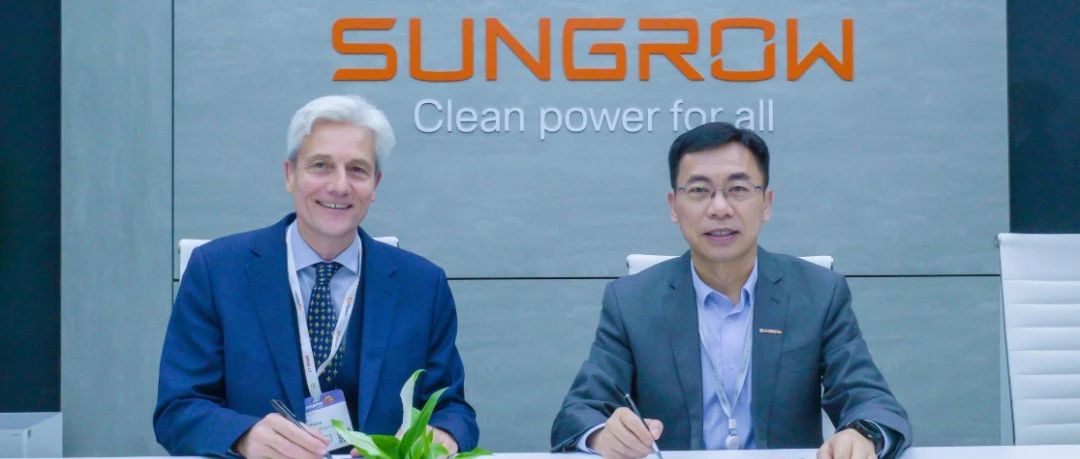
4.4GWh!阳光电源欧洲最大储能项目正在推进
鑫椤锂电· 2025-07-04 01:28
Core Viewpoint - EIG has established Fidra Energy, focusing on developing large-scale battery energy storage projects in the UK, aiming for a 10 GW platform by 2030 [2]. Group 1: Project Developments - Fidra Energy is developing three major battery storage projects in the UK: Thorpe Marsh (1.45 GW/3.3 GWh), Bicker Fen 1&2 (1.2 GW/2.4 GWh, in planning), and West Burton C (0.5 GW/1.1 GWh) [2]. - The Thorpe Marsh project is the largest battery storage project in the UK, with a capacity of 1.45 GW/3.1 GWh, located near a former coal power station and adjacent to a major substation [4]. - The West Burton C project, with a capacity of 0.5 GW/1.1 GWh, is situated in Nottinghamshire, near an existing gas power station and a proposed nuclear fusion site [6]. Group 2: Project Milestones - For the Thorpe Marsh project, key milestones include planning permission approval from Doncaster City Council in January 2025 and securing a 15-year contract for 1.4 GW capacity in the NESO T-4 auction in March 2025 [3][8]. - The West Burton C project is expected to finalize investment decisions by the end of 2025, with commercial operations anticipated in Q4 2027 [7][8].


建信期货镍日报-20250702
Jian Xin Qi Huo· 2025-07-02 05:28
Report Information - Report Title: Nickel Daily Report [1] - Date: July 2, 2025 [2] - Research Team: Nonferrous Metals Research Team [3] - Researchers: Yu Feifei, Zhang Ping, Peng Jinglin [3] Investment Rating - No investment rating provided in the report. Core View - Shanghai nickel remained strong above the 120,000 mark, with the total index position decreasing by 3,110 to 149,735 lots. The spot premium adjusted slightly, with the Jinchuan premium at 2,600 yuan/ton and the domestic mainstream brand electrowinning nickel spot premium at -100 - 400 yuan/ton. The support from the ore end declined, and the subsequent ore price may weaken further. The nickel iron plant still faced pressure, and the nickel iron price was in a dilemma. The nickel salt end also performed poorly. Benefiting from the warming macro - atmosphere and the high elasticity of nickel prices at low levels, Shanghai nickel returned above the 120,000 mark, but the rebound space of nickel prices may be limited. Previous long positions could be appropriately reduced, and a rolling operation strategy should be maintained [9]. Section Summaries 1. Market Review and Operation Suggestions - Market Performance: Shanghai nickel remained strong above 120,000, with the total index position decreasing by 3,110 to 149,735 lots. The spot premium adjusted slightly, with the Jinchuan premium at 2,600 yuan/ton and the domestic mainstream brand electrowinning nickel spot premium at -100 - 400 yuan/ton [9]. - Ore End: The support from the Indonesian nickel ore end decreased. The HMA decline in the first half of July led to a downward adjustment of the nickel ore benchmark price HPM, and the domestic red - soil nickel ore premium also loosened. The subsequent ore price may weaken further [9]. - Nickel Iron: Nickel iron plants faced pressure, with high costs and weakening prices. Stainless steel plants were sluggish, with reduced production and high inventories, only maintaining rigid demand for raw materials. The nickel iron price was in a dilemma [9]. - Nickel Salt: The price of nickel sulfate has not stopped falling [9]. - Operation Suggestions: Due to the warming macro - atmosphere and the high elasticity of nickel prices at low levels, Shanghai nickel returned above 120,000. However, considering the weak performance of each link in the industrial chain, the rebound space of nickel prices may be limited. Previous long positions could be appropriately reduced, and a rolling operation strategy should be maintained [9]. 2. Industry News - Bulgaria: Bulgaria officially launched the largest operating battery energy storage system in the EU, with a capacity of 124 MW/496.2 MWh. It was developed by Advance Green Energy AD and completed in six months with local government support, breaking the previous domestic record [10][11]. - Turkey: A research team in Turkey developed a TOPCon solar cell using nickel contact and almost no silver, with silver usage below 0.5 mg/W, achieving almost the same efficiency as traditional silver - contact cells. This innovation can significantly reduce production costs [11]. - UK: Apatura obtained planning permission for a 100 - MW battery energy storage system project in Scotland. It is the tenth approved project in the past 17 months, with the total approved energy storage capacity exceeding 1.6 GW. The project will help Scotland achieve its energy and emission reduction goals [11].
建信期货镍日报-20250606
Jian Xin Qi Huo· 2025-06-06 02:11
Report Information - Report Title: Nickel Daily Report [1] - Date: June 6, 2025 [2] - Research Team: Nonferrous Metals Research Team [3] - Researchers: Yu Feifei, Zhang Ping, Peng Jinglin [3] 1. Investment Rating - No investment rating information is provided in the report. 2. Core View - The nickel industry continues to face a supply-demand surplus, but the firm support from the Indonesian nickel ore end provides a bottom support for nickel prices. It is recommended to buy at low levels [8]. 3. Summary by Directory 3.1 Market Review and Operation Suggestions - On the 5th, Shanghai nickel fluctuated narrowly and weakened in the late session. The main contract 2507 closed at 121,570, down 0.43% from the previous day. The total open interest of the index increased by 2,523 to 165,179 lots [8]. - In the spot market, trading was relatively light. The premium of Jinchuan nickel was 2,450 yuan/ton, and the premium of Russian nickel was reported at 350 yuan/ton [8]. - Regarding nickel ore, the subsequent supplementary quotas of RKAB are expected to start the approval process in June and July of the second half of the year. The previous market rumor that a large number of RKAB quotas were approved in the past few weeks is not true. The supply shortage of nickel ore has not been alleviated [8]. - The cost of NPI remains high due to the firm nickel ore prices. Both Indonesia and China are generally facing losses, with high pressure on capacity clearance, and prices may be relatively firm [8]. - Nickel sulfate prices are slowly declining. On the 5th, the average price was reported at 27,815 yuan/ton. The weak ternary battery market has dragged down the demand for nickel [8]. - Stainless steel mills are in the red, with reduced production schedules and high inventories. The demand for nickel can only maintain the minimum requirement [8]. 3.2 Industry News - SMM expects the HPM of Indonesian domestic trade nickel ore to remain stable with a slight decline in the first half of June, with an estimated month-on-month decrease of 0.06%. The HMA in the first half of June is 15,405 US dollars/ton, down 10 US dollars/ton [11]. - Bulgaria has officially launched the largest operating battery energy storage system in the EU, with a capacity of 124 MW/496.2 MWh [12]. - A research team in Turkey has developed a TOPCon solar cell using nickel (Ni) contacts with almost no silver (Ag), significantly reducing silver usage while maintaining high performance [12]. - Renewable energy storage company Apatura has obtained planning permission for a 100 MW battery energy storage system (BESS) project in Scotland, increasing its approved total energy storage capacity to over 1.6 GW [12][13]
153MW/612MWh!阳光电源斩获非洲最大独立储能系统订单
鑫椤储能· 2025-05-28 06:26
Core Viewpoint - The partnership between Sunshine Power and Globeleq marks a significant advancement in battery energy storage in Africa, with the Red Sands BESS project set to become the largest independent battery storage system on the continent, addressing energy supply challenges in South Africa [1][2]. Group 1: Project Overview - The Red Sands BESS project will have a capacity of 153MW and 612MWh, and is part of South Africa's first battery energy storage independent power producer procurement program (BESIPPPP) [1]. - The project will occupy approximately 5 hectares (12 acres) of land and will connect to the grid via the Eskom Garona substation [1]. - The project aims to support South Africa's electricity system by providing load shifting and grid stability services, facilitating the integration of renewable energy [1]. Group 2: Contractual Details - Sunshine Power will supply its advanced PowerTitan 2.0 liquid-cooled energy storage system and will provide comprehensive operation and maintenance (O&M) services under a 15-year contract with Globeleq [1][2]. - The financial closure of the Red Sands BESS project is expected by 2025, with operations commencing in 2027 [2]. Group 3: Strategic Importance - The project is strategically positioned to address ongoing energy supply challenges in South Africa, enhancing the reliability and efficiency of the power grid [1][2]. - Globeleq's renewable energy head emphasized the importance of long-term strategic commitments from all project partners to ensure the project's success [2].
建信期货镍日报-20250528
Jian Xin Qi Huo· 2025-05-28 01:45
Group 1: General Information - Report Date: May 28, 2025 [2] - Report Type: Nickel Daily Report [1] - Research Team: Nonferrous Metals Research Team [3] - Researchers: Yu Feifei, Zhang Ping, Peng Jinglin [3] Group 2: Market Review and Operational Suggestions - Nickel Price Movement: On the 27th, nickel prices continued to trade in a narrow range. The main contract 2506 hit a low of 122,000, a half - month low, and closed at 122,170, down 0.55%. The total open interest of the index increased by 7,419 to 176,178 lots [9] - Spot Premium: The spot premium remained generally stable. The Jinchuan premium was 2,200 yuan/ton, and the Russian nickel premium was 250 yuan/ton [9] - Nickel Ore: The premium of Indonesian nickel ore this week remained stable at $26 - 28 per wet ton. The decline of the new round of Indonesian domestic trade nickel ore HPM was slight, and the current negotiation premium was still strong. It is expected that the price of Indonesian ore will be prone to rise and difficult to fall [9] - LME Inventory: LME nickel inventory increased by 1,362 tons on the 27th, with the main increase of 1,482 tons coming from the Busan warehouse. The increase in inventory put downward pressure on prices [9] - Battery - grade Nickel Sulfate: The average price of battery - grade nickel sulfate remained flat at 28,015 yuan. Next week is a traditional procurement node. With the expected improvement in market demand in June and cost support, nickel salt prices are expected to rise [9] - Overall Outlook: Recently, the prices of nickel - related products in the industrial chain have weakened slightly but with limited room. Nickel prices continued to consolidate. In addition, the subsequent supplementary quota of RKAB is expected to start the approval process in June, and there are still concerns. Wait for low - buying opportunities [9] Group 3: Industry News - Indonesian Domestic Trade Ore Benchmark Price: SMM expects the Indonesian domestic trade ore HPM to remain stable with a slight decline in the first half of June, down 0.06% from the previous period. The HMA in the first half of June is $15,405 per ton, down $10 per ton. The HPM prices of different - grade nickel ores are expected to decline slightly compared with the second half of May. SMM expects the premium in June to be difficult to rise and may remain stable at the May level [10][11] - Battery Energy Storage Projects: - Bulgaria officially launched the largest - scale operating battery energy storage system in the EU, with a capacity of 124 MW/496.2 MWh [11] - Renewable energy storage company Apatura has obtained planning permission for a 100 - MW battery energy storage system project in Scotland, increasing its approved total energy storage capacity to over 1.6 GW [11][12] - Solar Cell Innovation: A research team in Turkey developed a TOPCon solar cell using nickel (Ni) contact with almost no silver (Ag), significantly reducing silver usage while maintaining high efficiency [11]
【新能源周报】新能源汽车行业信息周报(2025年5月5日-5月11日)
乘联分会· 2025-05-13 08:35
Industry Information - During the "May Day" holiday, over 80 cities in China hosted nearly 100 auto shows, with smart and new energy vehicles becoming the main drivers of consumption, as sales of new energy vehicles exceeded 60% in many locations [9][10] - Continental Group and Horizon's joint venture, Zhijia Continental, launched the Astra and Luna driver assistance systems, securing multiple mass production orders from leading automakers [9][10] - NVIDIA is developing a new AI chip compliant with U.S. export regulations to maintain its market share in China, with samples expected for testing by June [11] - Uber partnered with Momenta to deploy autonomous taxis in Europe by early 2026 [11] - The U.S. imposed a 25% tariff on key automotive parts, which Japan strongly opposes [12] - Waymo announced its autonomous taxi fleet has surpassed 1,500 vehicles, with plans to produce 2,000 more in Arizona [12][13] - Pony.ai and Uber will integrate their Robotaxi services on the Uber platform in the Middle East, expanding to 15 cities internationally [13][14] - The European Parliament approved relaxed carbon emission rules for automakers, allowing more time for compliance [14] - CATL launched a 9MWh super-capacity energy storage system, TENER Stack, which improves energy density and reduces construction costs [19][20] - The automotive import and export total for March increased by 32.1% month-on-month, with exports growing by 38.9% [19] Policy Information - Jiangsu Province announced a new pricing structure for industrial electricity to promote renewable energy consumption and reduce costs for businesses [3][32] - Guangdong's Nanao County issued interim measures for managing new energy vehicle charging and swapping infrastructure [4][33] - Beijing set standards for electric vehicle battery swapping times, with passenger vehicles limited to 4 minutes and commercial vehicles to 5 minutes [34] - Sichuan Province will implement regulations for the recycling and utilization of used power batteries starting June 1 [36] - The Ministry of Industry and Information Technology is proposing new safety standards for electric vehicle door handles [40] Company Information - Avita's global R&D center has been inaugurated, facilitating collaboration with Huawei on new product development [43] - Xiaomi has renamed its "smart driving" features to "assisted driving" in response to national standards [45] - NIO delivered its 700,000th vehicle at its Wuhan research facility [6]



Fluence Energy(FLNC) - 2025 Q2 - Earnings Call Transcript
2025-05-08 13:32
Financial Data and Key Metrics Changes - The company reported approximately $432 million in revenue for Q2 2025, exceeding expectations due to faster project milestone achievements [9][30] - Adjusted gross profit was $45 million, resulting in an adjusted gross profit margin of approximately 10.4%, marking the seventh consecutive quarter of double-digit margins [30] - Annual recurring revenue (ARR) increased to $110 million, with a revised guidance for ARR of $145 million [9][32] Business Line Data and Key Metrics Changes - The backlog at the end of the quarter was approximately $4.9 billion, including $200 million in contracts added during the quarter [9][20] - The company anticipates a strong ramp-up in order volume, particularly in Australia, as it enters the second half of the fiscal year [9][10] Market Data and Key Metrics Changes - The U.S. electricity demand is projected to grow by 11% through 2030, indicating a significant increase in annual energy storage capacity [14] - Battery storage capacity in Australia is expected to reach 51 gigawatt hours by February 2030, up from 7 gigawatt hours in 2024 [15] Company Strategy and Development Direction - The company is focused on its SmartStack technology and U.S. domestic content strategy to create value for stakeholders [21][22] - The domestic content strategy aims to meet local manufacturing requirements under the Inflation Reduction Act (IRA), providing tariff incentives and creating jobs [25][28] Management's Comments on Operating Environment and Future Outlook - Management expressed optimism about the long-term growth prospects for energy storage despite current tariff-related uncertainties [11][39] - The company believes that the high tariff levels on Chinese imports are unlikely to be sustainable and expects a return to normalized contracting activity in the U.S. market [12][39] Other Important Information - The company ended the quarter with over $1 billion in liquidity, including $610 million in cash, providing a strong financial foundation [10][32] - The revised guidance for fiscal 2025 reflects a lower revenue expectation due to tariff impacts, with a midpoint guidance of $2.7 billion [34][36] Q&A Session Summary Question: Clarification on AESC ramp and capacity - Management clarified that the Tennessee facility has two lines, each with a capacity of 3 to 3.5 gigawatt hours, allowing for a combined annualized run rate of 12 gigawatt hours through a mix of domestic and imported batteries [45][48] Question: Mix of contracts in pause state - Approximately half of the $700 million in paused contracts were already in backlog, while the other half were under advanced negotiations [97][98] Question: Domestic content strategy and customer willingness - Management indicated that customers are hesitant to commit to fully domestic offerings due to uncertainty around future tariff negotiations with China [109][111] Question: Competitive landscape and tariff impacts - The competitive landscape remains intense, with management noting that uncertainty has made it difficult to gauge competition levels [70][71] Question: Global alternative cell supply situation - Management acknowledged that while there is some production outside of China, the majority of cell production still comes from China, making diversification challenging [76][78]

英媒:需求激增推动电池储能热潮,中韩企业开辟竞争新战线
Huan Qiu Shi Bao· 2025-04-29 22:38
Group 1 - The competition between Chinese and South Korean companies in the battery sector is expanding from electric vehicles to energy storage systems (ESS) due to the rising demand for renewable energy and data centers [1] - ESS helps stabilize the power grid by providing backup power, especially as the demand for clean technologies and AI-related hardware increases [1] - The share of energy storage batteries in the global battery market has increased from 5% in 2020 to 20%, with predictions of more than doubling by 2030 [1] Group 2 - Chinese energy storage batteries account for nearly 90% of the global ESS installed capacity, with over 80% market share in the US and over 75% in Europe [2] - Following the imposition of tariffs in the US, South Korean battery companies see an opportunity to regain market share, with LG Energy focusing on cost-effective lithium iron phosphate batteries for the US market [2] - The different trajectories of Chinese and South Korean energy storage companies illustrate a "tale of two battery markets" [2] Group 3 - In 2022, China exported lithium-ion batteries worth $15.3 billion to the US, widening the market share gap with competitors like South Korea [3] - Chinese lithium iron phosphate batteries are favored in the US for their competitive pricing and cost-effectiveness, particularly for data centers [3] - Despite high tariffs, Chinese exporters may withstand costs due to existing advantages, while South Korean manufacturers have yet to prove their ability to competitively produce lithium iron phosphate batteries at scale [3]