
科技强国

Search documents
从一部百万字的“史纲”说开去:科技史亟应引起史学界高度重视
Xin Lang Cai Jing· 2025-12-21 23:49
转自:北京日报客户端 科技史研究是深入推进中国特色社会主义政治经济学发展的重要工具。恩格斯曾经说过:"即使只是在 一个单独的历史事例上发展唯物主义的观点,也是一项要求多年冷静钻研的科学工作,因为很明显,在 这里只说空话是无济于事的,只有靠大量的、批判地审查过的、充分地掌握了的历史资料,才能解决这 样的任务。"中国今天的经济学,特别是政治经济学研究要丰富和发展,就必须深入到生产力的各个部 门里面去,因此就必须下功夫钻研科学技术和产业史,了解人类怎样从科学发明转变到技术应用,又怎 样由新的科技形成新的产业,以及这个产业是怎样扩张、成熟起来并成为支柱产业,最后又是怎样被新 的科技革命所形成的新的产业所取代的。在这方面,新中国史尤其是改革开放史等提供了大量研究素 材,值得深入研究。 综上所述,随着以《中华人民共和国科学技术史纲》等为代表的新中国科技史研究论著的出版,相关研 究机构和人员的持续跟进,新中国科技史研究显示出勃勃生机。新中国科技史研究与新中国的科学技术 发展同频共振,后者的飞速发展为前者提供了不竭动力,前者则持续记述、总结后者的规律及特点,二 者共同为强国建设、民族复兴伟业提供重要支持。 (作者为当代中国研 ...
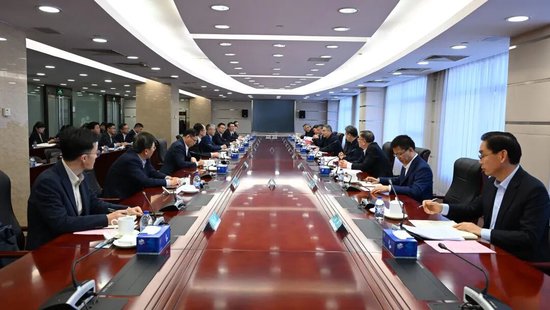
郭永航与中国工程院院士潘垣座谈交流
Guang Zhou Ri Bao· 2025-12-19 01:56
Core Insights - Guangzhou is focusing on advancing the new energy and energy storage industries by leveraging its strengths in technology innovation and industrial integration [2][3] - The collaboration between local government and academic institutions aims to enhance research and development in nuclear fusion and power technologies, aligning with national strategic needs [2][3] Group 1: Government Initiatives - The Guangzhou government is implementing the spirit of the 20th Central Committee and the Central Economic Work Conference to promote high-level technological self-reliance and innovation [2] - The city aims to build a modern industrial system referred to as "12218" to support its economic growth [2] Group 2: Research and Development - Academician Pan Yuan's team is focused on nuclear fusion, pulsed strong magnetic fields, and power technology, which aligns with Guangzhou's goals in new energy and energy storage [2][3] - The team highlighted the explosive growth in electricity demand driven by the AI revolution and the rapid development of smart networks, new energy vehicles, and the digital economy [3] Group 3: Collaboration and Future Prospects - There is a strong emphasis on deepening collaboration between industry, academia, and research to achieve breakthroughs in new energy technologies and their application [3] - The partnership aims to enhance international cooperation and seize opportunities in energy technology and industry [3]
西南及北部湾区综合科学考察第一期工作推进会在南宁召开 陈刚侯建国龙腾出席并讲话 韦韬主持
Guang Xi Ri Bao· 2025-12-19 01:53
龙腾表示,做好西南及北部湾区综合科学考察工作是一项光荣而艰巨的任务。要提高政治站位,从 建设科技强国的高度认识本次科考工作的重要性。要聚焦高质量发展,从推动科技创新和产业创新深度 融合的角度谋划实施。要创新科考范式,从新技术、新方法中探索科考新路径。要强化组织实施,以强 烈的政治责任感和历史使命感协同推进,将西南及北部湾区综合科学考察打造成标志性科学工程,为筑 牢南方生态安全屏障和促进边疆民族地区高质量发展作出新的更大贡献。 会后,陈刚、侯建国、韦韬、龙腾等参观了西南科考工作任务前期调研进展情况,以及支撑西南科 考智能体"寰宇·瞳鼓"、科考新装备等展示。 西南及北部湾区综合科学考察总体专家组组长孙福宝在会上介绍了实施方案及2025年工作任务部 署。中国科学院副院长、党组成员何宏平,自治区领导卢新宁、周异决及钟得志,科技部、中国科学院 相关司局负责同志,广东省、海南省、贵州省、云南省及跨部门协调机制成员单位相关负责同志,区 直、中直驻桂有关单位主要负责同志,各设区市党委或政府及科技行政管理部门主要负责同志,有关科 研院所、科技型企业主要负责同志等参加会议。(罗昌亮 陈贻泽) 12月17日,西南及北部湾区综合科学 ...
贯彻落实党的二十届四中全会精神权威访谈|当好桥梁纽带 服务科技强国建设——访中国科协党组书记贺军科
Xin Hua She· 2025-12-17 12:57
Core Viewpoint - The article emphasizes the importance of technological modernization in China's development and the role of the China Association for Science and Technology (CAST) in uniting and leading scientists to contribute to building a strong technological nation [1]. Group 1: Contributions During the 14th Five-Year Plan - CAST has made significant contributions by promoting national scientific innovation achievements and enhancing the confidence of scientists in the new system of governance [2]. - The organization has focused on cultivating young scientific talent and optimizing the evaluation system for scientific personnel, establishing a "home for scientists" to protect their rights [2][3]. - Numerous academic conferences have been held to enhance scientists' insights into technological frontiers, and initiatives like "Science and Technology Courtyards" have supported rural revitalization [3]. Group 2: Responsibilities in the 15th Five-Year Plan - CAST aims to fulfill its role as a bridge between the government and scientists, guiding them to align with national goals and fostering a spirit of scientific innovation [4][5]. - The organization plans to enhance the innovation environment for scientists by promoting academic prosperity and establishing high-level academic exchange platforms [5]. Group 3: International Cooperation - CAST is committed to deepening international scientific exchanges and cooperation, supporting the establishment of international scientific organizations, and promoting China's technological innovations globally [6]. - The organization will facilitate multilateral platforms for scientific and cultural exchanges, enhancing international collaboration and sharing China's technological stories [6]. Group 4: Promoting Scientific Culture - The promotion of scientific literacy and innovation culture is crucial for enhancing public understanding of science and supporting the foundation for a strong technological nation [7]. - CAST will improve the effectiveness of its socialized science popularization system and strengthen the supply of high-quality scientific resources [7][8]. - The organization will also focus on celebrating and promoting the achievements of scientists to inspire future generations and foster a culture of scientific excellence [9].
当好桥梁纽带 服务科技强国建设——访中国科协党组书记贺军科
Xin Hua Wang· 2025-12-17 11:42
Core Viewpoint - The modernization of China is fundamentally linked to technological advancement, with a focus on achieving high-level self-reliance and strength in technology, as emphasized in the 20th Central Committee's Fourth Plenary Session and the recommendations for the 15th Five-Year Plan [1] Group 1: Contributions of the China Association for Science and Technology (CAST) - During the 14th Five-Year period, CAST has significantly contributed to the development of China's technological innovation, enhancing the country's scientific strength [2] - CAST has promoted the spirit of scientists and encouraged technology workers to integrate their academic pursuits into the mission of building a strong technological nation [2][3] - The organization has focused on cultivating young scientific talent and optimizing the evaluation system for scientific personnel, establishing platforms like "Science Workers' Home" to support their rights [2][3] Group 2: Enhancing Academic and Scientific Exchange - CAST has facilitated numerous academic conferences, enhancing the insight of technology workers into cutting-edge science [3] - The organization has implemented initiatives like technology service teams to assist local enterprises and promote regional development [3] - CAST has expanded the influence of the "Science Popularization China" brand, aiming for 15.37% of citizens to possess scientific literacy by 2024 [3] Group 3: Responsibilities and Future Directions - In the 15th Five-Year period, CAST aims to fulfill its role as a bridge between the government and technology workers, promoting high-level self-reliance in technology [4][5] - The organization will enhance the innovation environment for technology workers by fostering academic prosperity and establishing world-class scientific societies and journals [5] - CAST plans to deepen international scientific cooperation, supporting the establishment of international scientific organizations and promoting China's technological achievements globally [6] Group 4: Promoting Innovation Culture - CAST will focus on enhancing the effectiveness of social science popularization, aiming to improve public scientific understanding and support innovation [7] - The organization will promote the spirit of scientists and cultivate an innovative culture, emphasizing the importance of scientific achievements and role models [8][9] - Initiatives will include the establishment of the China Scientists Museum and various outreach programs to disseminate scientific knowledge widely [9]
中国农业银行与国机集团签署战略合作协议
Xin Lang Cai Jing· 2025-12-16 06:40
Core Points - On December 15, Agricultural Bank of China signed a strategic cooperation agreement with China National Machinery Group, focusing on rural revitalization and manufacturing strength [1][6] - The agreement was signed by key executives from both organizations, including the chairman and president of Agricultural Bank of China and the chairman and general manager of China National Machinery Group [1][6] Group 1 - Agricultural Bank of China views China National Machinery Group as an important strategic partner and aims to deepen cooperation across various fields to contribute to high-quality economic and social development [3][8] - China National Machinery Group expressed gratitude for the support from Agricultural Bank of China and highlighted the potential for collaboration in national strategies such as rural revitalization and technological advancement [3][8] - Both parties aim to expand their cooperation during the "14th Five-Year Plan" period, enhancing the partnership to new levels [3][8]


航天智装(300455) - 300455航天智装投资者关系活动记录表20251212
2025-12-15 10:25
Group 1: Company Overview and Industry Position - The company focuses on three strategic industries: rail transportation, aerospace, and nuclear industry, establishing a diversified industrial layout with three main business segments [3] - The subsidiary, XuanYu Intelligent, has become a significant supplier in the domestic special robot and intelligent equipment sector, particularly in high-radiation environments [3] Group 2: Future Development Plans - The company aims to strengthen key technology research and development in its three core areas, enhance marketing systems, and improve brand influence to increase market competitiveness [4] - Plans include the introduction and cultivation of professional talent in key areas such as technology R&D and supply chain management to enhance operational efficiency and risk resistance [4] Group 3: Market Challenges and Strategies - The company acknowledges the intensifying competition in the rail transportation industry and plans to leverage digital economy opportunities to drive innovation and traditional industry upgrades [6] - Strategies to counteract increased competition include expanding brand influence and market share through continuous innovation and value extension [6] Group 4: Investor Relations and Governance - Independent directors have actively worked to improve the company's information disclosure mechanisms, ensuring timely and accurate communication with minority investors [6] - The company is focused on cultivating leading talents and enhancing management professionalism to build a competitive workforce [6] Group 5: Strategic Adjustments in Response to National Policies - The company is aligning its strategies with national policies by focusing on quality improvement in its main business, enhancing R&D in key sectors, and optimizing capital structure for better resource allocation [8]

数智赋能让古城焕“新”生
Ren Min Wang· 2025-12-15 07:59
编者按 0:00 随着时代步伐的奔涌向前,很多古城面临"记忆消失"的危机。古城的传统风貌如何精准留存?今天,一 起走进"中华古城数字图谱集成工程",看中华古城如何在数字时代让"古今对话"成为可能。 千万IP创科普,共筑科技强国梦。为普及科学知识,弘扬科学精神,提高全民科学文化素质,助力实现 高水平科技自立自强,中国科协科普部与人民网联合策划推出"见证科技之路"主题报道,聚焦国家科技 战略政策、重要科技奖项、"卡脖子"关键核心技术等,深入基层一线开展采访调研,推出一批生动鲜活 的科普精品,大力弘扬科学家精神,为建设科技强国汇聚磅礴力量。 ...
“无废城市”的绿色引擎
Ren Min Wang· 2025-12-15 04:15
编者按 千万IP创科普,共筑科技强国梦。为普及科学知识,弘扬科学精神,提高全民科学文化素质,助力实现 高水平科技自立自强,中国科协科普部与人民网联合策划推出"见证科技之路"主题报道,聚焦国家科技 战略政策、重要科技奖项、"卡脖子"关键核心技术等,深入基层一线开展采访调研,推出一批生动鲜活 的科普精品,大力弘扬科学家精神,为建设科技强国汇聚磅礴力量。 0:00 城市,如同一个有机的生命体,建筑,则是这个生命体中的细胞。在雄安这座未来之城,有一个特殊 的"细胞"——雄安之翼,它正以其独特的生命韵律,参与着城市生态系统的循环,成为"无废城市"建设 的绿色引擎。 ...
进一步汇聚智慧和力量(编辑手记)
Ren Min Ri Bao· 2025-12-14 22:30
党的二十届四中全会《建议》明确提出"完善新型举国体制"。当下,新一轮科技革命和产业变革加速演 进,加快高水平科技自立自强必须充分发挥新型举国体制优势。从"嫦娥"揽月到"天问"探火,从"蛟 龙"载人深潜到"蓝鲸"托举可燃冰试采,新时代以来,加快完善新型举国体制,充分发挥国家作为重大 科技创新组织者的作用,我国重大科技创新成果竞相涌现。 (责编:杨光宇、胡永秋) 关注公众号:人民网财经 "十五五"时期,必须进一步健全新型举国体制,强化国家战略科技力量,优化配置创新资源,实现国家 创新体系整体效能显著提升。把智慧和力量汇聚到国家最需要的地方,就一定能为建成科技强国、实现 中国式现代化奠定更加坚实的基础。 《 人民日报 》( 2025年12月15日 17 版) 实践证明,充分发挥新型举国体制优势,要聚焦国家重大战略与科技前沿,统筹好政府、市场、社会力 量,实现跨部门、跨领域、跨主体协同攻关。从基础研究的长期投入,到重大任务的组织实施,从关键 核心技术攻关,到科技成果转化应用,都在更高效的体制机制内汇聚动能。 ...