
藏粮于地

Search documents
端稳“菜篮子” 高州近30万亩冬种作物长势喜人
Nan Fang Nong Cun Bao· 2025-11-18 01:35
Core Viewpoint - The agricultural sector in Gaozhou is experiencing a significant boost with nearly 300,000 acres of winter crops showing promising growth, contributing to stable production and increased income for farmers [2][3][20]. Summary by Sections Winter Crop Area and Growth - Gaozhou has fully initiated winter crop production, covering nearly 300,000 acres, with a focus on both grains and vegetables [3][10]. - The planned area for winter crops this year is 279,100 acres, including 50,600 acres for grains and 228,500 acres for vegetables [4][6]. Crop Types and Yield Expectations - Various winter crops are thriving, including corn, bitter melon, and chili peppers, with expectations of high yields [7][12]. - Bitter melon is projected to yield 10,000 kilograms per acre, with current market prices exceeding 4 yuan per pound for bitter melon and 3 yuan per pound for chili peppers, which are better than the same period last year [15][18]. Agricultural Strategies and Innovations - Gaozhou has been leveraging its warm winter climate and idle farmland by implementing strategies to optimize winter crop production, focusing on high-quality varieties and advantageous crops [16][19]. - The initiatives aim to transform winter idle resources into significant agricultural productivity and steady income growth for farmers [20].


辽北粮仓披金裳 铁岭今秋庆丰收 全面落实“藏粮于地、藏粮于技”战略,助力筑牢国家粮食安全防线
Ren Min Ri Bao· 2025-11-17 22:02
Core Viewpoint - The article highlights the successful agricultural practices in Tieling City, Liaoning Province, emphasizing the importance of food security and the implementation of strategies to enhance crop yield and quality while ensuring farmers' income [1][6]. Group 1: Agricultural Practices and Innovations - Tieling City has transformed 5,400 acres of low-lying land into productive rice fields, reducing labor costs by over 30% through mechanization [2]. - The rice yield in Shuangjingzi Town reached 1,300 pounds per acre, an increase of 300 pounds compared to 2024, with total production exceeding 66 million pounds [2]. - The city has constructed over 5 million acres of high-standard farmland, aiming for a mechanization rate of over 99% for rice harvesting by 2025, with a projected yield increase of 10%-15% for major crops [2]. Group 2: Technological Advancements - Tieling City has introduced a new grain storage technology model that has been recognized nationally, effectively addressing issues of grain spoilage and helping farmers increase their income [4][5]. - The use of advanced machinery, including large harvesters equipped with BeiDou navigation, has significantly improved the efficiency of rice harvesting [4]. Group 3: Economic Support and Policies - The city has implemented an "enterprise + farmer" order model, connecting over 200 farmers with local rice processing enterprises to boost income [6]. - Tieling City has increased social security standards and provided substantial financial support to low-income groups, totaling 3.334 billion yuan [6]. - Future plans include establishing a dynamic subsidy mechanism and a regional modern agricultural service center to enhance transparency and efficiency in agricultural support [7].
肇庆怀集:打好“三手”组合拳,推进建设高标准农田
Nan Fang Nong Cun Bao· 2025-11-17 09:31
Core Viewpoint - The article highlights the achievements and ongoing efforts of Zhaoqing Huaiqi County in constructing high-standard farmland, emphasizing the importance of agricultural modernization and food security through innovative practices and strategic planning [4][11]. Group 1: High-Standard Farmland Construction - By 2025, Huaiqi County plans to establish 20,000 acres of new high-standard farmland and upgrade 6,800 acres, with a total investment exceeding 900 million yuan [2][3]. - The county has implemented 67 high-standard farmland projects, covering 19 towns and achieving a total of 432,000 acres of high-standard farmland and 31,800 acres of upgrades [3][4]. - The construction of high-standard farmland is viewed as a foundational project for ensuring food security, promoting agricultural modernization, and facilitating rural revitalization [22][24]. Group 2: Innovative Models and Mechanisms - Huaiqi County has explored a "state-owned enterprise + land transfer + N" model to address challenges in land transfer, establishing a state-owned enterprise to coordinate land consolidation and village collective economic development [16][17]. - The land transfer area has exceeded 20,000 acres, transforming small plots into larger ones, which has increased economic benefits for local farmers [19]. - A comprehensive work mechanism has been established, involving county-level coordination, departmental collaboration, and village participation, ensuring that construction tasks are integrated into annual performance assessments [28][30]. Group 3: Agricultural Practices and Techniques - The county prioritizes scientific planning and strict quality control in farmland construction, focusing on six major projects including land leveling and soil improvement to create modern farmland that is resilient to drought and flooding [31][33]. - The introduction of purple vetch as a green manure crop has significantly improved soil fertility, with average yields of drought-resistant rice increasing by 30% compared to conventional varieties [40][41]. - Deep plowing practices have been implemented to enhance soil structure, increasing soil layer thickness from less than 20 cm to 25-28 cm, which improves water retention and crop root growth [57][59].
83%进口依存度下的破局之战:广东大豆绿色高效增产施肥新模式
Nan Fang Nong Cun Bao· 2025-11-14 13:01
Core Insights - The article discusses the critical situation of China's soybean dependency, highlighting an 83% import reliance and the need for increased domestic production capabilities [3][12][13] - It emphasizes the importance of scientific fertilization techniques to enhance soybean yield and address the challenges posed by soil conditions in southern China, particularly Guangdong [19][31][76] Group 1: Soybean Dependency and National Strategy - Soybean is a strategic agricultural product crucial for national food security and oil supply [2] - In 2024, China's total soybean trade volume is projected to be 105.1 million tons, with imports reaching 105.03 million tons, resulting in a dependency rate of 83.57% [3][4] - The high dependency on imports poses significant risks to the domestic soybean industry, making self-sufficiency a national strategic imperative [12][13] Group 2: Scientific Fertilization Techniques - A recent event in Guangzhou focused on sharing scientific fertilization techniques aimed at increasing soybean yields through improved management and technology [7][8] - Experts highlighted the necessity of a precise fertilization system tailored to regional soil characteristics and the biological needs of soybeans, moving away from traditional blind fertilization methods [30][31] - The article outlines a new fertilization paradigm that integrates soil health, nutrient balance, and mechanization to enhance soybean production sustainably [38][76] Group 3: Soil Challenges and Solutions - Southern China's unique climate conditions, such as high temperatures and heavy rainfall, lead to soil acidification and nutrient availability issues [22][25] - Recommendations include applying organic fertilizers to improve soil fertility, using lime to adjust soil pH, and adopting a balanced fertilization approach with a specific nutrient ratio [40][42] - The article discusses the development of innovative fertilizers that enhance nutrient absorption and support root nodule development, crucial for soybean yield [61][63] Group 4: Technological Innovations and Future Prospects - The integration of technology in fertilization practices, such as signal-transmitting fertilizers, has shown promising results in increasing soybean yield and quality [49][52] - The use of drones for efficient application of leaf fertilizers is highlighted as a significant advancement in agricultural practices [71] - The article concludes that these innovations could lead to a substantial increase in soybean production in Guangdong, contributing to national food security and self-sufficiency [77][78]
国网酒泉供电公司:电靓沃野绘“丰”景 筑牢根基保粮安
Zhong Guo Neng Yuan Wang· 2025-11-14 02:34
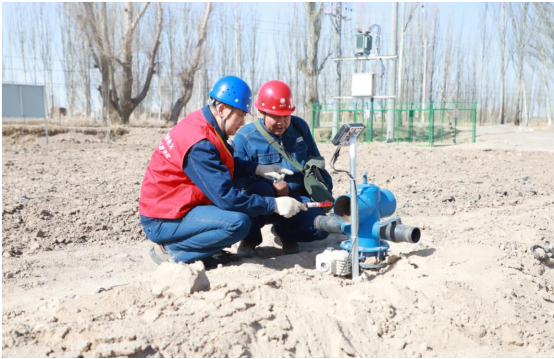
Core Viewpoint - The construction of high-standard farmland in Jiuquan is progressing rapidly, supported by the State Grid Jiuquan Power Supply Company, which is enhancing agricultural modernization through efficient electricity services [1][4]. Group 1: High-Standard Farmland Construction - The construction site in Yumen District is bustling with activity, with machinery transforming scattered land into contiguous farmland [1]. - The "autumn and winter campaign" for high-standard farmland construction is in full swing, with the State Grid Jiuquan Power Supply Company providing essential electrical support [1][4]. Group 2: Service Innovations - The service team introduced a "one-stop" service process via the "Online State Grid" app, allowing users to submit electricity applications and track progress in real-time [3]. - A "mobile business hall" model was launched to enhance service efficiency, enabling on-site processing of electricity applications and immediate feedback on plans [3]. Group 3: Safety and Risk Management - The company established a regular communication and early warning mechanism to manage risks associated with increased heavy machinery during construction [3]. - Safety awareness among farmers is being improved through demonstrations and case studies, focusing on the safe distance requirements for machinery operations [3]. Group 4: Strategic Collaboration - The company aligns its electricity infrastructure development with national strategies for agricultural modernization, collaborating with local agricultural authorities to synchronize planning and implementation [3][4]. - The commitment to rural revitalization is emphasized, with plans to strengthen the power grid and service responsiveness to support the entire agricultural production chain [4].
黑龙江佳木斯高标准农田超千万亩 粮食产量迭创新高
Zhong Guo Xin Wen Wang· 2025-11-13 04:22
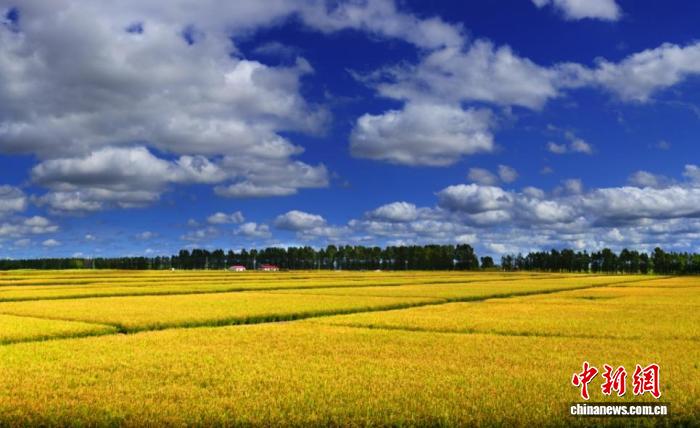
Core Insights - Jiamusi City has achieved a record high grain production of 233.6 billion jin in the previous year, with an increase of nearly 1.3 billion jin compared to 2020, and is expected to set new records this year due to favorable agricultural conditions [1][3] Agricultural Development - The city has implemented the "Four Doubles" project, creating 10,000 demonstration fields and upgrading nearly 4 million acres of dry land with advanced seeding technology [3] - A total of 10.38 million acres of high-standard farmland have been established, accounting for 66.8% of the city's permanent basic farmland [3] - The area of national-level green food raw material standardized production bases has reached 15.6 million acres, representing 53% of the city's sown area, the highest among city-level regions in the country [3] Industry Integration - The number of large-scale agricultural product processing enterprises has increased to 265, up by 95 since 2020, with 130 leading agricultural industrialization enterprises at the city level [4] - Jiamusi has established the largest cranberry production base in Asia and the largest perilla product supply base in the country, along with the largest sturgeon industry park in Northeast China [4] - The brand value of Jiamusi rice has surpassed 21.29 billion yuan, with 15 geographical indication products cultivated [4] Rural Development - The city has created 112 demonstration villages, with over 6.658 million acres of farmland under large-scale management [4] - The per capita disposable income of farmers reached 20,801 yuan last year, an increase of 5,168 yuan compared to 2020 [4] - Infrastructure improvements in rural areas have significantly enhanced public services in education, healthcare, and elderly care [4]
李强对推进农田水利和高标准农田建设工作作出重要批示强调 高质量推进高标准农田建设 为保障粮食安全加快农业农村现代化作出更大贡献
Yang Shi Wang· 2025-11-07 12:32
Core Points - The State Council held a video conference on winter and spring agricultural water conservancy and high-standard farmland construction, emphasizing the importance of these initiatives for food security and rural modernization [1][2] - Premier Li Qiang highlighted the achievements in agricultural water conservancy and high-standard farmland construction, which have significantly supported continuous grain harvests and farmers' income growth [1] - The government aims to implement a new round of actions to enhance grain production capacity, focusing on high-quality farmland construction and modernization of irrigation systems [1] Summary by Categories Agricultural Water Conservancy - The government has accelerated the promotion of agricultural water conservancy, achieving notable results that support food security and farmers' income [1] - There is a focus on modernizing large and medium-sized irrigation areas and restoring agricultural drainage systems [1] High-Standard Farmland Construction - The initiative aims to enhance grain production capacity by implementing high-standard farmland construction [1] - The government encourages participation from farmers and social forces to contribute to national food security and agricultural modernization [1] Policy Implementation - The government emphasizes the need to adhere to Xi Jinping's thoughts and the central government's decisions in promoting these agricultural initiatives [1] - A comprehensive management mechanism will be established to ensure project quality, funding supervision, and effective resource allocation [1]
加快农业农村现代化
Ren Min Ri Bao· 2025-11-06 00:24
Core Viewpoint - The modernization of agriculture and rural areas is essential for the overall modernization of the country, as emphasized by General Secretary Xi Jinping [1][2]. Group 1: Significance of Accelerating Agricultural and Rural Modernization - The achievements in "three rural issues" since the 18th National Congress have been historic, with significant improvements in rural conditions and agricultural production capabilities [2]. - The comprehensive grain production capacity remains above 1.3 trillion jin, with expectations to exceed 1.4 trillion jin in 2024 [2]. - The contribution rate of agricultural science and technology has reached 63.2%, and the mechanization rate of crop farming exceeds 75% [2]. - The eradication of absolute poverty has been a historic achievement, with all farmers entering a moderately prosperous society [2]. - The per capita disposable income of rural residents is projected to reach 23,119 yuan in 2024, with the urban-rural income ratio decreasing to 2.34:1 [2]. Group 2: Relationship of Agricultural Modernization to National Goals - Agricultural modernization is a critical task for building a modern socialist country, addressing the imbalances and weaknesses in rural development [3]. - Strengthening the agricultural foundation is vital for national stability and food security, especially in the face of international uncertainties [3]. - Achieving agricultural modernization is essential for ensuring food security and providing a solid foundation for the modernization of China [3]. Group 3: Basic Requirements for Agricultural Modernization - Agricultural modernization is a major and urgent strategic task that requires prioritizing rural development and urban-rural integration [5]. - The relationship between setting goals and maintaining historical patience is crucial, as agricultural modernization is a systematic and dynamic process [6]. - Local conditions must be considered in the implementation of agricultural modernization, avoiding a one-size-fits-all approach [6]. - The integration of traditional agricultural practices with modern elements is necessary to preserve cultural heritage while advancing modernization [6]. Group 4: Strategic Deployment for Agricultural Modernization - The focus is on enhancing agricultural production capacity and quality, ensuring food security through modern agricultural practices [9]. - Establishing mechanisms to prevent poverty and ensure sustainable development in rural areas is essential [10]. - Building beautiful and livable rural areas is a priority, with an emphasis on improving infrastructure and public services [11]. - Strengthening policies that support farmers and enhance agricultural productivity is critical for achieving modernization goals [12].
刘国中在人民日报发表署名文章:加快农业农村现代化
Xin Lang Cai Jing· 2025-11-05 23:52
Core Viewpoint - The article emphasizes the systematic deployment of key tasks for accelerating agricultural and rural modernization during the "15th Five-Year Plan" period, highlighting the importance of persistent implementation and achieving tangible results [1] Summary by Relevant Sections - **Modernization of Agriculture** - The fundamental solution for agriculture lies in modernization, with a focus on continuously improving comprehensive agricultural production capacity [1] - **Strategic Initiatives** - The strategy includes enhancing the supply guarantee capacity for important agricultural products such as grain, implementing the "storing grain in the land" and "storing grain in technology" strategies, and stabilizing grain planting areas [1] - **Production Capacity Enhancement** - A new round of actions to increase grain production capacity by 100 billion jin is to be launched, expanding the scale of grain yield improvement projects and promoting high-yield and efficient farming models [1] - **Food Security Measures** - Strengthening agricultural disaster prevention and mitigation capabilities is essential to solidify the foundation of national food security, ensuring that China's food supply remains stable [1] - **Diverse Food Supply System** - The development of modern facility agriculture and a diversified food supply system is encouraged, alongside continuous efforts to reduce food waste and establish long-term mechanisms for food conservation [1] - **Land Management** - Strict adherence to the arable land red line is mandated, with rigorous management of land occupation and compensation, and rectification of illegal land occupation behaviors [1]
加快农业农村现代化(学习贯彻党的二十届四中全会精神)
Ren Min Ri Bao· 2025-11-05 22:08
Core Viewpoint - The modernization of agriculture and rural areas is essential for the overall modernization of the country, as emphasized by General Secretary Xi Jinping and outlined in the 15th Five-Year Plan proposal [1][2]. Group 1: Significance of Accelerating Agricultural and Rural Modernization - The achievements in "Three Rural Issues" since the 18th National Congress have been historic, with significant improvements in rural conditions and agricultural production capabilities, maintaining grain production capacity above 1.3 trillion jin, and expected to exceed 1.4 trillion jin in 2024 [2]. - The contribution rate of agricultural science and technology has reached 63.2%, with mechanization rates exceeding 75%, placing agricultural innovation among the world's top ranks [2]. - The eradication of absolute poverty has been a remarkable achievement, with all farmers entering a moderately prosperous society, ensuring no large-scale return to poverty [2]. - Rural residents' per capita disposable income is projected to reach 23,119 yuan in 2024, with the urban-rural income ratio decreasing to 2.34:1 [2]. Group 2: Relationship of Agricultural Modernization to National Goals - Agricultural modernization is a critical task for building a modern socialist country, addressing the imbalances and inadequacies in rural development, which remain significant challenges [3]. - Strengthening the agricultural foundation is vital for national stability and food security, especially in the face of complex international environments [3]. - Achieving agricultural modernization is essential for ensuring food security and providing a solid foundation for advancing Chinese-style modernization [3]. Group 3: Basic Requirements for Agricultural Modernization - Agricultural modernization is a major and urgent strategic task, requiring a focus on prioritizing agricultural and rural development, and promoting urban-rural integration [5]. - The process must be systematic and patient, addressing the most pressing issues faced by farmers and gradually achieving significant results [5][6]. - Local conditions must be considered in the implementation of modernization strategies, avoiding a one-size-fits-all approach [6]. Group 4: Strategic Deployment for Agricultural Modernization - The 15th Five-Year Plan outlines key tasks for accelerating agricultural modernization, emphasizing the need for effective implementation of these strategies [8]. - Enhancing agricultural production capacity and quality is fundamental, with a focus on sustainable practices and technological advancements [9]. - Establishing mechanisms to prevent poverty and ensure continuous support for vulnerable populations is crucial for maintaining progress in rural areas [10]. - Promoting the construction of beautiful and livable rural areas is essential for improving the quality of life for farmers [11]. - Increasing the effectiveness of policies aimed at supporting agriculture and rural development is necessary to ensure sustainable growth [12].