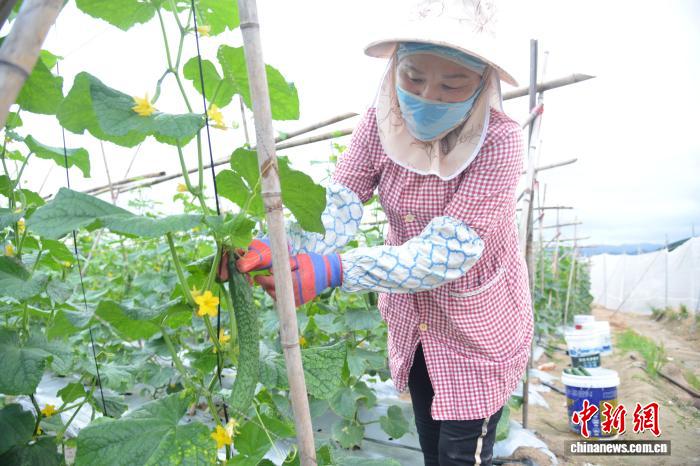
苦瓜

Search documents
中外网友“大对账”,对到了菜市场
Xin Lang Cai Jing· 2026-02-14 06:12
Core Viewpoint - The article highlights the stark contrast in fruit and vegetable availability between China and several Western countries, emphasizing China's successful agricultural policies and practices that ensure year-round supply of diverse produce [3][10]. Group 1: Agricultural Policies and Achievements - China's "vegetable basket" project, initiated in 1988, has significantly improved the supply of vegetables, meat, and dairy, leading to increased farmer incomes and a stable supply chain [6][7]. - In 2023, the average per capita vegetable consumption in China reached 588 kilograms, with vegetable cultivation area consistently exceeding 300 million mu, maintaining the world's largest scale [3][10]. - China is the world's largest producer and consumer of fruits, with a total fruit production of 335 million tons and consumption of 328 million tons in 2024, far exceeding the global average per capita fruit consumption [3][10]. Group 2: Technological Advancements and Infrastructure - The use of advanced technology in agricultural practices, such as smart systems for monitoring soil conditions and automated irrigation, has transformed traditional greenhouses into intelligent "cloud greenhouses" [9]. - The establishment of a comprehensive cold chain logistics system facilitates the efficient transportation of produce across regions, ensuring fresh vegetables reach consumers quickly [9][10]. - China's focus on seed breeding has led to a domestic seed market share exceeding 91%, contributing to the diversity and quality of produce available [9][10]. Group 3: Global Context and Comparisons - In contrast to China's agricultural success, several Western countries face challenges such as adverse weather conditions and rising energy costs, leading to reduced vegetable production and supply shortages [3][6]. - Reports from the UK, South Korea, and Australia indicate significant vegetable shortages due to various factors, highlighting the effectiveness of China's agricultural policies in maintaining a stable supply [3][6].

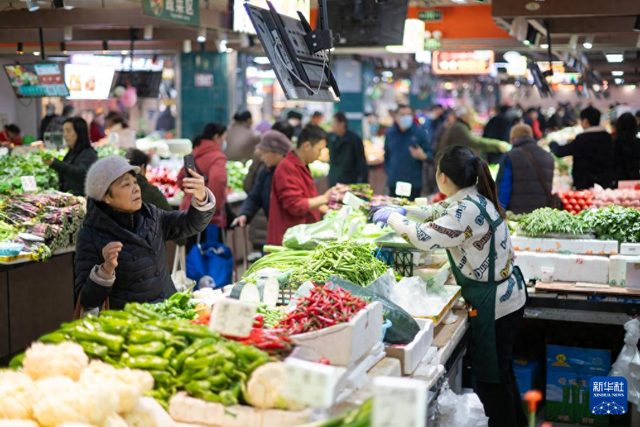
科技服务暖冬行,稳产保供迎新春
Nan Fang Nong Cun Bao· 2026-02-12 06:35
Group 1 - The article emphasizes the importance of ensuring stable vegetable production and quality during the upcoming Spring Festival, highlighting the critical period for supply assurance [4][6] - Agricultural technology specialists are actively providing technical guidance in vegetable production areas to support safe and stable winter-spring vegetable production [5][7] - Specific recommendations for disease prevention and management are provided, including the use of certain agents and practices to enhance plant resilience [15][16][18] Group 2 - In the Taiping Town, agricultural specialists identified physiological water deficiency and poor root development as the causes of wilting in buckwheat, suggesting timely irrigation and foliar fertilization as remedies [26][27][29] - The article discusses an organic farm in Yinlin Village that is exploring green planting methods, showcasing the vitality of ecological agriculture through diverse crop cultivation [31][36] - The farm is experimenting with microbial agents to replace chemical pesticides, achieving over a 30% reduction in pest incidence, and is encouraged to document data for broader application [38][39]

跟南瓜“谈心”
Xin Lang Cai Jing· 2026-02-10 00:32
Group 1 - The article highlights the transformation of agricultural practices in a village, emphasizing the shift from traditional irrigation methods to scientific management techniques, which have improved crop yield and quality [1][2] - The introduction of high-standard farmland projects has enabled local farmers to utilize modern technology, such as soil moisture sensors, leading to better water management and reduced pesticide use [1][2] - The success of local farmers, like 阿宏, is attributed to their ability to connect with external markets and utilize online platforms for selling their produce, ensuring better sales and reducing waste [2] Group 2 - The current agricultural landscape in the village is characterized by vibrant and healthy crops, indicating a significant improvement in farming practices and productivity [2] - The article describes the bustling activity during the harvest season, with farmers efficiently managing the collection and distribution of their produce, showcasing a thriving local economy [2] - The sensory details, such as the smell of the soil and the sounds of the crops, evoke a sense of connection to the land and the positive changes that have taken place over the years [3]
尼泊尔过去四月食品价格受供应链中断冲击 部分蔬菜价格飙涨八倍
Shang Wu Bu Wang Zhan· 2026-02-02 07:47
Core Viewpoint - The report from Nepal's Ministry of Commerce, Supplies and Consumer Protection highlights significant food price increases due to protests, strikes, and policy changes disrupting supply chains, with some vegetable prices soaring by up to eight times [1] Group 1: Price Increases - Most food prices have been unstable and on an upward trend during the first four months of the fiscal year, driven by factors such as middlemen manipulation, speculative behavior during political instability, and exchange rate fluctuations [1] - Bitter gourd and green beans saw price increases of up to 800%, while tomatoes rose by 67 NPR per kilogram, Basmati rice by 66 NPR per kilogram, and lentils by 47 NPR per kilogram [1] Group 2: Discrepancies in Data - The report contrasts with data from the Nepal Rastra Bank, which indicates that as of mid-December 2025, year-on-year food inflation had dropped to 1.63%, with vegetable prices decreasing by 8.54%, suggesting a long-term easing of inflation [1] - The Ministry of Commerce's report focuses on month-on-month changes within the fiscal year, revealing the severe short-term impact of supply chain disruptions [1] Group 3: Regulatory Criticism and Recommendations - Consumer rights activists criticize the lack of regulation, claiming that middlemen manipulate the market under political protection, leading to excessive price differentials [1] - The report recommends developing alternative trade mechanisms through businesses and cooperatives to reduce intermediaries and stabilize prices [1]
商务预报:1月19日-25日36个大中城市食用农产品零售价格情况
Shang Wu Bu Wang Zhan· 2026-01-30 06:13
Core Insights - The report provides a detailed analysis of retail prices for various food items, highlighting both month-on-month and year-on-year changes in prices across different categories [1] Group 1: Grain Prices - Rice is priced at 6.51 yuan/kg, showing a slight decrease of 0.2% month-on-month and 0.6% year-on-year [1] - Flour remains stable at 6.11 yuan/kg, with no change month-on-month and a decrease of 2.1% year-on-year [1] Group 2: Cooking Oil Prices - Soybean oil is priced at 12.77 yuan/kg, with a minor increase of 0.1% month-on-month and a decrease of 1.8% year-on-year [1] - Peanut oil is at 28.63 yuan/kg, also showing a 0.1% increase month-on-month and a decrease of 0.5% year-on-year [1] - Canola oil is priced at 16.72 yuan/kg, with a slight decrease of 0.1% month-on-month and a decrease of 1.5% year-on-year [1] - Blended oil remains at 15.50 yuan/kg, with no change month-on-month and a decrease of 1.1% year-on-year [1] Group 3: Meat Prices - Pork (hind leg) is priced at 26.62 yuan/kg, reflecting a month-on-month increase of 0.9% but a significant year-on-year decrease of 12.3% [1] - White strip chicken is at 24.73 yuan/kg, with a minor increase of 0.1% month-on-month and a decrease of 2.8% year-on-year [1] Group 4: Egg Prices - Fresh eggs are priced at 10.56 yuan/kg, showing a notable month-on-month increase of 2.8% but a year-on-year decrease of 9.7% [1] Group 5: Aquatic Product Prices - Carp is priced at 21.73 yuan/kg, with a month-on-month increase of 0.7% and a year-on-year decrease of 2.4% [1] - Silver carp is at 21.98 yuan/kg, showing a month-on-month increase of 0.7% and a year-on-year increase of 1.1% [1] - Grass carp is priced at 23.33 yuan/kg, with a month-on-month increase of 0.2% and a year-on-year increase of 7.6% [1] - Crucian carp is at 29.74 yuan/kg, reflecting a month-on-month increase of 0.1% and a year-on-year increase of 2.2% [1] - Large hairtail is priced at 48.12 yuan/kg, with a month-on-month increase of 0.4% and a year-on-year decrease of 0.6% [1] - Large yellow croaker is at 55.36 yuan/kg, showing a month-on-month increase of 0.6% and a year-on-year increase of 9.0% [1] Group 6: Vegetable Prices - The average price of vegetables is 8.57 yuan/kg, with a month-on-month increase of 1.1% and a year-on-year increase of 5.8% [1] - Cucumber has the highest month-on-month increase of 4.9%, priced at 9.35 yuan/kg, and a year-on-year increase of 19.3% [1] - Zucchini shows a month-on-month increase of 4.8% and a year-on-year increase of 19.5%, priced at 8.72 yuan/kg [1] - Cabbage has a month-on-month increase of 3.7% and a year-on-year increase of 21.5%, priced at 3.39 yuan/kg [1] - Green pepper is priced at 11.16 yuan/kg, with a month-on-month increase of 2.5% and a year-on-year increase of 19.0% [1] - Bitter melon shows a month-on-month increase of 2.1% and a year-on-year increase of 11.0%, priced at 13.02 yuan/kg [1] - Cauliflower has the largest month-on-month decrease of 2.5%, priced at 8.13 yuan/kg, with a year-on-year decrease of 3.7% [1] - Green beans show a month-on-month decrease of 1.6% and a year-on-year decrease of 4.4%, priced at 11.89 yuan/kg [1] - Spinach is priced at 9.93 yuan/kg, with a month-on-month decrease of 0.7% but a year-on-year increase of 23.0% [1] - Broccoli shows a month-on-month decrease of 0.4% and a year-on-year decrease of 3.2%, priced at 9.52 yuan/kg [1] - Asparagus lettuce is priced at 7.41 yuan/kg, with a month-on-month decrease of 0.3% and a year-on-year decrease of 0.3% [1]

土地不闲,收益翻番!曲阜创新种植模式,激活乡村产业振兴新活力
Qi Lu Wan Bao· 2025-12-06 09:34
Core Insights - The article highlights the successful agricultural transformation in Sanmenmiao Village, where innovative crop rotation and cooperative farming have significantly increased income and revitalized the local economy [1][2][3]. Group 1: Agricultural Innovation - The introduction of a "two years seven seasons" crop rotation model, which includes planting lettuce and sweet corn, has optimized land use and increased harvest frequency [2][3]. - In 2023, the income from 6 acres of greenhouses reached 220,000 yuan, nearly tripling from the previous year, demonstrating the effectiveness of the new farming practices [2]. Group 2: Community Impact - The success of Sanmenmiao Village has attracted neighboring villages, leading to the establishment of nearly 40 greenhouses and the formation of a significant lettuce planting industry cluster [3]. - Other villages are adopting similar agricultural practices, such as the production of gourds and bitter melons, contributing to a diversified rural economy [3][4]. Group 3: Future Prospects - Local authorities plan to enhance policy support and resource integration to encourage the development of distinctive industries across towns, aiming for a comprehensive rural revitalization [5].
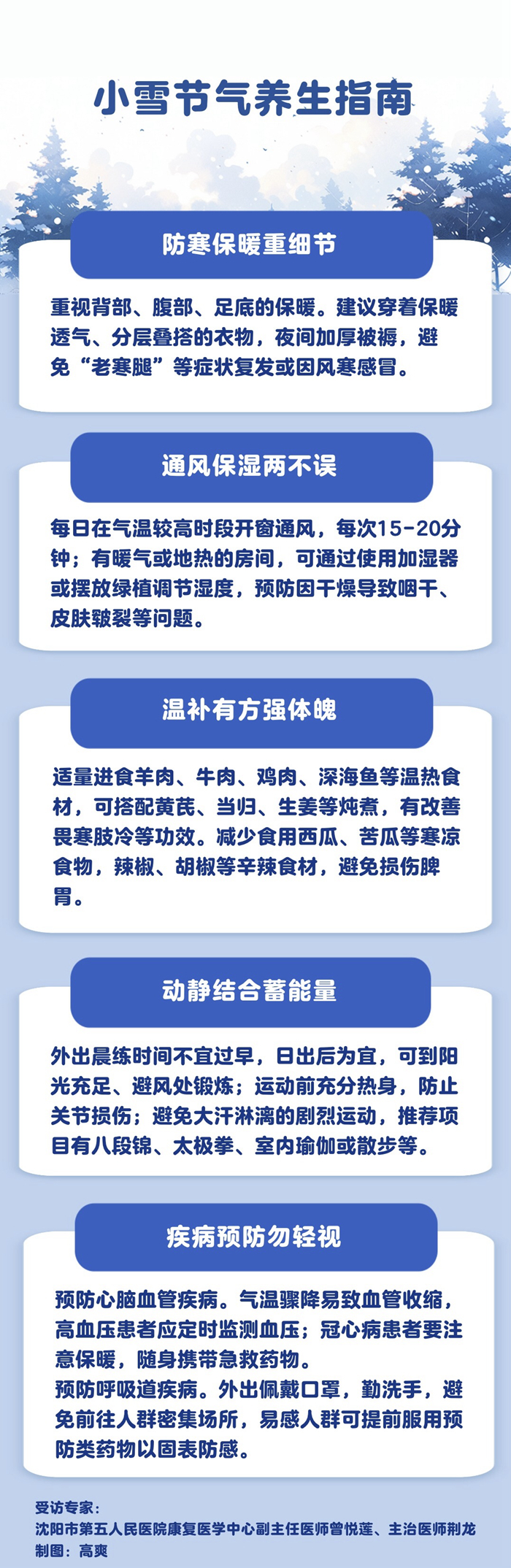
请收藏!小雪节气,这些养生知识要知道
Xin Hua She· 2025-11-22 07:46
Group 1 - The article discusses dietary recommendations for the "Minor Snow" solar term, emphasizing the consumption of warming foods such as lamb, beef, chicken, and deep-sea fish, which can be paired with herbs like astragalus, angelica, and ginger to improve cold sensitivity [6][10] - It advises against consuming cold foods like watermelon and bitter melon, as well as spicy ingredients like chili and pepper, to avoid damaging the spleen [6] Group 2 - The article highlights the importance of combining movement and rest to build energy during this season [7] - It recommends outdoor morning exercises after sunrise in sunny, wind-sheltered areas, with a focus on warming up to prevent joint injuries, suggesting activities like Baduanjin, Tai Chi, indoor yoga, or walking [8] Group 3 - The article emphasizes the need for disease prevention, particularly for cardiovascular and respiratory diseases, as temperature drops can lead to blood vessel contraction [9][10] - It advises hypertension patients to monitor their blood pressure regularly and for coronary heart disease patients to keep warm and carry emergency medication [10] - For respiratory disease prevention, it suggests wearing masks outdoors, frequent hand washing, and avoiding crowded places, with recommendations for at-risk individuals to take preventive medications [10]
商务预报:11月10日-11月16日36个大中城市食用农产品零售价格情况
Shang Wu Bu Wang Zhan· 2025-11-20 02:28
Group 1: Core Insights - The retail prices of various food items show mixed trends, with some experiencing slight increases while others face declines compared to previous periods [1] - Notably, pork prices, particularly for hind leg meat, have decreased significantly by 14.5% year-on-year [1] - Vegetable prices have shown an overall increase, with a weighted average price of 8.26 yuan per kilogram, reflecting a 3.9% year-on-year rise [1] Group 2: Price Changes by Category - Rice remains stable at 6.56 yuan per kilogram, with a slight year-on-year increase of 0.2% [1] - Cooking oils such as soybean oil and peanut oil have seen minor price changes, with soybean oil priced at 12.86 yuan per liter, down 1.7% year-on-year [1] - Among vegetables, cabbage has the highest month-on-month increase of 4.3%, while rapeseed has the largest decline at 2.7% [1]
端稳“菜篮子” 高州近30万亩冬种作物长势喜人
Nan Fang Nong Cun Bao· 2025-11-18 01:35
Core Viewpoint - The agricultural sector in Gaozhou is experiencing a significant boost with nearly 300,000 acres of winter crops showing promising growth, contributing to stable production and increased income for farmers [2][3][20]. Summary by Sections Winter Crop Area and Growth - Gaozhou has fully initiated winter crop production, covering nearly 300,000 acres, with a focus on both grains and vegetables [3][10]. - The planned area for winter crops this year is 279,100 acres, including 50,600 acres for grains and 228,500 acres for vegetables [4][6]. Crop Types and Yield Expectations - Various winter crops are thriving, including corn, bitter melon, and chili peppers, with expectations of high yields [7][12]. - Bitter melon is projected to yield 10,000 kilograms per acre, with current market prices exceeding 4 yuan per pound for bitter melon and 3 yuan per pound for chili peppers, which are better than the same period last year [15][18]. Agricultural Strategies and Innovations - Gaozhou has been leveraging its warm winter climate and idle farmland by implementing strategies to optimize winter crop production, focusing on high-quality varieties and advantageous crops [16][19]. - The initiatives aim to transform winter idle resources into significant agricultural productivity and steady income growth for farmers [20].
三亚首批冬季瓜菜开摘 明年1月将大规模上市
Zhong Guo Xin Wen Wang· 2025-11-07 13:46
Core Insights - The winter vegetable harvest in Sanya, Hainan, has begun, with significant production expected to support the market before the Spring Festival [1][3] - Sanya's winter vegetable planting area is projected to reach 166,100 acres, with an expected yield of over 340,000 tons [3][5] Group 1: Production and Harvesting - Farmers in Sanya are currently harvesting cucumbers, with individual farmers like Li Junning expecting to collect two to three thousand pounds in a single day [1][5] - The largest area for winter vegetable cultivation in Sanya is located in the Yazhou District, where 30,000 acres have been prepared for planting, involving approximately 4,300 households [3][5] - The peak harvest period for Sanya's vegetables will see products shipped nationwide, with cucumbers and other vegetables expected to be available in large quantities starting January next year [5][7] Group 2: Agricultural Strategy and Crop Management - The Hainan Provincial Department of Agriculture has proposed adjustments to winter vegetable planting, focusing on stabilizing melon production, increasing bean varieties, and reducing pepper cultivation [5][7] - Sanya is implementing advanced agricultural techniques, such as the "insect net+" green pest control technology for cowpeas, and promoting the "netted cowpea" brand [5][7] - The introduction of high-yield, disease-resistant varieties through the "South Breeding" program has resulted in significant yield increases, with cowpea varieties yielding over 4,000 pounds more per acre compared to traditional varieties [7] Group 3: Research and Development - Sanya is leveraging its favorable climate and research partnerships with institutions like the Chinese Academy of Tropical Agricultural Sciences to introduce and test new vegetable varieties [7] - The establishment of a healthy seedling production base aims to support local vegetable production, with plans to produce at least 10 million seedlings annually through intensive factory-style cultivation [7]