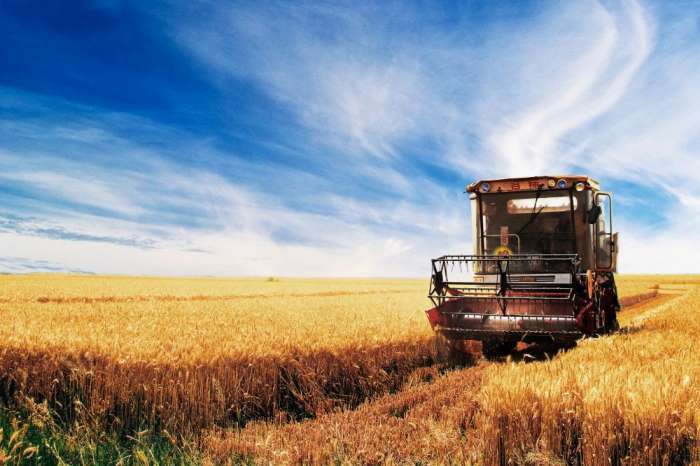
新一轮千亿斤粮食产能提升行动

Search documents
2026年中央一号文件发布:粮食产量稳定在1.4万亿斤左右
Xin Jing Bao· 2026-02-03 10:57
Core Insights - The central document emphasizes stabilizing grain production at approximately 1.4 trillion jin, with a target of 14,298 billion jin by 2025, marking an increase of 168 billion jin from previous levels [1][2] Group 1: Grain Production Goals - Grain production is set to overcome adverse weather conditions, achieving a historical high and maintaining stability above 1.4 trillion jin for two consecutive years [1] - The document outlines a focus on enhancing grain and oil production, integrating various agricultural practices to improve efficiency and yield [1] Group 2: Agricultural Strategy - The strategy includes optimizing agricultural production structures and regional layouts, promoting high-quality grain varieties, and implementing projects to enhance grain circulation [1] - There is a commitment to increasing soybean production capacity and diversifying oilseed supply, alongside stable development in cotton, sugar, and natural rubber industries [1] Group 3: Policy Evolution - The terminology regarding the new round of the 100 billion jin grain production capacity enhancement action has evolved, indicating a more aggressive implementation approach for 2025 [2]
中国日报:赵口引黄灌区现代化改造工程开工
Shui Li Bu Wang Zhan· 2026-01-26 02:08
Core Viewpoint - The commencement of the Zhao Kou Yellow River Irrigation District modernization project is a significant step towards ecological protection, high-quality development, and national food security in China [1] Group 1: Project Overview - The Zhao Kou Irrigation District is located in the eastern plain of Henan Province and is the largest irrigation area in the province and the fourth largest in the country [1] - The project has a designed irrigation area of 3.665 million acres and a total investment of 6.499 billion yuan, with completion planned for July 2029 [1] Group 2: Key Construction Elements - The main construction activities include the renovation or new construction of 220 channels (ditches) with a total length of 1,353 kilometers, and the renovation (or new construction) of 2,019 various structures such as sluices and pumping stations [1] - The project will also advance the construction of a digital twin irrigation area, focusing on creating a water-saving, efficient, and ecologically sound flagship project [1]
农业农村部:2025年粮食产量再创新高,增产主要来自玉米
2 1 Shi Ji Jing Ji Bao Dao· 2026-01-22 05:00
Core Insights - In 2025, China's grain production reached a historical high of 14,298 billion jin, an increase of 168 billion jin, maintaining stability above 14 trillion jin for two consecutive years [2] - The increase in grain production was primarily driven by autumn crops, with an increase of 163.6 billion jin, accounting for over 90% of the total annual grain increment [2] - Key regions contributing to the increase include the three northeastern provinces, Inner Mongolia, and Xinjiang, which together accounted for nearly 70% of the national increment [2] - Corn was the main crop contributing to the increase, with a production rise of 126.4 billion jin, representing 75% of the total grain increment [2] Agricultural Practices and Techniques - In 2025, the area for integrated water and fertilizer management reached over 8.8 million acres, with significant advancements in high-performance machinery and comprehensive technology integration [3] - The contribution of yield improvement to national grain production was over 90%, indicating a strong focus on enhancing single crop yields [3] - The Ministry of Agriculture and Rural Affairs emphasized that the increase in production was achieved mainly through improvements in yield rather than expanding cultivated area [4] Future Plans - In 2026, the Ministry of Agriculture and Rural Affairs will continue to focus on grain production, implementing a new round of actions aimed at increasing grain capacity by 100 billion jin [4] - Key areas of focus will include stabilizing cultivated area, improving yield, optimizing structure, enhancing efficiency, and disaster reduction [4] - The ministry encourages local governments to promote large-scale yield improvements for grain and oil crops, leveraging new agricultural management entities and advanced technologies [4]

农业农村部:粮食安全总体有保障 但粮食产需紧平衡的态势没有改变
Xin Lang Cai Jing· 2026-01-22 02:52
Core Viewpoint - The overall food security in China is guaranteed, but the balance between food supply and demand remains tight, necessitating continued efforts to enhance agricultural production capacity [1] Group 1 - The Ministry of Agriculture and Rural Affairs emphasizes the importance of improving comprehensive agricultural production capacity [1] - A new round of actions aimed at increasing grain production capacity by 1 billion jin (approximately 500 million kg) will be implemented [1] - The goal is to establish a diversified food supply system to strengthen the supply guarantee for important agricultural products [1]
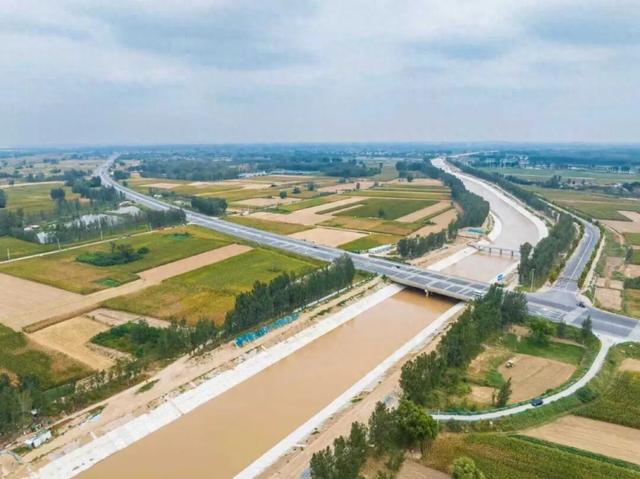
河南赵口引黄灌区现代化改造工程开工,系国家“两重”项目
Xin Lang Cai Jing· 2026-01-19 02:44
Core Viewpoint - The commencement of the Zhao Kou Yellow River Irrigation District modernization project marks a significant step in enhancing ecological protection, food security, and high-quality water resource development in Henan Province and the broader Yellow River basin [1]. Group 1: Project Overview - The Zhao Kou Yellow River Irrigation District is located in the eastern plain of Henan Province and is the largest irrigation district in the province and the fourth largest in the country [1]. - The project has a designed irrigation area of 3.665 million acres and a total investment of 6.499 billion yuan, with a completion target set for July 2029 [1]. - Key construction components include the renovation or construction of 220 channels with a total length of 1,353 kilometers and the renovation or construction of 2,019 various structures such as sluices and pumping stations [1]. Group 2: Strategic Importance - This project is a crucial initiative for implementing the ecological protection and high-quality development strategy of the Yellow River basin, as well as the national food security strategy and the new round of grain production enhancement actions [1]. - The project aims to create a water-saving, efficient, and ecologically sound irrigation system, contributing to national food security and promoting high-quality water resource development [1].
“十四五”水利建设投资5.68万亿元 2026年力争保持大规模、高水平态势
Zhong Guo Zheng Quan Bao· 2026-01-09 23:00
Core Viewpoint - The National Water Network construction is progressing rapidly, with significant investments and projects aimed at enhancing water security and agricultural productivity in China by 2025 [1][2]. Group 1: Investment and Infrastructure Development - During the 14th Five-Year Plan, a total of 5.68 trillion yuan was invested in water conservancy construction, with over 1 trillion yuan invested annually since 2022 [1]. - By 2025, the investment in water conservancy construction is expected to reach 1.28 trillion yuan, creating 3.15 million jobs and contributing to economic growth [1]. - A total of 181 major water conservancy projects have commenced during the 14th Five-Year Plan, which is an increase of 65 projects compared to the previous five-year period [1]. Group 2: Agricultural and Food Security - By the end of 2025, the irrigated area of arable land is projected to reach 109 million acres, an increase of over 5.3 million acres compared to the end of the 13th Five-Year Plan, with a corresponding grain yield of 80.76% [2]. - The Ministry of Water Resources plans to enhance the supply capacity of important agricultural products through a new round of initiatives aimed at increasing grain production [2]. Group 3: Future Plans and Strategies - In 2026, the Ministry of Water Resources will focus on implementing major water conservancy projects and modernizing irrigation systems, including new large-scale irrigation areas in Guangdong and Jiangxi [3]. - The Ministry will also promote water-saving technology innovation and the development of a modern water-saving industry, emphasizing digital, green, and integrated approaches [3].
“十四五”水利建设投资5.68万亿元
Zhong Guo Zheng Quan Bao· 2026-01-09 20:45
Group 1 - The core viewpoint of the articles highlights the significant progress in China's water conservancy infrastructure, with a total investment of 5.68 trillion yuan during the 14th Five-Year Plan period, and an expected investment of 1.28 trillion yuan by 2025, which will create 3.15 million jobs [1][2] - The construction of 181 major water conservancy projects has commenced, which is an increase of 65 projects compared to the previous five-year plan, with 94 projects completed and operational [1] - The national water network now covers 80.3% of the country's land area, providing essential water security for major strategic implementations and economic zones [1] Group 2 - By the end of 2025, the irrigated area of arable land is projected to reach 109 million acres, an increase of over 5.3 million acres from the end of the 13th Five-Year Plan, contributing to 80.76% of grain production [2] - The Ministry of Water Resources plans to focus on enhancing food security and agricultural water efficiency through the modernization of irrigation systems and the implementation of a comprehensive agricultural water-saving policy [2][3] - Major irrigation projects, such as the new large-scale irrigation areas in Guangdong and Jiangxi, are set to be developed, with a design irrigation area exceeding 6 million acres [3]
中央农村工作会议关键提法之四:新一轮千亿斤粮食产能提升行动
Xin Hua Wang· 2026-01-05 01:00
Group 1 - The recent Central Rural Work Conference analyzed the current situation and challenges facing the "three rural issues" and outlined the work plan for 2026 [1] - The conference emphasized the need to implement a new round of actions to increase grain production capacity by one hundred billion jin, as maintaining grain production is a primary task [5] - China's grain output has remained at a high level of 1.3 trillion jin for eight consecutive years, indicating increasing difficulty in further production growth [5] Group 2 - The strategy to enhance agricultural production capacity includes modernizing agriculture, improving comprehensive production capacity, and ensuring ecological production [5] - Key strategies include "storing grain in the land" and "storing grain in technology," which aim to stabilize grain planting areas and enhance grain yield [5] - The focus is on integrating high-yield and efficient agricultural models, strengthening disaster prevention and mitigation capabilities, and solidifying the foundation of national food security [5]
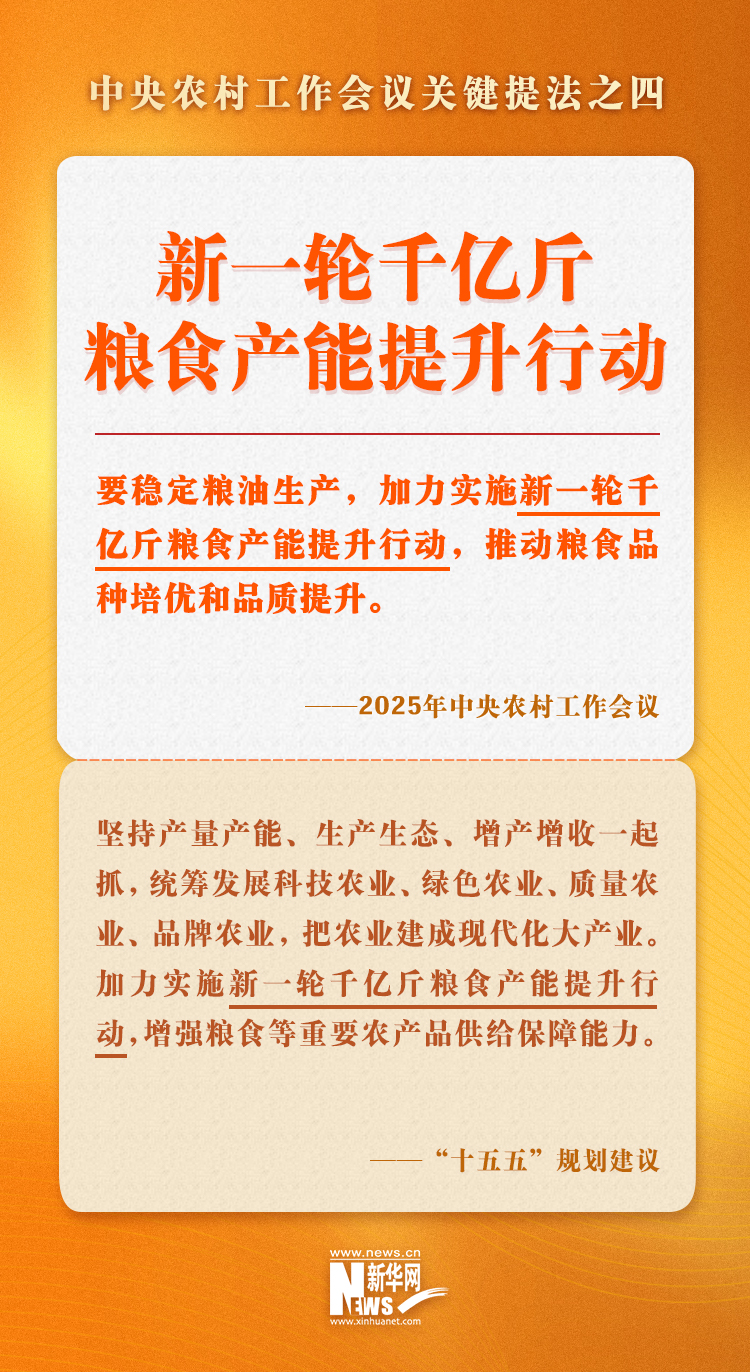
2026年“三农”工作:加力实施新一轮千亿斤粮食产能提升行动
Yang Shi Wang· 2025-12-31 03:44
Core Viewpoint - The Central Rural Work Conference held on December 29-30, 2023, in Beijing, focuses on ensuring stable production and supply of grain and important agricultural products for 2026, aiming to enhance agricultural comprehensive production capacity and quality efficiency [1] Group 1: Grain Production and Supply - The Minister of Agriculture and Rural Affairs, Han Jun, emphasized the need to maintain grain production, stabilize planting area, optimize structure, and increase yield [3] - A new round of actions to enhance grain production capacity by 100 billion jin is to be implemented, aiming for a bumper harvest of grain and oil [3] - Efforts will be made to stabilize grain sowing area and promote significant yield increases for oil crops through advanced machinery and integrated technology [4] Group 2: Diversified Food Supply System - There is a focus on strengthening the production supply of "vegetable basket" products and accelerating the establishment of a diversified food supply system [6] - Local governments are encouraged to continue comprehensive regulation of pig production capacity and support the recovery of beef and sheep industries [6] Group 3: Infrastructure and Technological Advancements - The conference highlighted the importance of stabilizing grain and oil production and enhancing water conservancy infrastructure to improve agricultural disaster prevention and reduction capabilities [7] - In Shandong, green grain enhancement actions and high-standard farmland construction are being implemented to continuously improve grain yield levels [7] - Advanced technologies such as soil testing for precise fertilization and integrated pest management are being applied, resulting in over a 10% increase in wheat and corn yields [9] Group 4: High-Standard Farmland Development - Shandong is integrating high-standard farmland construction with water conservancy projects to restore drainage functions and support grain production [11] - By 2025, over 75 million acres of high-standard farmland are expected to be newly built or upgraded, with irrigation areas exceeding 1.09 billion acres nationwide [11]
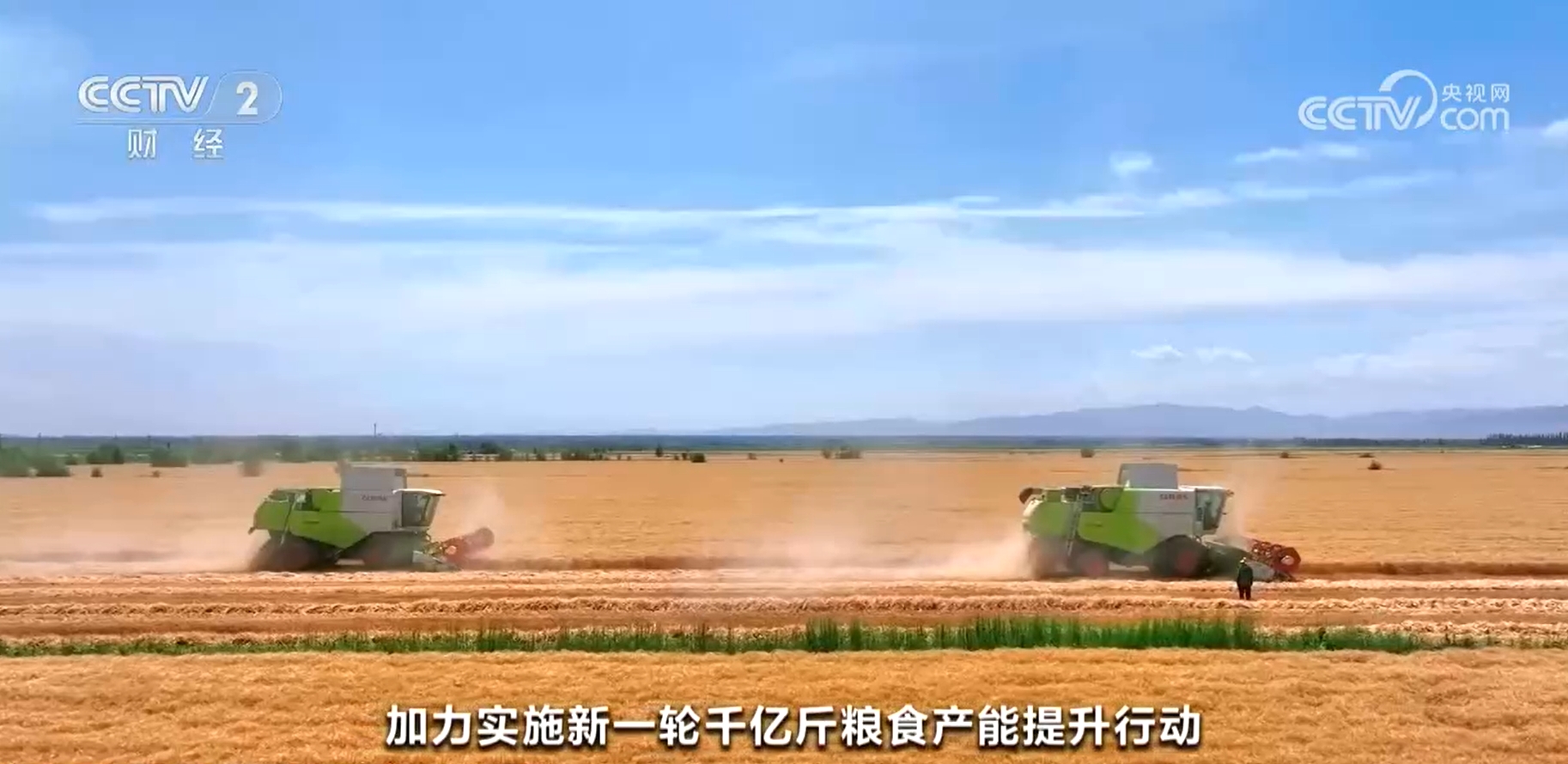
中央定调:加力实施新一轮千亿斤粮食产能提升行动,提升粮食品质
2 1 Shi Ji Jing Ji Bao Dao· 2025-12-30 12:22
Core Viewpoint - The central theme of the news is the emphasis on enhancing grain production capacity in China through the implementation of a new round of actions aimed at increasing grain output by over 100 billion jin by 2030, ensuring food security and responding to the rising demand for quality grain products [2][3][4]. Group 1: Grain Production Goals - The Central Rural Work Conference highlighted the need to maintain focus on grain production, integrating various agricultural practices to enhance overall production capacity and quality [2]. - In 2025, China's grain production reached a record high of 14,298 billion jin, marking an increase of 167.5 billion jin or 1.2% from the previous year, achieving the milestone of "22 consecutive years of abundant harvests" [2]. - The per capita grain availability in China has reached 500 kg, surpassing the internationally recognized safety line of 400 kg, indicating a stable grain supply [2]. Group 2: Policy Implementation - The new round of actions for increasing grain production capacity has been consistently emphasized in the Central No. 1 Document for three consecutive years, with specific policy statements focusing on the implementation and reinforcement of these actions [3]. - The 2025 Central Rural Work Conference reiterated the commitment to enhance grain production capacity while also improving the quality of grain varieties to meet consumer demands [3][4]. - The "14th Five-Year Plan" suggests that enhancing grain production capacity will be a key task in agricultural work, with a focus on stabilizing staple grain production and expanding the production of high-quality feed crops [4].