资金占用

Search documents
又一家!*ST沪科“资金占用”悬顶二十年,监管出手立案调查!
Xin Lang Cai Jing· 2025-12-15 11:53
登录新浪财经APP 搜索【信披】查看更多考评等级 受损股民可至新浪股民维权平台登记该公司维权:http://wq.finance.sina.com.cn/ 关注@新浪证券、微信关注新浪券商基金、百度搜索新浪股民维权、访问新浪财经客户端、 新浪财经首页都能找到我们! 证监会一份立案告知书,让*ST沪科(维权)的信息披露问题成为市场焦点,而在这份通知背后,一系 列法律追索权的大门已经为受损股民打开。 一、涉信息披露违法违规 2025年12月12日,上海宽频科技股份有限公司(证券简称:*ST沪科)收到中国证监会下发的《立案告 知书》。 因公司涉嫌信息披露违法违规,根据《中华人民共和国证券法》等法律法规,中国证监会已正式决定对 公司立案调查。 根据历史案例,上市公司一旦被证监会立案调查,最终被认定为信息披露违法违规并受到处罚的可能性 较大,立案调查期间,公司将面临投资者的集体诉讼。 至于违规细节,公告中并未披露,具体还需等待监管调查。上海沪紫律师事务所刘鹏律师表示,暂定于 2025年12月12日(含当日)之前买入,并在2025年12月13日之后卖出或仍持有而亏损的即可参与维权, 挽回损失。(*ST沪科维权入口) 随着 ...
“一针两千,童颜针年销3亿元”背后:多家关联方注册地“查无此人”,股民追问“钱呢”,钱氏姐弟几乎“掏空”江苏吴中,公司即将退市
3 6 Ke· 2025-12-15 01:28
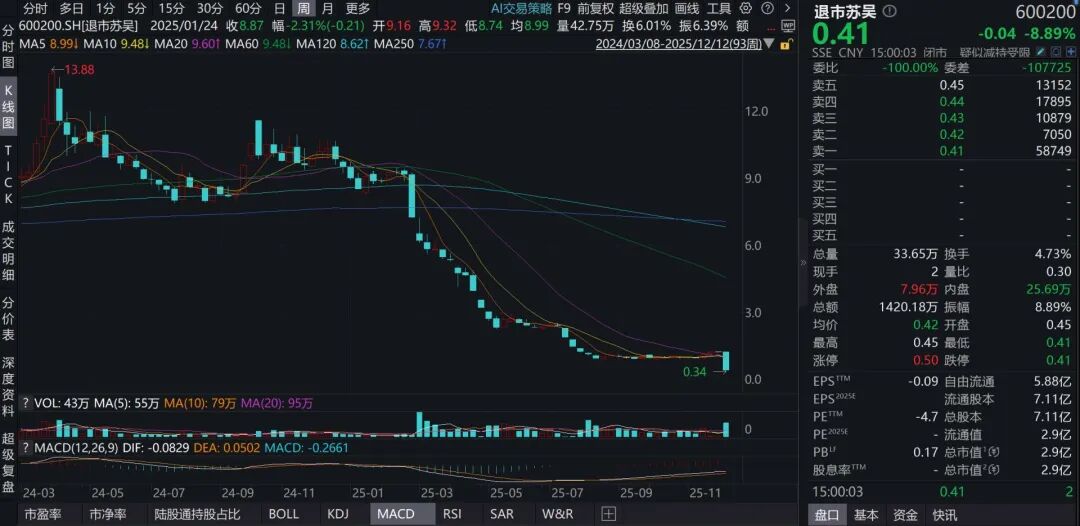
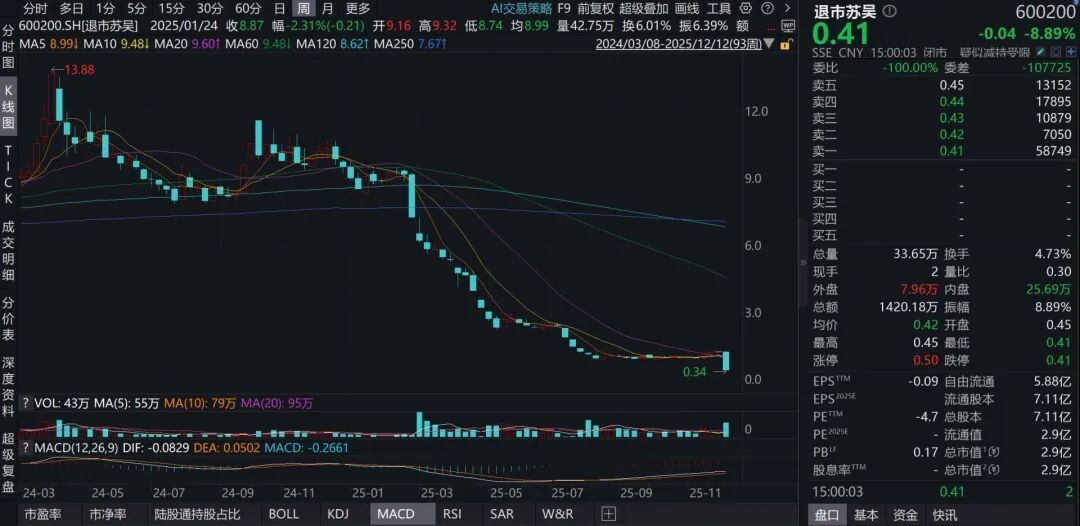
时隔半年,再次谈起钱氏姐弟财务造假的细节,退市苏吴(以下统称江苏吴中)的时任高管们变得沉默寡言。 因连续多年财务造假被勒令退市的江苏吴中股票于2025年12月9日进入退市整理期。截至发稿,留给中小股东决定去留的时间仅剩11个交易日。从12月9日 开盘到现在,江苏吴中股价累计下跌66.94%。 | 分时 多日 1分 5分 15分 30分 60分 日 周 月 更多 | AI交易策略 F9 前复权 超级叠加 画线 工具 @ ② > | 退市苏吴 1 | 600200 | △ 600200.SHi退市苏曼] 2025/01/24 收8.87 幅-2.31%(-0.21) 开9.16 高9.32 低8.74 均8.99 量42.75万 换6.01% 振6.39% 额 | WP | 0.41 | -0.04 -8.89% | | | | | | | | | | | | --- | --- | --- | --- | --- | --- | --- | --- | --- | --- | --- | --- | --- | --- | --- | --- | --- | --- | | 2024/03/08-2025/12 ...


“童颜针年销3亿”背后:钱氏姐弟几乎掏空江苏吴中,股民追问“钱呢”!
Mei Ri Jing Ji Xin Wen· 2025-12-14 22:34
时隔半年,再次谈起钱氏姐弟财务造假的细节,退市苏吴(以下统称江苏吴中)的时任高管们变得沉默寡言。 12月初,每经记者通过多种渠道向江苏吴中财务总监、董秘及其他高管表达采访诉求。截至发稿,各方均未给出有效回应。 实探3家关联公司: 注册地址均"查无此人" 11月下旬,中国证监会对江苏吴中下发《行政处罚决定书》,揭开了江苏吴中钱氏姐弟长达数年的违法行为。 因连续多年财务造假被勒令退市的江苏吴中股票于2025年12月9日进入退市整理期。截至发稿,留给中小股东决定去留的时间仅剩11个交易日。从12月9日 开盘到现在,江苏吴中股价累计下跌66.94%。 监管查明,江苏吴中的三家子公司通过与浙江优诺德贸易有限公司(以下简称优诺德)等多家关联公司开展无商业实质的贸易业务,虚增营收、营业成本 和利润,并占用部分资金。 江苏吴中股价走势 图片来源:Wind 《每日经济新闻》记者深入调查发现,过去4年,江苏吴中董事长钱群山、副董事长钱群英两姐弟秘密搭建了一关联交易网,通过至少6家公司以贸易业务 往来为遮挡,4年累计虚增收入超17亿元,并长期占用上市公司资金。每经记者进一步实地走访其中5家后发现,有4家公司的注册地址"查无此人", ...
新华锦:集团占用资金4.06亿未归还或被实施退市警示
Xin Lang Cai Jing· 2025-12-12 11:29
新华锦公告称,截至2025年半年度报告披露日,新华锦集团及其关联方非经营性占用公司资金4.06亿 元,原计划通过出售股权清偿,该交易已终止。若未能在六个月内清收被占用资金,公司股票将被停 牌;停牌后两个月内仍未完成整改,将被实施退市风险警示;此后两个月内仍未完成整改,将被终止上 市交易。公司正督促集团还款,目前生产经营正常。 ...

祥源系爆雷前夕祥源文旅突击收购?频繁高溢价接盘中景信资产背后现控股股东身影
Xin Lang Cai Jing· 2025-12-12 09:29
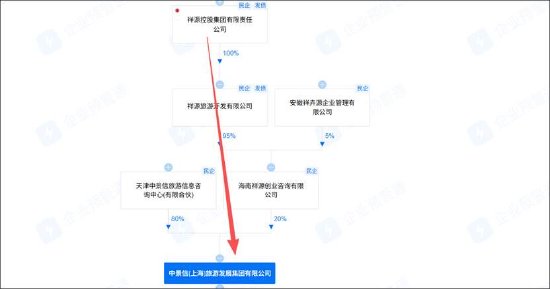
出品:新浪财经上市公司研究院 文/夏虫工作室 核心观点:祥源系暴雷前夕祥源文旅(维权)为何突击现金并购中景信资产?需要指出的是,公司账面 资金并不宽裕。中景信与祥源系关系匪浅,背后出现祥源控股股东身影。值得注意的是,祥源文旅频繁 高溢价接盘中景信资产,但部分标的出现收购当年即商誉减值或部分标的业绩骤升等现象。 近日,祥源控股因在浙江金融资产交易中心发行的多款金融产品逾期兑付引发旗下上市公司股价地震。 据公开资料显示,"祥源系"的爆雷传闻始于11月底,祥源控股通过浙金中心发行的2-3款金融产品(预 期收益率4%-5%)出现逾期,涉及金额据统计超百亿元。据悉,"祥源系"产品的增信人为祥源控股、俞 发祥。 随着事件发酵,"祥源系"旗下上市公司交建股份(维权)、祥源文旅、海昌海洋公园纷纷发布公告紧急 澄清。 交建股份、祥源文旅、海昌海洋公园三家公司公告称,近日,网上出现有关祥源控股、公司实控人承担 连带保证责任的金融产品出现部分逾期兑付的媒体报道并引发投资者关注。就相关事项向祥源控股及公 司实际控制人进行了核实及自查并进行如下澄清: 其一,在某平台发行的涉及与祥源控股地产合作项目的金融产品存在部分逾期兑付情形,祥源控 ...

浙江帕瓦新能源股份有限公司关于2025年三季度报告的信息披露监管问询函的回复公告
Shang Hai Zheng Quan Bao· 2025-12-11 20:12
Core Viewpoint - Zhejiang Pava New Energy Co., Ltd. reported a significant decline in revenue and continued losses in the third quarter of 2025, prompting regulatory inquiries regarding its financial disclosures and asset valuations [1]. Group 1: Revenue and Profitability - For the first three quarters of 2025, the company achieved a revenue of 356 million yuan, a year-on-year decrease of 54.25%, and a net profit attributable to shareholders of -204 million yuan, indicating ongoing losses [1][2]. - The primary product, NCM ternary precursor, accounted for over 95% of sales, with the top five customers contributing over 90% of revenue. The decline in revenue was attributed to a decrease in sales volume of single crystal NCM products and a strategic reduction in loss-making orders [2][3]. Group 2: Industry Context - The company's revenue decline is influenced by external factors, including the rising market share of lithium iron phosphate batteries and increased competition from new entrants in the precursor market. The industry is experiencing structural overcapacity and intensified competition [3]. - The pricing model for the company's main products is based on raw material costs plus processing fees, making it vulnerable to fluctuations in the prices of nickel, cobalt, and manganese, which are primarily imported [3]. Group 3: Fixed Assets and Impairment - The company reported a fixed asset value of 891 million yuan at the end of the reporting period, with an impairment loss of 56 million yuan recognized in the first three quarters. The low capacity utilization rate, which dropped to 18.74% in the first half of 2025, raised concerns about further impairment [1][4]. - A specific impairment test conducted on the NCM production line indicated a recoverable amount of 470.69 million yuan, leading to a recognized impairment of 56.41 million yuan, with a reduction rate of 10.70% [4]. Group 4: Inventory and Disputes - The company reported an inventory value of 285 million yuan at the end of the reporting period, with a provision for inventory write-down of 9.93 million yuan. There have been multiple contract disputes related to delivery issues with customers and suppliers [5][6]. - Inventory aging analysis revealed that 119.14 million yuan of inventory had been held for over a year, primarily due to long-term unsold stock. However, there were no issues with product quality or delivery disputes reported [6]. Group 5: Receivables and Credit Losses - The company reported accounts receivable of 3.09 million yuan at the end of the reporting period, down from 202 million yuan at the beginning of the year, with a significant increase in credit loss provisions amounting to 22.14 million yuan [1][8]. - The increase in credit loss provisions was attributed to changes in expected credit loss rates based on market conditions and customer credit status, aligning with accounting standards [8][9]. Group 6: Retrospective Adjustments - The company has made retrospective adjustments to certain accounting items, including issues related to revenue inflation and insufficient inventory write-downs, which are currently under investigation by authorities [11][12].

掩盖资金占用实施财务造假后积极主动供述 监管对惠伦晶体案拟从轻罚款合计1140万
Zhong Guo Jing Ying Bao· 2025-12-11 04:53
登录新浪财经APP 搜索【信披】查看更多考评等级 中经记者 孙汝祥 夏欣 北京报道 12月9日,惠伦晶体(300460.SZ)方面披露,当日收到《行政处罚事先告知书》。 经查,惠伦晶体未按规定披露资金占用事项,致使2020年年报存在重大遗漏。为掩盖资金占用行为,惠 伦晶体又实施了财务造假行为,导致2021年、2022年年报存在虚假记载。 "考虑当事人积极配合查处、占用资金已归还、主动供述调查未掌握的违法行为等因素",广东证监局拟 决定对公司及5名当事人合计罚款1140万元。 占用资金 《行政处罚事先告知书》显示,2020年,惠伦晶体以采购设备及材料、预付工程款等名义,向其他公司 支出款项,并最终划转至控股股东新疆惠伦股权投资合伙企业(有限合伙)(以下简称"新疆惠伦")及 惠伦晶体实际控制人赵积清本人等关联方银行账户,用于归还新疆惠伦股权质押款及赵积清个人借款。 上述关联方非经营性资金往来构成关联方对公司的资金占用,2020年累计发生额为2833万元,期末余额 为2663万元,资金占用发生额占惠伦晶体2020年年报披露净资产的5.12%。 截至2025年3月,关联方已归还上述占用资金及利息。 财务造假 广东证监 ...

证监会:拟严禁控股股东、实际控制人实施资金占用、违规担保等损害上市公司利益的行为,严格规范同业竞争和关联交易行为
Sou Hu Cai Jing· 2025-12-05 10:52
Core Viewpoint - The China Securities Regulatory Commission (CSRC) has drafted the "Regulations on the Supervision and Administration of Listed Companies (Public Consultation Draft)" to enhance corporate governance and is currently seeking public feedback [1] Group 1: Corporate Governance Structure - The draft specifies the basic framework for corporate governance of listed companies, detailing the matters to be included in the company’s articles of association [1] - It outlines the powers and methods of operation for the shareholders' meeting, board of directors, audit committee, and independent directors [1] Group 2: Behavior of Directors and Senior Management - The draft clarifies the qualifications for directors and senior management, detailing their duties of loyalty and diligence, as well as the responsibilities of the board secretary [1] - It emphasizes the need to strengthen incentives and constraints on directors and senior management [1] Group 3: Behavior of Controlling Shareholders and Actual Controllers - The draft specifies the criteria for identifying controlling shareholders and actual controllers, prohibiting actions that harm the interests of listed companies, such as fund occupation and illegal guarantees [1] - It strictly regulates behaviors related to competition and related party transactions [1] Group 4: Protection of Shareholder Rights - The draft prohibits interference with shareholders' exercise of their legal rights and regulates behaviors such as the transfer or waiver of voting rights, as well as the reduction of holdings by major shareholders and specific shareholders [1]
上市公司造假并被强制退市:钱氏姐弟资本局
经济观察报· 2025-12-03 14:47
Core Viewpoint - The article discusses the significant decline in the stock price of Jiangsu Wuzhong Pharmaceutical Development Co., Ltd. (referred to as "*ST Suwu"), which has lost 90% of its market value since the involvement of the Qian siblings, with the stock price dropping from 11 yuan to 1.24 yuan by November 25, 2025 [1][15]. Summary by Sections Company Control and Ownership - In February 2018, Qian Ying, the sister of Qian Qunshan, acquired control of Jiangsu Wuzhong through a share transfer transaction valued at approximately 707 million yuan, gaining a 17.01% stake in the company [5]. - Prior to this acquisition, Jiangsu Wuzhong had nine actual controllers, and the company faced an investigation by the CSRC, which concluded with no wrongdoing found [5]. Financial Misconduct and Penalties - On November 25, 2025, the CSRC issued an administrative penalty against *ST Suwu for concealing the actual controller, financial fraud, and fund occupation, resulting in a fine of 10 million yuan for the company and 1.5 million yuan for Qian Qunshan [2][21]. - The company was found to have inflated revenue and profits through non-commercial trade activities, with inflated revenues of 4.95 billion yuan in 2020, 4.69 billion yuan in 2021, and so on, leading to significant penalties [18]. - By the end of 2023, related parties had occupied 1.693 billion yuan of *ST Suwu's funds, nearly exhausting the company's net assets [19]. Strategic Changes and Business Direction - After Qian Ying took control, Jiangsu Wuzhong shifted its strategy to focus on "pharmaceuticals + medical aesthetics," establishing a medical aesthetics division and investing in related products [14]. - Despite ongoing investigations and financial issues, Qian Qunshan continued to promote the company's medical aesthetics products, claiming significant sales figures [15]. Future Implications - The article highlights the potential for criminal charges against the Qian siblings if their actions are deemed to constitute embezzlement, as seen in similar cases where individuals were prosecuted for misappropriating company funds [22].
上市公司造假并被强制退市:钱氏姐弟资本局
Jing Ji Guan Cha Wang· 2025-12-03 12:49
Core Viewpoint - Jiangsu Wuzhong Pharmaceutical Development Co., Ltd. is facing delisting due to severe violations including concealing the actual controller, financial fraud, and fund occupation, leading to a penalty of 10 million yuan and a forced delisting decision by the Shanghai Stock Exchange [2][13][16]. Group 1: Company Background and Control - Jiangsu Wuzhong was controlled by Qian Qunshan's sister, Qian Qunying, after a share transfer in February 2018, where 60.61% of the shares were sold for approximately 707 million yuan [3][4]. - Prior to the transfer, the company had nine actual controllers, and its revenue dropped significantly to 1.702 billion yuan in 2018, with a net loss of 286 million yuan [4]. - Qian Qunshan was found to be the actual controller despite Qian Qunying being the nominal controller, as he exercised real control over the company [5][8]. Group 2: Violations and Penalties - The China Securities Regulatory Commission (CSRC) issued a penalty on November 25, 2025, for financial fraud, revealing that the company inflated revenues and profits through non-commercial trade activities from 2020 to 2023 [14][15]. - The inflated revenues amounted to 4.95 billion yuan, 4.69 billion yuan, 4.31 billion yuan, and 3.77 billion yuan for the respective years, constituting significant percentages of reported revenues [14]. - The total fund occupation reached 1.693 billion yuan by the end of 2023, nearly exhausting the company's net assets of 1.744 billion yuan [15]. Group 3: Future Implications - The company is set to enter a delisting period on December 9, 2025, with the last trading day expected to be December 29, 2025, under the new name "Delisted Suwu" [2]. - There are ongoing concerns regarding the potential criminal implications for the involved parties, as the actions may constitute embezzlement under Chinese law [16].