
金融向善

Search documents
浙商银行合肥分行:以金融助力民生 持续提升群众获得感
Zhong Guo Jin Rong Xin Xi Wang· 2025-06-23 13:01
Core Viewpoint - Zhejiang Merchants Bank Hefei Branch focuses on a people-centered development approach, implementing a "finance for good" service philosophy to address the urgent needs of the public through innovative financial services and community engagement [1] Group 1: Financial Services Optimization - The branch has launched multiple "age-friendly financial services," including dedicated service windows for the elderly, one-on-one service specialists, and home services for those with mobility issues, significantly improving service for elderly clients [2] - Service processes have been optimized with simplified account opening procedures, multilingual service personnel, and a paperless account opening initiative, enhancing the experience for foreign clients [2] - The introduction of standardized and customized "small change bag" products facilitates cash exchange for the public and merchants, reducing wait times and improving cash payment environments [2] Group 2: Community Engagement and Welfare Activities - The branch enriches financial literacy initiatives targeting key demographics such as the elderly, youth, and new citizens through community activities like dance classes and financial education [3] - Annual targeted poverty alleviation efforts are conducted in rural areas, supporting local economic development and educational initiatives through partnerships with schools [3] Group 3: Innovative Financial Products - The branch is developing a brand for science and technology financial services, offering 16 types of financial products tailored to the needs of tech enterprises, including "Talent Support Loan" and "Innovation Incentive Loan" [4] - A successful credit issuance of 3 million yuan was made to Anhui Jiansheng Biotechnology Co., Ltd. through the "Innovation Bank Loan" model, addressing the funding challenges faced by knowledge-intensive enterprises [4] - The bank aims to continue innovating service models and enhancing public welfare to improve the overall sense of gain, happiness, and security for the community [4]

《中国特色金融发展之路的源头活水与价值启示——溯源习近平同志在闽金融论述与实践》智库报告发布
Xin Hua Wang· 2025-06-19 03:10
Group 1 - The report provides a comprehensive review and summary of Xi Jinping's exploration of the path of financial development with Chinese characteristics, highlighting its practical experiences and global significance [1][2] - It is divided into three parts: the theoretical origins and distinct characteristics of the path of financial development with Chinese characteristics, the source of vitality, and the enlightening experiences for the world [1] - The report emphasizes that Xi Jinping's financial discourse and practices during his tenure in Fujian are systematic, profound, and rich in results, providing a theoretical and practical foundation for the development of this financial path [1] Group 2 - The report analyzes the unique paths of the financial development with Chinese characteristics, including its service to national strategies, prevention of systemic risks, promotion of common prosperity, and empowerment of global financial governance [2] - It highlights a "financial for good" institutionalized path that integrates the advantages of party leadership with market mechanism innovations, achieving a threefold paradigm breakthrough [2] - The report suggests that when finance is effectively embedded within the national governance framework, its potential to serve common human values can be greatly unleashed [2]
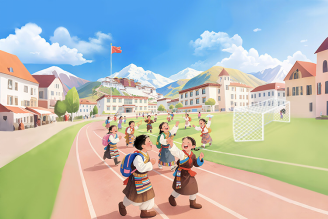
与爱童行 筑梦未来 ——泓德基金“爱心之路”六一公益行
Xin Lang Ji Jin· 2025-06-05 02:43
Core Viewpoint - The article highlights the philanthropic efforts of Hongde Foundation in supporting education and improving living conditions for children in Tibet, particularly through donations and community engagement [1][3][4]. Group 1: Philanthropic Activities - On June 1, 2025, Hongde Foundation delivered sports outfits, backpacks, stationery, and bedding to 306 students at the Second Primary School in Angren County, Tibet [1]. - In August 2024, the foundation had previously provided winter clothing and sports equipment to students in the region, demonstrating a consistent commitment to improving educational conditions [3]. - The foundation emphasizes the importance of precise assistance by conducting thorough research on the needs of the beneficiaries, ensuring that donations are relevant and impactful [3]. Group 2: Educational Support - Hongde Foundation has been actively involved in educational support initiatives in Tibet, including the establishment of the "Dream Scholarship" to assist impoverished students in pursuing higher education [3]. - The foundation has also provided new sports equipment to schools and has made donations to welfare institutions for orphaned and disabled children, showcasing a broad commitment to educational welfare [3]. - The foundation's efforts aim to cultivate a knowledgeable and culturally aware new generation, highlighting the collective responsibility of society in fostering education and social progress [4]. Group 3: Community Impact - The joy and smiles of the children receiving the donations reflect the positive impact of the foundation's work, illustrating the power of philanthropy in transforming lives [4]. - The foundation's initiatives not only provide material support but also inspire a sense of social responsibility and awareness among the community [4].

陆建强:金融向善:社会价值评价在授信风控中的应用
清华金融评论· 2025-05-25 10:33
Core Viewpoint - The article emphasizes the need for financial institutions to rethink their operational models in light of three major changes: functional positioning, digital intelligence, and the era of existing stock. It advocates for a customer-centric "Good Standard System" to reshape credit risk control logic and promote high-quality development in the financial sector, providing a practical model for China's financial system [1]. Group 1: Challenges of Traditional Credit Risk Control Models - Traditional credit risk control models rely heavily on financial indicators and collateral guarantees, which limits their effectiveness in risk assessment. This approach often leads to a preference for clients with sufficient collateral, resulting in various limitations such as the lagging nature of financial data and the inability to adapt to market fluctuations [3]. - The reliance on static financial metrics can lead to "adverse selection" and "moral hazard," where financial institutions may lend to clients with poor credit conditions, increasing the risk of non-performing loans [3]. Group 2: Imbalance in Financial Resource Allocation - Financial institutions tend to favor clients with strong financial standings, leading to a "Pareto principle" resource allocation where a majority of financial resources are concentrated in a few sectors, neglecting the needs of small and medium-sized enterprises (SMEs) and private enterprises [5]. - This imbalance results in significant challenges for the real economy, as many SMEs face difficulties in obtaining financing, which hampers their growth and the overall transformation of the economy [5]. Group 3: Lack of a Social Value Evaluation System - The absence of a comprehensive social value evaluation system hinders financial institutions from effectively assessing clients' social contributions, which could guide resource allocation towards more socially responsible areas [6]. - Overemphasis on short-term profits can lead to financial risks and social issues, as institutions may invest in high-risk areas without considering their social responsibilities [6]. Group 4: Constructing the "Good Standard System" - To address these challenges, there is a need to reconstruct the positioning and value of finance, prioritizing functionality over profitability. This involves moving away from traditional financial metrics and developing a more holistic financial evaluation system that incorporates social value [8]. - The new system should assess clients based on their social responsibility, environmental contributions, and governance, rather than solely on financial status [10]. Group 5: Quantifying Customer Goodness Levels - The "Good Standard System" can be developed by creating a negative list for undesirable behaviors and a scoring system for positive contributions. This dual scoring approach will help categorize clients into different "goodness" levels, influencing their credit ratings and access to financial resources [11]. - Higher-rated clients may receive benefits such as relaxed credit conditions and preferential treatment, while lower-rated clients will face stricter controls and potential denial of new credit [11].
温暖内含光|上海信托:高举人民金融旗帜 聚焦长期主义打造“以人为中心”的惠民信托平台
Di Yi Cai Jing· 2025-05-19 01:23
Group 1: Core Perspectives - Shanghai Trust has actively responded to national policies on poverty alleviation and rural revitalization, focusing on education, healthcare, cultural environmental protection, and rural development through charitable trust initiatives [1][2][3] - The organization aims to transform the traditional "blood transfusion" approach to poverty alleviation into a "blood-making" strategy, emphasizing sustainable development and local capacity building [4][5] Group 2: Education Initiatives - Shanghai Trust has implemented a model in Yunnan that selects 100 rural school principals and key teachers annually for training in Shanghai, promoting advanced educational concepts and management methods [2][3] - The "Yunnan model" has been expanded to 12 provinces in central and western China, impacting nearly 4 million students and creating a positive cycle of education improvement, capability enhancement, and income increase [2][3] Group 3: Healthcare Initiatives - The organization has partnered with top hospitals in Shanghai to train over 3,000 healthcare professionals from underdeveloped regions, enhancing local medical capabilities and ensuring sustainable healthcare solutions [4][5] - This initiative aims to create a "medical community" between Shanghai and 12 provinces in the central and western regions, addressing the challenges of short-term medical support and resource retention [5] Group 4: Rural Governance and Capacity Building - Shanghai Trust has established training programs for county and township officials in Gansu, Xinjiang, and other provinces, focusing on enhancing governance capabilities and promoting effective rural development [6] - The training has equipped nearly 400 officials with skills in policy implementation, industry development, and cultural preservation, fostering proactive innovation in rural revitalization efforts [6] Group 5: Future Directions - The trust industry is positioned to support national strategies and enhance social welfare, with Shanghai Trust aiming to integrate charitable trust functions with asset management capabilities [6] - The organization plans to expand its charitable initiatives, creating a sustainable development model that aligns commercial interests with social good [6]
​联储证券志愿者团队走进成都安岳努力九年制学校
Sou Hu Wang· 2025-05-07 06:44
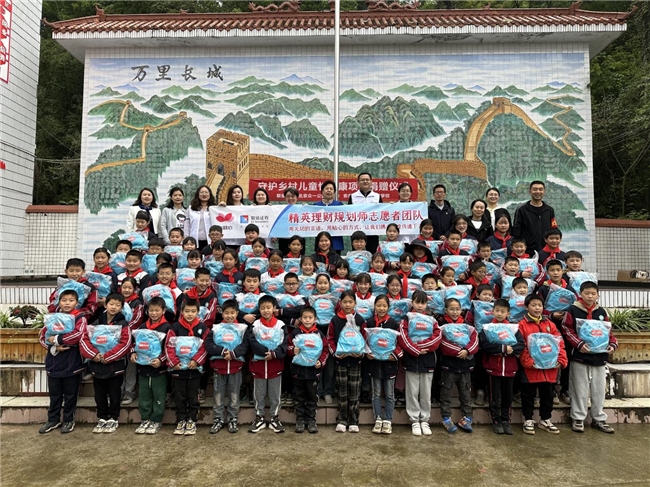
Group 1 - The core initiative of the company is to support the health and safety education of children in rural areas through collaboration with the Beijing Zhongyi Public Welfare Foundation, providing courses on "Girl Protection" and "Embracing Adolescence" [1][5] - On April 10, the company and the foundation delivered health education courses at Anyue Nuli Nine-Year System School in Chengdu, donating 255 health protection packages to students from grades 1 to 8 [1][3] - The company has been actively involved in the "Girl Protection" project since 2019, conducting 732 classes across over 20 provinces, reaching 35,135 students and over 10,000 parents [5] Group 2 - The volunteer team from the company participated in the "Caring for Our Bodies" course, emphasizing the importance of body awareness and safety among children [3] - The company’s social responsibility practice is encapsulated in the "Financial for Good" philosophy, aiming to explore sustainable development paths and enhance social welfare [5] - Since the establishment of the "Heart to Heart" public welfare program in 2017, the company has focused on contributing positively to economic, social, educational, and environmental aspects as part of its corporate citizenship responsibility [5]
联储证券发布《2024企业社会责任报告》:践行责任担当,助力可持续发展
Cai Fu Zai Xian· 2025-04-30 12:22
Core Viewpoint - The company emphasizes its commitment to sustainable development and social responsibility, aligning with national strategies and policies to enhance its role in the financial sector [1][3]. Group 1: Corporate Governance and Compliance - The company prioritizes compliance as a vital aspect of its operations, adhering strictly to national laws and regulations while enhancing its governance structure [4]. - In 2024, the company implemented a comprehensive approach to risk management, focusing on compliance and operational integrity to ensure stable growth [4]. Group 2: Sustainable Development Initiatives - The company actively supports national strategies, particularly in the "dual carbon" initiative, by launching various green financial products to facilitate economic and social transformation [3]. - The company has signed partnership agreements with six former national-level poverty-stricken counties to aid rural revitalization through a multifaceted support model [3]. Group 3: Technological Advancement - The company is committed to digital transformation, integrating technology into its financial services to enhance efficiency and reduce operational costs [5]. - In 2024, the company launched a new generation trading system, significantly improving transaction performance and customer experience [5]. Group 4: Talent Development - The company views talent as its most valuable asset, focusing on attracting and nurturing skilled professionals to drive its growth [6]. - In 2024, the company enhanced its talent acquisition and internal training programs, providing employees with ample opportunities for career development [6]. Group 5: Social Responsibility and Community Engagement - Since the launch of the "Lianchuang Heart-to-Heart" public welfare program in 2017, the company has been dedicated to improving education and welfare for children in impoverished areas [7]. - In 2024, the company conducted 893 investor education activities, reaching a total of 334,962 participants, promoting a healthy and fair investment environment [7].