银行资本补充

Search documents
近9000亿元!年内银行“二永债”发行“井喷”
Jin Rong Shi Bao· 2025-07-17 07:22
Group 1 - The issuance of perpetual bonds (二永债) by commercial banks has significantly accelerated, particularly in the second quarter, with a total of 894.56 billion yuan issued across 57 bonds by July 15 [1] - In the second quarter alone, 43 bonds were issued, amounting to 638.7 billion yuan, which is more than three times the issuance in the first quarter [1] - The issuance of perpetual bonds reflects the substantial capital replenishment pressure faced by small and medium-sized banks [1][3] Group 2 - The issuance of perpetual bonds is concentrated in economically developed regions such as Jiangsu, Zhejiang, and Guangdong, while other regions show lower activity [2] - State-owned banks are experiencing a marginal decrease in demand for perpetual bonds as their capital adequacy ratios are already at high levels, indicating a shift in issuance focus towards smaller banks [2] - As of the end of the first quarter, the capital adequacy ratios for city commercial banks and rural commercial banks were 12.44% and 12.96%, respectively, which are significantly lower than the 17.79% of state-owned banks [3] Group 3 - The demand for external capital replenishment among banks is expected to continue increasing in the second half of the year, with the issuance of perpetual bonds likely to maintain an upward trend [3]
机构密集调研银行,这些指标受关注
新华网财经· 2025-07-13 08:56
Core Viewpoint - The article highlights the increasing interest of institutional investors in listed banks, particularly focusing on loan allocation, interest margin trends, and capital replenishment strategies. Group 1: Investor Engagement - Multiple listed banks, including Jiangsu Bank, Suzhou Bank, and Ningbo Bank, have engaged in investor relations activities, discussing key issues with investors [1] - As of July 12, 2023, 26 listed banks have been surveyed by institutions, totaling 230 instances of engagement, primarily among small and medium-sized banks [1][3] - Changshu Bank received the highest number of surveys at 33, while Ningbo Bank attracted the most institutions, with 195 participating [3][4] Group 2: Interest Margin Trends - The interest margin remains a hot topic among institutions, with the net interest margin for banks reported at 1.43% in Q1 2025, a year-on-year decrease of 0.11 percentage points [4] - Jiangsu Bank aims to maintain a net interest margin that outperforms peers by enhancing asset research capabilities and managing loan interest rates [5] - Changshu Bank plans to consolidate its interest margin advantage by optimizing both asset and liability sides, focusing on high-yield assets and controlling high-cost deposits [6] Group 3: Capital Replenishment - Capital replenishment is another key focus for investors, with regulatory updates from the Financial Regulatory Bureau regarding advanced capital measurement methods [8] - Ningbo Bank is actively researching regulatory requirements and plans to issue up to 45 billion yuan in capital bonds [8] - Suzhou Bank reported a successful conversion of nearly 5 billion yuan in convertible bonds, enhancing its capital strength [9] - Su Nong Bank intends to issue up to 1 billion yuan in secondary capital bonds to support its operations [9]





触发可转债强赎条款 缓解资本补充压力
Jin Rong Shi Bao· 2025-07-11 01:41
Core Viewpoint - The recent strong performance of bank stocks has led to multiple convertible bonds triggering mandatory redemption clauses, which can alleviate repayment pressure and enhance core tier 1 capital for banks [1][2][3]. Group 1: Mandatory Redemption of Convertible Bonds - Qilu Bank has decided to exercise its early redemption rights for its convertible bonds due to a significant increase in its stock price, which has risen nearly 70% since the beginning of 2024 [1]. - Other banks, such as Hangzhou Bank and Nanjing Bank, have also seen their convertible bonds trigger mandatory redemption clauses due to their stock prices exceeding the required thresholds for consecutive trading days [2]. - The mandatory redemption of convertible bonds is becoming a trend among banks, with several already completing this process in 2024 [2][3]. Group 2: Impact on Capital Structure - The triggering of mandatory redemption clauses is expected to facilitate the conversion of bonds into equity, thereby effectively supplementing banks' core tier 1 capital [1][4]. - The unique property of convertible bonds allows banks to optimize their capital structure, making them an increasingly important option for capital supplementation [4][5]. - The redemption process sends a positive signal to the market regarding the financial health and stability of banks, potentially attracting more investors [5]. Group 3: Market Dynamics and Future Outlook - The banking sector has shown strong performance in the secondary market, with the Shenwan Primary Bank Industry Index rising over 17.77% year-to-date, ranking second among 31 primary industry indices [3]. - A decrease in the issuance of new convertible bonds has led to a rapid decline in the market's existing convertible bond scale, creating favorable conditions for mandatory redemptions [3]. - Analysts predict that the ongoing trend of mandatory redemptions will further highlight the supply-demand imbalance in the convertible bond market, providing support for their valuations [3].

中小银行积极补充资本满足监管要求
Jin Rong Shi Bao· 2025-07-08 01:13
Core Viewpoint - The demand for capital replenishment among small and medium-sized banks is increasing, with a significant acceleration in the issuance of subordinated and perpetual bonds in the first half of the year [1][2][3]. Group 1: Capital Replenishment Trends - In the first half of 2025, commercial banks issued a total of 52 subordinated and perpetual bonds, amounting to 812.56 billion yuan, a 3.4% increase compared to the same period last year [1]. - Small and medium-sized banks issued 33 subordinated and perpetual bonds, totaling 154.56 billion yuan, representing a 50% year-on-year growth, significantly higher than the industry average [1][2]. - Recent issuances include Sichuan Bank's 6.6 billion yuan bond at a 2.15% interest rate and Xi'an Bank's 5 billion yuan perpetual bond [1]. Group 2: Regulatory Environment and Approval - The National Financial Regulatory Administration has approved several banks, including Shanxi Bank and Chengdu Bank, to issue capital tools, with approval limits of up to 9.5 billion yuan and 11 billion yuan respectively [2]. - Lanzhou Bank is set to issue a 4 billion yuan perpetual bond, marking the first perpetual bond issuance by a commercial bank in July [2]. Group 3: Capital Adequacy and Challenges - As of Q1 this year, the capital adequacy ratios for city commercial banks, private banks, and rural commercial banks were 12.44%, 11.98%, and 12.96% respectively, compared to 17.79% and 13.71% for state-owned and national joint-stock banks [3]. - Small and medium-sized banks face pressure to expand capital and are increasingly turning to subordinated bonds to quickly enhance their capital adequacy ratios [3]. Group 4: Capital Supplementation Methods - Capital replenishment for banks includes both internal and external sources, with internal sources primarily being retained earnings and external sources including IPOs, rights issues, and subordinated bonds [3][4]. - The issuance of perpetual bonds is seen as a significant method for banks to optimize their capital structure and meet regulatory requirements [2][3]. Group 5: Market Dynamics and Investor Sentiment - Historically, the issuance of perpetual bonds by small and medium-sized banks has been limited due to high regulatory thresholds and market skepticism regarding credit risks [6]. - The approval of perpetual bonds for private banks, such as the 4 billion yuan issuance by WeBank, indicates a potential shift in market dynamics [5][6]. Group 6: Future Outlook - With ongoing regulatory improvements, the capital replenishment channels for private and small banks are expected to diversify, leading to a more robust capital replenishment system [7].
苏农银行分红率仅16.98%远低于同行 资本充足率降至12.91%再谋发债“补血”
Chang Jiang Shang Bao· 2025-07-06 22:33
Core Viewpoint - Su Nong Bank is planning to issue subordinated capital bonds to enhance its capital adequacy ratio amid transformation pressures and has reduced cash dividends for the second consecutive year to retain profits for capital replenishment [1][2][4]. Group 1: Capital Management - Su Nong Bank intends to issue subordinated capital bonds with a total scale of no more than 1 billion yuan to strengthen its capital base [1][3]. - As of March 2025, the bank's capital adequacy ratio is 12.91%, a decrease of 0.17 percentage points from the end of the previous year [2][3]. - The bank has previously issued subordinated capital bonds in April 2021 and May 2024, with sizes of 500 million yuan and 1 billion yuan, respectively [3]. Group 2: Financial Performance - In 2024, Su Nong Bank reported operating income of 4.174 billion yuan, a year-on-year increase of 3.17%, and a net profit of 1.945 billion yuan, up 11.62% [2][5]. - The bank's cash dividend for 2024 was 330 million yuan, with a cash dividend payout ratio of only 16.98%, marking the lowest in nearly eight years [4][5]. - For Q1 2025, the bank achieved operating income of 1.132 billion yuan, a 3.29% increase year-on-year, and a net profit of 440 million yuan, up 6.19% [6]. Group 3: Strategic Focus - The bank is focusing on retail transformation, with customer assets under management (AUM) exceeding 118 billion yuan and retail deposits surpassing 100 billion yuan [5]. - The bank's management has indicated that the low dividend payout ratio is due to the need to retain profits for capital replenishment and to enhance risk resistance capabilities [5][6]. - The bank's non-performing loan ratio remains stable at 0.90%, with a provision coverage ratio of 420.03% as of March 2025 [6].
上半年商业银行“二永债”合计发行规模超8100亿元
Zheng Quan Ri Bao· 2025-07-03 16:18
Core Viewpoint - The issuance of perpetual bonds by commercial banks is accelerating, particularly among regional small and medium-sized banks, as they face significant capital replenishment pressures in the second half of the year [1][4]. Group 1: Issuance Trends - In the first half of the year, commercial banks issued a total of 52 perpetual bonds, with an issuance scale of 8125.60 billion, representing a year-on-year increase of 3.43% [2]. - The second quarter saw a significant increase in issuance, with a total of 6387 billion issued, reflecting a quarter-on-quarter growth of over 267% and a year-on-year increase of 22.23% [2]. - State-owned banks accounted for over 50% of the total issuance, with a total of 4100 billion, although this was a decrease of 460 billion compared to the previous year [2]. Group 2: Capital Replenishment Pressure - Small and medium-sized banks are under considerable pressure to replenish capital due to declining profitability and limited internal capital retention [3][4]. - The reliance on external capital sources, such as perpetual bonds and convertible bonds, is increasing among these banks [3]. - Experts predict that the demand for external capital will continue, leading to an expansion in the issuance of perpetual bonds [4]. Group 3: Future Outlook - The upcoming expiration of a large volume of perpetual bonds in the second half of the year will necessitate early issuance for replacement, supporting supply [5]. - The core tier one capital adequacy ratio for commercial banks has declined, indicating a need for further capital replenishment [5]. - National joint-stock banks and city commercial banks are expected to become the main issuers in the future, particularly in economically developed regions [5].
中小银行加速回血 上半年发行“二永债”超1500亿元
2 1 Shi Ji Jing Ji Bao Dao· 2025-07-01 10:46
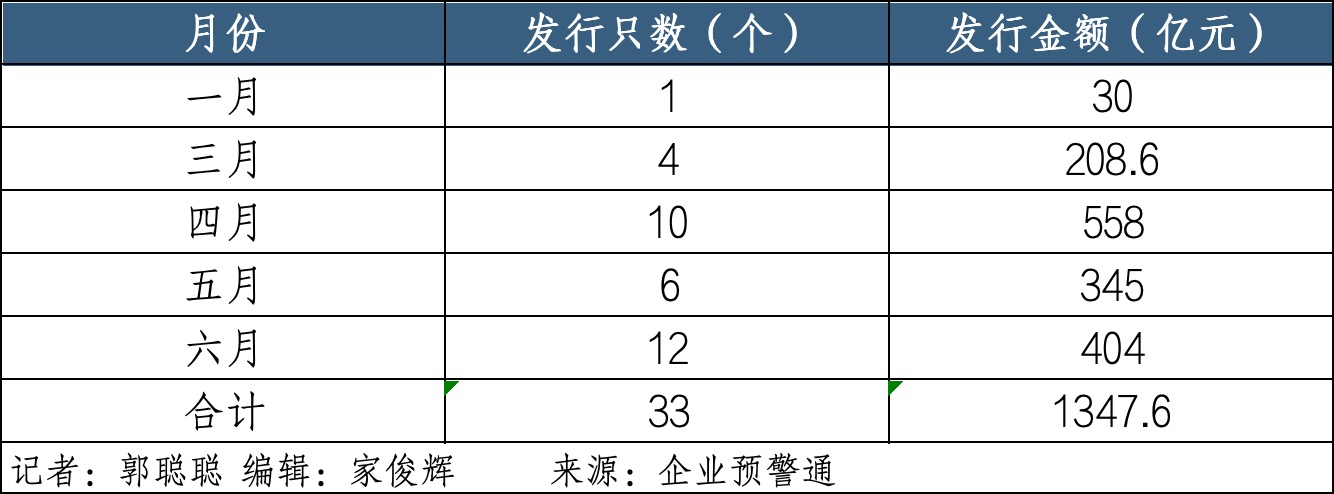
Group 1 - The core viewpoint of the articles highlights a significant acceleration in the capital replenishment process of small and medium-sized banks in the first half of 2025, with a notable increase in the issuance of "perpetual bonds" [1][2] - The issuance scale of "perpetual bonds" by small and medium-sized banks reached 154.56 billion yuan, marking a substantial year-on-year growth of 50% [1][2] - The capital adequacy ratios of small and medium-sized banks are under pressure, with the core Tier 1 capital adequacy ratio for commercial banks dropping to 10.7% as of the end of March, compared to 17.79% for state-owned banks [1][2] Group 2 - In the first half of 2025, a total of 52 "perpetual bonds" were issued across the industry, amounting to 812.56 billion yuan, with small and medium-sized banks accounting for 33 issuances totaling 154.56 billion yuan [2][3] - The issuance structure shows that small and medium-sized banks issued 584.6 billion yuan in subordinated bonds and 961 billion yuan in perpetual bonds, with interest rates generally above 2.0% [2] - The issuance pace of "perpetual bonds" by small and medium-sized banks has accelerated, with a peak issuance of 55.8 billion yuan in April and a record monthly issuance of 40.4 billion yuan in June [2][3] Group 3 - City commercial banks played a dominant role in the issuance of "perpetual bonds," with 22 city commercial banks successfully issuing bonds totaling 148.1 billion yuan, representing 95.8% of the total issuance by small and medium-sized banks [3] - Major city commercial banks such as Jiangsu Bank, Beijing Bank, Nanjing Bank, and Hangzhou Bank led in issuance scale, with Jiangsu Bank issuing 30 billion yuan in perpetual bonds [3][4] - The core capital adequacy ratios of these leading city commercial banks are below the industry average, indicating a pressing need for capital replenishment [4] Group 4 - Several small and medium-sized banks have received regulatory approval for capital tool issuance, including Lanzhou Bank, which was approved to issue up to 5 billion yuan in perpetual bonds [4][6] - The approval for bond issuance reflects the urgent capital replenishment needs of regional small and medium-sized banks, contrasting with the significant capital increases seen in state-owned banks [4][6] - Recommendations have been made to establish a long-term mechanism to support capital replenishment for small and medium-sized banks, including broadening the scope of local government special bonds and optimizing shareholder qualifications [11]


二永债发行提速商业银行密集“补血”
Zhong Guo Zheng Quan Bao· 2025-06-26 21:25
Group 1 - The issuance of perpetual bonds and subordinated bonds by commercial banks has significantly increased since the second quarter, with a total issuance exceeding 800 billion yuan this year, and over 600 billion yuan in the second quarter alone, representing a quarter-on-quarter growth of 260.82% [1][2] - The average interest rates for subordinated and perpetual bonds have decreased in the second quarter, with rates of 2.25% and 2.31% respectively, compared to 2.40% and 2.44% in the first quarter, prompting banks to accelerate their issuance [2][3] - Major state-owned banks have been actively issuing these bonds, with Agricultural Bank of China issuing 600 billion yuan in subordinated bonds and other banks like Industrial and Commercial Bank of China and China Construction Bank also completing significant issuances [2][3] Group 2 - Regional small and medium-sized banks have a more urgent need for capital replenishment, with nearly 30 such banks issuing a total of 119.1 billion yuan in subordinated and perpetual bonds in the second quarter, reflecting a strong demand for capital [3][4] - The capital adequacy ratios of city commercial banks and rural commercial banks are lower than those of larger banks, necessitating the issuance of bonds to meet operational needs [3][4] - There is a noticeable regional disparity in bond issuance among small and medium-sized banks, with most activity concentrated in economically developed areas such as Jiangsu, Zhejiang, and Guangdong [4]

债券发行提速 中小银行忙“补血”
Jin Rong Shi Bao· 2025-06-26 03:17
Core Viewpoint - The demand for capital replenishment among small and medium-sized banks is increasing, as evidenced by recent approvals for the issuance of perpetual bonds and other capital instruments [1][2][3] Group 1: Recent Developments - Lanzhou Bank has received regulatory approval to issue up to 5 billion RMB in perpetual bonds, with the flexibility to decide on the timing and scale within 24 months [1] - Xi'an Bank has been approved to issue up to 7 billion RMB in perpetual bonds, also with similar issuance flexibility [1] - Other banks, including Zhejiang Chouzhou Commercial Bank and Shanxi Bank, have also received approvals for capital instruments, indicating a broader trend [1] Group 2: Capital Adequacy and Sources - In Q1 of this year, the capital adequacy ratios for city commercial banks, private banks, and rural commercial banks were 12.44%, 11.98%, and 12.96% respectively, compared to 17.79% and 13.71% for state-owned and national joint-stock banks [2] - Capital replenishment for banks can be categorized into internal and external sources, with internal sources primarily being retained earnings and external sources including IPOs, rights issues, and various types of bonds [2] Group 3: Challenges and Opportunities - There are over 4,000 small and medium-sized banks in China, accounting for 99% of the banking system, but they face challenges in capital replenishment compared to larger banks [3] - The recent approvals for perpetual bonds indicate that the channels for capital replenishment for small and medium-sized banks are expanding [3] - The issuance of perpetual bonds by private banks, such as MyBank, is becoming more common, although historically it has been rare due to high regulatory standards and market concerns [4][5] Group 4: Expert Insights - Experts suggest that feasible capital replenishment methods for small and medium-sized banks include shareholder capital injection, issuance of subordinated debt, profit retention, attracting strategic investors, and local government support [5] - The regulatory environment is expected to continue improving, which may lead to a more diversified capital replenishment system for private and small banks [5]

四家大行5200亿元定增募资,全部到账!
证券时报· 2025-06-24 08:38
国有大行本轮"补血"最快仅耗时75天 靴子落地。 6月23日晚间,建设银行公告指出,该行当日已收到财政部缴付的认购资金1050亿元人民币。资金到账后,建设银行还需在中国证券登记结算有限责任公司上海分 公司办理完成本次发行新增股份的登记托管手续。 至此,建设银行、中国银行、交通银行、邮储银行四家国有大行向特定对象发行A股股票,用以补充核心一级资本的募集资金已全数到账。 根据相关公告,3月30日,四家国有大行就已与财政部等特定对象签署了附条件生效的股份认购协议。从签署协议到资金到账,四大国有大行中,中国银行、交通 银行的核心一级资本补充进度最快,仅耗时75天;邮储银行紧随其后,最晚的建设银行耗时也不到三个月时间。 来看四家国有大行本轮补充核心一级资本的时间线: 2024年9月24日,作为一揽子增量政策的组成部分,"国家计划对六家大型商业银行增加核心一级资本"被首次提及。金融监管总局局长李云泽彼时介绍这一增量政策 时表示,将按照"统筹推进、分期分批、一行一策"的思路,有序实施。 3月12日,2025年政府工作报告对外发布,其中明确,拟发行特别国债5000亿元,支持国有大型商业银行补充资本。 3月30日,建设银行、中 ...