
一个中国原则

Search documents
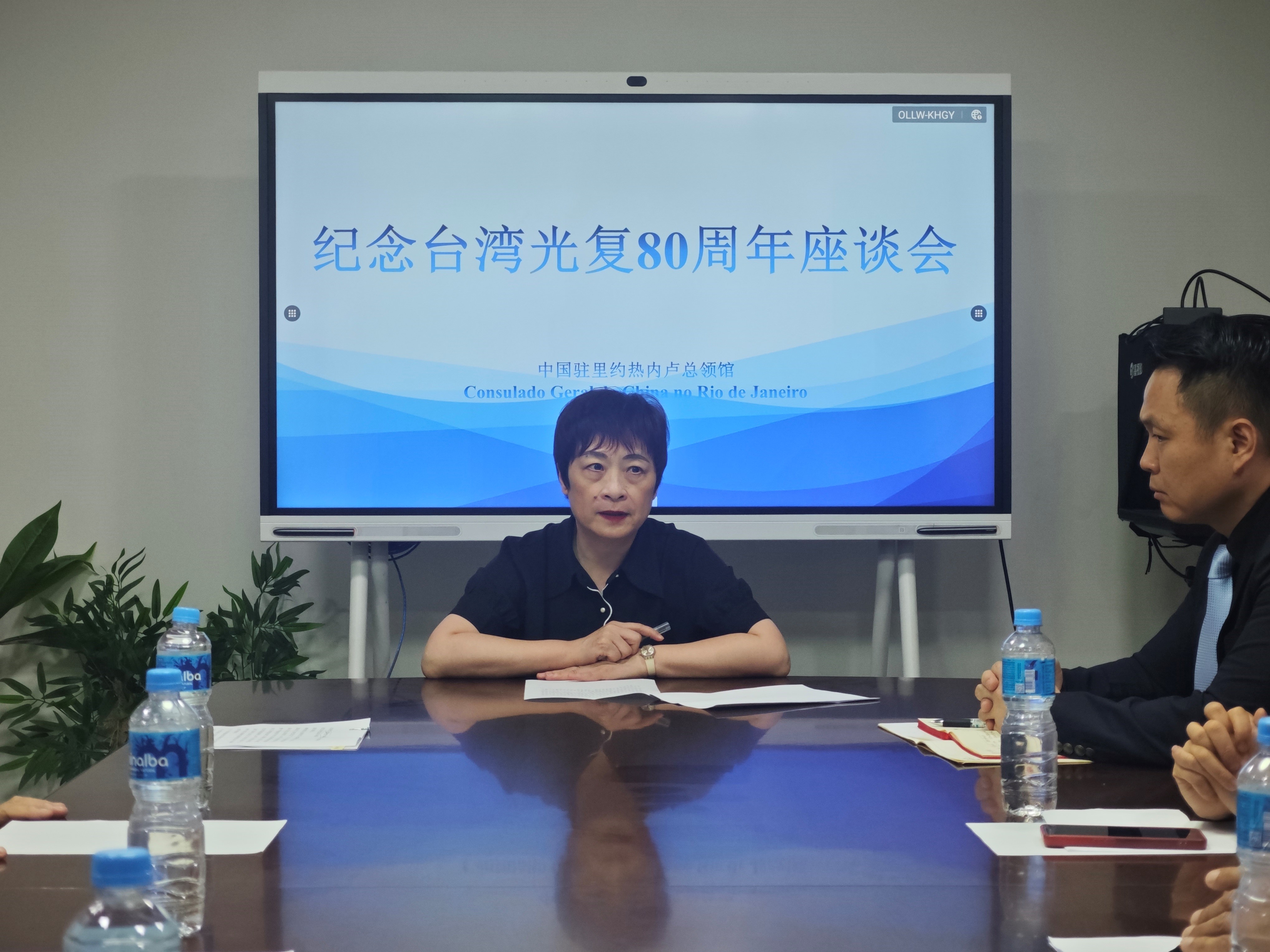
中国驻里约热内卢总领馆举办纪念台湾光复80周年座谈会
人民网-国际频道 原创稿· 2025-10-28 06:33
Core Viewpoint - The event commemorating the 80th anniversary of Taiwan's liberation reflects the shared aspirations of Chinese people both domestically and abroad, emphasizing the importance of national unity and the ongoing struggle against separatism [4]. Group 1 - The Chinese Consulate in Rio de Janeiro held a seminar to commemorate the 80th anniversary of Taiwan's liberation, attended by over 20 representatives from local Chinese communities and Taiwanese compatriots [1]. - The Consul General, Tian Min, elaborated on the significance of establishing Taiwan Liberation Memorial Day, highlighting the complex current situation regarding the struggle against separatism and the bright prospects for national reunification [4]. - Participants expressed their commitment to uphold national unity and oppose separatist actions, viewing the historical context of the Anti-Japanese War and Taiwan's liberation as a shared memory of the Chinese nation [6].

“维护联大第2758号决议权威”会议在联合国举行
人民网-国际频道 原创稿· 2025-10-28 06:32
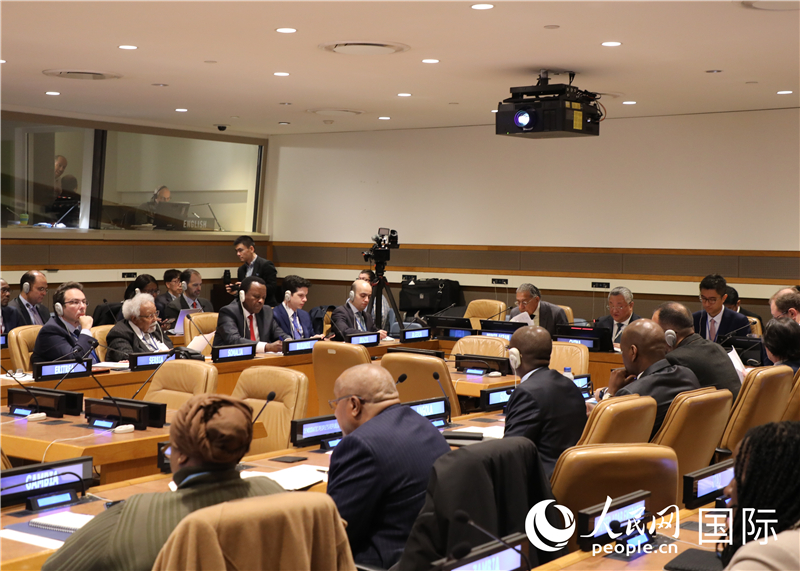
10月27日,中国常驻联合国代表团在联合国总部举办"纪念台湾光复80周年,维护联大第2758号决议权威"会议。 人民网记者 李志伟摄 傅聪强调,日前中国全国人大根据宪法,将10月25日设立为台湾光复纪念日。1971年的同一天,联大以压倒 性多数通过第2758号决议,恢复中华人民共和国在联合国的合法席位,彰显了国际社会对坚持一个中国原则的郑 重承诺。台湾是中国领土不可分割的一部分,这是不可撼动的历史和法理事实,所谓"台湾地位未定论"完全是极 少数势力精心炮制的谎言。任何歪曲解读联大第2758号决议的行径,都是挑战二战后国际秩序和联合国权威,注 定不会得逞,国际社会坚持一中原则的稳固格局不会动摇。中国必将实现完全统一,这是不可阻挡的历史大势。 与会各方纷纷祝贺中国设立台湾光复纪念日,共同回顾联大第2758号决议通过的历史时刻和重大意义,高度 赞赏中华人民共和国恢复在联合国合法席位以来为世界和平与发展所作突出贡献,强调将始终坚持一中原则,维 护联大第2758号决议权威,支持中国实现完全统一。 人民网联合国10月27日电 (记者李志伟)10月27日,中国常驻联合国代表团在联合国总部举办"纪念台湾光 复80周年,维护联 ...
钟台文:祖国必然统一势不可挡
Xin Hua She· 2025-10-28 05:13
Core Viewpoint - The unification of Taiwan with the mainland is an inevitable historical trend and a common aspiration of the Chinese people, essential for the great rejuvenation of the Chinese nation [1][5][8]. Group 1: Historical Context - Throughout Chinese history, unification has been the mainstream development, with a shared understanding that "unity leads to strength, while division leads to chaos" [2]. - Taiwan has been part of a unified multi-ethnic state for most of its history, and the Taiwanese people's resistance against foreign occupation reflects a strong patriotic tradition [2][4]. Group 2: Current Relations - Under the leadership of the Communist Party, cross-strait relations have developed significantly, with increasing cooperation and exchanges benefiting both sides [3][5]. - The desire for peace, development, and cooperation is the mainstream sentiment among the Taiwanese people, supported by policies from the mainland [3]. Group 3: Challenges and Opposition - The "Taiwan independence" movement is viewed as a minor force that undermines the collective interests of the Chinese nation and poses risks to Taiwan's future [4][5]. - External interference is seen as an obstacle to unification, but it is asserted that such efforts will ultimately fail [5][8]. Group 4: Future Prospects - The development of the mainland's economy and military strength is expected to facilitate the unification process, as it enhances the ability to promote social exchanges and deepen emotional connections between the two sides [8][9]. - A reasonable "two systems" proposal for Taiwan is suggested, which would respect its current social system while allowing greater participation in governance and international affairs [9].
中国常驻联合国代表团举办“纪念台湾光复80周年”会议
Xin Hua She· 2025-10-28 05:06
Core Points - The meeting commemorating the 80th anniversary of Taiwan's liberation was held at the United Nations, emphasizing the authority of UN General Assembly Resolution 2758 [1][2] - The establishment of Taiwan Liberation Memorial Day by China is seen as a step to unify national consensus and strengthen global consensus on the Taiwan issue [2] Group 1 - The Chinese representative at the UN highlighted the significance of October 25, marking it as Taiwan Liberation Memorial Day, and reaffirmed that Taiwan is an inseparable part of China [1] - The meeting was attended by representatives from nearly 40 countries, including Algeria, Russia, Brazil, and Pakistan, who expressed support for China's stance on the one-China principle [2] - The emphasis was placed on the unchanging nature of Resolution 2758 and the international community's commitment to the one-China principle [2] Group 2 - The establishment of Taiwan Liberation Memorial Day is intended to consolidate both national and international consensus regarding Taiwan [2] - The former Pakistani UN representative stated that October 25 is significant for both China and the international community, as it further acknowledges the one-China principle [2] - The meeting concluded with a strong affirmation of support for China's goal of achieving complete unification [2]
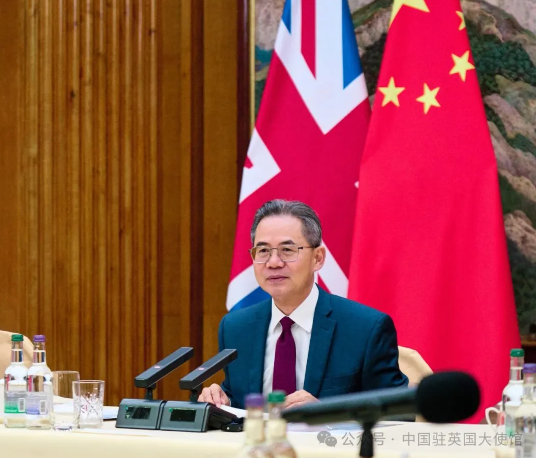
郑泽光大使在英国《每日电讯报》发表署名文章:中英应共同维护战后国际秩序
Ren Min Wang· 2025-10-28 02:22
Core Viewpoint - The article emphasizes the historical significance of Taiwan's return to China, asserting it as an integral part of China's territory and a key outcome of World War II and the post-war international order [5][6][8]. Summary by Sections Historical Context - The year marks the 80th anniversary of Taiwan's recovery, which is framed as a significant result of World War II and the post-war international order [6]. - Taiwan has been an inseparable part of China since ancient times, with its illegal occupation by Japan through the Treaty of Shimonoseki in 1895 being highlighted [6][7]. United Nations Resolution - The UN General Assembly Resolution 2758, passed in 1971, recognized the People's Republic of China as the sole legitimate representative of China in the UN, effectively resolving Taiwan's representation issue [6][7]. - The article argues that recent claims by Taiwan's Democratic Progressive Party and external forces that challenge this resolution are fundamentally erroneous and undermine UN authority [6][7]. One China Principle - The One China principle is presented as a universal consensus in the international community, with Taiwan referred to as "Taiwan, Province of China" in UN documents [7]. - The UK government’s acknowledgment of this principle during the establishment of diplomatic relations with China in 1972 is emphasized as a historical commitment that should not be forgotten [7][8]. Current Threats and Responsibilities - The article identifies "Taiwan independence" movements and external support as the primary threats to peace and stability in the Taiwan Strait [8]. - It calls for the UK, as a major WWII victor and permanent member of the UN Security Council, to uphold its commitments and oppose any actions that challenge Resolution 2758, aligning with international interests [8].
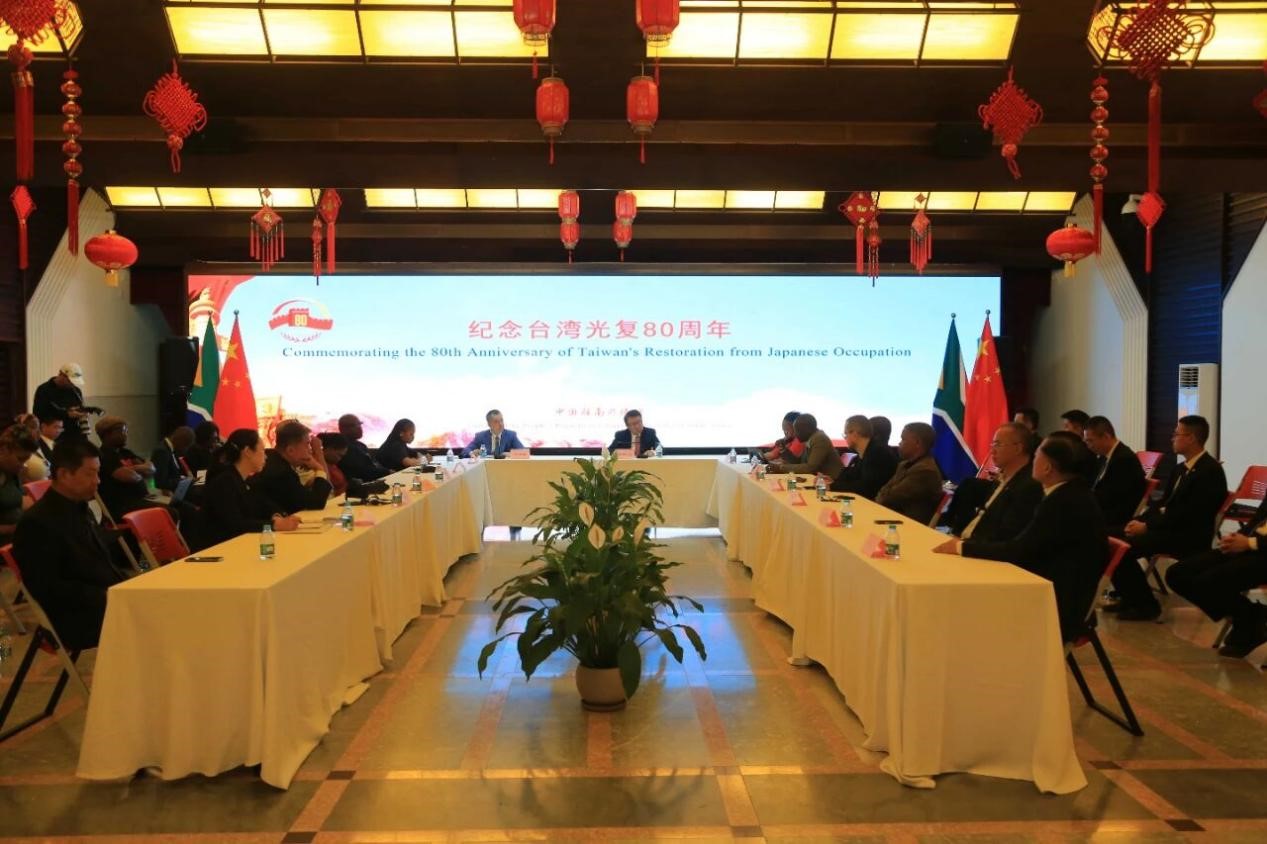
中国驻南非使馆举办纪念台湾光复80周年座谈会
人民网-国际频道 原创稿· 2025-10-28 02:09
人民网约翰内斯堡10月28日电 (记者杨讴、郑翔)日前,中国驻南非使馆举办纪念台湾光复80周年座谈会。南非国民议会议员、政党、智库和媒体代 表等约40人出席。 南方发言嘉宾表示,世界上只有一个中国,台湾是中国不可分割的一部分。支持南非政府坚定奉行一个中国原则,南各界将继续支持中方捍卫国家主权 和领土完整。 座谈会现场。中国驻南非使馆供图 中国驻南非大使吴鹏结合中国设立台湾光复纪念日,介绍台湾问题历史经纬,强调台湾光复是中国政府恢复对台湾行使主权的重要铁证,联大第2758号 决议从政治上、法律上和程序上彻底解决了包括台湾在内全中国在联合国的代表权问题,一个中国原则已成为国际社会普遍共识和国际关系基本准则。 ...
中国驻加拿大使领馆及侨界举办多场座谈会纪念台湾光复80周年
Zhong Guo Xin Wen Wang· 2025-10-28 01:13
Core Viewpoint - The recent commemorative events for the 80th anniversary of Taiwan's recovery emphasize the significance of Taiwan's return to China as a crucial outcome of World War II and a fundamental part of the post-war international order, urging adherence to the One China principle [1][2][3]. Group 1: Commemorative Events - Multiple seminars were held by Chinese consulates and the overseas Chinese community in Canada to commemorate the 80th anniversary of Taiwan's recovery [1][2][3]. - The events included discussions with representatives from the Chinese community, Chinese enterprises, students, and scholars, highlighting the historical context and significance of Taiwan's recovery [1][2][3]. Group 2: Statements from Officials - Chinese Ambassador to Canada Wang Di articulated the importance of establishing Taiwan Recovery Day, asserting that Taiwan's return is a significant achievement of WWII and a consensus in international relations [1]. - Consul General Cheng Hongbo in Toronto emphasized the need for the Chinese community to oppose "Taiwan independence" and promote cultural integration between the two sides of the Taiwan Strait [2]. - Acting Consul General Zeng Zhi in Vancouver reiterated that Taiwan's recovery is an essential part of the historical and legal facts regarding China's unity, encouraging the Chinese community to contribute to national reunification efforts [3]. Group 3: Community Responses - Representatives from the overseas Chinese community expressed strong opposition to "Taiwan independence" and a commitment to supporting the reunification of China [1][2][3]. - The All-Canada Chinese Promotion Committee for China's Unification called for unity among overseas Chinese to promote peaceful reunification and uphold the One China principle [3].
让国际社会坚持一个中国原则的基本格局更加巩固
Xin Hua She· 2025-10-28 01:00
Core Viewpoint - The establishment of Taiwan Recovery Memorial Day on October 25 is a significant move that emphasizes Taiwan as an inseparable part of China, reinforcing the historical facts of World War II victories and the post-war international order [1][2][4]. Group 1: Historical Significance - The decision to set October 25 as Taiwan Recovery Memorial Day is seen as a timely and meaningful acknowledgment of Taiwan's liberation from Japanese colonial rule, marking the 80th anniversary of this event [1][2]. - The memorial day serves as a reminder of the sacrifices made during the Anti-Japanese War and the global anti-fascist struggle, highlighting Taiwan's recovery as a crucial outcome of these efforts [5][6]. Group 2: International Recognition - The establishment of this memorial day is viewed as a reaffirmation of the "One China" principle, gaining overwhelming support from the international community, including countries like Pakistan and South Africa [2][4][6]. - Various international scholars and diplomats emphasize that recognizing Taiwan's status as part of China is essential for maintaining historical truth and international justice [3][4][5]. Group 3: Unity and National Identity - The memorial day is expected to inspire unity among Chinese people both domestically and abroad, fostering a collective spirit aimed at national rejuvenation and territorial integrity [1][7]. - The event is seen as a platform to strengthen emotional ties between Taiwan and the mainland, reinforcing the shared historical narrative and cultural identity [8].