碳中和

Search documents
热泵板块复盘研究:地缘冲突或引发能源危机,热泵板块行情复盘
GUOTAI HAITONG SECURITIES· 2026-03-19 07:03
Investment Rating - The report assigns an "Overweight" rating for the heat pump sector, indicating a projected performance that exceeds the Shanghai and Shenzhen 300 Index by more than 15% [5]. Core Insights - The heat pump sector experienced a historical surge in 2022 due to the energy supply shock from the Russia-Ukraine conflict, with European natural gas prices peaking at $70.04 per million British thermal units (MMBtu), a 148% increase from the beginning of the year and a 354% year-on-year increase [5][13]. - The capital market quickly priced in the demand for alternative heating solutions in Europe, leading to a 69% increase in the Wind Air Source Heat Pump Index from its low on April 26, 2022, to its peak on August 18, 2022 [5][9]. - The report highlights three driving forces behind the heat pump market: the surge in natural gas prices, policy catalysts from the EU, and increasing export data [13][14]. Summary by Sections 1. Review of the Heat Pump Market Driven by the Russia-Ukraine Conflict - The heat pump market's timeline is marked by four key events: the outbreak of the Russia-Ukraine war in February 2022, the market's initiation in April 2022, the peak phase in July-August 2022, and the market's decline post-September 2022 [8][10]. - The maximum increase in the heat pump sector was approximately 69%, with representative stocks like Deye Co., Ltd. and Sunrain Co., Ltd. achieving gains of over 200% [9][11]. 2. Underlying Logic of the Market: Natural Gas Prices, Policy Catalysts, and Export Data - The core driver of the heat pump market was the sharp rise in European natural gas prices, which reached a historical high in August 2022, significantly increasing heating costs for residents and boosting demand for heat pumps as a viable alternative [13][14]. - The EU's REPowerEU plan set a target for the installation of 10 million heat pumps from 2023 to 2027, providing a strong policy foundation for market expectations [17][18]. 3. Market Conclusion: Why Did the Optimism Reverse Quickly? - After peaking in August 2022, European natural gas prices fell sharply, leading to a significant decline in demand expectations for heat pumps, which were viewed as a one-time demand spike rather than a structural shift in heating solutions [22][24]. 4. Differences in the Current U.S.-Iran Conflict - The current U.S.-Iran conflict has not caused the same level of price spikes in natural gas as the Russia-Ukraine conflict, with TTF natural gas futures only rising by 76% compared to the extreme increases seen previously [25][27].
申万宏源助力立新能源6亿元碳中和绿色科技创新公司债成功发行
申万宏源证券上海北京西路营业部· 2026-03-19 02:32
Core Viewpoint - The successful issuance of the "Xinjiang Liren New Energy Co., Ltd. 2026 Carbon Neutral Green Technology Innovation Corporate Bonds (Phase I)" demonstrates strong market demand and low interest rates for green bonds in the region, reflecting the company's commitment to carbon neutrality and technological innovation [3] Group 1 - The bond issuance scale is 600 million yuan, with a subscription multiple of 3.57 times and a coupon rate of 1.90%, marking the lowest historical rate for AA+ rated corporate bonds in the Northwest region [3] - The issuer specializes in wind and solar power generation and is the only state-controlled listed company in Xinjiang focusing on renewable energy, serving as a key platform for integrating state-owned resources and industries [3] - This bond features dual labels of "carbon neutral green bond" and "technology innovation bond," aligning with national strategies for carbon neutrality and innovation-driven development [3] Group 2 - The bond issuance achieved a dual excellence in issuance cost and subscription enthusiasm, further enhancing the regional market influence of Shenwan Hongyuan and showcasing its commitment to deepening its presence in Xinjiang [3]


谷歌/腾讯/亚马逊/长时储能理事会等核心代表出席!国际长时储能专题边会(闭门研讨会)报名启动
中关村储能产业技术联盟· 2026-03-18 08:32
Core Viewpoint - The article discusses the organization of an international closed-door seminar on long-duration energy storage during the 14th Energy Storage International Summit and Exhibition (ESIE 2026), aimed at promoting the industrial development of long-duration energy storage technologies and enhancing international cooperation [3]. Group 1: Event Details - The seminar will gather key representatives from the long-duration energy storage sector, with 24 high-level guests confirmed to attend [5]. - Notable participating organizations include LDES Council, Redox One, ESB, ExxonMobil, Infinity Energy Systems, Google, Tencent, Amazon, Energy Vault, Kraftblock, and Sumitomo Corporation [6][7][9][10][12][15]. - The event is scheduled for April 2, 2026, from 09:30 to 12:00 at the Beijing Capital International Exhibition Center [17]. Group 2: Agenda Highlights - The opening remarks will be delivered by Chen Haisheng, Chairman of the Zhongguancun Energy Storage Industry Technology Alliance [18]. - Keynote presentations will include topics such as global long-duration energy storage policy trends and industry outlook, and advancements in China's long-duration energy storage technology [18][19]. - A closed-door discussion will follow the keynote presentations, involving all attending guests [19]. Group 3: Participation and Registration - The seminar invites core technology companies, project developers, investment institutions, and relevant stakeholders in the long-duration energy storage field, limited to ESIE 2026 exhibitors [20]. - Registration must be completed by March 23, 2026, with an approval process for participants [21][23]. - Limited seating is available, encouraging prompt registration [24].
【环保】氢能综合应用试点新政落地,持续重点推荐氢氨醇行业——碳中和领域动态追踪(一百七十九)(殷中枢/郝骞)
光大证券研究· 2026-03-18 07:58
Core Viewpoint - The article discusses the recent policy update from the Chinese government regarding hydrogen energy applications, emphasizing the comprehensive upgrade of the policy framework aimed at reducing costs and promoting a closed-loop ecosystem for hydrogen energy applications [4][5]. Group 1: Policy Framework and Goals - The new notification represents a continuation of national-level incentives for the hydrogen industry, significantly upgrading the previous fuel cell vehicle demonstration city cluster policy [5]. - The core of the new policy is "application-driven, scenario-based," establishing a comprehensive application system that includes one general fuel cell scenario, multiple industrial application scenarios, and various innovative application scenarios [5]. - By the end of 2025, the cumulative sales of hydrogen fuel cell vehicles in China are expected to reach nearly 40,000 units, with 574 hydrogen refueling stations built, and green hydrogen production capacity of approximately 250,000 tons [5]. - The 2030 quantitative targets include reducing the average terminal hydrogen price to below 25 yuan per kilogram, with a goal of 15 yuan per kilogram in advantageous regions, and doubling the number of fuel cell vehicles to 100,000 compared to 2025 [5]. Group 2: Pilot Program and Funding - The policy maintains a "reward instead of subsidy" standard, selecting five city clusters for a four-year pilot program, with a maximum central reward of 1.6 billion yuan per city cluster, totaling no more than 8 billion yuan in central financial subsidies [5]. - The funding disbursement will follow a "pre-disbursement followed by settlement" model, shifting the policy focus from addressing technological shortcomings in the supply chain to reducing costs through large-scale applications [5]. Group 3: Vehicle and Infrastructure Development - The vehicle segment continues to focus on heavy-duty commercial vehicles, with optimized requirements for application thresholds, assessment systems, and technical standards [6]. - The notification emphasizes the construction of hydrogen highways and corridors, promoting large-scale applications in heavy-duty transport and cold chain logistics [6]. - City clusters that primarily promote fuel cell vehicles are expected to deploy over 8,000 fuel cell vehicles and build more than 30 hydrogen refueling stations, along with establishing at least one hydrogen highway or corridor [6]. Group 4: Industrial Applications and Innovations - The new notification includes industrial hydrogen applications in the central financial reward scope for the first time, with green ammonia being a core expansion scenario [7]. - It covers hydrogen-based chemical raw material substitution, hydrogen metallurgy, and hydrogen blending combustion, as well as innovative scenarios in rail transit, shipping, and new energy storage [7]. - City clusters focusing on industrial applications are required to ensure that industrial application scenarios account for no less than 75% of their total applications, promoting cost reduction through collaboration between transportation and industrial sectors [7].

生物基产业解读②:奔驰/宝马/小米押注! 合成生物材料进入供应链了?
合成生物学与绿色生物制造· 2026-03-18 05:46
Core Viewpoint - The automotive industry is undergoing a transformation towards lower carbon and more sustainable practices, driven by regulatory pressures and consumer demand for environmentally friendly materials [6][7]. Group 1: Opportunities for Bio-based and Synthetic Biological Materials - The application of bio-based materials in the automotive sector is shifting from niche experimentation to mainstream adoption, with natural plant fibers and microbial synthetic plastics being integrated into various components [6]. - Regulatory frameworks, such as the EU's new ELV and REACH regulations, are imposing high environmental standards, mandating that 25% of plastics used in new cars must come from recycled materials, and that the use of bio-based materials in car interiors must reach at least 35% by 2025 [7]. - Consumer awareness is rising, with 85% of car buyers considering interior environmental friendliness in their purchasing decisions and willing to pay a 5%-10% premium for bio-based materials [7]. - The cost of bio-based materials is decreasing due to innovations in large-scale production and raw material sourcing, with some materials now costing less than 1.1 times that of traditional petroleum-based materials [7]. Group 2: Leading Companies in Bio-based Material Adoption - Mercedes-Benz has introduced animal-free interiors using AMSilk spider silk-based materials and plant proteins in concept car door handles [8]. - BMW is investing in natural fiber-reinforced materials from Bcomp and exploring the use of coffee grounds in automotive parts, with recent models utilizing hemp fiber composites [8]. - Xiaomi's YU7 model features "Misu Leather," derived from corn stalks, and bio-based biodegradable interior materials [8]. - Volkswagen has used AMSilk's Biosteel fibers in the door handles of its VISION EQXX concept car, which are biodegradable and recyclable [8]. - Volvo's EX30 incorporates BCOMP's AmpliTex™ natural fiber composite technology, and the company has invested in Bcomp's Series B financing [9]. - Hyundai collaborates with UNCAGED Innovations to use high-performance bio-based leather, enhancing touch and durability [9]. - Ford has integrated bio-based materials into various components, including seat cushions and dashboards [10]. - Chery is developing bio-based interior products in collaboration with Fengyuan Bio, including bio-based polyurethane adhesives [11]. Group 3: Accelerating Low-Carbon Transition - Chinese automotive parts manufacturers are increasingly entering the global supply chain of luxury brands, adapting to stringent EU environmental regulations to avoid high carbon tariffs [14]. - The upcoming Bio-based Conference in Shanghai will focus on the development and application of bio-based materials in automotive contexts, inviting collaboration among various stakeholders [15].
光大证券晨会速递-20260318
EBSCN· 2026-03-18 01:33
Group 1: Banking Industry - The core viewpoint of the report emphasizes that the development of wealth management companies will focus on "quality improvement" rather than "scale expansion" by 2026, with an estimated annual growth of 2-3 trillion yuan, reflecting a year-on-year decrease in growth [1] - The newly released "Interim Measures for Regulatory Rating of Wealth Management Companies" aims to guide the high-quality development of the wealth management industry, placing significant weight on asset management capabilities and risk management [1] Group 2: Hydrogen Energy Industry - The report highlights the joint issuance of a notice by the Ministry of Industry and Information Technology, the Ministry of Finance, and the National Development and Reform Commission to launch hydrogen energy comprehensive application pilot projects, focusing on large-scale cost reduction and the establishment of a closed-loop ecosystem for hydrogen energy applications [2] - Key recommendations include focusing on companies such as Goldwind Technology, China Tianying, and Shanghai Electric, which are expected to benefit from the expanded application scenarios in the hydrogen and ammonia industry [2] Group 3: Communication Sector - The report on Jucheng Co., Ltd. indicates a downward adjustment of the 2025 net profit forecast to 363 million yuan, a 12% decrease from previous estimates, while maintaining profit forecasts for 2026 and 2027 at 512 million yuan and 623 million yuan respectively, with current price-to-earnings ratios of 57, 41, and 33 times [3] - The long-term growth potential of the company is viewed positively, leading to a "buy" rating [3] Group 4: Optical Technology Sector - The report on Qiu Tai Technology shows a significant increase in revenue to 20.877 billion yuan, a year-on-year growth of 29.3%, and a net profit of 1.494 billion yuan, which represents a substantial increase of 435.2% [4] - Adjustments to the net profit forecasts for 2026 and 2027 have been made, reducing them by 6% and 7% to 879 million yuan and 1.091 billion yuan respectively, while a new forecast for 2028 is set at 1.38 billion yuan [4] - The report maintains a "buy" rating due to the expected continued growth in non-mobile camera module fields and the successful expansion of multi-optical business segments [4]
生物基产业解读②:奔驰/宝马/小米押注! 生物基材料进入供应链了?
DT新材料· 2026-03-17 16:04
Core Insights - The automotive industry is undergoing a transformation towards low-carbon and sustainable practices, driven by both policy and consumer demand for environmentally friendly materials [5][9]. Group 1: Opportunities for Bio-based Materials - Bio-based materials are transitioning from niche applications to mainstream use in automotive interiors, driven by regulatory requirements and consumer preferences [8]. - The EU's new regulations mandate that 25% of plastics used in new cars must come from recycled materials, and by 2025, at least 35% of interior materials must be bio-based [9]. - Market research indicates that 85% of car buyers consider the environmental impact of interior materials, with a willingness to pay a 5%-10% premium for bio-based options [9]. - Advances in production techniques and raw material innovations are reducing the costs of bio-based materials, making them competitive with traditional petroleum-based materials [9]. Group 2: Leading Automotive Companies Adopting Bio-based Materials - Mercedes-Benz has introduced animal-free interiors using materials like spider silk protein and plant-based proteins [10]. - BMW is collaborating with Swiss bio-manufacturing firm Bcomp to utilize natural fiber-reinforced materials and is exploring the use of coffee grounds in automotive parts [10]. - Xiaomi's YU7 model features a seat surface made from "rice leather," derived from corn stalks, showcasing the application of bio-based materials [10]. - Volkswagen has used biodegradable and recyclable Biosteel fibers in its concept car, VISION EQXX [11]. - Volvo's EX30 incorporates natural fiber composite materials from Bcomp, and the company has invested in Bcomp's funding round [11]. - Hyundai is partnering with UNCAGED Innovations to use high-performance bio-based leather in its vehicles [11]. - Ford has integrated bio-based materials into various components, including seat cushions and dashboards [12]. - Chery is developing bio-based interior products in collaboration with Fengyuan Bio [13]. - McLaren's W1 supercar features tires made from over 50% bio-based and recyclable materials [14]. Group 3: Accelerating Low-Carbon Transition - Chinese automotive parts manufacturers are increasingly entering the global supply chain of luxury brands, driven by the need to comply with stringent EU environmental regulations [16]. - The upcoming Bio-based Conference in Shanghai aims to facilitate discussions on policy trends and the development of bio-based automotive materials [17].




《分布式能源规划员》(综合能源服务方向)培训通知丨系列培训
中国能源报· 2026-03-17 12:52
Core Viewpoint - The article emphasizes the importance of developing distributed energy and integrated energy services as a crucial path towards carbon neutrality, highlighting the need for interdisciplinary talent in energy planning and management [1]. Group 1: Training Information - The training titled "Distributed Energy Planner (Integrated Energy Services Direction)" will be held online from March 24 to March 29, 2026 [2]. - The training is organized by the Human Resources and Social Security Ministry's Social Security Capacity Building Center and hosted by China Energy News Co., Ltd [2]. Group 2: Target Audience - The training is aimed at various stakeholders including provincial and municipal power companies, energy groups, and enterprises in the oil and gas sector [2]. - It also targets new energy companies (wind, solar, storage), energy service companies, and professionals interested in the integrated energy services sector [2]. Group 3: Course Outline - The course will cover an overview of integrated energy services, including its driving forces and current development status both domestically and internationally [3]. - It will include modules on distributed photovoltaic projects, natural gas distributed energy applications, smart microgrids, hydrogen energy applications, new energy storage, and zero-carbon factory assessments [4]. Group 4: Training Fees - The training fee is set at 3600 yuan per person, which includes training, materials, and certification costs [5]. Group 5: Contact Information - For inquiries, contact Yang at 15801248899 or Wang at 15201547047 [6].

碳生万物成功生产出人造石油公司并完成全球最大空气源可持续航空燃料工艺线
财联社· 2026-03-17 12:31
2024 年,特斯拉前高管任宇翔与碳捕集转化领域资深专家张鸿曦联合创立了碳生万物; 2026 年 1 月,公司临港研发创新中心正式揭牌,同时落地的还有 " 全球最大的百吨级空气 源可持续航空燃料( SAF )工艺线 " 。 尽管空气捕集技术成本比传统的 CCUS 高,但主要源于 目前规模化程度不高,同时还处于产 业初期 。 " 就像当年光伏、新能源汽车从高价到普及一样,我们相信 以 空气制 人造石油 的成本也会 不断下降。 " 任宇翔表示。 对于二氧化碳制油的技术路径和方向,公司创始人任宇翔此前曾表示,二氧化碳是新时代的石 油。人类达成碳中和的关键是停止开采石油、天然气和煤炭,而停止开采的关键前提则是必须 找到替代它们的能源和碳源。可再生能源已逐渐替代化石能源,但碳源替代仍是未解难题。生 物质受限于自然光合作用的生产力, 作用极低 。 " 因此唯一的解决方案是大规模从空气中捕集二氧化碳,将其转化为现代生活所需的各类碳基 产品。 " 任宇翔表示,目前传统的碳捕捉( CCUS )是从工业尾气中进行二氧化碳捕集,虽 然在短期对于减碳意义重大,但最终来源仍是煤炭、 石油和 天然气。另外, CCUS 捕集受 到地域限制 ...

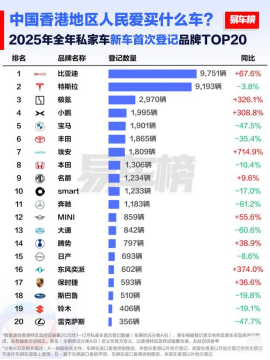
2025 年比亚迪荣膺香港全品牌销冠 中国品牌首次登顶
Xin Lang Cai Jing· 2026-03-17 08:34
Core Insights - BYD achieved a historic performance in the Hong Kong car market in 2025, leading with a total of 9,751 vehicles sold, marking its first time as the overall sales champion in Hong Kong [1][6] - The Sea Lion 07EV was the best-selling model of the year, with 5,680 units sold, breaking the dominance of foreign brands in the market [1][6] Sales Performance - In 2025, BYD's new car registration reached 9,751 units, a 68% increase compared to 2024 [2][8] - In the first half of 2025, BYD sold 4,902 vehicles, surpassing Tesla's 3,889 units, achieving a market share of 26.71% [2][8] - The monthly sales in January 2025 were 849 units, placing BYD at the top of the monthly sales chart [2][8] Market Dynamics - BYD's success in Hong Kong is attributed to its strategic channel layout, with over 10 stores in key urban areas [4][10] - The introduction of models like the Sea Lion 07EV, Yuan PLUS, and Tengshi D9 caters to diverse consumer needs [4][10] - Government policies supporting electric vehicle adoption, such as tax reductions for first-time registrations, have created a favorable environment for BYD's growth [5][10] Future Outlook - BYD aims to maintain its leading position in the Hong Kong market through technological innovation and enhanced customer service [5][10] - The company is positioned as a key player in promoting the green transformation of the automotive industry in Hong Kong [11]