
空铁联运

Search documents
今年暑运北京大兴机场运送国际及地区旅客量超百万人次
Zhong Guo Xin Wen Wang· 2025-09-01 17:35
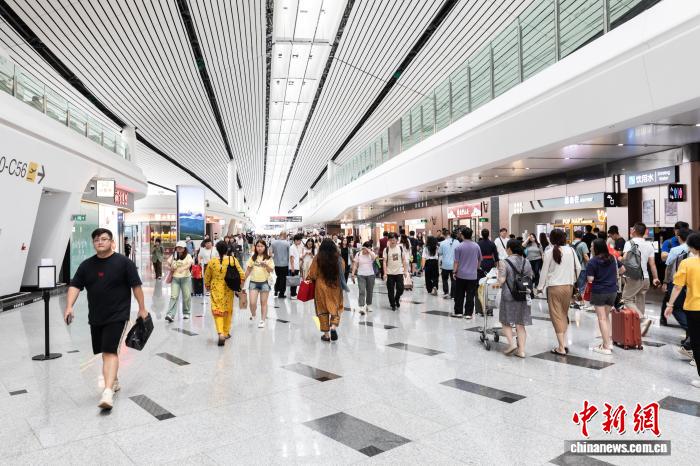
Core Insights - Beijing Daxing International Airport reported a total of 60,800 flights and 9.5647 million passengers during the summer travel season from July 1 to August 31, indicating a year-on-year increase of 4.91% in flight volume and 4.84% in passenger volume [1] - International and regional passenger traffic reached 1.0991 million, reflecting a year-on-year growth of 13.66%, showcasing a robust growth trend in overall operations [1] Group 1 - The summer travel season saw a diverse mix of passenger flows, including students, tourists, and family visits, contributing to the airport's increased traffic [3] - Domestic travel to major cities like Guangzhou, Shenzhen, and Shanghai remained high, while there was a notable increase in passengers traveling to tourist destinations such as Urumqi, Kunming, and Guiyang [3] - Daxing Airport served approximately 127,000 passengers through its four city terminals during the summer travel period, with over 30,000 pieces of checked luggage processed [3] Group 2 - The airport's international connectivity included around 40 destinations, with popular routes primarily in Southeast Asia, East Asia, and Hong Kong-Macau regions [3] - High passenger load factors were maintained on flights to London, Moscow, Doha, and Casablanca during the summer travel season [3] - The integration of the "air-rail intermodal" system was further expanded with the trial operation of the Tianjin West Station city terminal, enhancing connectivity options for travelers [3]

长三角机场群加速扩容
Guo Ji Jin Rong Bao· 2025-09-01 12:44
Core Insights - The construction of the Jiaxing Nanhu Airport marks a significant step in the development of the world-class airport cluster in the Yangtze River Delta, with plans for it to officially open by the end of 2025 [2][3] - The Yangtze River Delta region is rapidly expanding its airport infrastructure, with a focus on enhancing air logistics capabilities and connecting various cities through specialized airports [2][4] Airport Development - Jiaxing Nanhu Airport is positioned as the only professional air cargo airport in the Yangtze River Delta, with a focus on cargo operations, featuring 33 dedicated cargo positions out of 56 total [3] - Lishui Airport is designed as a tourism hub, connecting major tourist attractions with key markets, while Bozhou and Bengbu airports are also set to commence operations this year [4] - The new Nanjing Ma'anshan Airport will make Nanjing the second city in the Yangtze River Delta with dual airports, enhancing regional connectivity [4] Economic Impact - The Yangtze River Delta airports are projected to handle 288 million passengers in 2024, a 19.5% increase year-on-year, surpassing other major regions [2] - The development of the Jiaxing Nanhu Airport is expected to contribute significantly to the local economy, with projections indicating that the airport's economic zone could account for 15% of Jiaxing's GDP by 2035 [5] Collaborative Development - The strategy for airport development in the Yangtze River Delta emphasizes collaborative efforts among cities, with examples of shared airports and joint ventures to enhance regional connectivity [7] - The integration of air transport services with local economies is being prioritized, with initiatives like virtual terminals and digital cargo services being implemented to extend airport services to surrounding areas [7]

暑运收官 宁夏各机场累计运送旅客252.5万人次
Zhong Guo Xin Wen Wang· 2025-09-01 07:27
Summary of Key Points Core Viewpoint - The summer transportation season in Ningxia has concluded with significant growth in passenger traffic and flight operations, indicating a robust recovery and increased demand in the aviation sector. Group 1: Passenger and Flight Statistics - During the summer transportation period, Ningxia airports handled a total of 2.525 million passengers and 18,600 flight operations, representing year-on-year increases of 10.4% and 9.9% respectively [1] - Yinchuan Airport specifically recorded 1.73 million flight operations and transported 2.405 million passengers, with cargo volume reaching 8,500 tons, showing year-on-year growth of 7.4%, 8.4%, and 5.3% respectively [1] Group 2: Operational Enhancements and Services - Yinchuan Airport operated 8,649 flights and achieved a passenger throughput of 1.231 million in August alone, with a record of over 40,000 daily passengers for 18 days, including 12 consecutive days [2] - The airport's flight release normal rate reached 84.85%, an increase of 3.27 percentage points year-on-year, positioning it among the top airports of similar size in the country [3] - To enhance passenger experience, the airport upgraded self-service check-in facilities and optimized check-in counter layouts, reducing average processing time by 40 seconds and shortening flight cut-off time to 30 minutes [3] Group 3: New Routes and Market Initiatives - Yinchuan Airport expanded its network with 12 new routes to key cities in Xinjiang and popular tourist destinations, increasing the total number of routes to 93 and enhancing connectivity [2] - The airport collaborated with tourism departments to launch unique products like "Aviation Tourism Passport" and "Ningxia Culinary Map" to stimulate market activity [2] Group 4: Transportation Connectivity - To facilitate last-mile connectivity for travelers, Yinchuan Airport increased the frequency of airport bus services and opened 18 new passenger transport routes, ensuring seamless connections with surrounding cities [3] - A dedicated "Bus to Campus" service was introduced to connect universities directly to the airport, enhancing convenience for students [4]
“航站楼”搬进了高铁站 空铁联运“一张网”正加速成型
Huan Qiu Wang· 2025-08-23 07:40
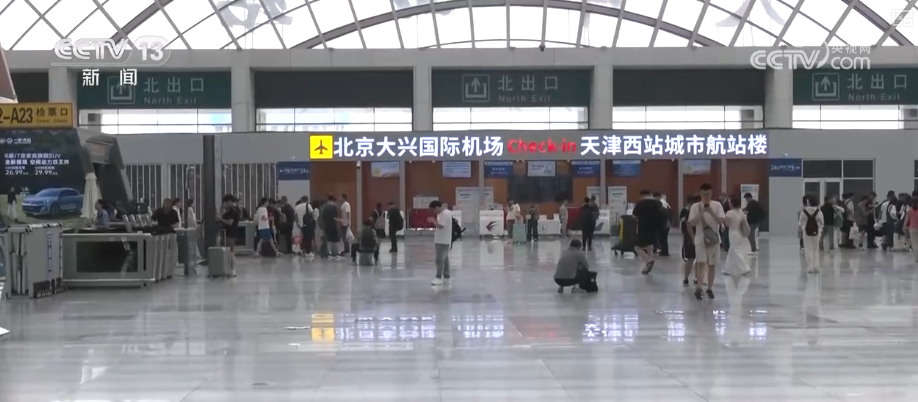
Core Viewpoint - The integration of high-speed rail and air travel is enhancing convenience for travelers, with seamless connections and improved services at urban terminals [1][12][27]. Group 1: Seamless Integration of High-Speed Rail and Air Travel - The Tianjin West Station has introduced a city terminal that allows passengers to check in and handle luggage for flights, making the process similar to that at airports [1][3]. - Passengers can complete check-in and luggage handling in about one to two minutes, with the city terminal equipped with six check-in counters and comprehensive service functions [3][11]. - Daily, there are approximately 20 to 24 pairs of high-speed trains operating towards Daxing Airport, indicating a strong passenger flow [5][7]. Group 2: Expansion of Air-Rail Network - The air-rail network in China is expanding, with 22 airports and railway stations adopting integrated or adjacent layouts, allowing for easy transfers [12][14]. - As of June, Air China’s app covers 73 cities and 120 transfer train stations, while Eastern Airlines offers seamless transfers through 47 hub cities [14][18]. - The introduction of rapid transfer channels at airports, such as Lanzhou, allows passengers to bypass secondary security checks, significantly reducing transfer times [16][18]. Group 3: Emergency Coordination and Passenger Experience - The "Urumqi-Turpan Air-Rail Intermodal" scheme provides solutions for extreme weather conditions, allowing passengers to transfer from Turpan Airport to Urumqi via special trains [19][24]. - Since the mechanism's establishment, it has been activated 23 times, transferring over 28,000 passengers and reducing average wait times from 7 hours to 3-4 hours [24][26]. - The Civil Aviation Administration is promoting deeper integration of air and rail services, aiming for improved coordination and service innovation by 2027 [27][29].

暑运观察·精细化服务畅通“铁路+飞机”无缝衔接“软硬联通”
Yang Shi Wang· 2025-08-23 06:12
Core Viewpoint - The integration of air and rail transport in China is enhancing travel convenience, particularly during peak travel seasons, with seamless connections between high-speed rail stations and airports [1][5][20] Group 1: Infrastructure Development - The Tianjin West Station city terminal, recently opened, is the first city terminal in the Beijing-Tianjin-Hebei region built on national railway infrastructure, featuring an open design that integrates with the high-speed rail waiting area [2][3] - As of now, 22 airports in China have adopted integrated or adjacent layouts with railway stations, allowing passengers to transfer on foot, while 19 airports utilize interconnecting services [6][7] Group 2: Service Enhancements - The city terminal at Tianjin West Station offers six check-in counters and comprehensive services including flight display, check-in, and luggage transport for specific train services [2][3] - Airlines are increasingly providing refined and personalized services to improve the air-rail transfer experience, breaking down service barriers between aviation and rail [8][13] Group 3: Emergency Solutions - The "Urumqi-Turpan air-rail intermodal transport" plan has been established to address seasonal weather challenges, allowing passengers to transfer from Turpan Airport to Urumqi via high-speed rail when flights cannot land in Urumqi [17][19] - Since the mechanism's establishment in 2019, it has facilitated the transfer of over 28,000 passengers, significantly reducing average wait times and complaints [19] Group 4: Future Developments - The Civil Aviation Administration of China and the National Railway Group are working on a task list to promote high-quality development of air-rail intermodal transport from 2025 to 2027, focusing on service innovation and international passenger integration [20][23]
小机场如何带动新客流?
2 1 Shi Ji Jing Ji Bao Dao· 2025-08-22 08:42
Group 1 - The core issue facing small airports is low passenger traffic, with 33% of the 263 airports in China having an annual passenger flow of less than 300,000 [1] - Small airports often have limited flight frequency, with many routes operating only every other day, which affects operational efficiency and cost distribution [1] - The Civil Aviation Administration of China is promoting connecting flights to enhance the network and improve passenger flow to small airports [2] Group 2 - The integration of air and rail transport is beneficial for increasing passenger numbers, as seen in the case of Ordos Airport, which experienced a 40% increase in passenger throughput [3] - Airlines are exploring new models, such as the "cloud bus" service by Huaxia Airlines, which connects hubs with smaller airports, significantly improving efficiency [3] - The fusion of aviation and tourism industries is a key strategy for attracting more passengers, with successful examples like the Sanqing Mountain Airport showing significant growth in passenger numbers [4][5] Group 3 - The development of small airports relies heavily on local government funding, and there is a need for sustainable business models that integrate various industries, including tourism [5] - The report highlights that the passenger transport volume for connecting flights from small airports is over six times that of mainline flights, indicating a strong demand for such services [2]
小机场如何带动新客流?丨记者观察
2 1 Shi Ji Jing Ji Bao Dao· 2025-08-22 08:33
Core Insights - The article discusses the challenges faced by small airports in China, particularly regarding low passenger traffic and flight frequency, which affects operational efficiency and cost management [2][3][4] - It highlights the efforts by the Civil Aviation Administration of China (CAAC) to promote connecting flights and integrate air and rail transport to enhance accessibility and increase passenger flow to small airports [3][4][5] Group 1: Small Airport Challenges - Many small airports, like Anyang Hongqiqu Airport, experience low flight frequency and limited routes, with only six routes and an average of three to four flights per day [1][2] - As of 2024, 33% of China's 263 airports have passenger traffic below 300,000, indicating a significant challenge in attracting travelers [2] - The current air route network in China is characterized by a dense trunk line system and sparse branch lines, with branch airports accounting for 70.7% of the total but only 9.5% of passenger flights [2][3] Group 2: Solutions and Innovations - The CAAC is promoting connecting flights to link trunk and branch lines, which has shown to significantly increase passenger transport volume from branch airports [3] - The integration of air and rail transport, as demonstrated by the Ordos Airport's 40% increase in passenger traffic, is a promising strategy for enhancing accessibility to small airports [3][4] - Airlines are exploring new models, such as the "Cloud Bus" service by Huaxia Airlines, which connects hub cities with branch airports, improving efficiency and passenger flow [4] Group 3: Industry Collaboration and Development - The integration of aviation with tourism is proving effective in attracting passengers, as seen with the Sanqing Mountain Airport, which has maintained high growth rates through combined travel packages [5] - The development of small airports relies heavily on local government funding and must adapt to local characteristics while promoting collaboration with various industries for sustainable growth [5]
越来越多中小机场投运!
第一财经· 2025-07-23 11:45
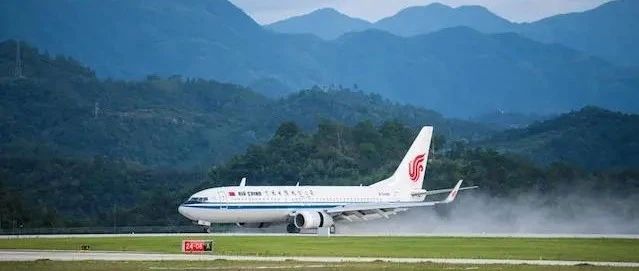
Core Viewpoint - Accelerating the construction of small and general airports is a significant direction for the development of China's civil aviation industry [1][2]. Group 1: New Airport Developments - Lishui Airport, the eighth civil transport airport in Zhejiang, officially opened on July 18, 2025, after nearly 18 years of preparation, featuring a 2,800-meter runway and a terminal of 12,000 square meters, capable of handling 1 million passengers and 4,000 tons of cargo annually [1][2]. - The airport fills a gap in civil aviation in southwestern Zhejiang and is expected to boost local tourism and economic development, particularly benefiting the 470,000 overseas Chinese in the region [1][2]. Group 2: Infrastructure Investment - During the 14th Five-Year Plan, over 100 billion yuan is invested annually in civil aviation infrastructure, with modern airports like Chengdu Tianfu and Qingdao Jiaodong being completed [2]. - By the end of this year, the total number of civil airports in China is expected to reach around 270, with a significant increase in domestic routes and cities served [2]. Group 3: Regional Airport Expansion - New airports are also being developed in the Anhui region, with Bozhou and Bengbu airports expected to commence operations this year [4]. - The construction of small and branch airports is emphasized as a cost-effective choice that significantly enhances regional connectivity and economic benefits [5]. Group 4: Tourism and Economic Impact - Small airports are becoming increasingly popular, facilitating easier access to previously less-visited tourist destinations, which are now seeing a surge in visitor numbers [5]. - New direct flights to popular tourist destinations are being launched, connecting them directly to major cities, thus enhancing travel convenience [5]. Group 5: Integration with High-Speed Rail - The integration of high-speed rail with major airports is improving passenger convenience, with examples like the seamless transfer between Shanghai Hongqiao Airport and nearby high-speed rail stations [6]. - This integration is expected to expand the service radius of hub airports and optimize airspace resource utilization [6].
越来越多中小机场投运,“小机场城市游”受追捧
Di Yi Cai Jing· 2025-07-23 11:20
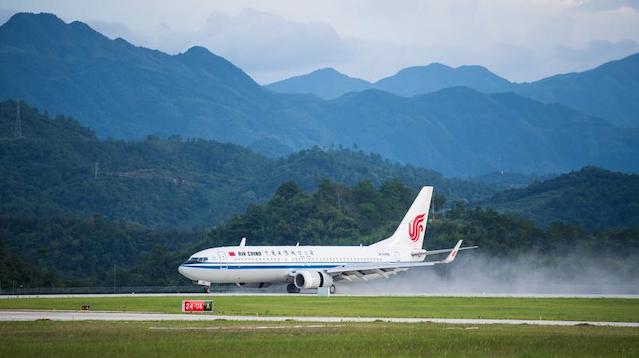
Core Insights - The construction of Lishui Airport marks a significant development in China's civil aviation, enhancing the regional air transport network and supporting tourism and economic growth in the area [1][3] Infrastructure Development - Since the start of the 14th Five-Year Plan, the Civil Aviation Administration of China (CAAC) has invested over 100 billion yuan annually in infrastructure, with modern airports like Chengdu Tianfu and Qingdao Jiaodong being completed [3] - By the end of this year, the total number of civil airports in China is expected to reach around 270 [3] - Lishui Airport, which took nearly 18 years to build, features a 2,800-meter runway and a terminal covering 12,000 square meters, capable of handling 1 million passengers and 4,000 tons of cargo annually [1][3] Regional Connectivity - Lishui Airport fills a gap in air transport in southwestern Zhejiang, facilitating easier access to tourist destinations and supporting the local economy, particularly for the 470,000 overseas Chinese residents [1][3] - The airport is positioned as a "tourism branch airport," enhancing connectivity to key tourist sites in the region [1] Future Developments - More small and regional airports are planned, with Jiaxing Nanhu Airport expected to open by the end of the year, focusing on a cargo-centric model [3][5] - The construction of new airports in Anhui province, including Bozhou and Bengbu, is also underway [4] Economic Impact - Small airports are seen as cost-effective solutions for enhancing regional connectivity and boosting local economies, particularly in tourism [6] - The rise of small airports is linked to increased tourist traffic in previously less-visited cities, with new direct flights connecting these destinations to major urban centers [6] Integration with Transportation Networks - There is a growing trend of integrating high-speed rail with major airports, improving accessibility and convenience for travelers [7] - Currently, 22 transport airports have established "hard connections" with train stations, enhancing the overall travel experience [7]
客货齐增!国际客运货运航线加密 丝路核心枢纽活力凸显
Yang Shi Wang· 2025-07-22 08:10
Core Insights - Xinjiang is positioned as a key hub in the Silk Road Economic Belt, enhancing its connectivity with surrounding countries and the world [1] Group 1: Passenger Traffic and Connectivity - In the first half of the year, Xinjiang served 1.764 million inbound and outbound passengers, with 17 countries (regions) and 27 international passenger routes opened [1] - Urumqi Tianshan International Airport has added two new international routes to Uzbekistan's Fergana and Kazakhstan's Chimkent, achieving comprehensive coverage of 10 major cities in Central Asia [3] - As of July 20, 2023, Urumqi has 3 routes to Kazakhstan with 66 weekly round-trip flights, reflecting a 28.6% year-on-year increase in cross-border passenger traffic [4] Group 2: Trade and Logistics - The international cargo throughput at Urumqi Tianshan International Airport reached 49,200 tons in the first half of the year, marking a significant year-on-year increase of 486.8% [6] - The airport has expanded its international cargo routes to 28, covering 18 countries, establishing itself as one of the fastest-growing air cargo hubs globally [7]
