空铁联运

Search documents
流动中国的活力图景
Ren Min Ri Bao Hai Wai Ban· 2026-02-03 22:51
Core Viewpoint - The Spring Festival travel rush (Chunyun) in 2026 is expected to see a record 9 billion trips, reflecting a strong demand for travel during the holiday season, with various measures in place to ensure passenger safety and comfort [6][8]. Group 1: Spring Festival Travel Overview - The Spring Festival travel period runs from February 2 to March 13, lasting 40 days, with a total of 9 days off for the holiday this year [6]. - The anticipated cross-regional passenger flow is projected to reach 9.5 billion trips, marking a historical high [6]. - The railway sector expects to transport 540 million passengers, with over 14,000 trains operating on peak days, and a 5.3% increase in seating capacity compared to the previous year [8]. Group 2: Volunteer and Service Initiatives - Over 18,000 railway volunteers are deployed across 527 stations to assist passengers during the travel rush, providing guidance and support [8]. - Special services are offered for vulnerable groups, including elderly, disabled, and pregnant travelers, ensuring a one-on-one assistance approach [7][8]. Group 3: Transportation Enhancements - New train schedules have been implemented to improve capacity and service quality, including the introduction of high-speed trains connecting major cities [9][10]. - The Beijing West Station has upgraded its facilities, including free charging stations and improved seating, enhancing the overall passenger experience [7][10]. Group 4: Aviation Sector Developments - The civil aviation sector anticipates a passenger volume of 95 million during the Spring Festival, reflecting a 5.3% year-on-year increase [11]. - New services such as "air-rail intermodal" options are being introduced to streamline the travel process for passengers, allowing for easier check-in and baggage handling [12]. - Airlines are launching various customer-friendly initiatives, including additional baggage allowances for students and special services for elderly and young travelers [12].


2026年春运首日观察:反向过年 一线城市热度最高
Zhong Guo Jing Ying Bao· 2026-02-03 05:32
Core Insights - The 2026 Spring Festival travel season has begun, with a notable increase in travel demand due to the late timing of the holiday and extended vacation periods, leading to a mix of returning home, student travel, and tourism [1] Group 1: Travel Trends - First-tier cities remain the most popular destinations, with "reverse New Year" and "North-South travel" emerging as new trends this year [1][2] - The top ten destinations before the Spring Festival include Beijing, Chengdu, Shanghai, Guangzhou, Shenzhen, Haikou, Kunming, Chongqing, Sanya, and Harbin, indicating strong appeal from major cities and key tourist locations [1][3] - On the first day of the Spring Festival travel, long-distance travel trends show a significant interest in western cities, with Chengdu and Chongqing leading hotel bookings among non-first-tier cities [1] Group 2: Flight and Hotel Data - The most popular flight routes during the Spring Festival include Guangzhou-Shanghai, Beijing-Shenzhen, and Beijing-Chengdu, primarily connecting first-tier cities [3] - Hotel search interest in first-tier cities surged over 70% on the first day of the Spring Festival travel, with many hotels near train stations and airports already sold out [3] - There is a notable increase in interest for less popular routes driven by the "reverse New Year" trend, with some routes seeing over a 300% increase in popularity compared to last year [4] Group 3: Travel Logistics - Many cities are enhancing transfer services between airports and high-speed rail stations to facilitate smoother travel experiences [5] - Predictions indicate multiple travel peaks during the Spring Festival, with February 7 expected to be the first major travel peak, leading to rising ticket prices [6] - Ticket prices for popular routes have already begun to increase, with a notable rise observed from February 6 to February 7 [6]
全国民航旅客运输量有望达到9500万人次
Ren Min Ri Bao· 2026-01-19 19:04
Core Insights - The civil aviation industry is expected to see a record high in passenger transport volume during the Spring Festival travel season, with an estimated 95 million passengers, averaging 2.38 million passengers per day, representing a year-on-year increase of approximately 5.3% [1] Group 1: Passenger Demand - The Spring Festival travel period will experience overlapping flows of return home, family visits, student travel, and strong holiday tourism demand [1] - Two peak passenger flow periods are anticipated around the Spring Festival, particularly due to the later date of the holiday this year, leading to concentrated return trips for students and the general public [1] - Daily peak passenger flow is expected to reach 2.6 million [1] Group 2: Operational Preparedness - The civil aviation system is committed to ensuring safe, convenient, and warm travel for the public during the Spring Festival travel season [1] - There will be a focus on increasing flights to hub airports and tourist destinations in the domestic market [1] - In the international market, airlines will prioritize increasing flights to neighboring countries and major inbound tourism destinations based on demand [1] Group 3: Flight Operations - The civil aviation sector is projected to operate 780,000 flights during the Spring Festival, averaging 19,400 flights per day, which is a 5% increase year-on-year [1] - This operational capacity is expected to effectively meet the travel demand of passengers [1]
今年民航春运旅客运输量有望创历史新高
Zheng Quan Ri Bao· 2026-01-19 16:13
Core Insights - The Civil Aviation Administration of China (CAAC) forecasts that the national civil aviation passenger transport volume during the Spring Festival travel season is expected to reach 95 million, with a daily average of 2.38 million passengers, representing a year-on-year growth of approximately 5.3% [1] Group 1: Spring Festival Travel Characteristics - The civil aviation Spring Festival is expected to achieve a historical high in passenger transport volume, driven by the combination of traditional travel flows such as returning home, family visits, and student travel, along with a strong demand for holiday tourism [1] - Two peaks in passenger flow are anticipated around the Spring Festival, particularly due to the later timing of the holiday this year, leading to a concentrated return of students and workers, with daily peaks potentially reaching 2.6 million passengers [1] - There is an increasing enthusiasm for tourism travel, as indicated by current flight search and booking trends, benefiting from policies promoting tourism, extended holidays, and inbound/outbound travel, with popular routes for winter sports in the north and warm-weather escapes in the south seeing heightened interest [1] Group 2: Operational Preparedness and Capacity - The CAAC has proactively organized industry units to assess the Spring Festival market situation, leading to the evaluation of flight routes and the allocation of resources for peak travel times [2] - In the domestic market, there will be a focus on increasing flights to hub airports and tourist destinations, while in the international market, there will be an emphasis on enhancing flights to neighboring countries and key inbound tourism destinations [2] - The civil aviation sector is expected to operate approximately 780,000 flights during the Spring Festival, averaging 19,400 flights per day, which marks a 5% increase year-on-year, effectively supporting passenger travel demand [2]
2026年民航春运旅客量有望创新高 民航局多举措保障出行
Bei Jing Shang Bao· 2026-01-19 15:15
Core Insights - The 2026 Spring Festival travel season is expected to see a record high of 95 million passengers, with a daily average of 2.38 million, representing a year-on-year growth of approximately 5.3% [1][2] Group 1: Passenger Volume and Trends - The Spring Festival travel period will last from February 2 to March 13, totaling 40 days [1] - The travel season is anticipated to create two peaks in passenger flow, particularly due to the late timing of the Spring Festival, leading to concentrated return trips for students and workers [2] - The demand for air travel is expected to be boosted by traditional return flows and a strong holiday tourism demand [2] Group 2: Flight Operations and Capacity - The Civil Aviation Administration of China (CAAC) plans to ensure 780,000 flights during the Spring Festival, averaging 19,400 flights per day, which is a 5% increase year-on-year [5] - The CAAC will focus on increasing flights to hub airports and popular tourist destinations domestically, while also enhancing international routes to neighboring countries [5] - The CAAC is encouraging airlines to develop integrated travel products, such as domestic connecting flights and air-rail intermodal services [5] Group 3: Passenger Rights and Services - The CAAC will ensure that airlines adhere to integrated service requirements, particularly in managing flight delays and ticket changes [6] - Special attention will be given to travelers with specific needs, including the elderly, children, and disabled passengers, to enhance service processes and ensure a smooth travel experience [7]
2026年民航春运旅客量有望创新高,民航局多举措保障出行
Bei Jing Shang Bao· 2026-01-19 12:27
Core Viewpoint - The 2026 Spring Festival travel season in China is expected to see a record high of 95 million passengers, with daily averages of 2.38 million, reflecting a year-on-year growth of approximately 5.3% [1][3] Group 1: Passenger Transport Expectations - The total passenger transport volume during the Spring Festival travel period is projected to reach 95 million, with a daily average of 2.38 million, marking a 5.3% increase from the previous year [1][3] - Two peaks in passenger flow are anticipated around the Spring Festival holiday, particularly due to the late timing of the holiday in 2026, leading to concentrated return flows of students and workers, with daily peaks potentially reaching 2.6 million [3][6] - The demand for air travel is expected to be further released due to the combination of traditional return flows and a surge in holiday tourism [3] Group 2: Travel Trends and Popular Destinations - Popular travel routes are expected to include northern ice and snow tourism and southern warm weather escapes, with significant interest in outbound and inbound travel routes [3][4] - As of January 19, over 520,000 tickets for domestic flights and over 180,000 for international flights had been booked for the first day of the Spring Festival travel season [4] Group 3: Operational Preparedness and Flight Arrangements - The Civil Aviation Administration of China (CAAC) plans to ensure 780,000 flights during the Spring Festival travel period, averaging 19,400 flights per day, which is a 5% increase from the previous year [6][7] - The CAAC is enhancing coordination across departments and regions to manage flight flow effectively and maintain a high on-time performance rate during the travel season [7] - Measures are being taken to address potential operational pressures from complex weather conditions and high passenger volumes, including safety checks and emergency response preparations [6][7]
旅客运输量有望创历史新高 民航全力保障春运安全顺畅
Xin Hua She· 2026-01-19 11:08
Core Viewpoint - The civil aviation industry in China is preparing for a record-high passenger transport volume during the upcoming Spring Festival travel season, with a projected total of 95 million passengers and an average of 2.38 million passengers per day, highlighting the importance of safety and operational efficiency [1][2]. Group 1: Passenger Transport Volume - The Spring Festival travel season will last for 40 days, from February 2 to March 13, 2026, with an expected passenger transport volume of 95 million [1]. - Daily passenger flow is anticipated to reach 2.38 million, marking a historical high for the civil aviation sector [1]. - The late timing of the Spring Festival this year is expected to lead to a concentrated return flow of students and workers, with peak daily traffic potentially hitting 2.6 million [1]. Group 2: Operational Safety and Capacity - The Civil Aviation Administration of China (CAAC) emphasizes the importance of safety, urging industry units to adhere to winter operational safety plans and conduct special safety inspections during the Spring Festival [2]. - The CAAC plans to enhance flight capacity by increasing flights to hub airports and tourist destinations, as well as adding international flights to neighboring countries [2]. - A total of 780,000 flights are expected to be operated during the Spring Festival, reflecting proactive capacity planning [2]. Group 3: Passenger Services - The CAAC is focused on optimizing passenger services to create a comfortable travel environment, including improving information dissemination for delayed flights and enhancing service for special needs passengers [3]. - Efforts will be made to maintain a high on-time performance rate for flights during the travel season through refined flow management and inter-departmental coordination [3]. - The civil aviation system is committed to ensuring safe, convenient, and pleasant travel experiences for the public during the Spring Festival [3].
春运民航旅客运输量预计达9500万人次 有望创历史新高
Xin Lang Cai Jing· 2026-01-19 11:00
Core Insights - The Civil Aviation Administration of China (CAAC) forecasts a record high of 95 million passengers during the 2026 Spring Festival travel period, with an average of 2.38 million passengers per day, representing a year-on-year growth of approximately 5.3% [1] - The total number of flights is expected to reach 780,000, averaging 19,400 flights per day, also reflecting a 5% increase year-on-year [1] Group 1: Passenger Demand - The Spring Festival travel period will see a combination of traditional travel flows such as returning home, family visits, and student travel, alongside a strong demand for tourism, leading to a significant release of air travel demand [3] - The peak daily passenger flow is anticipated to reach 2.6 million, driven by the late timing of the Spring Festival this year, resulting in concentrated return travel for students and the general public [3] Group 2: Operational Challenges - The combination of large passenger volumes, high-density operations, and adverse weather conditions such as rain and snow will pose higher demands on the operational capabilities of airlines, airports, and air traffic control [5] - The CAAC emphasizes the importance of safety, urging industry players to strictly implement winter operational safety plans and conduct thorough inspections to identify and mitigate risks [5] Group 3: Capacity Management - The CAAC has proactively organized industry assessments of the Spring Festival market, leading to the evaluation of flight routes and the allocation of resources for the travel period [5] - In the domestic market, there will be an increase in flights to hub airports and tourist destinations, while in the international market, there will be a focus on increasing flights to neighboring countries and major inbound tourism destinations [5] Group 4: Service Enhancements - The CAAC plans to strengthen inter-departmental and inter-regional coordination to manage flight traffic effectively, aiming to maintain a high on-time performance rate during the Spring Festival [6] - There will be a focus on improving services for passengers, including timely information on delayed flights and accommodating the needs of special groups such as the elderly, children, and first-time travelers [6]

今年春运全国民航旅客运输量有望达到9500万人次
Xin Lang Cai Jing· 2026-01-19 09:56
Core Insights - The civil aviation industry is expected to see a record high in passenger transport volume during the Spring Festival travel season, with an estimated 95 million passengers, averaging 2.38 million daily, representing a year-on-year increase of approximately 5.3% [1] - Two peaks in passenger flow are anticipated around the Spring Festival, particularly due to the later timing of the holiday this year, leading to concentrated return flows of students and workers, with a single-day peak potentially reaching 2.6 million passengers [1] - The demand for travel is increasing, driven by favorable policies and trends in tourism, with popular routes for winter tourism in northern regions and warm-weather destinations in southern regions seeing heightened interest [1] Industry Actions - Airlines are focusing on increasing flights to hub airports and popular tourist destinations during the Spring Festival, while also enhancing international routes to neighboring countries and key inbound tourism markets [2] - The Civil Aviation Administration encourages airlines to develop integrated travel products, including domestic connecting flights and air-rail transport options, to provide more choices for travelers [2] - The aviation sector is expected to operate approximately 780,000 flights during the Spring Festival, averaging 19,400 flights per day, which is a 5% increase year-on-year, effectively supporting passenger travel demand [2]
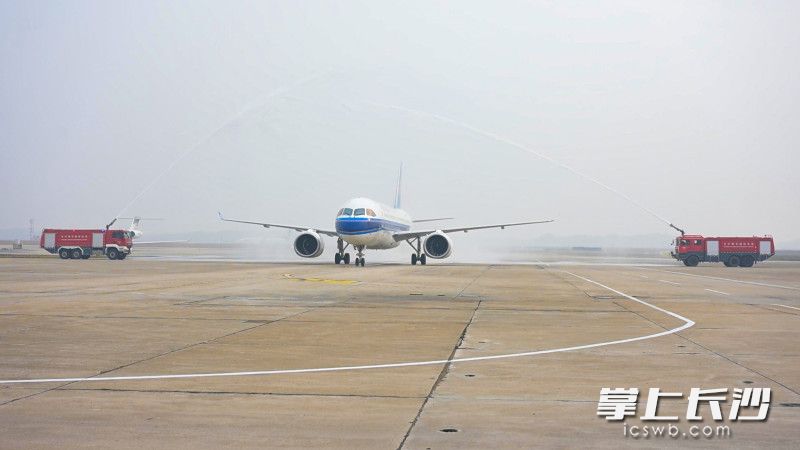
C919入列南航湖南分公司,中部地区首架执管国产大飞机落地长沙
Chang Sha Wan Bao· 2025-12-31 08:46
Core Insights - The C919 aircraft has officially entered service with China Southern Airlines' Hunan branch, marking a significant milestone in the domestic aviation industry and expanding the scale of domestic aircraft operations in China [1][3]. Group 1: C919 Aircraft Operations - The C919 aircraft, designated B-658N, successfully landed at Changsha Huanghua International Airport, making Changsha the fourth city in China to operate the C919 after Beijing, Shanghai, and Guangzhou [1]. - Since its first flight to Hunan in January 2025, China Southern Airlines has operated over 1,400 flights on seven routes from Changsha to major cities, carrying over 170,000 passengers [3]. - The airline plans to introduce a second C919 aircraft by the 2026 Spring Festival, expanding its operations to include more routes and increasing the frequency of flights, particularly on the Changsha to Beijing route [9]. Group 2: Route Expansion and Network Development - China Southern Airlines operates 43 routes from Hunan, connecting to 36 domestic and international destinations, with a total of 834 flights per week during the current winter-spring season [5]. - The airline is enhancing its international route offerings, including new flights from Changsha to Singapore and Ho Chi Minh City, set to commence in early 2026, which will increase the weekly international flights to 44 [7]. Group 3: Service Innovations and Infrastructure Development - The airline is developing an "air-rail intermodal" product to improve passenger travel efficiency and is set to launch a "one-minute boarding" service on the Changsha to Beijing route before the 2026 Spring Festival [7]. - China Southern Airlines is focused on strengthening its operational support systems for the C919, enhancing maintenance capabilities, and fostering collaboration in the development of domestic aircraft [9].