
绿色环保

Search documents
我国船舶工业领先优势巩固 全球首艘甲醇双燃料智能超大型油轮交付
Zhong Guo Chan Ye Jing Ji Xin Xi Wang· 2025-12-24 22:06
中船大连造船项目经理李吉明介绍,这条船使用了甲醇燃料,相比常规燃料,这艘船的二氧化碳排放最 高能减少92%,硫氧化物排放最高能减少到99%。 除了绿色环保,作为智能型超大型油轮,它还搭载了国内自主研发的智能船基平台及多套船用智能系 统,在运维、航行等方面实现了安全高效的智慧运营管理。接下来,这条船将服务于中东到远东的航 线。 转自:央视网 绿色环保 搭载多套智能系统 12月22日交付的这艘油轮,作为全球首艘甲醇双燃料动力智能超大型油轮,由中船大连造船自主研发。 船长约333米,型宽60米,一次可运载约210万桶原油。 与常规超大型油轮相比,该船具备更优的适航性和适港性,采用的国产甲醇双燃料主机和甲醇燃料供给 系统,还可以满足最新国际环保排放标准。 12月22日,由我国自主设计、建造的全球首艘甲醇双燃料动力智能超大型油轮在辽宁大连交付,标志着 中国船舶工业在智能化、绿色化发展道路上迈出坚实一步,进一步巩固了在全球造船业竞争中的领先优 势。 ...
福恩股份IPO将上会,3.81亿分红“惹眼”
Sou Hu Cai Jing· 2025-12-24 10:09
Core Viewpoint - The company, Hangzhou Fu'en Co., Ltd., a leading supplier of recycled fabrics in China, is set to have its IPO application reviewed on December 26, with plans to raise 1.25 billion yuan primarily for capacity expansion. However, it faces significant risks due to high customer concentration and governance issues related to family control [3][4][5]. Group 1: Company Overview - Fu'en Co. is recognized as a leader in the recycled fabric industry, collaborating with major international brands like Uniqlo and H&M, leveraging its green and eco-friendly concept [3][6]. - The company has transitioned from a collective ownership model to a family-controlled structure, with the founder and his family holding 83.89% of the voting rights as of the IPO application date [4][5]. Group 2: Financial Performance - Fu'en's revenue increased from 1.764 billion yuan in 2022 to 1.813 billion yuan in 2024, with net profits consistently exceeding 200 million yuan during this period. In the first half of 2025, revenue and net profit were reported at 938 million yuan and 105 million yuan, respectively [7]. - Over 70% of Fu'en's revenue comes from its top five clients, which is significantly higher than the industry average, indicating a high customer concentration risk [6][8]. Group 3: IPO and Fundraising - The company plans to raise 1.25 billion yuan through its IPO, with nearly 60% allocated for capacity expansion projects, including the development of integrated recycled fabric production [9]. - Regulatory scrutiny has arisen regarding the necessity and rationality of the proposed capacity expansion, given the current utilization rate of 93% and concerns about potential overcapacity [9][10]. Group 4: Market Risks - Fu'en's performance is closely tied to the inventory levels of its major clients, which could lead to reduced orders if these brands experience prolonged inventory turnover periods [8]. - The global textile supply chain is shifting towards Southeast Asia, which may increase the risk of client dependency for Fu'en if major clients diversify their supplier base [8][10]. Group 5: Technological and Competitive Landscape - The rapid technological evolution in the recycled fabric industry poses a risk of obsolescence for Fu'en's production technologies if new eco-friendly materials emerge [10]. - Competition is intensifying, with other companies like Kaimeng Textile and Zhejiang Sanyuan gaining market share, which could impact Fu'en's future performance if it fails to effectively manage new product absorption [10].


行走拉美手记丨中巴合作实现绿色梦想——走进比亚迪巴西卡马萨里大型生产基地综合体
Xin Hua Wang· 2025-12-24 02:56
Group 1 - BYD is significantly contributing to Brazil's electric vehicle market, having sold 100,000 electric and hybrid vehicles in the country this year [1] - The BYD production complex in Camaçari is the company's first electric passenger vehicle factory in Latin America and its largest overseas facility, with a total production capacity of 600,000 vehicles upon completion [1] - The first phase of the complex, which includes the assembly plant, has been completed, with the first vehicle rolling off the production line in July and the 14 millionth new energy vehicle produced in October [1] Group 2 - The factory fosters a collaborative environment where Chinese and Brazilian employees work together, enhancing cultural exchange through shared activities such as a football tournament and music events [2] - The workforce has grown from 10 employees in 2013 to nearly 3,000 employees, showcasing the rapid expansion of BYD's operations in Brazil [2] - The factory is set to introduce a second production shift next year, with plans for additional facilities including a welding plant, painting plant, stamping plant, parts factory, battery factory, and R&D center to further boost local employment [3][4] Group 3 - BYD's investment strategy in Brazil focuses on a full industry chain approach, contributing to sustainable development and promoting green initiatives [4]

2025年中国餐饮连锁行业市场研究报告
硕远咨询· 2025-12-23 14:08
Investment Rating - The report does not explicitly provide an investment rating for the Chinese restaurant chain industry Core Insights - The Chinese restaurant chain industry is experiencing rapid growth, with the market expected to exceed 1 trillion RMB by 2024, driven by consumer demand for quality and convenience [20][21] - The industry is characterized by a diverse range of business formats, including fast food, casual dining, coffee shops, and tea houses, each catering to different consumer preferences [9][10] - Digital transformation and innovation in service delivery are key trends, with companies adopting technologies like smart ordering and online-to-offline (O2O) models to enhance customer experience [8][14] Summary by Sections 1. Industry Overview - Restaurant chains are defined as businesses operating multiple outlets under a unified brand, emphasizing standardized management and quality [4] - The industry has evolved from a focus on fast food in the 1980s to a more diversified market with various dining formats [12][14] - Major brands include McDonald's, KFC, Haidilao, and Starbucks, reflecting a mix of local and international influences [10][11] 2. Market Environment Analysis - The macroeconomic environment supports the restaurant chain industry, with rising disposable incomes and urbanization driving demand [26] - The supply chain, including food sourcing and logistics, plays a crucial role in operational efficiency [27][28] - Regulatory frameworks are increasingly focused on food safety and environmental sustainability, impacting operational practices [31] 3. Market Size and Development Trends - The market is projected to grow at a compound annual growth rate (CAGR) of around 10%, with fast food and tea segments leading the growth [20][21] - Online sales channels are rapidly expanding, particularly in delivery services, which are becoming essential for consumer engagement [39] - Future trends indicate a shift towards more personalized and health-conscious dining options, driven by changing consumer preferences [42] 4. Competitive Landscape Analysis - Leading companies like Haidilao and Starbucks dominate the market, leveraging strong brand recognition and supply chain efficiencies [43][44] - Smaller brands are competing through niche offerings and localized strategies, often focusing on innovation and customer engagement [46] - Foreign brands maintain a significant presence but face increasing competition from domestic players [47] 5. Consumer Behavior and Demand Analysis - The consumer base is diverse, with younger demographics showing a preference for quality and unique dining experiences [55] - Health consciousness is rising, leading to increased demand for nutritious and environmentally friendly food options [62][63] - Price sensitivity remains a critical factor, particularly among lower-income consumers, influencing purchasing decisions [65] 6. Technological Innovation and Digital Transformation - Digital technologies are being widely adopted for operational management, enhancing efficiency and customer interaction [67][68] - Emerging technologies like AI and IoT are transforming the industry, promoting automation and improved service delivery [69] - Challenges related to data security and system reliability are significant concerns as companies increase their reliance on technology [70] 7. Future Opportunities and Risks - Opportunities for growth are abundant, driven by rising consumer incomes, technological advancements, and supportive government policies [72] - Key risks include intensified competition, fluctuating raw material prices, and regulatory changes that could impact operational costs [74]
未上市业绩已变脸,福恩股份毛利率逐级下行
Sou Hu Cai Jing· 2025-12-23 08:41
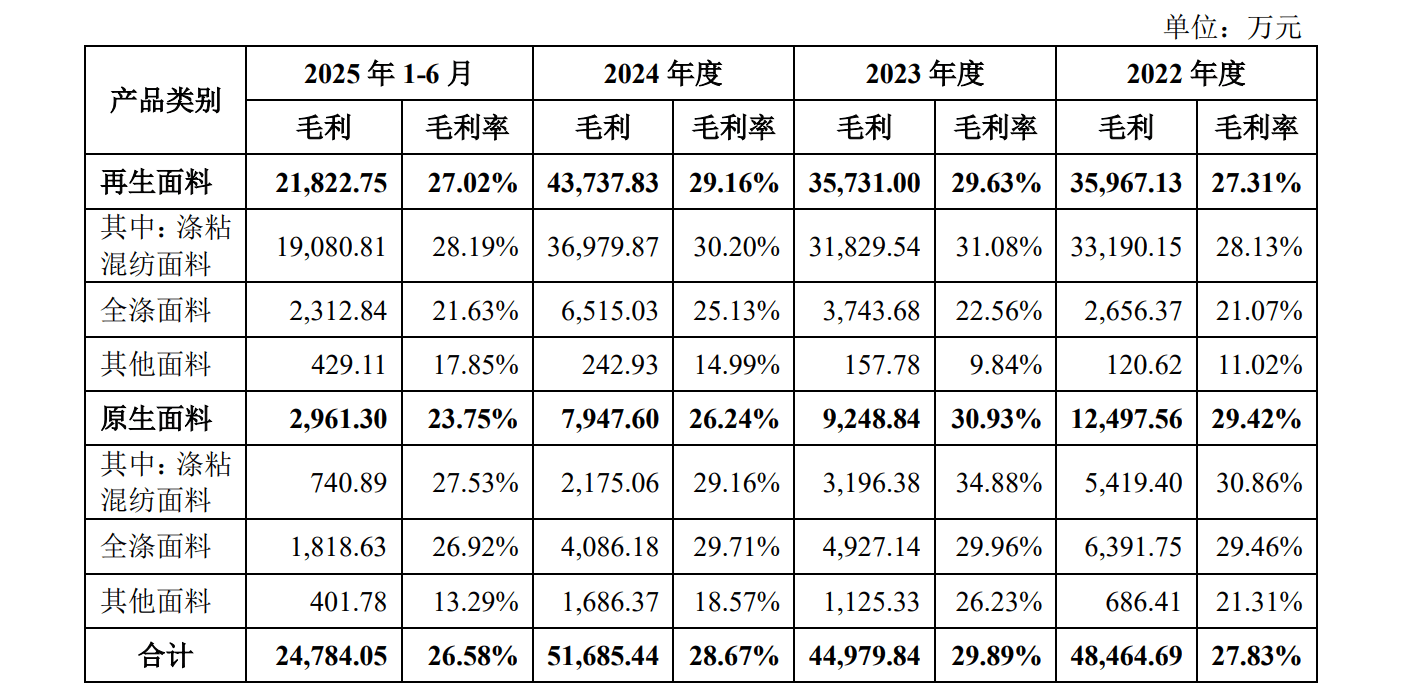
Core Viewpoint - The company, Fuen Co., Ltd., is facing significant challenges ahead of its IPO, with expectations of declining profits and a decrease in gross margins, raising concerns about its competitive edge in the sustainable fabric market [1][5]. Group 1: Company Overview - Fuen Co., Ltd. specializes in eco-friendly fabrics, primarily recycled materials, and has established itself as a leading supplier for major brands like Uniqlo and H&M [1][2]. - The company plans to raise 1.25 billion yuan through its IPO, with 800 million yuan allocated for an integrated project on recycled eco-friendly fabrics and 450 million yuan for a high-end recycled materials research institute [2]. Group 2: Market Position and Competitive Advantage - Fuen Co., Ltd. has a unique competitive advantage due to its sustainable and eco-friendly philosophy, which is becoming a standard in the industry as more competitors gain certification [3]. - The company is the largest supplier of recycled blended fabrics for H&M and Uniqlo, indicating a strong market position [3]. Group 3: Financial Performance and Projections - The company forecasts a revenue of 1.71 billion yuan for 2025, a decrease of 5.8% year-on-year, with a projected net profit of 230 million yuan, down 16.6% [5]. - The gross margin for the first half of 2025 is expected to be 26.6%, a decline of over two percentage points compared to the previous year [5][7]. Group 4: Challenges and Risks - The gross margin for recycled fabrics has been declining, with the gross margin for recycled blended fabrics dropping from 29.6% in 2023 to 27% in the first half of 2025 [6][7]. - The company relies heavily on outsourcing, with over 30% of its production outsourced, raising concerns about potential technology leakage [3][4]. - Rising raw material costs, including a nearly 5% increase in yarn prices and a similar rise in fabric prices, are pressuring the company's margins [9][10]. Group 5: Inventory and Accounts Receivable - The company has seen a significant increase in inventory, with a 20% rise compared to 2022, leading to substantial impairment provisions [11]. - The accounts receivable turnover rate has decreased from approximately 8 times in 2022 to 6.5 times in 2024, indicating slower collection from customers [11].
全球与中国消费电子用热塑性聚氨酯(TPU)市场现状及未来发展趋势
QYResearch· 2025-12-23 07:04
Core Viewpoint - The thermoplastic polyurethane (TPU) industry for consumer electronics is at a critical turning point, facing short-term price pressures but long-term opportunities driven by trends towards green, high-performance, and intelligent materials [7]. Group 1: Current Industry Status - TPU is a high-performance polymer material used in consumer electronics for protective cases, functional components, and structural parts, with specific mechanical and environmental properties [2][5]. - The global TPU market for consumer electronics is projected to grow from $547.50 million in 2024 to $1,025.35 million by 2031, with a compound annual growth rate (CAGR) of 9.60% [16]. - The Chinese market is rapidly evolving, expected to account for approximately 49.87% of the global market by 2031, growing from $252.96 million in 2024 [16]. Group 2: Market Growth Drivers - The demand for TPU in consumer electronics is driven by the need for lightweight, durable materials in smartphones, wearables, and flexible displays, with increasing penetration in protective cases and smart device applications [20][22]. - Innovations in TPU manufacturing are leading to customized products with unique properties such as flame retardancy, UV resistance, and antibacterial features, expanding applications across various industries [9][10]. Group 3: Technological and Environmental Trends - The industry is witnessing a shift towards bio-based and biodegradable TPU products, with companies like BASF and Wanhua Chemical introducing bio-based TPU with 30%-70% bio-content [11]. - The development of recycling technologies is expected to enhance TPU waste recycling rates, aligning with global carbon neutrality goals [11]. Group 4: Competitive Landscape - The top three global manufacturers, BASF, Covestro, and Huntsman, hold over 41% market share, indicating a highly competitive environment, particularly in China [17][19]. - The market is characterized by a "two super, many strong" structure, with leading companies like Huafeng Group and Wanhua Chemical dominating the high-end market, while smaller firms operate in the low-end market [19]. Group 5: Policy and Regulatory Environment - Government policies such as "Made in China 2025" and the "Internet Plus" initiative are promoting high-end and intelligent development in the TPU sector, encouraging its application in electronic products [24]. - Environmental regulations are driving the development of green TPU materials, reducing reliance on traditional petroleum-based materials [24].
《假如我们从未见过森林》:一片树叶唤醒绿色希望
Xin Lang Cai Jing· 2025-12-21 05:19
Core Viewpoint - The book "What If We Had Never Seen a Forest" illustrates a world without trees, emphasizing the importance of nature and hope for regeneration through the journey of a girl named Ah Chui [3][4]. Summary by Sections Story Overview - Ah Chui lives in an industrial city where forests and trees have long disappeared. One day, she discovers a leaf, sparking her curiosity about trees [3]. - Accompanied by her grandmother and a dog named Pipi, Ah Chui embarks on a journey to find trees, facing challenges in a desolate landscape [3]. Themes and Imagery - The illustrations in the book convey a strong contrast between the bleakness of the industrial city and the vibrant imagery of the forest described by the grandmother, creating a powerful visual impact [4]. - Ah Chui's discovery of a seed symbolizes hope for the return of forests, reinforcing the message that even in a barren world, one can plant the seeds of renewal [3][4]. Awards and Recognition - The book has received the Silver Award at the 4th "Bronze Auihua Picture Book Award" [5].

天津日报数字报刊平台-图片新闻
Xin Lang Cai Jing· 2025-12-20 21:05
Group 1 - The core viewpoint of the article highlights the innovative measures taken by China Railway 12th Bureau at the Xingtang Street Terminal to initiate a "green revolution" in soil transportation within the Suzhou Industrial Park [3] - The terminal employs a "land-to-water" model for soil transportation, which enhances efficiency and sustainability [3] - Operations are conducted continuously for ten hours, showcasing a commitment to productivity and operational excellence [3] Group 2 - Digital supervision is implemented to ensure effective management and oversight of the soil transportation process [3] - The initiative includes cross-regional efforts to transform waste into valuable resources, emphasizing environmental sustainability [3]

泰瑞机器:助力农村人居环境改善
Zheng Quan Ri Bao· 2025-12-19 15:49
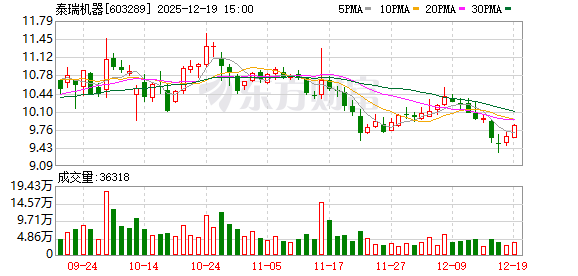
Core Viewpoint - The company is actively responding to green environmental policies by providing molding equipment and process support in the fields of biodegradable materials and eco-friendly daily necessities, aiding customers in product environmental upgrades and cost optimization, and contributing to the improvement of rural living environments [2] Group 1 - The company emphasizes its commitment to green environmental policies [2] - The company offers support in biodegradable materials and eco-friendly daily necessities [2] - The company's efforts aim to help customers achieve product environmental upgrades and cost optimization [2] Group 2 - The company's initiatives contribute to the improvement of rural living environments [2]

从生活用纸看促消费与反浪费
Ren Min Wang· 2025-12-19 04:15
Core Viewpoint - The article discusses the relationship between the upgrade of paper product consumption and the opposition to waste, emphasizing that consumption upgrades do not necessarily lead to increased waste but can enhance quality and efficiency in usage [1][3]. Group 1: Consumption Upgrade - The shift from "just enough" to "specific use" in paper products reflects an improvement in living standards and consumption upgrades, which focus on quality rather than quantity [1][2]. - Higher quality paper products, such as kitchen paper and cream paper, reduce the amount used while improving user experience, demonstrating that consumption upgrades can lead to resource savings and reduced waste [1][3]. Group 2: Supply and Demand Adaptation - Achieving a precise match between supply and demand is crucial for unifying consumption upgrades with waste reduction, as seen in products designed for specific scenarios [2][5]. - The introduction of high-quality, specialized paper products can enhance their utility and effectiveness, thereby minimizing unnecessary consumption [3][4]. Group 3: Trends in Paper Consumption - The current trends in paper consumption include scenario refinement, prioritization of quality, and increased emphasis on green and eco-friendly products, such as biodegradable paper [4][5]. - The popularity of bamboo pulp paper illustrates how environmentally friendly products can attract consumers while also reducing waste and promoting sustainable practices [4][5].