鸿蒙生态

Search documents
华为:鸿蒙代码量已超 1.3 亿行
程序员的那些事· 2025-12-29 03:27
Group 1 - The core data of the HarmonyOS ecosystem includes over 130 million lines of open-source code and nearly 10,000 code contributors [1][3] - More than 32 million terminal devices are currently running HarmonyOS 5 and 6 [1] - The HarmonyOS has undergone over 100 system version updates, with the number of developers exceeding 10 million and daily application downloads and updates surpassing 88 million [1] Group 2 - The HarmonyOS ecosystem contains over 350,000 applications and meta-services, with an adaptation rate exceeding 95% [3] - The daily application download and update volume remains at 88 million [3] - The initial open-source code volume was reported to be 7 million lines when it was first opened in 2020 [3]


鸿蒙从“可用”迈向“好用”:不仅是速度的胜利,更是模式的成功
Xin Lang Cai Jing· 2025-12-29 02:04
从2019年鸿蒙首次亮相,到2025年,鸿蒙操作系统已经 走过了6年。这6年间,鸿蒙生态发生了天翻地覆的变 化,走出了属于自己的生态体系。今天我们就从"鸿蒙合 伙人"开发者、数码爱好者和应用真体验,看华为如何走 出属于自己的道路。 从2019年鸿蒙首次亮相,到2025年,鸿蒙操作系统已经走过了6年。这6年间,鸿蒙生态发生了天翻地覆 的变化,走出了属于自己的生态体系。今天我们就从"鸿蒙合伙人"开发者、数码爱好者和应用真体验, 看华为如何走出属于自己的道路。 ...
鸿蒙生态的“好用”跃迁:从突围到引领的操作系统新范式
Huan Qiu Wang· 2025-12-27 14:04
1 f 鸿蒙生态的"好用"跃迁:从突围到引领的操作系统新范式。 September 1 and of the program of the program of September of the Research and and and and and other the program and on were and on the support of the county of the county of the research an and and on the mail of the m 0:00 / 0:35 ...
华为:鸿蒙代码量已超 1.3 亿行
程序员的那些事· 2025-12-26 23:42
2025 年 12 月 21 日,华为通过心声社区公布了鸿蒙生态的一些数据: 开源鸿蒙代码量超 1.3 亿行,代码贡献者接近 1 万人; 目前搭载 HarmonyOS 5 和 6 的终端设备超 3200 万台; PS2:开源鸿蒙是在 2020 年开源,据报道最初代码量是在 700 万行。 鸿蒙系统已进行超过 100 次系统版本更新,开发者人数突破 1000 万,用户日均下载、更新应用超过 8800 万次; 鸿蒙生态内应用及元服务超 35 万个,适配度超 95%,用户日均应用下载更新量达 8800 万次。 PS1:"(开源)鸿蒙代码量 1.3 亿行" 这个数据,其实 余承东早在 8 月 16 日的央视财经访谈上就提到过 ,最早应该是在 5 月 24 日公布的。 ...

鸿蒙生态如何打造出境服务新体验?解决出境游"三大难"
经济观察报· 2025-12-26 12:23
Core Viewpoint - Huawei aims to enhance outbound travel experiences by leveraging its HarmonyOS capabilities and fostering partnerships to create a comprehensive service ecosystem for travelers [1][24]. Group 1: Market Trends - By 2025, China's outbound tourism market is projected to experience a robust recovery with an average annual growth rate of 44.3% [2]. - The traditional group travel model is declining, with over 70% of travelers now opting for independent travel, particularly among the "digital natives" of Generation Z [3]. Group 2: User Experience Challenges - Travelers face significant "experience degradation" when transitioning from a highly integrated domestic digital ecosystem to fragmented services abroad [4][5]. - The mismatch in service distribution mechanisms between domestic and international contexts leads to difficulties in accessing essential services while traveling [5]. Group 3: Structural Gaps in Outbound Services - There are three major structural gaps in outbound travel services: 1. **Infrastructure Connection Gap**: Variability in network standards and roaming agreements across countries creates technical barriers [8]. 2. **Information Gap**: The lack of a unified digital intermediary complicates information access and decision-making for travelers [10]. 3. **Local Service Access Gap**: Travelers face high "digital identity costs" when trying to access local services, which are often distributed through traditional app-based models [12][14]. Group 4: Comprehensive Service Integration - Huawei proposes a solution that integrates pre-trip, in-trip, and post-trip services into a seamless experience, addressing the identified gaps [17][18]. - The integration includes features like itinerary management, local service recommendations, and AI-enhanced photo sharing to enhance user satisfaction [20][22]. Group 5: Ecosystem Development - Huawei is building a robust ecosystem by empowering partners and developers to enhance outbound travel services, as seen with the integration of services like Grab and Keeta [25][26]. - The HarmonyOS has launched over 120 outbound service cards, covering essential travel needs such as dining, accommodation, and shopping [27]. - The installed base of HarmonyOS devices has surpassed 32 million, indicating a significant market opportunity for global partners [28].

鸿蒙生态如何打造出境服务新体验?解决出境游"三大难"
Jing Ji Guan Cha Wang· 2025-12-26 11:32
Core Insights - The outbound tourism market in China is experiencing a strong recovery with an average annual growth rate of 44.3% by 2025 [1] - The traditional group tours are declining, with over 70% of travelers now opting for independent travel, primarily driven by the "digital natives" of Generation Z [2] Group 1: Industry Challenges - There is a significant "experience downgrade" for travelers accustomed to a highly integrated digital lifestyle in China when they travel abroad [2][3] - The outbound tourism experience is hindered by three major structural gaps: infrastructure connectivity, information exchange, and local service access [4] - The "infrastructure connectivity gap" arises from differences in network standards, complex roaming agreements, and varying levels of communication infrastructure across countries [5] - The "information exchange gap" is characterized by increased decision-making costs due to fragmented information sources and language barriers, making it difficult for travelers to navigate unfamiliar environments [7] - The "local service access gap" reflects the challenges faced by short-term visitors in establishing a digital identity to access local services, which often requires extensive setup [9][10] Group 2: Solutions Proposed by Huawei - Huawei aims to address these gaps by providing a comprehensive solution that integrates services across the entire travel experience, from pre-trip planning to post-trip sharing [11][12] - The proposed solution includes a unified service platform that aggregates travel information, visa updates, personalized itinerary suggestions, and easy booking options [14] - During the trip, Huawei's services will offer seamless connectivity, navigation, and local recommendations, enhancing the overall travel experience [15][16] - Huawei is also focusing on upgrading its core technologies and services, such as the Petal Maps and Tianji Tong app, to support global connectivity and enhance user experience [17] Group 3: Ecosystem Development - Huawei is building a collaborative ecosystem by empowering partners and developers to enhance outbound travel services, ensuring users have access to high-quality offerings [18][20] - The integration of services like Grab and Keeta into Huawei's ecosystem has significantly improved user experience, with Grab reporting an 18-fold increase in monthly orders after joining [18][19] - As of now, over 120 outbound service cards have been launched within the HarmonyOS ecosystem, covering essential travel needs such as dining, accommodation, and shopping [20] - The number of devices equipped with HarmonyOS has surpassed 32 million, indicating a substantial market opportunity for global partners [21]
近200位企业开发者齐聚蓉城,共探鸿蒙生态创新与产业融合新路径
Sou Hu Cai Jing· 2025-12-26 06:40
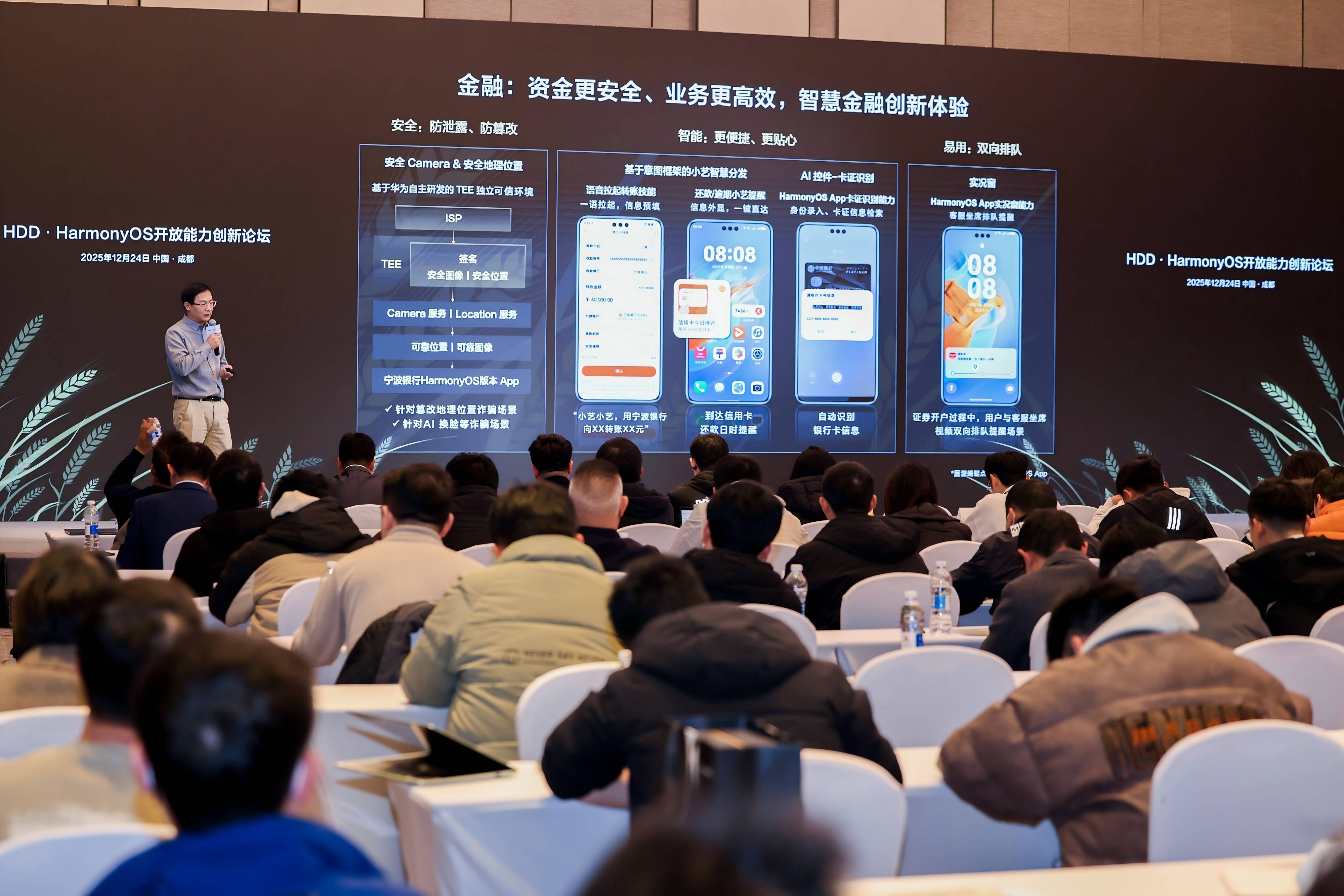
Core Insights - The HarmonyOS Open Capability Innovation Forum in Chengdu successfully gathered nearly 200 developers from various sectors, emphasizing the growth of the HarmonyOS ecosystem supported by local government policies and the Chengdu ecological innovation center [1][2] Group 1: Ecosystem Development - The Sichuan government is promoting the HarmonyOS ecosystem through substantial subsidies and open scenarios, aiming to establish Chengdu as a national digital economy hub [1] - Over 200 applications have been launched in Sichuan, showcasing the vibrant development of the HarmonyOS ecosystem across multiple sectors including government, finance, education, and consumer electronics [2] Group 2: Technological Advancements - The number of devices equipped with HarmonyOS 5 and HarmonyOS 6 has surpassed 32 million, with over 50,000 applications and services available, indicating rapid ecosystem growth [6] - The introduction of a new self-developed security architecture enhances user privacy and security, while distributed multi-device collaboration improves efficiency and resource sharing [6] Group 3: Industry Innovation Solutions - Huawei experts presented innovative solutions for industry applications, focusing on systematic integration of high-frequency APIs, components, and SDKs to facilitate digital transformation [7] - The integration of HarmonyOS SDK in local applications has improved user experiences, such as the Jingxun App's multi-device compatibility and personalized content delivery [7] Group 4: Marketing and Service Distribution - The lightweight and cross-terminal capabilities of meta-services are reshaping service distribution and user engagement, enhancing the overall user experience in various sectors [8] - The "Whale Hong Energy" model leverages HarmonyOS's capabilities to create a comprehensive commercial ecosystem, providing diverse services for brand marketing and user growth [8] Group 5: Productivity Enhancement - HarmonyOS computers are redefining office productivity by offering a seamless and intelligent collaborative experience, with over 10,000 applications available for various professional needs [9] - The forum highlighted solutions for enterprise security and management, aimed at enhancing digital office upgrades in Sichuan [9]
星河共筑:一个生态的“好用”元年
Xin Hua Wang· 2025-12-25 14:16
Core Insights - The core message of the articles is that the Harmony ecosystem has transitioned from initial technological expansion to a user experience-focused development phase, emphasizing the importance of user satisfaction and application integration [1][3]. Group 1: Ecosystem Development - Harmony has become the fastest-growing operating system in the history of smart terminals, indicating a successful market response to developer investments and user experience demands [3]. - The release of Harmony 6 on October 22 marks a strategic shift from basic functionality to enhancing user experience, focusing on making the system more user-friendly [3]. - The ecosystem's growth is supported by over 35 million applications and services available, with more than 10 million registered developers contributing to its development [5]. Group 2: Head Applications Integration - Major applications like WeChat, Alipay, Douyin, and Meituan are crucial for user experience, with their integration directly affecting user acceptance of the Harmony ecosystem [4]. - By 2025, head applications will have moved beyond basic compatibility to deeper integration with system capabilities, enhancing user interactions in social and payment scenarios [4]. - Innovations in applications such as WPS and DingTalk have improved efficiency by enabling seamless task transitions across devices, showcasing the system's capabilities [7]. Group 3: Mid-Tail Applications and Innovation - The ecosystem has seen significant contributions from mid-tail applications, with nearly 400 government and public service applications now available, enhancing user access to essential services [10]. - The gaming sector has also seen over 20,000 adaptations, with titles like "Genshin Impact" optimized for performance on Harmony, setting benchmarks for user experience [12]. - Unique applications that leverage Harmony's features, such as "Xiaoyuzhou" and "Orange Ledger," demonstrate the ecosystem's ability to foster diverse and innovative solutions [12]. Group 4: Developer Community and Support - The Harmony developer community has surpassed 10 million registered members, with over 7.32 million participating in training programs, indicating a robust support system for innovation [14]. - Huawei invests over 6 billion annually to incentivize developers, providing comprehensive support from technical assistance to business implementation [15]. - Successful applications like "Remy" and "Buque" exemplify the collaborative spirit between developers and Harmony, showcasing the potential for unique offerings within the ecosystem [15]. Group 5: National and Future Implications - The growth of the Harmony ecosystem aligns with national strategies for developing new productive forces and building a digital China, reflecting broader technological advancements [16]. - The ongoing evolution from application expansion to high-quality experience innovation signifies a collective effort towards a more integrated and user-centric digital landscape [18]. - Looking ahead to 2026, the Harmony ecosystem is poised for continued breakthroughs, emphasizing collaboration and shared growth among developers and users [18].

鸿蒙的“生态时刻”:一场关乎数字未来的静水深流
Feng Huang Wang Cai Jing· 2025-12-25 13:54
Core Insights - The event "Hongmeng Starry Night" showcased the confidence in the Hongmeng ecosystem, highlighting the contributions of over 10 million registered developers and 40,000 partners, along with 32 million devices [1][6] Group 1: Ecosystem Development - The transition from Hongmeng OS 5 to 6 represents a significant ecological evolution rather than a mere version update, marking a milestone in the ecosystem's growth [3] - The ecosystem has reached a critical point with over 32 million devices and 350,000 applications, indicating a maturity level of 95% [5] - The collective participation of 32 million users signifies a strong endorsement of digital sovereignty [6] Group 2: User Experience Philosophy - The concept of "good usability" is defined through three dimensions: smart functionality, seamless connectivity, and enhanced security, emphasizing user-centric design [7][8] - The integration of AI in Hongmeng 6 aims to provide intuitive user experiences, making technology an invisible yet essential part of daily life [7] - The ecosystem's evolution is driven by user interactions, where each engagement contributes to its continuous improvement [10] Group 3: New Infrastructure Thinking - Hongmeng is positioned as a crucial component of China's digital economy, representing a shift towards a self-developed operating system that can compete globally [11] - The system aims to provide efficient, secure, and intelligent solutions for the interconnected world, moving beyond traditional operating system paradigms [11][12] Group 4: Collaborative Ecosystem - The Hongmeng ecosystem fosters a "co-evolution" model, where developers, users, and partners contribute to its growth, creating a symbiotic relationship [14] - The ecosystem encourages active participation from developers and users, transforming them into co-creators rather than passive consumers [14][15] Group 5: Future Outlook - By December 2025, Hongmeng aims to achieve what other ecosystems might take years to accomplish, driven by technological strength, user experience, and ecological value [16] - The launch of the Mate 80 and Mate X7 series marks the beginning of a new phase for the ecosystem, with optimism for its future growth [16][17]
星河共筑:一个生态的“好用”元年
新华网财经· 2025-12-25 13:52
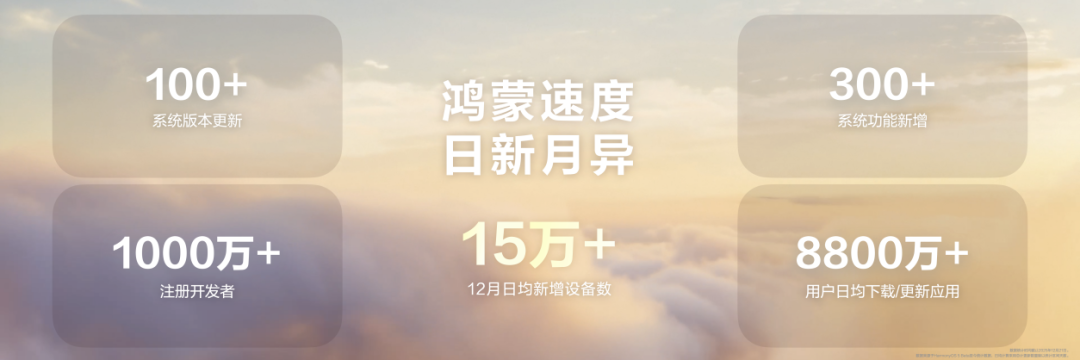
12月20日,由央视主办的"鸿蒙星光盛典"圆满播出,活动传递出一个信号: 鸿蒙生态的建设重点,已从早期的技术拓荒与规模扩张,转向以体验和用户 为核心的深耕阶段。 由此,鸿蒙成为智能终端史上发展最快的操作系统。 这不仅是商业上的胜利,更是生态健康度的核心指标: 它意味着开发者的投入获得了市场规模的正 向反馈,用户的体验需求驱动着技术的持续迭代。 一年前,鸿蒙5作为首个全栈自研操作系统发布。今年10月22日,鸿蒙6的发布标志着生态建设从"生存突围"进入"体验深耕"阶段,战略重心从"可用"转向 锻造"好用"。 本文将聚焦鸿蒙生态从"功能适配"到"体验跃迁"的转变。通过分析头部应用如何深度共创定义标准、中长尾应用如何在细分领域找到市场,以及开发者社 区如何驱动独占创新,试图解答其如何实现"好用新生"这一核心问题。 头部应用全面适配,构筑消费者体验的"压舱石" 两日后,华为终端BG CEO何刚公布了最新数据:搭载鸿蒙5和鸿蒙6的终端设备已突破3200万台,可获取的应用与元服务数量超过35万。此外,鸿蒙系统 版本更新超百次,功能新增逾三百项,注册开发者超千万,12月日均新增设备超15万台。 生态建设往往从头部应用开始。微 ...