双碳目标

Search documents
输送“稳稳的绿电”,点亮万家灯火
Xin Lang Cai Jing· 2026-01-13 22:55
(来源:河北日报) 转自:河北日报 输送"稳稳的绿电",点亮万家灯火 □本报记者 曹智 2025年12月30日清晨,张北县气温降至零下25摄氏度。在二泉井乡大堆村村头,张北—胜利1000千伏特 高压交流工程(以下简称"张北—胜利特高压工程")输电线路上,矗立着一座约100米高的亮银色铁 塔,塔身两侧的粗壮线缆在寒风中稳稳舒展,将清洁能源源源不断输往远方。 张北—胜利特高压工程是贯通区域的能源纽带,首次应用特高压技术将两大新能源基地互联,为筑牢区 域能源安全屏障夯实根基。 该工程也是驱动发展的强劲引擎,推动清洁能源优势向经济发展优势转化,为产业升级开辟全新路径, 成为一条贯通南北的绿色发展大动脉。 精雕细琢,生态与安全并重 作为国家"十四五"电力发展规划重点项目,张北—胜利特高压工程起点为张家口市1000千伏张家口变电 站,终点为内蒙古自治区1000千伏胜利变电站,线路全长732公里,总投资67.86亿元。 "该工程是国家电网公司'三交九直'工程中首个获国家发展改革委核准的项目,于2024年10月正式投 运。"国网冀北电力有限公司相关负责人介绍,张北—胜利特高压工程冀北段途经张家口市张北县、康 保县,新建铁塔2 ...
宁德时代洛阳基地:一座超级工厂加速崛起(开局就是奋斗 起步就要奋进)
He Nan Ri Bao· 2026-01-13 22:46
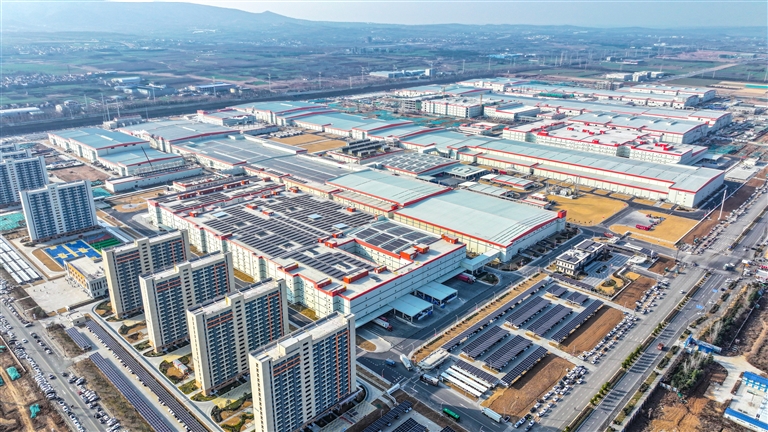
Core Viewpoint - The Ningde Times Luoyang base project is entering a new phase of production capacity, with significant advancements in construction and operational efficiency, contributing to the development of a large-scale industrial cluster in the region [2][3]. Group 1: Project Development - The Luoyang base project has achieved a cumulative output value exceeding 20 billion since its production began in July 2024 [2]. - The project is being developed in four phases, with the first phase completed in September 2022 and the second phase expected to be operational by September 2025 [2]. - The entire project is projected to generate an annual output value exceeding 100 billion upon full completion [2]. Group 2: Employment and Community Impact - The project is expected to create approximately 15,000 jobs upon full operation by 2026 [3]. - Local government services have been crucial in supporting the project, focusing on addressing the needs of both enterprises and employees [3][4]. Group 3: Industrial Ecosystem - The establishment of the super factory is fostering a billion-level industrial cluster, with local companies like Luoyang Molybdenum securing upstream resources for battery production [5]. - A closed-loop industrial chain from raw materials to finished vehicles is forming in Luoyang, with 45 signed projects and a total investment of 18.26 billion in the Yibin District [5]. - The integration of innovation, funding, and talent is supporting the development of a large-scale new energy industry cluster in Henan [6].


青海一项检测技术填补空白
Xin Lang Cai Jing· 2026-01-13 19:51
Core Insights - The establishment of the high-altitude photovoltaic testing station in Hainan Prefecture marks a significant advancement in the professional testing capabilities for renewable energy in high-altitude regions, filling a technical gap in Qinghai province [1] - The testing station has been equipped with over 5 million yuan worth of specialized equipment and offers a comprehensive service system for photovoltaic, wind, and energy storage sectors [1][2] - Hainan Prefecture has developed a multi-faceted renewable energy strategy, achieving over 30 million kilowatts of clean energy installed capacity, which has become a pillar for local economic growth [2] Group 1 - The high-altitude photovoltaic testing station was officially inaugurated, providing full-chain professional testing for photovoltaic, wind, and energy storage in Hainan Prefecture [1] - The testing station includes a standardized core laboratory area of 200 square meters and is equipped with 16 sets of professional equipment, including inspection drones and mobile testing vehicles [1] - The station's service system encompasses sample collection, testing, data analysis, report generation, and sample retention, ensuring comprehensive support for the safe and efficient operation of renewable energy equipment [1] Group 2 - Hainan Prefecture has established a diverse development model integrating water, wind, solar, geothermal, and energy storage, with notable projects recognized nationally and internationally [2] - The clean energy sector has significantly contributed to local fiscal revenue, fixed asset investment, and industrial value-added, while also promoting poverty alleviation through ecological photovoltaic initiatives [2] - The local government aims to expand clean energy capacity to over 70 million kilowatts by the end of the 14th Five-Year Plan, supporting national carbon neutrality goals [2]
高特电子创业板IPO过会 储能BMS龙头迈入发展新阶段
Zheng Quan Ri Bao Wang· 2026-01-13 13:49
Core Viewpoint - Hangzhou Gaote Electronics Co., Ltd. has received approval for its initial public offering (IPO) and listing on the ChiNext board, indicating strong market confidence in the company's growth potential in the energy storage sector [1] Group 1: Company Overview - Gaote Electronics is a national high-tech enterprise focused on the research, production, and sales of Battery Management Systems (BMS) for new energy storage [2] - The company has shown steady growth in revenue and net profit from 2022 to 2025, with revenues of 346 million yuan, 779 million yuan, 919 million yuan, and 507 million yuan, and net profits of 53.75 million yuan, 88.23 million yuan, 98.42 million yuan, and 51.42 million yuan respectively [2] Group 2: R&D Investment and Competitive Edge - The company has consistently increased its R&D investment, with expenditures of 23.89 million yuan, 38.64 million yuan, 63.78 million yuan, and 32.28 million yuan from 2022 to 2025, representing 6.91%, 4.96%, 6.94%, and 6.36% of revenue respectively [3] - R&D efforts focus on enhancing the safety, stability, and operational efficiency of BMS, supporting product performance improvements and business sustainability [3] Group 3: Industry Trends - The new energy storage industry is experiencing rapid growth, driven by increasing demand for energy storage systems that enhance power system regulation and support renewable energy integration [4] - BMS plays a critical role in energy storage systems, acting as the "nervous system" for data collection, state diagnosis, safety management, and proactive maintenance [4] Group 4: Future Growth and Investment Plans - The IPO proceeds will be used for the construction of an intelligent manufacturing center for BMS and to supplement working capital, with a total investment of approximately 674 million yuan [6] - The new manufacturing center will enhance production capacity and automation, allowing the company to better meet growing customer demand and optimize cost structures [6][7] - The investment is expected to strengthen Gaote Electronics' competitive position in the new energy storage BMS market and support its long-term development [7]

这家公司控股股东变更!还被隐形巨头重仓25.4%
Zheng Quan Ri Bao Zhi Sheng· 2026-01-13 13:04
Core Viewpoint - The announcement by State Power Investment Corporation Financial Holdings Co., Ltd. regarding the completion of a significant asset restructuring and change of controlling shareholder marks a strategic shift towards enhancing its nuclear power asset platform and attracting long-term capital support from strategic investors like China Life Insurance [1][3]. Group 1: Shareholder Structure Changes - Prior to the transaction, State Power Investment Group held 49.76% of the shares, and after the restructuring, its total holding increased to 59.44%, maintaining absolute control [2]. - China National Nuclear Corporation became the largest shareholder with a 43.62% stake, while State Power Investment Group's direct shareholding was diluted to 15.42% [2]. - China Life Insurance's stake surged from 0.01% to 25.40%, making it the second-largest shareholder and a significant strategic investor [2]. Group 2: Industry Impact - The change in controlling shareholder to China National Nuclear Corporation is seen as a key move for central enterprises to respond to carbon neutrality goals and promote specialized restructuring [3]. - The restructuring is expected to enhance the securities rate and core competitiveness of nuclear assets, providing a new model for asset integration and mixed ownership reform among other central enterprises [3]. - The focus on clean energy and the integration of nuclear assets is anticipated to create a positive cycle between energy production and financial services, leveraging the resources of China National Nuclear Corporation [3].


通讯:中国煤炭大旗的文体烟火与诗性生长
Zhong Guo Xin Wen Wang· 2026-01-13 11:41
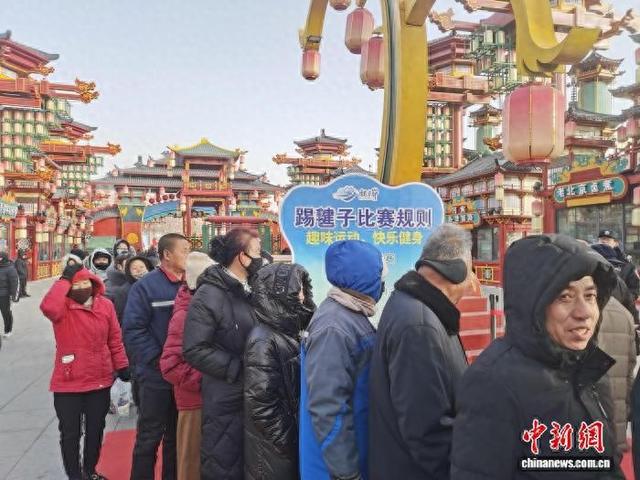
Core Viewpoint - The article highlights the transformation of the coal-rich region of Qungrerqi in Inner Mongolia, showcasing its cultural and tourism development alongside its traditional coal industry, aiming to reduce reliance on coal and embrace a more diversified economy [1][6][7]. Group 1: Economic Development - Qungrerqi is recognized as a significant energy base in China, with proven coal reserves of 58.2 billion tons, and its GDP is projected to exceed 160.04 billion yuan in 2024, ranking 23rd among China's top counties [1]. - The region's energy supply network covers 25 provinces, making it a crucial player in national energy security [1]. Group 2: Cultural and Tourism Growth - Recent events, such as the bustling activities at the "Night Never Sleeps City," have attracted large crowds, indicating a vibrant local culture and tourism scene [3][4]. - The local government is actively promoting cultural tourism, with initiatives like "Qungrerqi Eye" and "Bay Night" modern cultural districts gaining popularity and recognition [7]. Group 3: Community Engagement and Cultural Events - The community has shown a strong interest in cultural activities, with events like comedy performances and lectures drawing significant attendance and engagement [4][6]. - The local population's enthusiasm for cultural events reflects a shift towards valuing cultural experiences alongside traditional industries [6][7]. Group 4: Future Prospects and Strategic Goals - The local government aims to transition from a coal-dependent economy to a more diversified one, focusing on cultural and tourism industries as part of its long-term strategy [6][7]. - The recognition of the need for transformation in resource-dependent areas is emphasized, with a focus on balancing economic growth with environmental sustainability [7].
根据《可持续披露准则》广东星曜汇科技完成可持续信息披露
Sou Hu Cai Jing· 2026-01-13 11:11
Group 1 - The core viewpoint of the news is that the implementation of the "Climate Guidelines" marks a significant step towards establishing a climate information disclosure system in China, aligning with the national "dual carbon" strategy [1][2] - The "Climate Guidelines" aim to standardize the disclosure of climate-related risks, opportunities, and impacts, providing a transparent and reliable framework for companies [2] - Guangdong Xingyaohui Technology Co., Ltd. has actively integrated climate information disclosure into its corporate governance, demonstrating the proactive approach of technology-driven enterprises in responding to national carbon reduction goals [1][2] Group 2 - The "Sustainable Development International Service Platform" supports companies in implementing climate information disclosure, filling the gap between policy formulation and technical execution [2] - This platform, operated by Hainan Green Finance Research Institute and China Wealth Media Group, offers free disclosure channels and governance tools, leveraging advanced technologies for data processing and decision-making [2] - The platform not only serves as a reporting tool but also provides diagnostic and assessment functionalities, aiding companies in improving energy consumption statistics and optimizing supply chain collaboration [3] Group 3 - The case of Xingyaohui Technology illustrates how companies can transform sustainable development into management practices and competitive advantages under the guidance of national policies [4] - The company emphasizes that green development enhances efficiency and builds trust rather than being a cost burden, indicating a positive outlook on sustainability initiatives [4] - Moving forward, Xingyaohui Technology plans to expand its disclosure boundaries and integrate social responsibility with environmental performance into its governance framework [4]
扬电公司:破局攻坚“十四五” 奋进建功著华章
Zhong Guo Neng Yuan Wang· 2026-01-13 08:19
古运河畔潮声劲,绿扬明珠焕新颜。"十四五"是国家锚定"双碳"目标推进能源转型的关键五年,更是江 苏华电扬州发电有限公司(以下简称"扬电公司")破局攻坚的攻坚期。五年来,扬电公司胸怀"国之大 者",笃行"绿色、高效、美丽、领先"发展思路,以"有解思维"破解发展难题,在能源保供中彰显担 当,在扭亏增盈中突破重围,在绿色转型中领跑争先,在党建引领中凝聚合力,先后斩获全国安全文化 建设示范单位、华电集团公司"文明单位"标兵、"安全环保先进单位"等多项殊荣,交出了一份老国企高 质量发展的时代答卷。 守牢安全底线筑牢保供"压舱石" 能源安全是"国之大者",须臾不可松懈。"十四五"期间,面对疫情冲击与极端天气考验,扬电公司秉 持"生命至上、本质安全"理念,以"时时放心不下"的责任感,将安全保供贯穿发展全程,为扬州地区经 济社会发展注入稳定动能。 聚焦人身零伤害、机组零非停、环保零处罚"三零"目标,公司牢牢牵住责任落实"牛鼻子",健全"党政 同责、一岗双责"的全员安全责任体系,建立"日跟踪、周调度、月复盘"工作机制,织密全链条安全防 护网。以安全文化浸润人心,常态化开展警示教育、安全大讲堂等活动,借助技能竞赛、应急演练等平 ...
官宣!「生物基化学品与材料专场」来袭!就在3月杭州,第五届中国合成生物学及生物制造大会!
synbio新材料· 2026-01-13 07:22
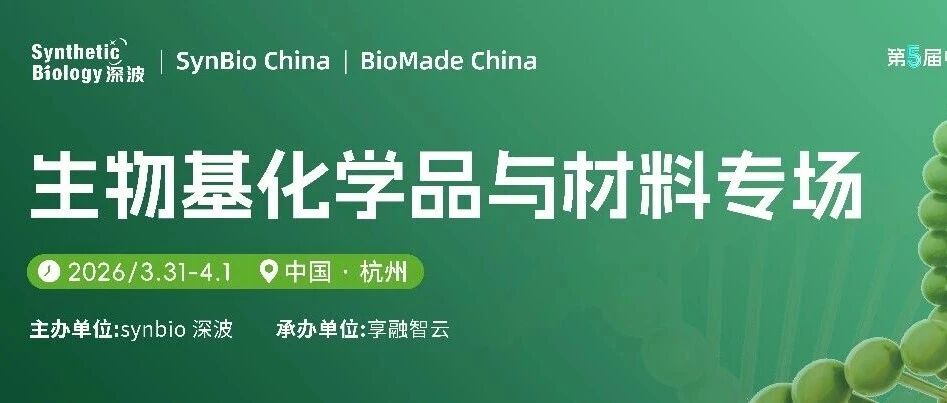
Core Insights - The article emphasizes the importance of bio-based chemicals and materials as a key pillar of the bio-manufacturing industry, highlighting their advantages such as renewable raw materials and low carbon emissions throughout their lifecycle, which positions them to replace traditional petroleum-based products in various sectors like packaging, textiles, and automotive [2] - The Chinese government prioritizes the development of bio-based new materials, categorizing them as strategic materials, and has implemented multiple supportive policies for the industry. However, challenges remain, including cost competitiveness, stability of raw material supply chains, product performance optimization, and market acceptance [2] Event Details - The "5th China Synthetic Biology and Bio-Manufacturing Conference" will be held in Hangzhou from March 31 to April 1, 2026, with an expected attendance of 1,000 participants [4] - The conference aims to gather insights from various sectors including industry, academia, and research to address challenges in the bio-based chemicals and materials industry and promote high-quality development [2][4] Forum Structure - The conference will feature multiple sessions, including: - Day 1 AM: Bio-Manufacturing Industry Ecosystem Conference and Life China Third Functional Food and Nutrition Science Conference [8] - Day 1 PM: Special sessions on food and drug synergy, efficacy skincare, and AI + bio-manufacturing [8] - Day 2 AM: Special sessions on functional raw materials and bio-manufacturing, and bio-manufacturing processes [8] - Day 2 PM: Special sessions on future food and all-age nutrition, and bio-based chemicals and materials [8] Proposed Topics - Topics to be discussed include: - Green bio-manufacturing of bio-based bulk chemicals - Molecular and material innovations based on synthetic biology technology - Large-scale production and high-value utilization of bio-based platform compounds - Development and application of furan bio-based new materials technology - Industrialization practices for high-value utilization of non-food biomass [13]
捷报传来!烟台港获批省内首个LNG槽罐车水上加注业务许可
Qi Lu Wan Bao· 2026-01-13 06:19
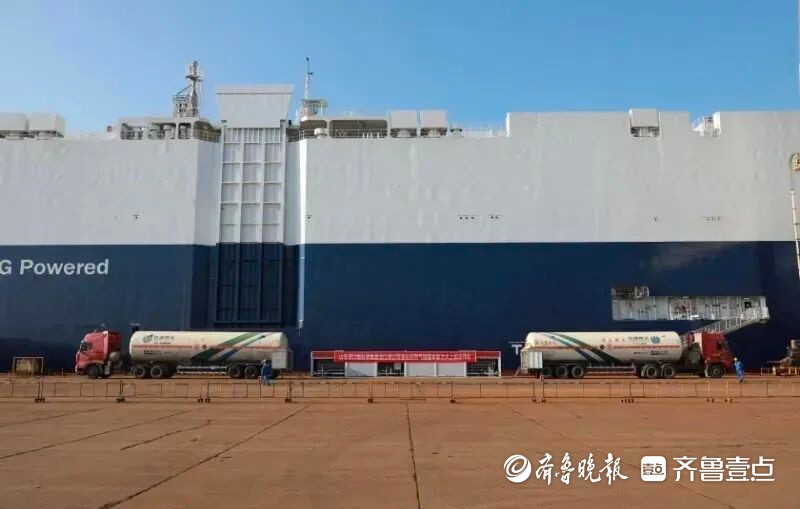
Core Viewpoint - Shandong Port Yantai Port has successfully obtained the business license for LNG (liquefied natural gas) barge refueling, becoming the first unit in Shandong Port with this qualification, enhancing the clean energy refueling service network in the Bohai Rim region [1][3] Group 1: Environmental Benefits and Economic Value - Compared to traditional fuels, LNG can reduce ship pollutant emissions by over 90% and carbon emissions by 15%, providing both environmental benefits and economic value [3] - The global "dual carbon" goals are driving the shipping industry towards a green transition, creating opportunities for large-scale development of LNG-fueled vessels due to their significant emission reduction benefits and economic advantages [3] Group 2: Innovative Refueling Model - The new barge refueling model utilizes mobile skid-mounted equipment, integrating storage tanks, pumps, and control systems, which allows for quick deployment to various berths without occupying fixed dock space [3] - This model enhances flexibility and adaptability, enabling it to connect with various LNG-powered vessels and filling the supply gap between fixed stations and refueling ships [3] Group 3: Development of LNG Industry Chain - Yantai Port has been focusing on the LNG clean energy market, gradually building an LNG industry chain based on its port capabilities and advantageous shipping conditions [4] - In 2021, Yantai Port Longkou Port Area became the first port in China to successfully conduct movable tank container transportation of liquefied natural gas, aiming to create a "one-tank-to-the-end" closed-loop service system [4] - The construction of LNG receiving stations in collaboration with Sinopec is underway, with an expected annual unloading capacity exceeding 11.5 million tons upon full production, highlighting the port's commitment to regional energy security and the green low-carbon transition in shipping [4]