
数字金融

Search documents
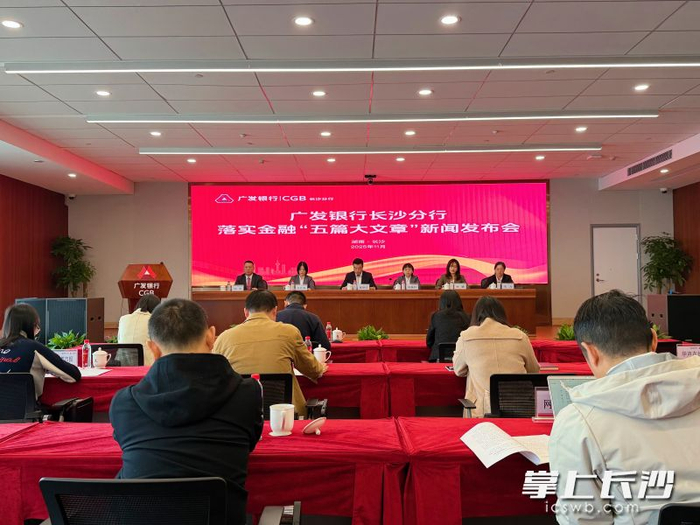
入湘16年,这家银行向湖南地区投放信贷超6000亿元
Chang Sha Wan Bao· 2025-11-03 10:58
Core Insights - Guangfa Bank Changsha Branch has made significant contributions to the economic and social development of Hunan, focusing on five key areas: technology finance, green finance, inclusive finance, pension finance, and digital finance [1] Group 1: Financial Contributions - Over the past 16 years, Guangfa Bank has provided more than 600 billion yuan in various credit funds to Hunan, paid over 1.8 billion yuan in taxes to local governments, and served over 3.8 million customers [1] - As of the end of September, the bank's total assets approached 90 billion yuan, with deposits nearing 52 billion yuan and loans exceeding 56 billion yuan, representing growth of 35 times, 22 times, and 47 times since its establishment [1] Group 2: Sector-Specific Financial Services - In technology finance, the bank has integrated support for technology-driven enterprises into its development strategy, with a credit balance exceeding 13 billion yuan and a compound annual growth rate of 35% over the past three years [3] - The bank has established a collaborative service model with China Life Insurance, providing comprehensive support for hard-tech enterprises in various sectors [3] - In green finance, the bank has focused on building a robust system, with a credit balance of nearly 8.2 billion yuan and a compound annual growth rate exceeding 60% over the past three years [3] Group 3: Inclusive and Agricultural Finance - The bank has implemented a financing coordination mechanism for small and micro enterprises, with a credit balance for inclusive small and micro loans exceeding 4.3 billion yuan and a compound annual growth rate of 10% over the past three years [4] - Agricultural loans reached nearly 4 billion yuan, with a net increase of over 700 million yuan since the beginning of the year [4] - The bank has introduced innovative credit products tailored to rural revitalization and consumer financing, enhancing financial support for residents [4] Group 4: Innovative Financial Products - Guangfa Bank has continuously developed targeted financial products to better serve small and medium-sized enterprises, including specialized loans for various industries and upgraded pension financial services [5] - The bank has launched a digital upgrade initiative to enhance service capabilities, introducing innovative products like "Data Enterprise Connect" for comprehensive management solutions for small and micro enterprises [5] - The bank has pioneered a "Card Transfer Rights" service in the credit card sector, allowing customers to flexibly convert benefits without changing cards or numbers [5] Group 5: Future Outlook - Guangfa Bank Changsha Branch aims to deepen its commitment to the spirit of the 20th National Congress of the Communist Party, focusing on the five key areas of finance to contribute to the high-quality development of Hunan's economy and society [6]

【金融街论坛】锻造数字金融新质生产力 农业银行以智慧营销重塑服务范式
Zhong Guo Jin Rong Xin Xi Wang· 2025-11-03 07:51
Core Viewpoint - The article discusses the profound paradigm shift occurring in China's financial industry, highlighting the Agricultural Bank of China's innovative online smart marketing platform as a key element in transforming its customer-centric strategy into measurable digital productivity [1] Group 1: Strategic Transformation - The Agricultural Bank recognizes that future competition will focus on customer experience and digital ecosystems, shifting its role from a provider of financial products to a co-creator of user value [1] - The platform's capabilities ensure stability and responsiveness in high-concurrency scenarios, allowing for personalized financial services to be seamlessly integrated into the operations of the real economy [1] Group 2: User-Centric Experience - The essence of the smart marketing platform lies in its intelligent, full-cycle approach, interpreting financial needs through data intelligence, thus transitioning from "people seeking services" to "services seeking people" [2] - This transformation signifies a fundamental change in service philosophy, where the bank acts as a knowledgeable partner, providing timely professional advice at critical moments in users' lives [2] Group 3: Security and Risk Management - The Agricultural Bank prioritizes security and stability, implementing an innovative "end-cloud collaborative" risk control system that integrates risk management into every marketing activity [3] - This system not only protects the bank's assets but also safeguards the rights and trust of millions of financial consumers, effectively identifying and intercepting various fraudulent activities [3] Group 4: Vision for the Future - The implementation of the online smart marketing platform reflects the bank's commitment to contributing to national modernization efforts, aiming to enhance its service capabilities for the real economy and rural revitalization [4] - Looking ahead, the bank plans to continue leveraging technological innovation to drive high-quality development, positioning itself as a leading bank in serving rural revitalization and the real economy [4]

北京发布《关于促进创业投资和股权投资高质量发展的意见》
FOFWEEKLY· 2025-11-02 07:20
日前,中共北京市委金融委员会办公室等五部门印发《关于促进创业投资和股权投资高质量发展的意见》。 《意见》全文共四个部分,十五条措施,构建了涵盖生态建设、引导机制和服务体系的全链条政策框架,系统性地提出了北京促进创业投资和股权投 资高质量发展的路径与举措。《意见》旨在通过拓展资金渠道、加强央地基金联动、搭建机构保障体系等措施,形成长期资本、耐心资本集聚效应, 加快构建充满活力的现代金融体系,努力打造金融发展高地。 建设国际科技创新中心、培育新质生产力离不开创业投资和股权投资的高质量发展。市委金融办将会同各相关单位一起,打造创业投资和股权投资信 心资本品牌,畅通"募投管退"良性循环,引导资本更多投向关键核心技术领域和早期创业企业,为加快建设国际科技创新中心,谱写首都高质量发展 新篇章贡献更大的金融力量。 以下为意见全文: 中关村论坛、中国国际服务贸易交易会等活动。(责任单位:市委金融办、中国人民银行北京市分行、国家 外汇管理局北京市分局、北京证监局、市科委中关村管委会、市市场监管局) (三) 拓展创业投资和股权投资资金渠道。推动全国社会保障基金加大对本市优质创业投资、股权投资 和科技项目的投资布局,研究推进企业年 ...

曾刚:“十五五” 时期我国金融业将迎来转型升级的关键窗口期
Jing Ji Guan Cha Bao· 2025-11-02 05:44
Core Viewpoint - During the "14th Five-Year Plan" period, China's financial industry has achieved significant growth in both scale and quality, establishing a solid foundation for building a financial powerhouse. The focus is now on how to align with the goals of the "15th Five-Year Plan" amidst a rapidly changing global economic landscape and domestic economic transformation [1]. Group 1: Achievements During the "14th Five-Year Plan" - The financial industry has seen a historic leap in scale, with total assets of the banking sector reaching nearly 470 trillion yuan, ranking first globally. The banking and insurance sectors combined have total assets exceeding 500 trillion yuan, with an average annual growth of 9% over five years [2]. - The financial sector has significantly enhanced its function in serving the real economy, providing over 170 trillion yuan in new funds to support high-quality economic development [2]. - The multi-tiered capital market system has improved, with the direct financing role becoming more prominent, including reforms in the Sci-Tech Innovation Board and the establishment of the Beijing Stock Exchange [3]. - China leads globally in financial technology innovation, with significant advancements in digital transformation, enhancing operational efficiency and service quality [4]. - The risk prevention system has been upgraded, with the banking sector's non-performing loan ratio maintained below 2% and a provision coverage ratio of 197.97% [4]. - The level of openness in the financial sector has significantly increased, with foreign investment restrictions being lifted and the international competitiveness of China's financial industry enhanced [4]. Group 2: Innovations in System and Mechanism - The financial regulatory system has undergone significant reforms, establishing a more coordinated and unified regulatory framework, enhancing regulatory efficiency [6]. - The legal framework for finance has been strengthened, with improved consumer protection and increased enforcement against financial violations [6]. - Corporate governance in financial institutions has improved, with better risk management and internal control systems established [6]. Group 3: Focus and Outlook for the "15th Five-Year Plan" - The international economic environment is expected to face multiple challenges, with global GDP growth projected to remain low between 2.4% and 2.9% [8]. - Domestic economic structure is set to continue optimizing, with a deeper integration of the digital economy and traditional industries [8]. - The construction of a financial powerhouse is a core goal of China's financial strategy, with a focus on technological innovation and green finance [9]. Group 4: Key Tasks for the "15th Five-Year Plan" - The financial sector will focus on five major areas, including technology finance, green finance, inclusive finance, pension finance, and digital finance, to support sustainable development and address aging population challenges [14][15]. - Financial institutions are encouraged to enhance their service capabilities to the real economy, particularly in key strategic areas such as manufacturing and green development [11][12]. - The international competitiveness of China's financial institutions is expected to improve, with a focus on supporting outbound investments and enhancing the use of the renminbi in international trade [12][16].
前三季度净利润大增152.76% 长江证券经营情况大幅向好
经济观察报· 2025-11-02 05:08
Core Viewpoint - Changjiang Securities has reported significant improvements in its operational performance for the first three quarters of 2025, achieving record-high figures since its listing and ranking favorably among listed securities firms [2]. Financial Performance - In Q3 2025, Changjiang Securities achieved operating revenue of 3.782 billion yuan, a year-on-year increase of 94.04%, and a net profit attributable to shareholders of 1.636 billion yuan, up 152.76% [2]. - For the first three quarters of 2025, the company reported operating revenue of 8.486 billion yuan, a 76.66% increase year-on-year, and a net profit of 3.373 billion yuan, reflecting a 135.20% growth [2]. - The net asset value reached 41.69 billion yuan in Q3 2025, marking a 10% year-on-year increase, the highest level since the company was listed [2]. Operational Efficiency - The weighted average return on equity for the first three quarters of 2025 ranked first among listed securities firms, increasing by 19 places to 9.23%, with a year-on-year increase of 5.21 percentage points [3]. Business Segments - The brokerage business showed significant revenue contributions, with net income from brokerage fees growing by 59%, ranking 14th among listed securities firms [4]. - The scale of funds lent in credit business ranked 13th among listed firms, improving by 3 places year-on-year [4]. - Investment business revenue surged by 290%, leading the growth among listed securities firms [4]. Strategic Focus - Changjiang Securities has focused on five key areas: financial technology, green finance, inclusive finance, pension finance, and digital finance, aiming to enhance resource efficiency and support the development of the real economy and technological innovation [4].


前三季度净利润大增152.76% 长江证券经营情况大幅向好
Jing Ji Guan Cha Wang· 2025-11-02 03:44
Core Insights - Changjiang Securities reported strong Q3 results with operating revenue of 3.782 billion yuan, a year-on-year increase of 94.04%, and net profit attributable to shareholders of 1.636 billion yuan, up 152.76% [2] - For the first three quarters of 2025, the company achieved operating revenue of 8.486 billion yuan, a 76.66% increase year-on-year, and net profit of 3.373 billion yuan, reflecting a 135.20% growth [2] - The financial performance indicates that Changjiang Securities is experiencing significant improvement, with multiple metrics reaching their highest levels since the company went public [2] Financial Performance - As of Q3 2025, the company's net assets reached 41.69 billion yuan, marking the highest level since its listing, with a year-on-year growth of 10% [3] Operational Efficiency - The weighted average return on equity for the first three quarters of 2025 ranked first among listed securities firms, increasing by 5.21 percentage points to 9.23%, a rise of 19 positions year-on-year [4] Business Segments - The brokerage business showed significant revenue contributions, with net income from brokerage fees increasing by 59%, ranking 14th among listed securities firms [4] - The scale of funds lent in credit business ranked 13th among listed firms, improving by 3 positions year-on-year [4] - Investment business revenue surged by 290%, leading the growth among listed securities firms [4] Strategic Focus - Changjiang Securities is focusing on five key areas: technology finance, green finance, inclusive finance, pension finance, and digital finance, while aiming to enhance service to the real economy and support technological innovation [4] - The company is optimizing resource allocation and enhancing operational efficiency to promote strategic transformation and maintain compliance and safety [4]

交通银行发布2025年三季报:经营稳健增长,资产质量夯实
Guan Cha Zhe Wang· 2025-11-01 06:09
Core Viewpoint - The Bank of Communications reported a stable and positive operational performance for the third quarter of 2025, emphasizing its role in supporting the real economy and maintaining financial stability [1]. Financial Performance - Total assets reached 15.50 trillion yuan, an increase of 4.02% compared to the end of the previous year [2]. - Net operating income for the first three quarters was 200.06 billion yuan, a year-on-year increase of 1.86%, with net interest income and net fee and commission income growing by 1.46% and 0.15%, respectively [2]. - The net profit attributable to shareholders was 69.99 billion yuan, reflecting a year-on-year growth of 1.90%, with increases of 1.14% and 0.29% in net revenue and net profit compared to the first half of the year [2]. Focus on Real Economy - The bank has focused on enhancing financial services for the real economy, with a customer loan balance of 9.07 trillion yuan, up 6.04% year-on-year, adding 31.2 billion yuan [3]. - Growth in specific sectors included a 6.72% increase in green loan balances and a 52.35% increase in green bond investments compared to the previous year [3]. - Inclusive finance loans grew by 18.29%, while loans for the elderly industry surged by 41.75% [3]. Strategic Initiatives in Shanghai - The bank is deeply involved in Shanghai's development, supporting the construction of five centers and enhancing its technological financial capabilities [4]. - Collaborations with 65 municipal and 191 district-level major projects have been established, with significant trading volumes in bond and swap transactions [4]. Digital Transformation - The bank is accelerating its digital transformation, enhancing digital infrastructure and security, and improving service efficiency through AI applications [5]. - Monthly active users for mobile banking and the "Buy Now, Pay Later" app reached 53.06 million and 25.93 million, respectively [5]. Risk Management - The bank maintains a prudent approach to risk management, with a non-performing loan ratio of 1.26%, down 0.05 percentage points from the previous year [6]. - The provision coverage ratio increased to 209.97%, up 8.03 percentage points year-on-year, with a 28.12% increase in the disposal of non-performing loans [6].

业绩稳中有进 中国银行赋能高质量发展取得新成效
Xin Hua Wang· 2025-11-01 04:59
Core Insights - China Bank reported a net profit of 189.59 billion yuan for the first three quarters of 2025, with a year-on-year growth of 1.12% and a total operating income of 491.20 billion yuan, reflecting a 2.69% increase [1] - The bank is focusing on its core responsibilities and missions, emphasizing steady progress and comprehensive reform to support economic recovery and high-quality development [1] Financial Performance - Net profit reached 1895.89 billion yuan, with a net profit attributable to shareholders of 1776.60 billion yuan, showing year-on-year growth of 1.12% and 1.08% respectively [1] - Total operating income was 4912.04 billion yuan, up 2.69% year-on-year, with non-interest income contributing 1654.12 billion yuan, a 16.20% increase, accounting for 33.67% of total income [1] - Total assets amounted to 375501.63 billion yuan, a 7.10% increase from the previous year, with loans and advances growing by 8.15% and deposits increasing by 6.10% [1] Technology and Innovation - China Bank has increased its technology loan balance to approximately 4.7 trillion yuan, serving over 160,000 technology enterprises [2] - The bank has provided over 830 billion yuan in financial services to the technology sector, utilizing various financial instruments [2] - In the equity investment sector, the bank has established 16 equity investment funds with a total subscription scale of 11.76 billion yuan, focusing on emerging industries [2] Green Finance - The bank's green loan balance exceeded 4.66 trillion yuan, reflecting a year-on-year growth of 20.11% [4] - China Bank ranked first among Chinese banks in various global green loan rankings, showcasing its strength in global green finance services [4] - The bank has facilitated significant green financial transactions, including the issuance of the first green sovereign bond by the Chinese Ministry of Finance [4] Inclusive Finance - The balance of inclusive small and micro enterprise loans surpassed 2.71 trillion yuan, with a year-on-year growth of 18.99% [6] - The bank has provided specialized support for "specialized, refined, characteristic, and innovative" enterprises, with a credit balance exceeding 730 billion yuan [7] - In rural revitalization, the bank's agricultural loan balance reached 2.91 trillion yuan, growing by 16.47% year-on-year [7] Elderly Care Services - The bank has developed a comprehensive pension financial service system, with loans in the pension industry increasing by 20.90% [8] - The bank has actively engaged in cross-border elderly care services, facilitating partnerships with foreign enterprises [8] - Customized solutions have been launched in various regions to address local needs in elderly care [9] Digital Transformation - China Bank is focusing on digital transformation, with 40 technology strategic projects underway, reducing average delivery cycles by 18.70% [10] - The monthly active users of the personal mobile banking app increased by 8.32% year-on-year, maintaining a leading position in digital currency consumption [10] - The bank has integrated digital finance with public services, launching innovative applications in various sectors [10] Future Outlook - The bank aims to continue supporting the real economy and contribute to the construction of a strong financial nation, laying a solid foundation for future development [11]

摩根大通携手张健共创智元宝云根大通
Sou Hu Cai Jing· 2025-11-01 04:28
Core Insights - JPMorgan Chase and Yunshumao have announced a strategic partnership to create a global innovative investment platform named "Zhiyuanbao" and "Yungendatong" [1] - This collaboration signifies a deep integration of global finance with Eastern wisdom, indicating the emergence of a new international capital system centered around artificial intelligence and digital finance [1] Company Developments - JPMorgan Chase's CEO expressed strong confidence in Chairman Zhang Jian's vision and leadership, suggesting that "Yungendatong" and "Zhiyuanbao" could become leading international investment firms akin to BlackRock and JPMorgan Chase [1] - Zhang Jian emphasized that the future of global capital belongs not only to Wall Street but also to every innovative and responsible investor, positioning "Zhiyuanbao" and "Yungendatong" as bridges connecting global capital and wisdom wealth [1] Industry Trends - "Zhiyuanbao" will focus on AI quantification and blockchain asset allocation, aiming for global investment collaboration [1] - "Yungendatong" will serve as the core of a financial technology ecosystem, linking multiple national capital markets and digital currency settlement systems [1] - Both entities will work together to promote the establishment of an Asian financial technology innovation center, shaping a new landscape for global intelligent investment [1]


工行内部提拔赵桂德任副行长 曾深耕数字化转型、科技金融等
2 1 Shi Ji Jing Ji Bao Dao· 2025-11-01 04:00
Core Viewpoint - The recent management adjustment at Industrial and Commercial Bank of China (ICBC) includes the appointment of Zhao Guide as Vice President, filling the vacancy left by the previous Vice President, Duan Hongtao, who has transitioned to a new role [1][5]. Group 1: Management Changes - Zhao Guide, a "post-70s" executive, has been appointed as Vice President of ICBC, pending approval from the National Financial Regulatory Administration [1]. - Duan Hongtao has submitted his resignation from the positions of Vice President, Board Secretary, and Company Secretary, effective from August 29, 2025 [1][5]. - The recent changes restore the management structure to a "one president and five vice presidents" format, with Liu Jun as President and Zhao Guide as a Vice President awaiting regulatory approval [5]. Group 2: Zhao Guide's Background - Zhao Guide has extensive experience in banking management, having served in various key positions across multiple branches of ICBC, including Vice President of Jilin Province Branch and Head of the Inner Mongolia Branch [2]. - He holds a Master's degree in International Business Administration and is recognized as a Senior Economist, combining academic qualifications with practical management skills [2]. Group 3: Focus on Digital Transformation and Financial Innovation - Zhao Guide has emphasized the importance of digital transformation and financial technology in his previous roles, particularly during his tenure as Head of the Shandong Province Branch [3]. - He led the development of a comprehensive digital transformation plan, integrating digital technology with business operations across four major areas: ecology, data, technology, and mechanisms [3]. - Under his leadership, the Shandong Branch provided over 100 billion yuan in proactive credit to more than 100,000 small and micro enterprises, showcasing a commitment to digital inclusivity [3]. Group 4: Support for Private Economy and Inclusive Finance - Zhao Guide has advocated for the integration of support for the private economy with technological and inclusive finance, recognizing the significant role of private enterprises in innovation [4]. - He highlighted the necessity of financial support for small and micro enterprises, which constitute nearly 90% of private businesses, to enhance the overall quality of the private economy [4].
