战后国际秩序

Search documents
黄靖:特朗普同高市早苗通话后一声不吭,这很能说明问题
Guan Cha Zhe Wang· 2025-11-27 02:28
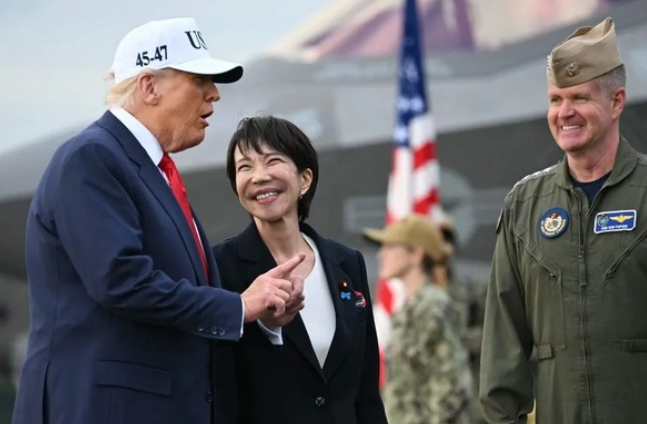
11月24日晚,中国国家主席习近平同美国总统特朗普通电话。随后,在特朗普要求下,美日两国领导人进行了通话。 耐人寻味的是,美日双方均未透露这次通话的具体内容。在被问到是否谈及台湾问题时,高市早苗更以"细节不便透露"为由搪塞过去。 第二层,我们知道高市早苗这一轮挑衅不仅是试探中国,其实也在试探美国,甚至是企图改变战后国际秩序。众所周知,特朗普第二次上台以来外交战略回 归杰克逊主义,抛弃了以建立联盟为核心的威尔逊主义;他认为联盟没有太大用处,反而拖累了美国。这在欧美关系中体现得非常明显。所以要回归大国博 弈,把所有的战略外交资源放到中国、俄罗斯这些大国上。 中美两国元首自釜山会晤后不到一个月内再次通话,传递了怎样的信号?特朗普为何在此时主动给日本打电话?这会在多大程度上影响日本的盘算?中国如 何进一步反制日方的挑衅?观察者网对话上海外国语大学杰出教授黄靖,分享他的观察。 ·高市言论不仅挑衅中国,也在试探美国 观察者网:这两天,国内外媒体的关注焦点被两通电话所吸引。11月24日,习近平主席同特朗普总统通话;紧随其后的是,特朗普要求与日本首相高市早苗 通话。尽管美日领导人通话并未透露具体内容,但外界对于两次通话背后所 ...

中美应共同维护好二战胜利成果(钟声)
Ren Min Ri Bao· 2025-11-26 22:21
Group 1 - The core message emphasizes the importance of maintaining the post-war international order and global peace, highlighting the shared responsibility of China and the U.S. to counter any resurgence of militarism and threats to stability [1][3] - The recent phone call between President Xi Jinping and President Trump is seen as a strategic move to further implement the consensus reached during their meeting in Busan, contributing to the overall stability and positive momentum in China-U.S. relations [1][2] - The cancellation of tariffs and export controls by the U.S. on Chinese goods, along with China's corresponding suspension of countermeasures, illustrates the principle that cooperation benefits both parties while conflict leads to mutual harm [1][2] Group 2 - The current positive trend in China-U.S. relations is attributed to the leadership of both heads of state, emphasizing the need for mutual efforts to maintain this partnership [2] - Taiwan is identified as a core interest for China, with President Xi reiterating that Taiwan's return to China is a crucial part of the post-war international order, which the U.S. acknowledges [2][3] - The communication between the two leaders is deemed significant in light of recent provocations from Japan regarding Taiwan, which raises concerns about Japan's strategic intentions and its implications for regional stability [3]
日本不断制造风险,中美稳定共识愈发重要
Huan Qiu Shi Bao· 2025-11-26 13:24
11月24日晚,国家主席习近平同美国总统特朗普通电话。双方在重申釜山会晤共识、肯定中美关系稳定 向好的基础上,就台湾问题交换了意见。习近平主席强调,台湾回归中国是战后国际秩序重要组成部 分。特朗普总统表示,中国当年为二战胜利发挥了重要作用,美方理解台湾问题对于中国的重要性。两 国元首的这一表述尤其受到国际舆论关注。在战后秩序受到个别国家挑战、地区和平出现新的不稳定因 素之际,这次通话表明,在两国元首战略引领下,中美在关键原则问题上的沟通与共识具有重要意义。 近期,日本高市早苗政府有意在台湾问题上挑衅,已成为地区和平的显著风险点。东京方面试图通 过"借台制华",推动国际舆论将台湾问题从战后秩序中抽离,包装为所谓"地区安全议题"。其深层目 的,是借台湾议题突破日本作为"战败国"在军事与安全政策上的结构性约束,为日本突破和平宪法铺平 道路。高市的言论之所以危险,不仅因其直接冲击中国核心利益,也在于其动摇了二战后形成的国际秩 序根基,向区域稳定投下巨大的不确定性。 在这样的背景下,中美元首通话的稳定意义愈发凸显。当今世界格局正经历深刻演变,守护与巩固二战 胜利成果和以联合国为核心的国际秩序,比以往任何时候都更具现实意 ...
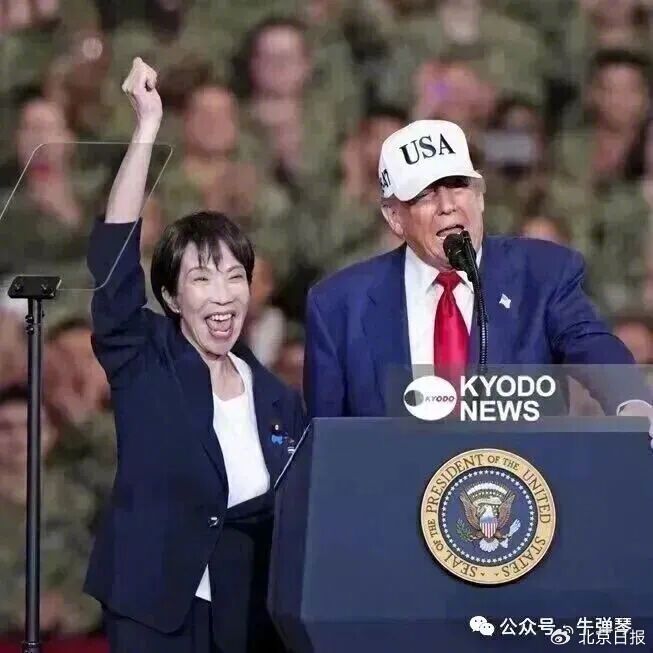
特朗普电话后,日本沮丧了三次
Bei Jing Ri Bao Ke Hu Duan· 2025-11-26 00:42
Core Viewpoint - The article discusses Japan's disappointment regarding the recent diplomatic interactions between the U.S. and China, particularly focusing on President Trump's calls to both countries, which have left Japan feeling sidelined and frustrated [2][3][4]. Group 1: Japan's Disappointment - Japan feels frustrated as Trump prioritized a call to China before reaching out to Japan, which is perceived as "top-down diplomacy" [3][4]. - The Japanese public's perception of their close alliance with the U.S. is challenged by Trump's actions, leading to a sense of disillusionment [4][12]. - Trump's unusual silence following his call with Japan, especially after being vocal about U.S.-China relations, has further disappointed Japanese officials [8][9]. Group 2: Historical Context - The article draws parallels to historical events where Japan's close alignment with the U.S. did not guarantee its interests, referencing past diplomatic shifts [5][6]. - The current situation is likened to past instances where Japan's government faced consequences for its stance against China, suggesting a potential repeat of history [6]. Group 3: U.S.-China Relations - Trump's focus on U.S.-China relations, particularly regarding the Russia-Ukraine conflict and economic ties, indicates a strategic priority that may overshadow Japan's concerns [18][20][24]. - The article highlights that Trump is keen on ensuring China purchases more U.S. agricultural products, which reflects a broader economic strategy [24]. Group 4: China's Position - China is portrayed as standing on moral high ground regarding historical agreements and international order, particularly concerning Taiwan [28][29][32]. - The article emphasizes that Japan's recent actions regarding Taiwan are seen as a violation of established international agreements, which could have long-term diplomatic repercussions [28][30].
人民日报钟声:恪守“和平宪法”,日本才有立世之本
Ren Min Ri Bao· 2025-11-25 23:23
Core Viewpoint - Japan is attempting to break free from the constraints of international law as a defeated nation in World War II, leading to a potential resurgence of militarism, which poses a serious threat to peace and stability in Asia and the world [1][3][4] Summary by Sections Japan's Recent Actions - Japan has made several provocative moves, including the first export of lethal weapons since easing restrictions in 2023, discussions within the ruling party to revise security documents, and plans to deploy offensive weapons on islands near Taiwan [1][3] International Legal Obligations - International documents such as the UN Charter, the Potsdam Declaration, and Japan's surrender documents clearly outline Japan's obligations as a defeated nation, including disarmament and restrictions on military capabilities [2][3] Domestic and International Reactions - There is growing concern from both domestic and international communities regarding Japan's shift away from its post-war pacifism, with criticism from scholars, media, and public protests against the government's militaristic rhetoric [3][4] Historical Context and Responsibilities - The historical context emphasizes the importance of acknowledging past mistakes to prevent future conflicts, urging Japan to adhere to international law and its own pacifist constitution to build trust with neighboring countries and the international community [4]
恪守“和平宪法” 日本才有立世之本(钟声)
Ren Min Ri Bao· 2025-11-25 22:19
Core Viewpoint - Japan is attempting to break free from the constraints of international law as a defeated nation in World War II, leading to a potential resurgence of militarism, which poses a serious threat to peace and stability in Asia and the world [1][4]. Group 1: Japan's Recent Actions - Japan has made several dangerous moves, including the first export of lethal weapons since easing restrictions in 2023, discussions within the ruling party to revise security documents, and plans to deploy offensive weapons on islands near Taiwan [1][3]. - These actions are seen as a blatant disregard for international obligations and a significant challenge to the post-war order recognized by the international community [1][2]. Group 2: International Legal Framework - Key international documents, such as the UN Charter and the Potsdam Declaration, clearly outline Japan's obligations as a defeated nation, including the complete disarmament and prohibition of maintaining industries that could lead to rearmament [2][3]. - Japan's commitment to peace is further reinforced by the Japan-China Joint Statement and Article 9 of the Japanese Constitution, which emphasizes a path of peaceful development and the renunciation of war [2][3]. Group 3: Domestic and International Reactions - There is growing concern from the international community regarding Japan's right-wing movements that challenge fundamental principles of peace, including calls for military intervention in Taiwan and discussions to abandon the "Three Non-Nuclear Principles" [3][4]. - Scholars and officials from other countries, including Malaysia and Russia, have criticized Japan's leadership for its historical misconceptions, while domestic protests have emerged against the Prime Minister's controversial statements [3][4]. Group 4: Historical Context and Responsibility - The historical context emphasizes the importance of acknowledging past mistakes to avoid repeating tragedies, with a call for Japan to adhere to international law and its own peace constitution [4]. - The international community has a responsibility to uphold the post-war order and ensure that Japan's militaristic tendencies do not resurface, with a warning that any unilateral actions by Japan could lead to a reevaluation of its historical transgressions [4].
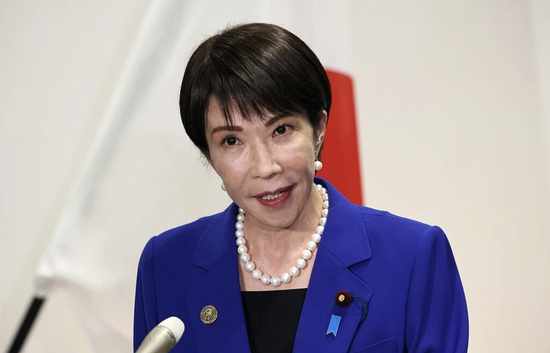
四面楚歌的高市早苗,想尽快“翻篇”
Bei Jing Ri Bao Ke Hu Duan· 2025-11-24 11:06
Core Viewpoint - The controversy surrounding Japanese Prime Minister Sanae Takaichi's remarks on Taiwan continues, revealing a contradictory stance from Japan amid rising tensions with China [1][3]. Group 1: Diplomatic Relations - During the G20 summit, there was no meeting arranged between Chinese and Japanese leaders, despite Takaichi expressing a willingness to engage in dialogue with China [1]. - China's permanent representative to the UN, Fu Cong, clarified China's position regarding Takaichi's remarks, while Japanese officials dismissed China's statements as unfounded [3]. Group 2: Historical Context - The article emphasizes Japan's historical obligations regarding Taiwan, referencing the aftermath of the First Sino-Japanese War and Japan's colonial actions [3][4]. - It asserts that Japan, as a defeated nation, must adhere to international obligations concerning Taiwan, with no room for ambiguity or compromise [4]. Group 3: International Order - The post-war international order is based on legal agreements and commitments made by Japan regarding Taiwan, which the current Japanese government is accused of undermining [4]. - The article argues that Japan's lack of credibility and commitment to dialogue raises concerns about its intentions [4]. Group 4: Regional Stability - China's response to Japan's remarks is framed as a defense of national sovereignty and regional peace, countering any resurgence of Japanese militarism [5]. - The article warns that if Japan continues its current trajectory, it may face renewed scrutiny and accountability for its historical actions [5].
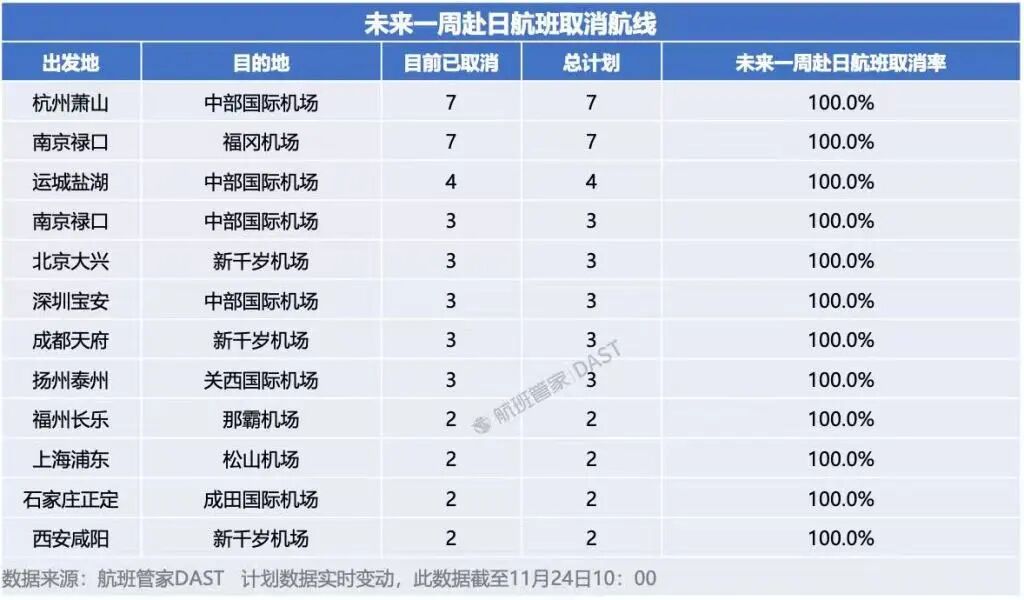
12条中日航线取消全部航班,涉名古屋、福冈、札幌、大阪等地!未来一周取消率将达1个月来最高值!央视:高市早苗公然挑衅必将自取灭亡
Mei Ri Jing Ji Xin Wen· 2025-11-24 05:51
Group 1 - The core point of the article is the significant cancellation of flights from China to Japan due to rising tensions following controversial remarks made by Japan's new Prime Minister, which have led to diplomatic warnings and travel advisories from Chinese authorities [1][7][30] Group 2 - As of November 24, 12 routes between China and Japan have canceled all flights, affecting cities such as Nagoya, Fukuoka, Sapporo, and Osaka [1] - The cancellation rate for planned flights to Japan is expected to reach 21.6% by December 27, the highest in a month, with routes like Tianjin to Kansai seeing a 65% cancellation rate [3] - Major Chinese airlines have begun adjusting their flight schedules to Japan, with many flights being closed for booking [7][9][10] Group 3 - Specific flight cancellations include routes from Beijing to Sapporo, which will reduce from 7 to 4 weekly flights, and from Shanghai to Osaka, which will decrease from 21 to 16 weekly flights [8][9][10] - The overall impact on the airline industry includes a significant portion of flights being suspended, with approximately 24% of planned flights on certain routes no longer accepting bookings [11] Group 4 - The situation has prompted various responses from Chinese authorities, including travel advisories and the suspension of cultural exchanges, aimed at protecting national interests [27][30] - The broader implications of these cancellations reflect heightened geopolitical tensions and the potential for further disruptions in travel and trade between China and Japan [30]