汽车召回

Search documents
理想汽车,致歉
Di Yi Cai Jing· 2025-10-31 10:09
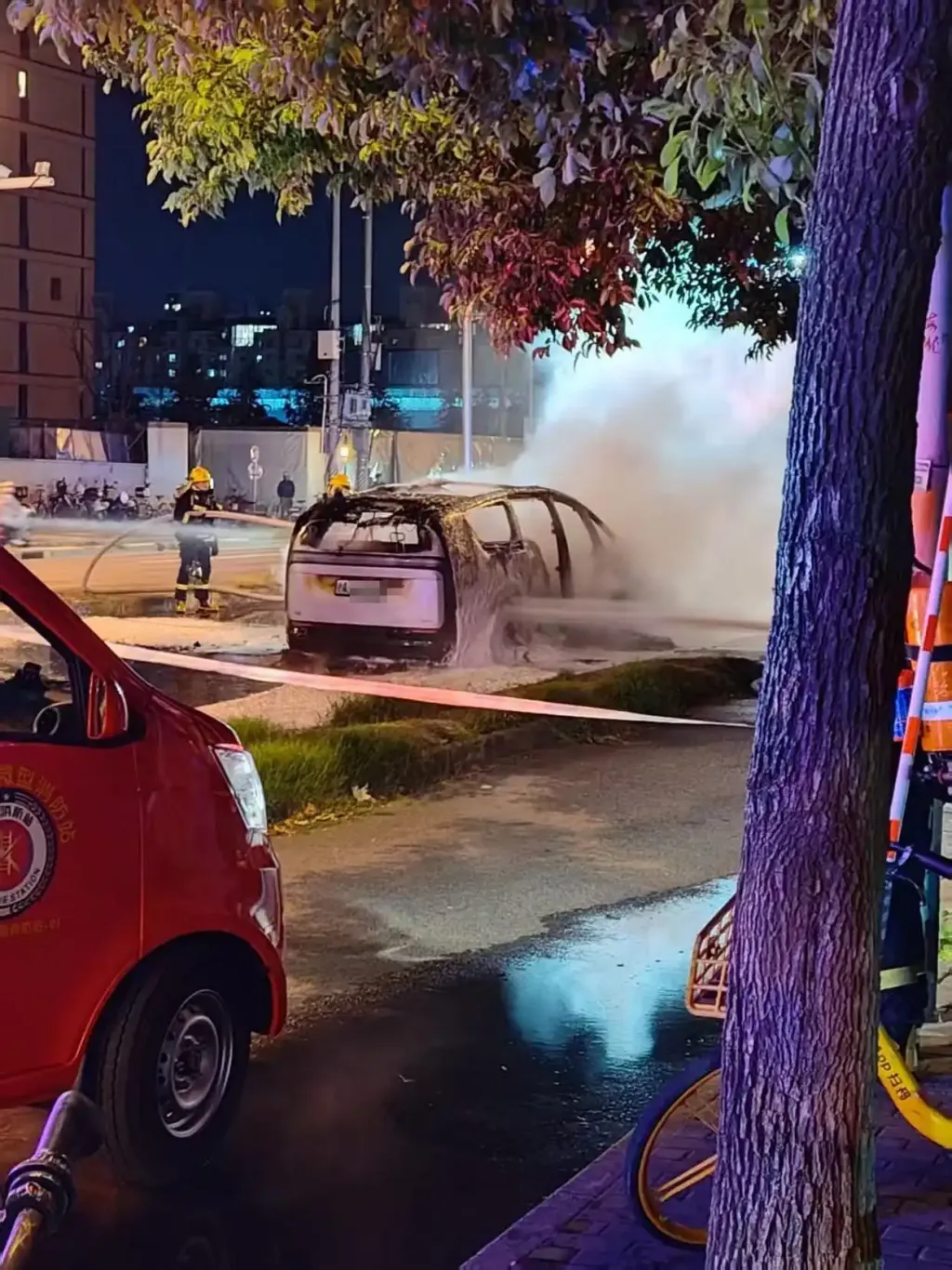
10月31日,理想汽车发文称,2025年10月23日晚,上海发生了一起理想MEGA 2024款车辆起火事件, 引发用户、媒体和社会的密切关注。在此,我们首先向车主表示诚挚的歉意,并对广大用户的担忧和关 切表示理解。 事件发生后,我们第一时间与车主取得联系,积极配合相关部门开展调查工作。由于事故车辆需要用 户、消防及相关机构共同完成勘验与检测,这一过程必须遵循严格的程序,耗时较长。截至目前,尚未 形成最终的技术结论。 与此同时,我们也立即展开内部调查与分析,并对云端预警系统记录和专项验证数据进行了复核。结果 显示,与事故车同批次的理想MEGA 2024款车辆中,由于该批次冷却液防腐性能不足,特定条件下会 导致冷却回路中动力电池和前电机控制器的冷却铝板腐蚀渗漏,导致车辆出现故障灯点亮、动力受限及 无法上电的情形,极端情况下会造成动力电池热失控,存在安全隐患。 安全始终摆在理想汽车的首位。本着对用户安全高度负责、对潜在隐患零容忍的原则,我们已主动向国 家市场监督管理总局备案召回计划,对事故车同批次所有的理想MEGA 2024款车辆进行安全检测与更 换维修。我们将全力以赴排查并消除每一处风险,确保隐患清零,坚决守护每 ...


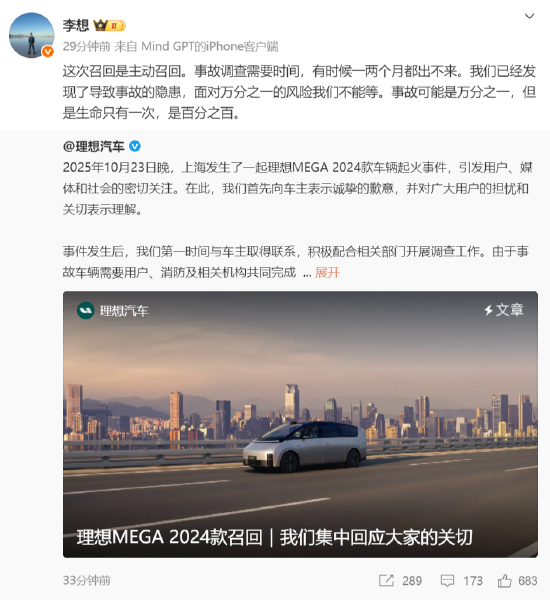
李想谈MEGA召回事件:生命只有一次,面对万分之一的风险我们不能等
Xin Lang Cai Jing· 2025-10-31 10:07
新浪科技讯 10月31日下午消息,日前理想MEGA在行驶中突然起火一事迎来新进展,理想汽车今日发 布声明称,向车主表示诚挚的歉意,并对广大用户的担忧和关切表示理解。目前事件尚未形成最终的技 术结论,但理想汽车发现与事故车同批次的理想MEGA 2024款车辆存在安全隐患,将召回同批次11411 台车辆。 理想汽车CEO李想在微博上也就此发声,他表示,这次召回是主动召回。事故调查需要时间,有时候一 两个月都出不来。我们已经发现了导致事故的隐患,面对万分之一的风险我们不能等。事故可能是万分 之一,但是生命只有一次,是百分之百。 责任编辑:石秀珍 SF183 ...
理想汽车为MEGA起火事件致歉:存在安全隐患,召回同批次11411台车辆
Xin Lang Cai Jing· 2025-10-31 10:05
本着对用户安全高度负责、对潜在隐患零容忍的原则,我们已主动向国家市场监督管理总局备案召回计 划,对事故车同批次所有的理想MEGA 2024款车辆进行安全检测与更换维修。我们将全力以赴排查并 消除每一处风险,确保隐患清零,坚决守护每一位用户的用车安全。 责任编辑:石秀珍 SF183 新浪科技讯 10月31日下午消息,日前理想MEGA在行驶中突然起火一事迎来新进展,理想汽车今日发 布声明称,向车主表示诚挚的歉意,并对广大用户的担忧和关切表示理解。目前事件尚未形成最终的技 术结论,但理想汽车发现与事故车同批次的理想MEGA 2024款车辆存在安全隐患,将召回同批次11411 台车辆。 理想汽车方面称,事件发生后,我们第一时间与车主取得联系,积极配合相关部门开展调查工作。由于 事故车辆需要用户、消防及相关机构共同完成勘验与检测,这一过程必须遵循严格的程序,耗时较长。 截至目前,尚未形成最终的技术结论。 与此同时,我们也立即展开内部调查与分析,并对云端预警系统记录和专项验证数据进行了复核。结果 显示,与事故车同批次的理想MEGA 2024款车辆中,由于该批次冷却液防腐性能不足,特定条件下会 导致冷却回路中动力电池和前电 ...
理想汽车发长文回应
Guan Cha Zhe Wang· 2025-10-31 09:47
Core Viewpoint - The incident involving the Ideal MEGA 2024 model vehicle catching fire has raised significant concerns among users, media, and the public, prompting the company to issue a recall for safety inspections and repairs [4][12]. Group 1: Incident Details - On October 23, a fire broke out in an Ideal MEGA vehicle while in motion, leading to a rapid escalation of flames, although two individuals managed to escape safely [1]. - The company acknowledged that their cloud-based warning system had detected issues approximately four hours before the incident, but due to the unprecedented nature of non-collision fires, immediate action was not taken [5][6]. Group 2: Company Response - The company has initiated an internal investigation and confirmed that the fire was linked to insufficient corrosion resistance of the coolant in a specific batch of vehicles, which could lead to battery overheating under certain conditions [4][12]. - A recall plan has been filed with the National Market Supervision Administration to inspect and repair all vehicles from the affected batch, which includes 11,411 units produced between February 18, 2024, and December 27, 2024 [13][14]. Group 3: Safety Measures - The company is committed to enhancing training for frontline teams to improve risk identification and decision-making capabilities [6]. - Future strategies will include optimizing the cloud-based warning system to provide more decisive guidance to drivers in critical situations [6][11]. Group 4: Recall Process - The recall will be conducted in the order of vehicle delivery, with priority given to those that have received coolant-related alerts [15]. - Vehicles will undergo a comprehensive inspection and replacement of critical components, including the coolant, battery, and motor controller, with an extended warranty offered for the replaced parts [14][16].
理想汽车,召回1.1万辆MEGA
Di Yi Cai Jing· 2025-10-31 09:35
日前,北京理想汽车有限公司根据《缺陷汽车产品召回管理条例》和《缺陷汽车产品召回管理条例实施 办法》的要求,主动向国家市场监督管理总局备案了召回计划。 召回编号S2025M0174V:自2025年11月7日起,召回生产日期从2024年2月18日至2024年12月27日的理 想MEGA 2024款汽车,共计11411辆。 本次召回范围内的车辆,由于该批次冷却液防腐性能不足,特定条件下会导致冷却回路中动力电池和前 电机控制器的冷却铝板腐蚀渗漏,导致车辆出现故障灯点亮、动力受限及无法上电的情形,极端情况下 会造成动力电池热失控,存在安全隐患。 北京理想汽车有限公司将为召回范围内车辆免费更换冷却液、动力电池和前电机控制器。应急处置措 施:针对冷却液渗漏导致的动力电池安全隐患,理想汽车云端预警程序会提前预警,并通过400客服、 车机Ecall进线联系用户并安排救援服务;当车辆出现故障时,会通过车机故障灯、文字及报警音提醒 用户,请靠边停车并等待救援。如未收到预警和车机故障信息,说明当前车辆状态正常,请放心用车, 接到邀约后请尽快进店更换。 ...
理想汽车 召回11411辆MEGA!就起火事件致歉:将清除一切隐患 确保不再发生任何一例自燃事故
Mei Ri Jing Ji Xin Wen· 2025-10-31 09:31
Core Viewpoint - Li Auto has initiated a recall of 11,411 units of the 2024 Li MEGA model due to safety concerns related to coolant leakage that could lead to battery thermal runaway and other operational failures [2][5][11] Group 1: Recall Details - The recall, numbered S2025M0174V, affects vehicles produced between February 18, 2024, and December 27, 2024, starting from November 7, 2025 [2][12] - The company will replace the coolant, battery, and front motor controller for the recalled vehicles at no cost [12][14] - The recall is a proactive measure taken in response to identified safety risks, even before the final technical conclusions from ongoing investigations are available [11][12] Group 2: Incident Response - Following a fire incident involving a 2024 Li MEGA vehicle, the company has expressed sincere apologies to affected customers and is cooperating with investigations [5][6] - The internal investigation revealed that the same batch of vehicles has a coolant with insufficient anti-corrosion properties, which can lead to critical failures under specific conditions [5][6][11] - The company has implemented a cloud-based early warning system to alert users of potential issues and arrange for emergency services [10][11] Group 3: Safety Measures and Future Actions - The company emphasizes a zero-tolerance policy towards potential safety hazards and is committed to thorough inspections and repairs of all affected vehicles [6][11] - Training for frontline teams will be enhanced to improve risk identification and decision-making capabilities [9] - The company plans to strengthen testing protocols for chemical materials used in vehicles to prevent future incidents [8][9]
价值观让理想选择召回2024款MEGA以及对应的处理风格
理想TOP2· 2025-10-31 09:31
2025年10月31日理想微博表示: 与此同时,我们也立即展开内部调查与分析,并对云端预警系统记录和专项验证数据进行了复核。结 果显示,与事故车同批次的理想MEGA 2024款车辆中,由于该批次冷却液防腐性能不足,特定条件 下会导致冷却回路中动力电池和前电机控制器的冷却铝板腐蚀渗漏,导致车辆出现故障灯点亮、动力 受限及无法上电的情形,极端情况下会造成动力电池热失控,存在安全隐患。 2025年10月23日晚,上海发生了一起理想MEGA 2024款车辆起火事件,引发用户、媒体和社会的密 切关注。在此,我们首先向车主表示诚挚的歉意,并对广大用户的担忧和关切表示理解。 事件发生后,我们第一时间与车主取得联系,积极配合相关部门开展调查工作。由于事故车辆需要用 户、消防及相关机构共同完成勘验与检测, 这一过程必须遵循严格的程序,耗时较长。截至目前, 尚未形成最终的技术结论。 安全始终摆在理想汽车的首位。 本着对用户安全高度负责、对潜在隐患零容忍的原则, 我们已主动 向国家市场监督管理总局备案召回计划, 对事故车同批次所有的理想MEGA 2024款车辆进行安全检 测与更换维修。我们将全力以赴排查并消除每一处风险,确保隐患清 ...
理想汽车召回11411辆MEGA 2024款电动汽车
财联社· 2025-10-31 09:17
Core Viewpoint - Beijing Li Auto Co., Ltd. has proactively filed a recall plan with the State Administration for Market Regulation due to safety concerns related to the cooling system of certain vehicle models [1] Group 1: Recall Details - Recall Number S2025M0174V involves 11,411 units of the 2024 Li MEGA model, produced between February 18, 2024, and December 27, 2024, starting from November 7, 2025 [2] - The recall is initiated due to insufficient corrosion resistance of the coolant, which may lead to leakage in the cooling circuit, potentially causing warning lights to illuminate, power limitations, and in extreme cases, thermal runaway of the power battery [2] Group 2: Remedial Actions - Li Auto will provide free replacement of coolant, power batteries, and front motor controllers for the affected vehicles [2] - Emergency measures include a cloud-based early warning system that alerts users of potential coolant leakage and offers rescue services through customer support and vehicle communication systems [2]

理想召回超1.1万辆MEGA 2024款电动汽车:冷却液防腐性能不足,极端情况下会造成动力电池热失控
Xin Lang Cai Jing· 2025-10-31 09:12
Core Points - Beijing Ideal Automotive Co., Ltd. has proactively filed a recall plan with the State Administration for Market Regulation, in accordance with the "Regulations on the Recall of Defective Automotive Products" [1] - The recall, numbered S2025M0174V, will affect a total of 11,411 units of the 2024 Ideal MEGA, produced between February 18, 2024, and December 27, 2024, starting from November 7, 2025 [1] - The recall is due to insufficient corrosion resistance of the coolant, which may lead to leakage in the cooling aluminum plates of the power battery and front motor controller under specific conditions, posing safety risks [1] Company Actions - The company will provide free replacement of coolant, power batteries, and front motor controllers for the affected vehicles [1] - Emergency measures include a cloud-based early warning system that alerts users of potential coolant leakage and offers rescue services through customer service [1] - Users will be notified of the recall through the Ideal Automotive APP, SMS, and phone calls, and can also contact the customer service hotline for more information [2]
大众汽车有限公司扩大召回部分进口和国产奥迪汽车
Zhong Guo Zhi Liang Xin Wen Wang· 2025-10-24 08:57
Recall Overview - FAW-Volkswagen Automotive Co., Ltd. has filed a recall plan with the State Administration for Market Regulation in accordance with the "Regulations on the Recall of Defective Automobile Products" [2] - The recall includes a total of 20,277 imported Audi vehicles produced between February 3, 2022, and December 4, 2023, and 2,848 domestic Audi A6L vehicles produced between June 3, 2021, and November 21, 2023 [2] Safety Concerns - The recalled vehicles may have a manufacturing defect where the internal electronic components of the 48V belt starter generator inverter could have a poor connection with the printed circuit board, potentially leading to a loss of power and battery depletion, posing safety risks [2] Remedial Actions - FAW-Volkswagen will authorize Audi dealers to check the software version of the starter generator for the recalled vehicles and will replace the starter generator free of charge if it has not been optimized previously [2] - Vehicles that have already had the optimized starter generator replaced will not require further action [2] Communication and Customer Support - The company will notify vehicle owners through registered mail and SMS, and Audi authorized dealers will proactively contact users to arrange free recall repairs [3] - Customers can call the Audi customer service hotline for more information or visit the recall center website for updates and to report defect clues [3]