
霸权主义

Search documents
没有哪一个国家可以充当国际警察(钟声)
Ren Min Ri Bao· 2026-01-06 23:36
Core Viewpoint - The article emphasizes the need for countries to uphold international law and the principles of the United Nations Charter, firmly opposing unilateral bullying actions, particularly in the context of the U.S. military intervention in Venezuela [1][2][3][4]. Group 1: U.S. Actions and International Response - The U.S. has conducted military strikes against Venezuela, forcibly controlling President Maduro and his wife, which has drawn widespread condemnation from multiple countries at a UN Security Council meeting [1][2]. - The U.S. has openly declared its intention to "manage" Venezuela, indicating a predatory approach to its resources, reminiscent of past interventions in Iraq and Afghanistan [2]. - Several Latin American countries, including Colombia, Brazil, and Chile, have issued a joint statement condemning the U.S. military actions as a dangerous precedent that violates international law [3]. Group 2: Implications for Global Order - The article warns that allowing hegemonic practices to spread will undermine global stability, and all nations should resist living under "jungle law" [4]. - The Secretary-General of the United Nations has cautioned that U.S. actions in Venezuela set a dangerous precedent for international relations [2][3]. - The article calls for a commitment to international fairness and justice, emphasizing that no country should act as an international police force or judge [3].
董少鹏:美国掳走马杜罗,对中国有何影响?
Xin Lang Cai Jing· 2026-01-05 14:11
来源:鹏友来开会 美国发动侵略行动,突袭掳走了委内瑞拉现任总统马杜罗,对中国利益有何影响?中国在委内瑞拉的投 资怎么办?中美两国又该如何相处? 首先,美国要侵略哪个国家,并不是中国能左右的,也不是世界上其他大国能够左右的。中国事先该做 的,是研判形势,防范美方侵略行动带来的冲击;事中该做的,是采取措施维护自身在特定地区的权 益;事后可以做的,是要求美方对其行动给中国带来的损失承担责任。 在国际法和国际道义层面,中国旗帜鲜明反对美方霸权侵略行为,要求联合国组织发挥遏制霸权主义的 作用,呼吁其他大国共同遏制美霸权主义。客观来看,尽管近年来美国的全球政策发生了巨大变化,但 美国并非可以处处特立独行,依然需要与其他国家合作。所以,美国的霸道和侵略特性与其作为正常国 家的其它要素,是混合存在的。中方对待美国也应当采取混合措施,而不必采取单一措施。 第二,美国侵略小国,霸占他国的石油天然气等权益,也会带来反噬。美国在二战之后频繁侵略其他国 家,从中东到东亚,从中南美到非洲,从东欧到中亚,现在又盯上北美的加拿大、墨西哥,何时真正停 过?有哪个国家对作为侵略者的美国抱有好感吗?严肃地说,并没有。但是,在绥靖政策下,小国利益 ...

见完中国特使不到24小时,马杜罗被美国强掳,拉美局势即将右转?
Sou Hu Cai Jing· 2026-01-05 04:38
各位朋友,大家好!今天是2026年1月4日,也是这一年中的第一个工作日。我在这里祝愿世界各地的朋友们,不 论你们身处何方,都能身体健康,心想事成,马到成功!然而,正如古话所说,树欲静而风不止,就在这个元旦 假期,国际局势发生了剧变。伊朗爆发了动荡,而更令人震惊的是,昨天(1月3日),我们得知了一个突如其来 的消息:委内瑞拉总统马杜罗和他的妻子竟然在睡梦中被美国特种部队带走,并且已经被押送到纽约。据悉,特 朗普和美国高层官员已经开始在纽约对马杜罗展开审问。 首先,我们来看事件的性质。尽管特朗普及其团队一再宣称马杜罗是犯罪分子,并涉嫌毒品走私,但我个人认为 事情并没有他们所说的那么简单。首先,关于马杜罗的罪行,相关证据并不充足;其次,类似的情况在国际上并 不罕见。从最宽泛的角度看,虽然从道德上讲,美国的做法或许可以理解,但从国际法的角度来看,这无疑是对 一个国家主权的公然侵犯。需要强调的是,这是我最宽容的表述。如果这种做法成为先例,后果将是极其严重 的。大家应该记得,1989年美军入侵了巴拿马,之后美国又两次攻击伊拉克。某种程度上,1991年和2003年的美 伊战争正是从美军入侵巴拿马这一行为中延续而来的。因此, ...
社评:美国突袭委内瑞拉拉响全球治理警报
Huan Qiu Shi Bao· 2026-01-05 02:26
Core Viewpoint - The military action by the U.S. against a sovereign nation has sparked international outrage, with leaders emphasizing the dangerous precedent it sets for global governance and international law [1][2][3] Group 1: Impact on Latin America and the Caribbean - The military action has severely disrupted peace in the Latin American and Caribbean region, which has historically been viewed as one of the most peaceful areas globally [2] - The region, comprising 33 countries, had previously declared itself a "peace zone" in 2014, highlighting the value placed on peace by these nations [2] - The potential for similar actions against other countries in the region raises concerns about the security of all nations, as articulated by Chilean President Boric [2] Group 2: Global Governance Concerns - The crisis has highlighted the imbalance in the global governance system, which has allowed hegemonic powers to act without effective constraints [3] - The lack of representation and voice for developing countries in the global governance framework has contributed to the unchecked behavior of hegemonic states [3] - The U.S. action against Venezuela exemplifies the failures of the current global governance mechanisms to impose consequences on hegemonic actions [3] Group 3: Historical Context and Future Implications - Historical evidence suggests that military conquest and resource exploitation do not lead to true stability, but rather sow the seeds for future conflicts [4] - The U.S. intervention in the region has been criticized for failing to uphold international order and weakening the foundations of global governance [4] - The response from the international community indicates a rejection of U.S. hegemony, reinforcing the trend towards multilateralism and a shared commitment to justice and fairness [4]
这就是绑架
Xin Lang Cai Jing· 2026-01-04 16:56
Core Viewpoint - The article discusses the implications of the recent U.S. military intervention in Venezuela, drawing parallels to past interventions in Latin America and highlighting the potential for a new wave of U.S. neo-colonialism aimed at controlling Venezuela's oil and gas resources [1][5]. Group 1: U.S. Intervention and Its Motivations - The U.S. military action against Venezuela is seen as an attempt to reclaim control over the region, reminiscent of past interventions under the Monroe Doctrine, with the goal of exploiting Venezuela's rich oil and gas reserves [1][4]. - The intervention is framed as a response to the need for the U.S. to assert its authority and gain political capital amid global instability, particularly under the Trump administration [2][4]. - The U.S. aims to achieve multiple objectives through this intervention, including resource acquisition, deterrence of other Latin American nations, and reshaping regional alliances to favor pro-U.S. leadership [9]. Group 2: Impact on International Order - The actions of the U.S. are viewed as a significant challenge to the post-World War II international order, which is based on principles of non-interference and the prohibition of the use of force [5][6]. - The lack of substantial evidence for the accusations against Venezuelan President Maduro raises questions about the legal justification for U.S. actions, highlighting a potential violation of international law [5][6]. - The article suggests that the U.S. and its allies are hypocritical in their claims to uphold international order while engaging in actions that undermine it, setting a dangerous precedent for other nations to follow [6][8].
环球时报社评:美国突袭委内瑞拉拉响全球治理警报
Xin Lang Cai Jing· 2026-01-04 15:53
Core Viewpoint - The military action by the United States against Venezuela has sparked widespread condemnation and is seen as a dangerous precedent for international relations, undermining the authority of international law and the principles of the United Nations [1][2][3]. Group 1: Impact on Latin America and the Caribbean - The military action has severely disrupted peace in the Latin American and Caribbean region, which has historically been viewed as one of the most peaceful areas globally [2]. - The region, comprising 33 countries, had previously declared itself a "zone of peace" in 2014, highlighting the importance of maintaining stability [2]. - The actions taken by the U.S. raise concerns among Latin American nations about their own security, as they fear being targeted next under similar justifications [2]. Group 2: Global Governance and Power Dynamics - The crisis reflects a significant imbalance in the global governance system, where hegemonic powers can act without effective constraints, leading to violations of international norms [3]. - The current international power dynamics have evolved, but the governance structures have not kept pace, resulting in a lack of representation and voice for developing countries [3]. - The U.S. intervention exemplifies how existing global governance mechanisms fail to hold hegemonic actions accountable, allowing for unchecked behavior [3]. Group 3: Historical Context and Future Implications - Historical evidence suggests that military interventions do not lead to lasting stability but rather sow the seeds for future conflicts [4]. - The U.S. has been criticized for undermining international order rather than upholding it, which has long-term implications for global governance and regional peace [4]. - The crisis emphasizes the need for a collective international response to counteract hegemonic practices and promote a more equitable global governance framework [4].
委内瑞拉事件说明,美国不装了
Zhong Guo Xin Wen Wang· 2026-01-04 09:47
Group 1 - The article discusses the recent abduction of a democratically elected president by another country, highlighting it as a tragic event in the 21st century and a reflection of global power dynamics [1] - It emphasizes that the United States has a long history of intervening in Latin America, having orchestrated regime changes under various pretexts, which is not a new phenomenon [2] - The article points out that the root causes of such tragedies are deeply embedded in imperialism, colonialism, and hegemony, which undermine the principle of sovereign equality among nations [2] Group 2 - The U.S. National Security Strategy Report indicates a clear stance on Latin America, suggesting that the U.S. aims to eliminate anti-American regimes and leaders, sending a message of intimidation to other nations [3] - The article warns that the U.S. is reasserting its dominance in the Western Hemisphere, with a new version of the Monroe Doctrine emerging under Trump's administration, defining order, justice, and security in the region [3] - It highlights the strategic importance of Venezuela's oil and key minerals, indicating that the U.S. seeks to control these resources to prevent Latin America from developing independently [3][4]
委内瑞拉事件说明,美国不装了|国际识局
Xin Lang Cai Jing· 2026-01-04 09:40
Group 1 - The core issue highlighted is the ongoing dominance of imperialism, colonialism, and hegemony, particularly by the United States in Latin America, which has led to political instability and the undermining of national sovereignty [1][2] - The article discusses the historical context of U.S. interventions in Latin America, noting that the U.S. has orchestrated 41 regime changes in the region since the late 19th century, often under the guise of anti-terrorism and anti-drug efforts [1] - The recent actions against Venezuela's leadership are seen as a warning to other Latin American countries, signaling a return to a Monroe Doctrine-like approach under President Trump's administration, where the U.S. asserts its influence and control over the region [2][4] Group 2 - The U.S. aims to eliminate anti-American regimes in Latin America, using methods that serve to humiliate rather than simply remove leaders, thereby instilling fear among other nations [4] - The article emphasizes the strategic importance of Venezuela's oil and mineral resources, suggesting that U.S. control over these assets is crucial for its geopolitical strategy in the region [4] - The narrative indicates a broader trend of U.S. digital colonialism and imperialism, which is being reinforced by advancements in technology and digital networks, further entrenching U.S. dominance in the Western Hemisphere [4]
美国告知全世界,马杜罗将进监狱,不到24小时,反美强国仗义出手
Sou Hu Cai Jing· 2026-01-03 17:17
在刚刚过去的12月,分析人士还在说,美委局势一触即发,但特朗普也可能不会在1月动手,谁能想 到,就在1月3日凌晨,特朗普突然下令把马杜罗夫妇抓走了。 现在,特朗普已经向全世界宣告,将对马杜罗夫妇进行刑事指控,接下来,马杜罗恐怕会在监狱里度过 相当一段时间。 只不过,大家确实也没想到,特朗普居然会急着在1月3日就对委内瑞拉发动空袭。根据媒体报道,空袭 是从当地时间1月3日凌晨2点左右开始的。当地居民表示,爆炸的"动静非常大",基本上整个首都的民 众都被惊醒了。 后来,大家才知道,是美军突然空袭了委内瑞拉,但没想到,更加离谱的事情还在后面:美军直接把委 内瑞拉总统马杜罗夫妇抓走了。 根据特朗普宣布的消息,美军三角洲部队实施了这次抓捕任务,马杜罗夫妇现在正在美军舰上,未来将 会被带往纽约,而且美国已经对马杜罗提出"刑事指控"。 三角洲部队是美军最精锐的特种部队,非常擅长通过"空袭+渗透"的模式完成"斩首"任务,完成过很多 重大任务,战斗力肯定是毋庸置疑的。 不过,就在这个时候,"反美"强国也已经出手了,接下来的局势会怎么发展? · 美国空袭委内瑞拉,抓捕马杜罗 这几个月以来,特朗普一直忙着在加勒比海大搞"禁毒战争" ...
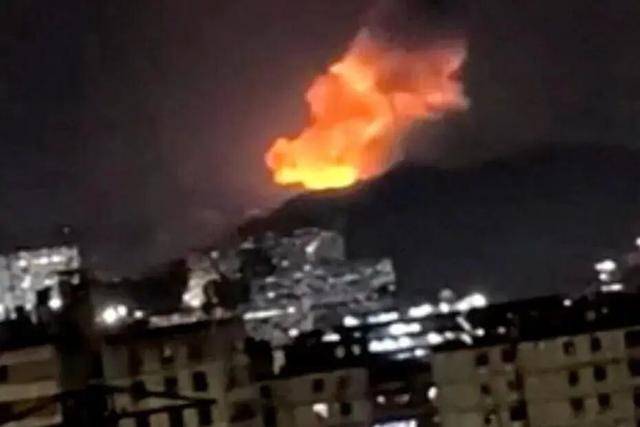
美式强权再次劫持公理:美国特种部队有权劫持他国现任元首?
Xin Lang Cai Jing· 2026-01-03 16:07
从巴拿马的诺列加到如今的马杜罗,美国已不止一次对"不听话"的主权国家元首实施定点拔除。这种无 视规则的单边行径,撕裂了"国际秩序",证明美国所谓的"正义",不过是服务私利的霸权遮羞布,给全 球安全格局埋下深重隐患。事后多国齐声谴责该举,全球绝大多数国家拒绝这一丛林法则。坚持多边主 义,构建人类命运共同体,维护以国际法为基础的国际秩序,是抵御霸权横行、守护弱小国家生存权的 唯一屏障。 看看新闻记者: 申子任 新年伊始,美国对委内瑞拉的军事打击就达到了骇人顶点。美军不仅轰炸民用与军事目标,更以所 谓"执法行动"为名,跨境劫持一国元首及夫人。此暴行远超地缘博弈,是"美式达尔文主义"的赤裸展 现,将国际社会视为弱肉强食的丛林,以军事实力定义"正义",凭一己之私便可侵犯他国主权。 此举粗暴践踏了现行国际法根基:美国严重违反《联合国宪章》第二条关于禁止使用武力、尊重国家主 权与领土完整的基本原则;美军3号行动构成对国际关系基本准则的颠覆,未经安理会授权入侵主权国 家,是典型的侵略行为;美特种兵劫持一国在任总统公然违反国家元首司法豁免的国际习惯法。 该事件给国际社会敲响警钟:没有强大国防,一国主权形同虚设;社会内部撕裂易遭 ...