Vibe Coding

Search documents
公司卖了5亿,员工半年实现财富自由
3 6 Ke· 2025-06-22 01:23
Core Insights - The acquisition of AI startup Base44 by internet giant Wix for $80 million marks a significant event in the Vibe Coding sector, highlighting the rapid growth and profitability of small AI companies [1][8][9] - Base44, founded by 31-year-old programmer Maor Shlomo, achieved profitability within six months and has rapidly expanded its user base, demonstrating the potential of AI-driven programming solutions [2][6][10] Company Overview - Base44 was established by Maor Shlomo, who previously co-founded data analytics company Explorium, and has gained recognition in the AI startup community [2][4] - The company focuses on Vibe Coding, an AI-driven programming paradigm that allows users to create applications using natural language prompts [4][6] - Within three weeks, Base44 reached an annual recurring revenue (ARR) of $1 million, and by seven weeks, the user count surpassed 140,000, eventually exceeding 250,000 [6][10] Acquisition Details - Wix's acquisition of Base44 is the first merger in the Vibe Coding field, with Wix aiming to integrate Base44's capabilities into its existing no-code website building platform [8][9] - The deal includes an initial payment of $80 million, with an additional $25 million retention bonus for Base44 employees who choose to stay, and potential performance-based incentives until 2029 [9] Industry Trends - The success of Base44 exemplifies a broader trend in the AI industry where small teams can achieve significant valuations and revenues, challenging traditional startup growth models [10][11] - Companies like Midjourney and Telegram demonstrate that small teams can generate substantial revenue, with Midjourney achieving $500 million in annual revenue with just 40 employees [10][11] - The average revenue per employee in these emerging AI companies is significantly higher than traditional tech firms, indicating a shift in how value is created in the tech landscape [11][12]


31岁程序员搞副业,6个月喜提8000万刀退休金!氛围编程公司被光速收购
猿大侠· 2025-06-21 03:13
Core Insights - The article highlights the success story of a 31-year-old programmer, Shlomo, who founded a startup called Base 44 after completing military service, which was sold for $80 million in cash to the SaaS company Wix within just six months of its establishment [2][5][6]. Group 1: Company Overview - Base 44 was created as a side project by Shlomo, aiming to enable non-programmers to build software without coding, which aligns with the emerging trend of Vibe Coding [4][21]. - The startup achieved significant growth, reaching 250,000 users within six months and generating a profit of $189,000 in May, despite high costs associated with LLM tokens [15][14]. Group 2: Acquisition Details - The acquisition by Wix is seen as a strategic move, as Wix has been focusing on no-code solutions, and integrating Base 44's profitable LLM Vibe Coding product fits well within their existing product line [39]. - Shlomo expressed that the decision to sell was influenced by the need for scale and resources that could not be achieved through organic growth alone, especially in a challenging business environment [36][38]. Group 3: Market Context - The article notes a growing interest in Vibe Coding products, with major companies like OpenAI investing heavily in similar technologies, indicating a robust market demand for such solutions [38][40]. - Base 44's rapid rise amidst competition suggests a trend where startups in the Vibe Coding space may increasingly attract attention from larger tech firms looking to enhance their offerings [40].


Andrej Karpathy:警惕"Agent之年"炒作,主动为AI改造数字infra | Jinqiu Select
锦秋集· 2025-06-20 09:08
Core Viewpoint - The future of AI requires a "ten-year patience" and a focus on developing "Iron Man suit" style enhancement tools rather than fully autonomous robots [3][30][34]. Group 1: Software Evolution - The software industry is undergoing a fundamental transformation, moving from Software 1.0 (human-written code) to Software 2.0 (neural networks) and now to Software 3.0 (using natural language as a programming interface) [6][10][11]. - Software 1.0 is characterized by traditional programming, while Software 2.0 relies on neural networks trained on datasets, and Software 3.0 allows interaction through prompts in natural language [8][10][11]. Group 2: LLM as a New Operating System - Large Language Models (LLMs) can be viewed as a new operating system, with LLMs acting as the "CPU" for reasoning and context windows serving as "memory" [12][15]. - The development of LLMs requires significant capital investment, similar to building power plants and grids, and they are expected to provide services through APIs [12][13]. Group 3: LLM's Capabilities and Limitations - LLMs possess encyclopedic knowledge and memory but also exhibit cognitive flaws such as hallucinations, jagged intelligence, anterograde amnesia, and vulnerability to security threats [16][20]. - The dual nature of LLMs necessitates careful design of workflows to leverage their strengths while mitigating their weaknesses [20]. Group 4: Partial Autonomy Applications - The development of partial autonomy applications is a key opportunity, allowing for efficient human-AI collaboration [21][23]. - Successful applications like Cursor and Perplexity demonstrate the importance of context management, multi-model orchestration, and user-friendly interfaces [21][22]. Group 5: Vibe Coding and Deployment Challenges - LLMs democratize programming through natural language, but the real challenge lies in deploying functional applications due to existing infrastructure designed for human interaction [24][25]. - The bottleneck has shifted from coding to deployment, highlighting the need for redesigning digital infrastructure to accommodate AI agents [25][26]. Group 6: Infrastructure for AI Agents - The digital world is currently designed for human users and traditional programs, neglecting the needs of AI agents [27][28]. - Proposed solutions include creating direct communication channels, rewriting documentation for AI compatibility, and developing tools that translate human-centric information for AI consumption [28][29]. Group 7: Realistic Outlook on AI Development - The journey towards AI advancement is a long-term endeavor requiring patience and a focus on enhancing tools rather than rushing towards full autonomy [30][31]. - The analogy of the "Iron Man suit" illustrates the spectrum of autonomy, emphasizing the importance of developing reliable enhancement tools in the current phase [33][34].


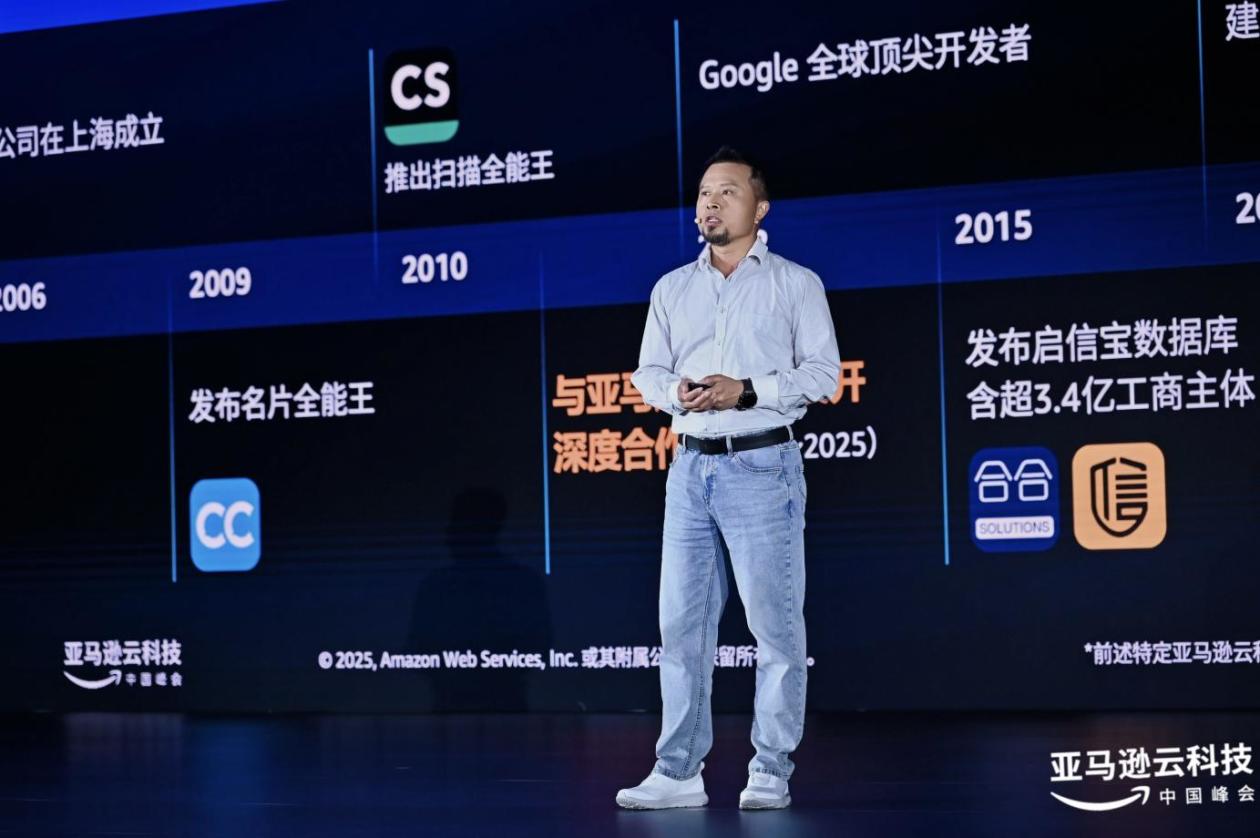
合合信息推出AI Agent云资源智能管理终端,可实现“一句话管理千台服务器”
Huan Qiu Wang· 2025-06-20 09:02
Core Insights - The article highlights the launch of Chaterm, the first AI Agent cross-platform cloud resource management terminal by Shanghai Hehe Information Technology Co., Ltd, at the 2025 Amazon Cloud Technology China Summit [1] - Chaterm aims to revolutionize cloud resource management by introducing a conversational terminal management tool that enhances automation and efficiency in operations [3][5] Group 1: Product Features - Chaterm allows users to manage cloud resources through natural language commands, significantly reducing the time required for tasks such as setting up GPU clusters from hours to minutes [5] - The product offers two operational modes: "assisted driving" where AI helps generate commands, and "autonomous driving" where AI plans and executes tasks independently, improving efficiency in cloud resource management [5] - Chaterm includes capabilities for batch management of remote servers, allowing users to customize commands without needing ROOT access, thus providing a user-friendly experience across multiple platforms [5] Group 2: Security and Open Source - To ensure data security and user privacy, Hehe Information has made Chaterm's core code fully open source, enabling developers to observe and customize the underlying algorithms [6] - The open-source approach promotes transparency and control in cloud resource management, aligning with the industry's push for secure and trustworthy solutions [6] Group 3: Industry Impact - The introduction of Chaterm is positioned as a significant step towards the intelligent transformation of the industry, as the company continues to explore the integration of AI technology with various industrial scenarios [6]
AI大神卡帕西最新演讲:AGI从幻想到落地,先要直面三个现实
3 6 Ke· 2025-06-19 12:09
Group 1 - The core idea presented by Andrej Karpathy is that Software 3.0 is revolutionizing traditional programming by introducing a paradigm where "prompts are the program," requiring programmers to adapt or risk obsolescence [2][4] - Karpathy categorizes software evolution into three phases: Software 1.0 (manual coding), Software 2.0 (machine learning), and Software 3.0 (prompt-driven), emphasizing that Software 3.0 is not merely a combination of the previous two but a new entity that significantly disrupts their existence [6][11] - The emergence of large language models (LLMs) is likened to "transformers" in technology, capable of performing multiple roles, thus fundamentally altering the traditional logic of technology commercialization [7][11] Group 2 - Karpathy introduces the concept of "LLM Psychology," highlighting two main challenges: "jagged intelligence," where AI excels in complex tasks but struggles with basic logic, and "anterograde amnesia," where AI lacks memory retention beyond immediate context [10][14] - The analogy of AI as a "forgetful delivery person" illustrates its inability to retain user preferences or past interactions, suggesting the need for a "digital diary" to enhance its learning and memory capabilities [16][14] - Solutions proposed include implementing a "system prompt learning" approach, allowing AI to summarize experiences and improve decision-making over time, akin to writing a work summary after a job [14][16] Group 3 - The concept of "partial autonomy" is introduced, where AI systems are equipped with an "autonomy regulator" to balance decision-making capabilities and human trust, facilitating a more effective human-AI collaboration [18][19] - Karpathy emphasizes the importance of rapid feedback loops in human-AI interactions, suggesting that AI should generate concise proposals for quick human validation, while also setting boundaries to prevent AI from producing non-functional code [21][23] - The transition from demo to product is highlighted as a significant challenge, with the need for developers to find a balance between feature richness and reliability in AI systems [23] Group 4 - The rise of "Vibe Coding" has led to a surge in startups, indicating a transformative moment in software development akin to the early days of Bitcoin [24][27] - The current development tool landscape is described as a mix of old and new, necessitating tools that can bridge the gap and enhance AI's understanding of complex documentation [27][30] - Karpathy calls for a redefinition of user categories in tool development, focusing on human users, API-driven programs, and intelligent agents that can process data and understand human language [30] Group 5 - Karpathy advocates for practical innovation over speculative goals like achieving AGI by 2027, emphasizing the need for semi-autonomous systems that can understand human intent and make decisions [31] - The evolution of software development is framed as a shift from manual coding to a more collaborative process with AI, requiring a complete overhaul of development workflows [31] - The vision for large models is to become foundational infrastructure, similar to utilities, enabling developers to build applications without reinventing the wheel, thus reshaping the entire tech ecosystem [31]
对话言创万物创始人:AI Coding 是在「垒砖」,我们想用 AI「盖房子」
Founder Park· 2025-06-17 09:49
Group 1 - AI Coding, or Coding Agent, is currently one of the hottest AI sectors, with stronger coding capabilities unlocking more application scenarios [1] - Vibe Coding has gained attention by introducing a large number of non-professional coders, but serious software production is more complex than it appears [2][11] - Software development is a decades-old industry that has built the digital world, and coding is just one part of software engineering, indicating that models capable of basic coding may eventually tackle larger problems [3][12] Group 2 - The startup Yanchuang Wantu, founded by Chen Zhijie and Liu Xiaochun in early 2025, focuses on AI Coding, specifically AI Software Engineering (AI SWE), aiming to transform the entire software production process [4][7] - The founders believe that the real opportunity lies in AI SWE, as coding only accounts for about 30% of an engineer's work, with the potential for AI to enhance productivity across the entire software lifecycle [8][11] Group 3 - The complexity of software engineering means that coding is just one part of a larger process that includes requirements communication, technical design, testing, and deployment [12][13] - AI's role in software engineering is expected to evolve, with AI potentially acting as a controller and planner to streamline various stages of the software development lifecycle [18][19] Group 4 - The AI Coding market is characterized by rapid technological advancements, where new models can quickly surpass existing ones, creating opportunities for new entrants [16] - The founders emphasize that the AI SWE landscape is broad and complex, with no single company currently able to address all aspects, suggesting a future with multiple valuable AI SWE companies [15] Group 5 - The future of AI SWE may involve a shift from traditional IDEs to a model where multiple AI agents collaborate to handle various tasks, allowing developers to focus on higher-level design and problem-solving [19][20] - The transition to AI-driven software engineering will likely lead to a clearer division of roles, with engineers focusing on setting goals and verifying results rather than performing routine tasks [41][42] Group 6 - The startup aims to create a lean organization, focusing on efficiency and effectiveness rather than size, with a current team of around 30 people [49][50] - The founders express satisfaction with the reduced meeting frequency and increased productivity in their current work environment compared to their previous experiences in large companies [54][56]

深度|吴恩达:语音是一种更自然、更轻量的输入方式,尤其适合Agentic应用;未来最关键的技能,是能准确告诉计算机你想要什么
Z Potentials· 2025-06-16 03:11
Core Insights - The discussion at the LangChain Agent Conference highlighted the evolution of Agentic systems and the importance of focusing on the degree of Agentic capability rather than simply categorizing systems as "Agents" [2][3][4] - Andrew Ng emphasized the need for practical skills in breaking down complex processes into manageable tasks and establishing effective evaluation systems for AI systems [8][10][12] Group 1: Agentic Systems - The conversation shifted from whether a system qualifies as an "Agent" to discussing the spectrum of Agentic capabilities, suggesting that all systems can be classified as Agentic regardless of their level of autonomy [4][5] - There is a significant opportunity in automating simple, linear processes within enterprises, as many workflows remain manual and under-automated [6][7] Group 2: Skills for Building Agents - Key skills for building Agents include the ability to integrate various tools like LangGraph and establish a comprehensive data flow and evaluation system [8][9] - The importance of a structured evaluation process was highlighted, as many teams still rely on manual assessments, which can lead to inefficiencies [10][11] Group 3: Emerging Technologies - The MCP (Multi-Context Protocol) is seen as a transformative standard that simplifies the integration of Agents with various data sources, aiming to reduce the complexity of data pipelines [21][22] - Voice technology is identified as an underutilized component with significant potential, particularly in enterprise applications, where it can lower user interaction barriers [15][19] Group 4: Future of AI Programming - The concept of "Vibe Coding" reflects a shift in programming practices, where developers increasingly rely on AI assistants, emphasizing the need for a solid understanding of programming fundamentals [23][24] - The establishment of AI Fund aims to accelerate startup growth by focusing on speed and deep technical knowledge as key success factors [26]

深度|GitHub CEO :真正的变革不是程序员被AI取代,而是写代码的起点、过程与目的正在被AI重构
Z Finance· 2025-06-15 02:05
Core Insights - The article discusses the transformative impact of AI on software development, emphasizing that AI is not replacing developers but rather reshaping the coding process and the role of developers [1][2][4] Group 1: Evolution of Software Development - The introduction of AI tools like GitHub Copilot has changed the starting point, process, and purpose of coding, moving from traditional coding practices to a more collaborative and creative approach [1][2] - AI is enabling a shift from "vibe coding" to "agentic DevOps," where developers act as orchestrators rather than mere code writers [1][2][4] - The initial skepticism about AI's ability to generate code has been replaced by recognition of its effectiveness, with early data showing that Copilot wrote approximately 25% of the code in enabled files [5][6] Group 2: User Experience and Interaction - The integration of features like Tab completion has significantly lowered the learning curve for developers, making coding more accessible [7][8] - Developers have adapted to using AI tools by leveraging existing coding habits and learning behaviors, such as modifying code snippets from various sources [9][10] - The user feedback for Copilot has been overwhelmingly positive, with a net promoter score of around 72, indicating high satisfaction among users [6] Group 3: The Role of Developers - The role of developers is evolving to include validating the outputs generated by AI agents, ensuring that the code meets business objectives and maintains security standards [13][14] - Learning programming is still essential, but understanding how to effectively use AI tools is becoming equally important in the software development landscape [11][12] - Developers must continuously adapt their skills to incorporate AI and new models into their workflows, as the landscape of software development is rapidly changing [15][16] Group 4: Open Source and Collaboration - GitHub's decision to open-source Copilot reflects a commitment to the developer ecosystem and aims to foster innovation and collaboration within the community [17][18] - The open-source nature of Copilot allows developers to learn from the code and potentially create competing products or integrate similar functionalities into their own tools [19][20] - The integration of multiple models and tools is expected to drive further innovation in software development, allowing for more tailored solutions [22][23] Group 5: Future of Software Development - The boundaries between deterministic and non-deterministic code are becoming blurred, with future software engineering requiring the ability to navigate both realms [24][25] - There is potential for a future where software systems are generated in real-time, with AI agents assisting in various tasks, leading to a more seamless user experience [26][27] - The concept of interconnected agents that can manage both personal and work-related tasks is emerging, suggesting a future where AI plays a central role in daily life [40][41]

Z Product|Lovable背后关键产品,YC校友Supabase再融两亿美元,Vibe Coding的全栈开发工具
Z Potentials· 2025-06-12 04:24
Core Insights - The article discusses the rise of Vibe Coding, a new AI-driven programming model that allows developers to focus on product innovation and user experience rather than being constrained by programming languages, with AI generating executable code from natural language inputs [2][3]. Group 1: Supabase Overview - Supabase, founded in 2020, is an open-source alternative to Google Firebase, providing backend services such as database management, authentication, and real-time capabilities, which significantly reduce the complexity and time required for backend development [3][6]. - The platform has gained substantial traction, with over 170,000 developers in its community and more than 80,000 stars on GitHub, indicating its popularity and utility among developers [6][12]. Group 2: Key Features of Supabase - Supabase offers a PostgreSQL-based database that provides stable data storage and built-in authentication for precise user access control [3]. - The platform simplifies the login process through social account integration, allowing developers to quickly establish multi-channel authentication systems [4]. - Supabase automates backend resource management, enabling startups to reduce labor costs and accelerate product launches without the need for extensive code rewrites [4]. - It includes a storage solution that integrates seamlessly with its authentication and database services, allowing for secure and efficient content management [4]. - The real-time data synchronization feature supports collaborative tools and applications, ensuring consistent user experiences across multiple devices [4]. Group 3: Funding and Growth - Supabase completed a $200 million Series D funding round in April 2025, achieving a post-money valuation of approximately $2 billion, with participation from notable investors such as Accel and Coatue [6][13]. - Prior to this, Supabase raised $80 million in a Series C round in September 2024, reflecting a rapid increase in valuation from an estimated $900 million to $2 billion within seven months [13]. - The growth in funding and valuation highlights the company's rapid development in the open-source and AI programming sectors, driven by a growing developer community [13].

喝点VC|a16z合伙人:开发者市场或成为AI首个真正意义上的万亿级市场;当前模型最致命的缺陷是永远不愿承认"我不知道"
Z Potentials· 2025-06-07 06:47
图片来源: a16z Z Highlights : a16z (Andreessen Horowitz) 是一家风险投资公司,以其多元化的投资领域著称,被投资公司包括 Airbnb 、 Meta 和 Twitter 等。本次访谈由 a16z 于 2025 年 5 月发布, Guido, Yoko 以及 Matt 三位合伙人分享了关于传统编程和最近的 vibe coding 编程模式的看法。 AI 编程生态跃迁:万亿美元市场的效率革命 Matt Bornstein: 我们基本可以确定,目前编程是 AI 领域的第二大市场。如果我说错了请纠正 —— 纯聊天机器人应该排第一,编程排第二,这是单纯看数 据的结果。 Yoko Li : 但消费者市场是很多不同领域的集合。 M att Bor nstein : 完全正确。 Guido Appenzeller : 这是我的市场定义方式。如果看真正同质化的市场,编程可能确实是第一。 Yoko Li : 编程市场比陪伴型应用更大吗? Guido Appenzeller : 是的。 Yoko Li : 我也这么认为。 Guido Appenzeller : 现阶段确实如此。可能要看 ...