
数据要素

Search documents
2025年中国数据要素行业发展研究报告
艾瑞咨询· 2025-08-30 00:06
Core Insights - Data is recognized as the fifth production factor, characterized by non-competition, replicability, and unlimited growth potential, making its value extraction process more complex than traditional production factors [1] - The development of the data factor market relies heavily on a clear policy framework and implementation pathways, with local data trading institutions and data merchants emerging as key drivers [1] - The establishment of a robust ecosystem for data supply and usage is essential to achieve the goals of effective data flow and security [1] Group 1: Industry Overview - The data factor market is currently in a critical phase driven by policy and practical exploration, with the establishment of the National Data Bureau marking a significant step towards a unified national data market [19][20] - By 2025, the market size is projected to exceed 200 billion yuan, with a compound annual growth rate of over 25% [23] - The construction of a complete national data circulation system is planned over the next five years, aiming to facilitate the integration of data into the real economy and break data monopolies [27] Group 2: Service Providers and Evaluation - The "iResearch - Top 30 Data Factor Service Providers" list includes companies recognized for their comprehensive capabilities in the data factor industry, categorized into four types: comprehensive technical service providers, data processing and governance firms, solution providers, and infrastructure service providers [7][9] - The evaluation model for service providers includes four core dimensions: industry depth, product and technology capability, service capability, and ecosystem capability [4] Group 3: Case Studies and Applications - Neusoft's City Data Value Empowerment Platform focuses on key areas such as smart healthcare and employment, creating a comprehensive service ecosystem that connects government regulation and industry [11][12] - The "Fujian Public Health Service Operation Platform" integrates various services to cover the entire lifecycle of citizens, enhancing data sharing and business collaboration [15] Group 4: Challenges and Future Directions - The industry faces challenges such as an incomplete pricing system and compliance barriers, which hinder the free flow of data in the market [31] - To address these issues, a dual approach involving the establishment of national standards and the promotion of successful cross-domain applications is necessary to unlock the deeper value of data [31][29]



三维天地2025年中报简析:营收上升亏损收窄,盈利能力上升
Zheng Quan Zhi Xing· 2025-08-29 23:43
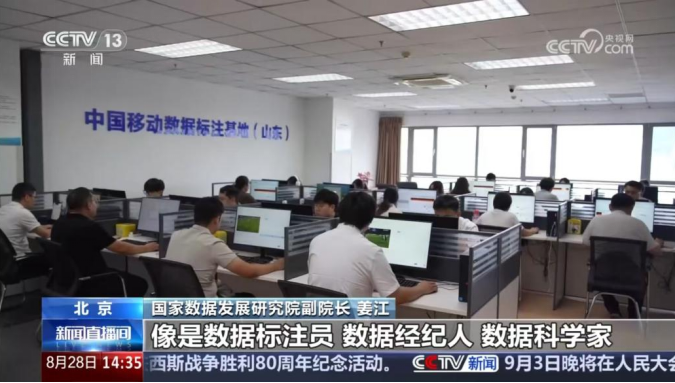
Core Viewpoint - The recent financial report of Sanwei Tiandi (301159) shows a slight increase in revenue and a reduction in net loss, indicating an improvement in profitability metrics despite ongoing challenges [1] Financial Performance - Total revenue for the first half of 2025 reached 69.263 million yuan, a year-on-year increase of 4.6% compared to 66.2193 million yuan in 2024 [1] - The net profit attributable to shareholders was -60.577 million yuan, improving by 12.08% from -68.9031 million yuan in the previous year [1] - The gross margin increased to 29.35%, reflecting a 15.2% year-on-year growth, while the net margin improved to -88.08%, up 16.44% year-on-year [1] - Total operating expenses (selling, administrative, and financial expenses) amounted to 43.1153 million yuan, accounting for 62.25% of revenue, a decrease of 13.74% year-on-year [1] Cash Flow and Debt - The company reported a negative operating cash flow per share of -0.87 yuan, which is an improvement of 35.65% compared to -1.35 yuan in the previous year [1] - The company’s cash and cash equivalents decreased by 52.39% to 143 million yuan, indicating potential liquidity concerns [1] - Interest-bearing debt decreased by 15.47% to 10.0837 million yuan, suggesting improved debt management [1] Business Model and Market Position - The company relies heavily on research and development for its business model, which has shown vulnerability due to historical performance [3] - The median Return on Invested Capital (ROIC) since the company’s listing is 13.27%, with a notably poor ROIC of -24.15% in 2024 [3] - The company has been recognized for its contributions to the development of data asset management standards and has received certifications that enhance its credibility in the industry [4] Strategic Initiatives - The company is actively involved in the RDA (Real Data Assets) initiative, focusing on integrating data with physical assets to enhance their value and marketability [4] - It has launched a data element trading and management platform aimed at facilitating data circulation and ensuring traceability [4] - The company is participating in various pilot projects and policy initiatives to leverage data assets in the context of national governance and economic development [4]
三维天地(301159)2025年中报简析:营收上升亏损收窄,盈利能力上升
Sou Hu Cai Jing· 2025-08-29 22:45
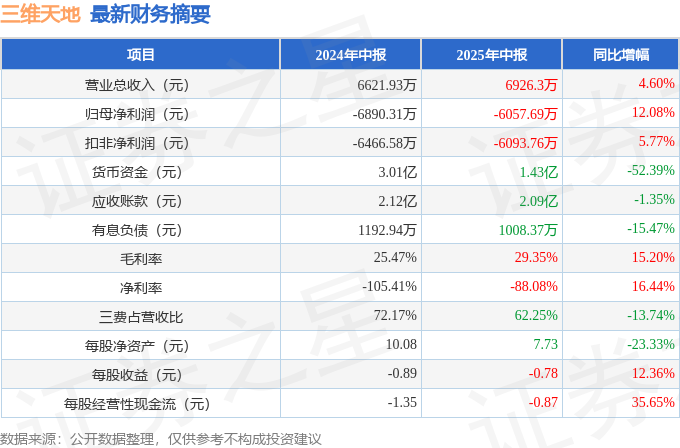
Core Viewpoint - The recent financial report of Sanwei Tiandi (301159) shows a modest increase in revenue and a reduction in net loss, indicating an improvement in profitability metrics despite ongoing challenges [1] Financial Performance - Total revenue for the first half of 2025 reached 69.263 million yuan, a year-on-year increase of 4.6% [1] - The net profit attributable to shareholders was -60.577 million yuan, showing a year-on-year improvement of 12.08% [1] - In Q2 2025, total revenue was 48.078 million yuan, up 4.65% year-on-year, while the net profit attributable to shareholders was -30.932 million yuan, reflecting a 19.9% year-on-year increase [1] - Gross margin improved to 29.35%, a year-on-year increase of 15.2%, while net margin was -88.08%, up 16.44% year-on-year [1] - Total operating expenses (selling, administrative, and financial) amounted to 43.1153 million yuan, accounting for 62.25% of revenue, a decrease of 13.74% year-on-year [1] Key Financial Ratios - Earnings per share improved to -0.78 yuan, a year-on-year increase of 12.36% [1] - Operating cash flow per share was -0.87 yuan, reflecting a 35.65% year-on-year improvement [1] - The company's net assets per share decreased to 7.73 yuan, down 23.33% year-on-year [1] Business Model and Market Position - The company relies heavily on research and development for its business model, which has shown vulnerability due to historical financial performance [3] - The company has a median Return on Invested Capital (ROIC) of 13.27%, with the worst year being 2024 at -24.15% [3] - The company is recognized as a key player in the data asset management sector, focusing on the Real Data Assets (RDA) paradigm [4] Strategic Initiatives - The company is actively involved in the development of standards and platforms for data asset management, including the launch of a data element trading operation management platform [4] - It has received recognition for its compliance with data rights and authorization standards, enhancing its credibility in the industry [4] - The company is exploring opportunities in the integration of data assets with physical assets, driven by supportive government policies [4]
中移齐鲁创新院:以高质量数据供给赋能人工智能产业向纵深迈进
Qi Lu Wan Bao· 2025-08-29 10:38
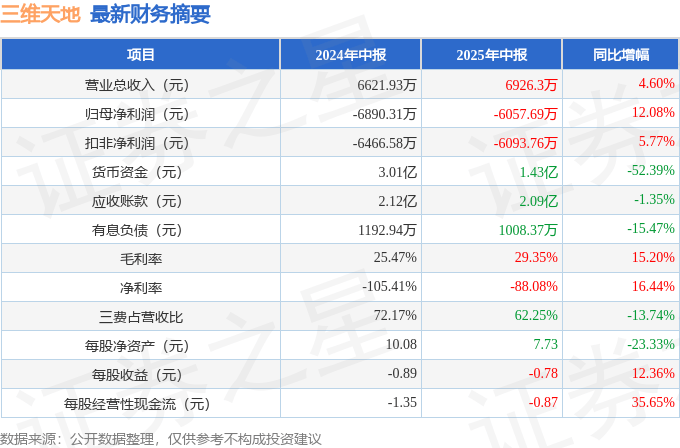
Core Insights - China Mobile's data labeling base in Shandong represents a forward-looking strategic layout in the data element field, focusing on data processing, platform construction, and service support to drive the release and transformation of data element value [1][3]. Group 1: Data Labeling Base Development - The data labeling base aims to ensure high-quality data set supply for AI industry development and improve the data labeling ecosystem infrastructure [3][4]. - It is designed to handle multi-modal data processing needs, creating a standardized production system for data collection, cleaning, labeling, quality inspection, and data sets [3][4]. - The base has successfully supported over 20 key large model projects, generating value exceeding 10 million yuan, with a year-on-year increase in labeling orders by 210% [4]. Group 2: Platform and Ecosystem Innovation - The base is innovating a sustainable development model of "platform + product + ecosystem," linking provincial data resources with industry demands [4][6]. - A core team of nearly 200 professionals has been established to ensure rapid response to industry orders and maintain service quality [6]. - The service range has expanded from AI companies to research institutions, government agencies, and industry partners, promoting deep integration of data elements with the real economy [6][7]. Group 3: Future Directions and Goals - The data labeling base is positioned as a key driver for the rapid development of the AI industry, focusing on enhancing multi-modal data processing accuracy and evaluation capabilities [7]. - The goal is to upgrade the urban-level data labeling platform to be more advanced in technology, comprehensive in service, and open in ecosystem [7][8].

慧辰股份上半年实现营业收入2.02亿元 加速推进“DATA与AI”融合
Zheng Quan Ri Bao Wang· 2025-08-29 07:48
Core Viewpoint - The company, Beijing Huichen Zidao Information Co., Ltd. (referred to as "Huichen"), reported a revenue of 202 million yuan in the first half of 2025, marking a year-on-year growth of 14.79%, but recorded a net loss attributable to shareholders of 32.03 million yuan [1][2]. Group 1: Financial Performance - In the first half of 2025, Huichen achieved total revenue of 202 million yuan, representing a year-on-year increase of 14.79% [1]. - The net profit attributable to shareholders was -32.03 million yuan, while the net profit after deducting non-recurring gains and losses was -34.38 million yuan [1]. Group 2: Business Strategy and Development - Huichen is focusing on data collection, analysis, mining, operation, and AI-related businesses, continuously accumulating high-quality commercial clients and data resources [1][2]. - The company is advancing its "ALLINAI" strategy, integrating data, algorithms, and computing power to enhance application scenarios [1][2]. - The average revenue per employee increased by 29.97% year-on-year, reflecting ongoing optimization of business and personnel structure [1]. Group 3: AI Integration and Product Development - AI-related demand from clients has become clearer and is on the rise, with the company effectively integrating AI technology into its data intelligence services, leading to multiple orders and a positive growth trend in innovative business [2]. - The revenue share from AI-driven product services is expected to increase, potentially boosting overall revenue and gross margin [2]. - Huichen has developed the "HuAI Intelligent Application Platform" for AIGC applications, supporting both self-developed and mainstream public service models [3]. Group 4: Computing Power Management - The company has created a "Fusion Computing Power Management Platform" that enables mixed scheduling of heterogeneous devices, reducing reliance on single hardware vendors [3]. - This platform significantly enhances resource utilization and operational efficiency while lowering inference costs [3]. - Huichen has signed a project for an "AI Public Computing Power Platform Software" [3].

同花顺涨2.03%,成交额29.68亿元,主力资金净流入2.20亿元
Xin Lang Cai Jing· 2025-08-29 03:08
Group 1 - The core viewpoint of the news highlights the significant stock performance and financial growth of Tonghuashun, with a stock price increase of 46.04% year-to-date and a market capitalization of 223.36 billion yuan [1] - As of June 30, 2025, Tonghuashun reported a revenue of 1.779 billion yuan, representing a year-on-year growth of 28.07%, and a net profit of 502 million yuan, reflecting a 38.29% increase [2] - The company has distributed a total of 7.938 billion yuan in dividends since its A-share listing, with 4.14 billion yuan distributed in the last three years [3] Group 2 - The main business segments of Tonghuashun include value-added telecommunications services (48.33%), advertising and internet promotion services (36.01%), fund sales and other services (9.43%), and software sales and maintenance (6.22%) [1] - As of June 30, 2025, the number of shareholders decreased by 2.77% to 86,800, while the average circulating shares per person increased by 2.84% to 3,175 shares [2] - The top ten circulating shareholders include significant institutional investors, with Hong Kong Central Clearing Limited being the third-largest shareholder, holding 12.2971 million shares, a decrease of 1.8611 million shares from the previous period [3]

天亿马上半年营收增长超六成净利扭亏 算力服务订单持续交付
Zheng Quan Shi Bao Wang· 2025-08-29 01:33
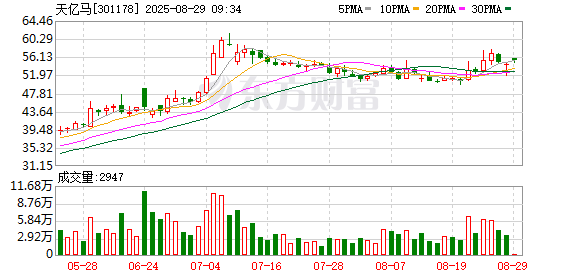
Group 1 - The company reported a significant increase in revenue and net profit for the first half of 2025, with operating income reaching 146 million yuan, a year-on-year increase of 63.24%, and a net profit attributable to the parent company of 6.06 million yuan, marking a turnaround to profitability [2] - The strategic transformation of the company has shown initial success, with a notable improvement in business structure and growth driven by the newly developed services in computing power and enterprise digitalization [2] - The company secured multiple software development projects with large state-owned enterprises, generating revenue of 43.45 million yuan, which represents a year-on-year growth of 126.37% [2] Group 2 - The company has strengthened its capital operations and acquisition efforts, planning to acquire 100% of Xingyun Kaiwu's equity through a combination of share issuance and cash payment [3] - Xingyun Kaiwu is recognized as a national-level specialized and innovative "little giant" enterprise, focusing on providing integrated solutions of IoT smart hardware and SaaS cloud platforms [3] - This collaboration is expected to enhance the company's research and development capabilities in digital services for smart self-service devices, improve the industrial chain layout, and expand product application scenarios and customer diversification [3]
A股盘前播报 | 中央汇金上半年加仓白酒和化工等ETF 机构:白酒行业底部特征明显
智通财经网· 2025-08-29 00:46
Industry Insights - The Chinese government has published a roadmap for high-quality urban development, aiming to establish a modernized people's city by 2035, focusing on various economic sectors including the primary economy, silver economy, ice and snow economy, and low-altitude economy [1] - Central Huijin has increased its holdings in several industry ETFs, notably adding 12.1 million shares of the Penghua Liquor ETF, indicating a positive outlook for the liquor industry as inventory levels decrease and financial pressures on companies ease [2] - Multiple banks have announced a reduction in RMB deposit rates by 10 to 20 basis points, reflecting ongoing downward pressure on deposit rates in the future [3] - The Chinese Ministry of Commerce has announced that trade negotiation representatives will meet with U.S. officials, signaling a commitment to continue economic discussions between China and the U.S. [4] Market Trends - The National Bureau of Statistics has indicated that several significant policies related to data ownership will be introduced, which could enhance the value of public data operations and improve local government asset structures [9] - Nvidia and Google have led an investment of $863 million in the nuclear fusion startup CFS, suggesting that advancements in high-temperature superconductors may accelerate the commercialization of controlled nuclear fusion [10] - There are indications that the price of photovoltaic glass may increase, with companies like Fuyao discussing new pricing with clients, suggesting a potential recovery in profitability for the solar industry [11] Company Announcements - Cambrian is expected to achieve annual revenue between 5 billion to 7 billion yuan by 2025, indicating growth potential [12] - CITIC Securities reported a net profit of 13.719 billion yuan for the first half of the year, a year-on-year increase of 29.80% [14] - Guolian Minsheng reported a net profit of 1.127 billion yuan for the first half of the year, showing a significant year-on-year increase of 1185.19% [14] - Huahong Semiconductor reported a net profit of 74.3154 million yuan for the first half of the year, a year-on-year decrease of 71.95% [14]
实探数博会:数据赋能千行百业
Zhong Guo Zheng Quan Bao· 2025-08-28 20:16
Group 1 - The core viewpoint of the news is that China's digital economy is expected to reach an added value of approximately 49 trillion yuan by the end of this year, accounting for about 35% of GDP, with the core industries of the digital economy achieving their "14th Five-Year Plan" targets ahead of schedule [1] - The 2025 China International Big Data Industry Expo, themed "Data Aggregates Industrial Momentum, Intelligent Development New Chapter," features over 16,000 registered guests and 375 participating companies, highlighting the importance of data as a driving force for industrial development [1] - The event showcases various applications of digital technology, including the low-altitude economy, with companies like Zhongke Xingtong presenting comprehensive product systems and case studies in the field of aerospace information [1][2] Group 2 - The GEOVIS iFlight low-altitude intelligent flight application platform is a highlight product at the expo, providing standardized services for aerial photography, intelligent inspection, and logistics delivery, addressing various low-altitude business needs [2] - High-quality data sets are crucial for supporting the "Artificial Intelligence +" initiative, with over 400PB of high-quality data sets constructed in China by the end of June [3] - The total scale of intelligent computing in China has reached 780,000 PFlops, ranking second globally, with significant contributions from western regions where data center operational costs are 50% to 70% lower than in eastern regions [3] Group 3 - Discussions at the expo emphasize the need for high-quality data set construction and the promotion of data element circulation and value release [3][4] - Experts suggest that the market for high-quality data sets is still small, and automation and intelligence in production need improvement, proposing subsidies to encourage the supply and demand of high-quality data sets [4] - The National Data Bureau is deploying pilot projects for data industry clusters to foster a robust industrial ecosystem and scale advantages, building on previous guidelines for high-quality data industry development [4]
2025中国国际大数据产业博览会在贵阳开幕 数聚产业新动能 落地应用新场景
Shang Hai Zheng Quan Bao· 2025-08-28 19:41
Core Insights - The 2025 China International Big Data Industry Expo showcases the integration of data elements and AI technology, highlighting new solutions and applications for industrial transformation and upgrading [1][2] Group 1: Data Infrastructure and AI Development - China is focusing on building computing power infrastructure and enhancing the development and sharing of data resources [2] - As of July, Guizhou Province has accumulated 29 large-scale data centers, with a total computing power of 92.60 EFLOPS, making it one of the regions with the strongest intelligent computing capabilities in the country [2] - High-quality datasets are crucial for AI training, determining the "intelligence" of AI systems, and are seen as a "moat" for AI development [2][3] Group 2: Industry Applications and Innovations - Numerous companies are seizing opportunities in AI and big data across various sectors, including low-altitude economy, medical diagnosis, and tourism [4] - The AI-driven personalized itinerary planning product by Mafengwo significantly enhances user experience and efficiency in travel planning [4] - The "39AI Doctor" product, implemented in over 40 hospitals and 187 community medical institutions in Guizhou, has a diagnostic result adoption rate of 92% [4] Group 3: Future Directions and Collaborations - Companies like Zhongke Xingtu are focusing on the low-altitude economy, presenting a comprehensive product system that includes planning, safety assurance, and application scenarios [6] - The development of a unified digital platform for government investment attraction by Zhaoshangyi aims to provide efficient services to enterprises [5][6] - Experts believe that with improved policies, technological advancements, and deepened application scenarios, data elements will release greater value and drive industries towards a new stage of intelligence [6]