
金融科技

Search documents
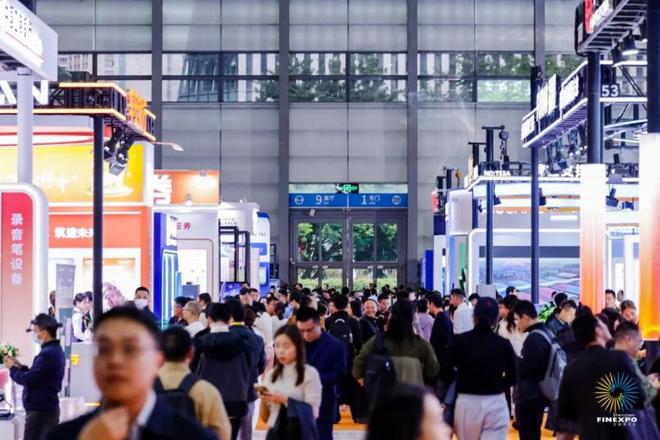
第十九届深圳国际金融博览会圆满闭幕 参展机构、人次实现双增长
2 1 Shi Ji Jing Ji Bao Dao· 2025-11-22 03:45
Core Insights - The 19th Shenzhen International Financial Expo showcased significant growth, attracting 47,400 attendees from 25 countries, marking a 58% increase in visitor numbers compared to the previous year [1] - The expo featured over 50 thematic events and announced 18 new industry policies and product results, with a total of 33 financing project roadshows, achieving an intended financing amount of 1.055 billion yuan [1][6] Industry Participation - A total of 288 institutions participated in the expo, representing a diverse range of sectors including banking, insurance, securities, private equity, and fintech, reflecting an 80% year-on-year increase [3] - Major financial institutions such as China Bank, Agricultural Bank, and HSBC showcased their latest products and services, highlighting the expo's growing influence in the financial sector [3] Financial Technology Highlights - Over 30 fintech companies, including WeBank and Kingdee Technology, presented cutting-edge technologies and innovations, with Huawei collaborating with 12 partners to demonstrate advanced financial ICT infrastructure [4] - The introduction of a "Government Guidance Fund Special Exhibition Area" aimed to create new pathways for industry-finance integration [4] Policy and Innovation - The expo's theme, "New Heights in Industrial Finance, Empowering the Future with Science and Technology," emphasized Shenzhen's commitment to high-quality industrial financial development [5] - Key policy announcements included the Shenzhen Financial Management Bureau's action plan for building a global fintech center and various initiatives in cross-border finance and green bonds [5] Investment and Financing Activities - The integration of various industry funds and associations facilitated 33 financing project roadshows, resulting in an intended financing amount of 1.055 billion yuan, showcasing Shenzhen's approach to industry-finance synergy [6] - The expo served as a platform for deepening the integration of finance with the real economy, promoting international cooperation and showcasing financial development achievements [6]

南京证券党委书记、董事长李剑锋:科创文化双驱动 激活行业发展新动能
Zhong Guo Zheng Quan Bao· 2025-11-22 01:41
Core Viewpoint - The article emphasizes the dual mission of the capital market in China, focusing on "technology empowerment" and "cultural soul-building" as part of the country's high-quality development strategy [1] Strategic Construction - Financial technology is reshaping the competitive landscape of the securities industry, with AI, big data, and blockchain becoming essential infrastructure for survival and development [2] - The integration of technology and culture is crucial, as the securities industry transitions from mere technical investment to a more holistic approach that includes cultural development [2][3] Practical Advancement - The company is focusing on three dimensions: organizational construction, integration of industry, academia, and research, and integration of technology and business to embed cultural concepts into all aspects of technology development and business innovation [4] - Talent is identified as the core carrier for the integration of technology and culture, with a focus on building a strong technical team through various dimensions such as cohesion, execution, learning, and innovation [4] Value Transition - The integration of technology and culture has led to improvements in technical capabilities, team vitality, and social value, supporting the company's social responsibility initiatives [7] - Four core insights from the company's cultural construction include strategic anchoring, talent activation, open collaboration, and value orientation [7] Strategic Goals - The company aims to build a "first-class modern investment bank" by deeply integrating technology into its cultural core, making "innovation culture" a driving force for digital transformation and social responsibility [8] - The focus will be on a "customer value and social responsibility dual orientation," enhancing technology innovation to create value and developing digital tools for investment [8][9] Talent and Cultural Support System - The company plans to enhance its talent acquisition and development mechanisms, ensuring a comprehensive approach to attracting, nurturing, utilizing, and retaining technology talent [9] - The commitment to a unique Chinese financial development path will be maintained, integrating compliance, integrity, professionalism, and stability into the company's cultural framework [9]

南京证券党委书记、董事长李剑锋: 科创文化双驱动 激活行业发展新动能
Zhong Guo Zheng Quan Bao· 2025-11-21 22:51
Core Viewpoint - The capital market is positioned as a "barometer" and "accelerator" of the national economy, playing a dual role of "technology empowerment" and "cultural soul forging" in China's high-quality economic development phase [1] Strategic Construction - Financial technology is reshaping the competitive landscape of the securities industry, with AI, big data, and blockchain becoming essential infrastructure for survival and development [2] - The integration of technology and culture is crucial, as the securities industry transitions from a focus on technology investment to a more holistic approach that includes cultural development [2][3] - The new "National Nine Articles" emphasizes the importance of financial technology research and application, placing technology empowerment at the core of industry development [3] Practical Advancement - The concept of "science and innovation culture" is operationalized through three dimensions: organizational construction, integration of production, education, and research, and integration of technology and business [4][5] - Talent is identified as the core carrier for the integration of technology and culture, with a focus on building a strong technical team [4] - Collaboration with universities and research institutions enhances innovation capabilities and supports industry standards [5] Strategic Goals - The company aims to integrate technology deeply into its cultural core, positioning "science and innovation culture" as a driving force for digital transformation and social responsibility [7][8] - The focus will be on a dual orientation of customer value and social responsibility, promoting technology innovation that creates value for investors [7] - A comprehensive talent and culture dual-drive system will be established to enhance the recognition and sense of belonging among core talents [8]
科创文化双驱动 激活行业发展新动能
Zhong Guo Zheng Quan Bao· 2025-11-21 20:09
Core Viewpoint - The article emphasizes the dual mission of the capital market in China, focusing on "technology empowerment" and "cultural soul-building" as part of the country's high-quality development strategy [1] Strategic Construction - Financial technology is reshaping the competitive landscape of the securities industry, with AI, big data, and blockchain becoming essential infrastructure for survival and development [2] - The integration of technology and culture is crucial, as the securities industry transitions from mere technical investment to a more holistic approach that includes cultural development [2][3] Policy and Industry Development - The new "National Nine Articles" highlights the importance of enhancing financial technology research and application, placing technology empowerment at the core of industry development [3] - The digital transformation of the securities industry is accelerating, necessitating a dual-track approach of "technology + culture" to create innovative pathways [3] Practical Advancement - The company is focusing on three dimensions: organizational construction, integration of production, learning, and research, and integration of technology and business to embed cultural concepts into all aspects of technology development and business innovation [3][4] - Talent is identified as the core carrier for the integration of technology and culture, with a focus on building a strong technical team [3][5] Talent and Culture Integration - The company is actively collaborating with universities and research institutions to enhance innovation capabilities and has established a talent cultivation program in partnership with Nanjing University [4][5] - The ITBP (IT Business Partner) model is being implemented to ensure that technical personnel are closely aligned with business needs, enhancing responsiveness to client issues [5] Value Orientation - The ultimate goal of cultural construction is to empower business development, with a focus on aligning technology and business strategies [5][6] - The company is committed to fulfilling social responsibilities through initiatives like open-source governance and personal information security protection [5][6] Strategic Goals - The company aims to integrate technology deeply into its cultural core, positioning itself as a leading modern investment bank [6][7] - A focus on customer value and social responsibility will guide technological innovation towards value creation, aligning with national financial development goals [6][7] Future Outlook - The company plans to enhance its talent and cultural dual-drive system, ensuring a robust mechanism for attracting, nurturing, and retaining technology talent [7] - The commitment to a unique Chinese financial development path will continue, integrating compliance, integrity, professionalism, and stability into its corporate culture [7]
“十四五”期间北京辖区企业实现直接融资超5.6万亿元
Zhong Guo Xin Wen Wang· 2025-11-21 13:17
Core Insights - During the "14th Five-Year Plan" period, enterprises in Beijing achieved direct financing exceeding 5.6 trillion RMB, with 200 new domestic and foreign listed companies [1][2] Group 1: Financial Infrastructure and Talent - Beijing's financial industry total asset scale accounts for approximately half of the national total, with asset management scale of various institutions in Beijing representing about 30% of the national total [1] - The establishment of new financial infrastructures includes the Digital RMB Operations Management Center and the National Financial Technology Risk Monitoring Center [1] - The city has around 740,000 financial professionals, significantly enhancing the capabilities of the national financial management center [1] Group 2: Pilot Policies and Innovations - Beijing actively promotes a series of national pilot policies, including cross-border financing facilitation trials with a business volume exceeding 4.8 billion USD [2] - The city has implemented integrated currency pools for multinational corporations, saving over 1.5 billion RMB for enterprises [2] - A unified bank settlement account system for both domestic and foreign currencies has been established, with over 117,000 accounts opened [2] - The regional equity market has seen three innovative pilot projects, focusing on system and business innovation, comprehensive services for stock options, and equity investment and share transfer trials [2]
记者手记丨在欧元金融周聆听中德金融合作的声音
Xin Hua She· 2025-11-21 09:18
Group 1 - The importance of the Chinese market for German companies remains strong, with many expressing a desire to strengthen economic and financial cooperation between China and Germany [1][2] - The establishment of the Baden-Württemberg Bank's branch in Shanghai is a strategic decision that has proven successful, catering to German, Austrian, and Swiss enterprises in China [1] - The 28th Euro Finance Week highlighted the increasing rational voices advocating for enhanced Sino-German economic and financial collaboration [1] Group 2 - The cooperation between China and Germany in addressing climate crises, promoting green finance, and maintaining financial stability is crucial [2] - Strengthening policy dialogue and cooperation is essential for maintaining a multilateral trade system and fair competition between the two nations [2] - The recent high-level financial dialogue between China and Germany has generated significant consensus among financial professionals, emphasizing the importance of continued economic and financial discussions [2][3] Group 3 - The mutual interconnection of the Chinese and European financial markets is vital for deepening bilateral economic cooperation and stabilizing global market expectations [3] - Financial cooperation is seen as one of the most professional and mutually beneficial areas in Sino-European relations [3] - The need for stable, transparent, and predictable investment rules is emphasized to facilitate business operations in each other's markets [2]
专家:AI赋能县域金融迈向高质量发展新周期
Zhong Guo Xin Wen Wang· 2025-11-21 08:00
Core Viewpoint - The current county financial sector in China is transitioning from merely ensuring service coverage to focusing on the quality of services, marking a new phase of high-quality development [1] Group 1: Achievements and Challenges - County financial services have made significant progress in service network coverage and credit scale expansion, but face challenges such as regional development imbalances, compliance risks, and low levels of digitalization [1] - The single structure of county industries leads to insufficient risk resistance and a lack of depth in financial services, compounded by a shortage of talent, which restricts the effectiveness of financial empowerment [1] Group 2: Pathways for Improvement - Experts suggest that the transition from "coverage" to "quality enhancement" requires exploration of new pathways, leveraging technology and collaborative efforts to break through existing barriers [2] - High-quality development of county finance necessitates a collaborative effort among government, market, and society, as unilateral efforts are unlikely to succeed [2] - Financial institutions must embrace their responsibility to support rural revitalization while seizing innovation opportunities brought by financial technology [2] Group 3: Recommendations for Financial Institutions - Financial institutions should utilize their data accumulation advantages to build industry-level datasets and seize leadership in the AI application ecosystem [2] - Accelerating government data sharing and breaking down departmental data barriers are essential for deepening the linkage between digital government and inclusive finance, particularly for the digital adaptation needs of rural elderly populations [2] - Financial institutions are encouraged to develop a "one county, one policy" service system to meet the large funding needs of area development through collaborative loans and policy coordination, transitioning from "funding providers" to "industry partners" [2] Group 4: Overall Consensus - Experts agree that county finance should maintain its focus on supporting agriculture and small enterprises while avoiding homogeneous competition [3] - Digital technology should be leveraged to enhance service efficiency and inclusiveness [3] - A multi-party collaboration mechanism involving government, financial institutions, and society is essential to inject strong financial momentum into rural revitalization [3]
利润暴涨62%,牛市旗手业绩集体井喷,聪明钱都在紧急调仓?
Xin Lang Cai Jing· 2025-11-21 07:16
Core Insights - The brokerage industry has experienced a significant profit surge, with net profits increasing by 62% year-on-year, driven by a combination of market activity and structural changes within the industry [2][5]. Group 1: Performance Overview - The brokerage sector reported total revenues of 419.5 billion and net profits of 169 billion, reflecting year-on-year growth of 42.55% and 62.38% respectively [2]. - Ten brokerages saw their net profits double, with Guolian and Minsheng achieving growth rates exceeding 300% [3]. - The industry's performance is attributed not only to a bullish market but also to a deep restructuring that has led to scale efficiencies, particularly among merged brokerages [5]. Group 2: Beneficiary Landscape - Financial IT service providers are the primary beneficiaries of the brokerage boom, with increased demand for trading system upgrades and risk control systems [7]. - The financial technology sector is experiencing new opportunities, particularly in digital advisory and intelligent risk control services [7]. - The wealth management value chain is becoming more prominent, as enhanced brokerage capabilities drive growth in fund distribution and asset allocation services [7]. Group 3: Future Trends - The brokerage industry is undergoing a transformation from being a typical cyclical sector to one focused on growth, with a rising proportion of light asset businesses and reduced earnings volatility [9]. - International expansion is accelerating, with cross-border business becoming a new growth driver, as leading brokerages increase their overseas revenue share [9]. - The industry's valuation framework may need to be restructured in light of these changes [9]. Conclusion - The ongoing transformation in the brokerage sector indicates that when traditional industries discover new growth logic, value reassessment is inevitable, emphasizing the importance of identifying companies with core competitive advantages [11][12].

中金公司拟吸收合并两家券商,金融科技ETF(516860)探底回升,机构称明年金融科技板块投资逻辑清晰
Xin Lang Cai Jing· 2025-11-21 05:51
Group 1 - The core viewpoint of the news highlights the decline of the China Securities Financial Technology Theme Index by 1.17% as of November 21, 2025, with mixed performance among constituent stocks [1] - Taxyou Co., Ltd. led the gains with an increase of 4.57%, while Shenzhou Information experienced the largest decline at 5.20% [1] - The Financial Technology ETF (516860) decreased by 1.28%, with a latest price of 1.39 yuan, but has seen a cumulative increase of 17.31% over the past six months [1] Group 2 - The liquidity of the Financial Technology ETF showed a turnover rate of 3.51% with a transaction volume of 75.6288 million yuan [1] - Over the past year, the average daily transaction volume of the Financial Technology ETF was 155 million yuan [1] Group 3 - On November 19, 2025, three brokerages, including CICC, Dongxing Securities, and Xinda Securities, announced a suspension of trading to plan a merger, which is a significant step in consolidating securities licenses under Central Huijin [1] - This merger is expected to create a new brokerage giant with total assets nearing 1 trillion yuan, marking another major consolidation in the securities industry following the merger of Guotai Junan and Haitong Securities [1] Group 4 - Dongwu Securities believes that the investment logic for the financial technology sector in 2026 is clear, driven by short-term and long-term factors, as well as macro policies and market dynamics [2] - The core drivers include ongoing policy support, stable market growth, active capital markets, and technological changes led by AI and financial innovation [2] Group 5 - The Financial Technology ETF has seen a significant growth of 393 million yuan in scale over the past three months [3] - Additionally, the ETF's share volume increased by 47.3 million shares in the same period [4] - The index closely tracks the performance of listed companies involved in financial technology, with the top ten weighted stocks accounting for 54.41% of the index as of October 31, 2025 [4]



科技赋能实体经济 兴业银行合肥分行率先接入省级融资信用服务平台
Zhong Guo Jin Rong Xin Xi Wang· 2025-11-21 03:48
Core Insights - Industrial Bank's Hefei branch has successfully completed a system integration with the provincial financing credit service platform, enhancing financial service capabilities for technology enterprises and injecting new financial momentum into the real economy [1] Financial Services Development - The Hefei branch quickly responded to a loan application from a local rice company, utilizing a comprehensive assessment based on various credit information dimensions and issued a credit loan of 2 million yuan to meet the company's financing needs [1] Future Initiatives - The Hefei branch plans to continue promoting innovation in financial products and service models, aligning with regional technological innovation development and leveraging both national and regional credit information platforms to provide efficient financing support for more enterprises [1]
