
物联网

Search documents
研判2025!中国家居智能硬件行业政策、产业链、市场规模、重点企业及未来前景展望:人工智能与物联网深度融合,驱动家居智能硬件规模达4600.1亿元[图]
Chan Ye Xin Xi Wang· 2025-12-05 01:13
Core Insights - The smart hardware industry, particularly in smart home applications, is rapidly evolving and becoming an essential part of daily life, transforming traditional living experiences through automation and intelligent services [1][9] - The market size of China's smart home hardware industry is projected to grow from 157.07 billion yuan in 2018 to 460.01 billion yuan by 2024, with a compound annual growth rate (CAGR) of 20% [1][9] - Future advancements will focus on deeper integration of artificial intelligence and the Internet of Things (IoT), leading to more natural human-computer interactions and enhanced environmental awareness [1][9] Industry Overview - Smart hardware is characterized by its integration of new information technologies such as intelligent sensing, human-computer interaction, and big data processing, extending from smartphones to various applications including smart homes [4] - Smart home hardware refers to devices that can collect, process, and connect information within home environments, forming the foundational units of smart home systems [4] Market Size and Growth - The smart home industry in China is expected to grow from 325.47 billion yuan in 2017 to 876.74 billion yuan by 2024, with a CAGR of 15.21% [7] - The overall smart hardware market in China is projected to expand from 513.3 billion yuan in 2018 to 1,503.3 billion yuan by 2024, with a CAGR of 19.61% [6] Policy Support - Recent government policies have been implemented to support the innovation and development of the smart hardware industry, providing strategic guidance and market conditions for growth [4] - For instance, the Chongqing Municipal Government's plan for 2023-2027 aims to enhance inspection and testing services for smart hardware and related industries [4] Industry Chain - The smart home hardware industry chain consists of upstream components like smart chips and sensors, midstream research and manufacturing, and downstream applications in smart homes [5] Competitive Landscape - The industry features a mix of international and domestic companies, with international brands dominating high-end markets and local firms excelling in mid-range segments [9] - Key players include Schneider Electric, Siemens, Ankerui, Rockchip, and Xiaomi, among others [2][9] Future Trends - The future of smart home hardware will see upgrades in technology architecture, enabling devices to understand and respond to environmental contexts [12] - Interaction paradigms will evolve towards seamless, natural interactions, moving beyond traditional app and voice command interfaces [13] - The value logic of the industry will shift from mere functionality to proactive service, focusing on personalized user experiences and subscription-based business models [14]


2025全球智能机械与电子产品博览会在澳门、珠海举行
Xin Hua She· 2025-12-05 00:39
Group 1 - The 2025 Global Intelligent Machinery and Electronic Products Expo opened on December 4 in Macau, featuring over a thousand participating companies from home and abroad [2][3] - The expo is themed "Bay Area Intelligent Manufacturing, Global Sharing" and is held simultaneously in Macau and Zhuhai, with distinct focuses on smart electronics and intelligent machinery respectively [3] - The Macau exhibition area highlights smart electronics, including pavilions for smart communication and IoT, smart audio-visual and metaverse, and venture capital concepts [3] Group 2 - The Zhuhai exhibition area focuses on intelligent machinery, featuring pavilions for smart equipment and industrial internet, smart transportation and future mobility, as well as smart home and health technology [3] - A keynote forum was held after the opening ceremony, with notable speakers including Nobel Laureate Daniel Shechtman and foreign academician Wang Zhonglin, who released the "Intelligent Future: Global Intelligent Machinery and Electronic Products Industry Development White Paper" [3][4] - The "Macau Innovation and Technology Pavilion" showcases over 50 local tech companies and four higher education institutions, demonstrating research and industrialization achievements in AI, smart healthcare, and IoT [4] Group 3 - The expo aims to establish a global communication platform for electronic products and intelligent manufacturing, promoting integration into the global supply chain and fostering international cooperation [4] - The event is organized by the Guangdong Provincial Department of Commerce and the Guangdong Provincial Department of Industry and Information Technology, with the China Electronics Chamber of Commerce as the main organizer, and will continue until December 6 [7]
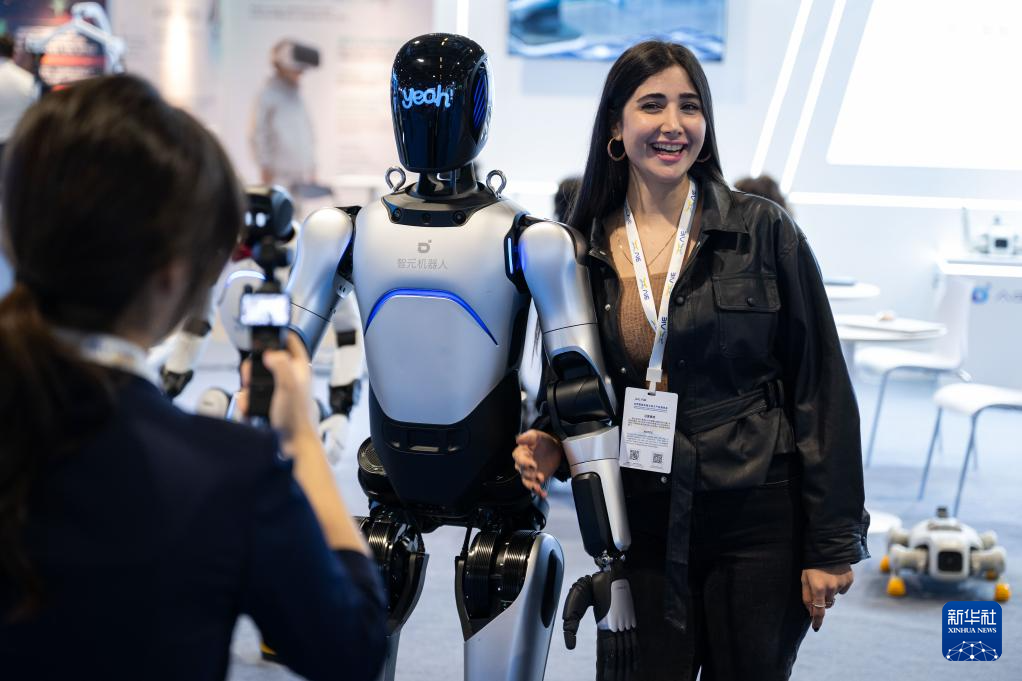
柔性屏,打开“显示”新视窗
Ren Min Ri Bao· 2025-12-05 00:07
Core Insights - The display technology is rapidly transitioning from "rigid" to "flexible," with flexible displays increasingly applied in consumer electronics, commercial spaces, and smart interactions [1] - Recent advancements include the development of high-performance stretchable polymer light-emitting diodes (PLED) by the Chinese Academy of Sciences and a prototype stretchable display by LG, achieving approximately 53% stretchability [1] - Flexible displays are reshaping human-computer interaction and creating a new generation of industrial clusters with applications ranging from foldable phones to curved screens [1] Group 1: Flexible Display Technology - Flexible displays are not merely bent versions of traditional glass screens; they require a multi-layered structure that includes flexible substrates, electronic components, packaging films, and cover plates [2] - The flexible substrate materials, such as polyimide and polyester, are essential for withstanding high temperatures and numerous folds without deformation [2] - Core electronic components like thin-film transistors (TFT) and organic light-emitting diodes (OLED) rely on high-performance materials to ensure rapid current flow and self-emission capabilities [3] Group 2: Packaging and Protection - Packaging technology is crucial for protecting flexible displays from environmental factors like oxygen and moisture, with ideal materials being lightweight, flexible, and offering excellent moisture and oxidation resistance [4] - Researchers are developing multi-layer composite packaging and exploring self-healing coatings to enhance the longevity of flexible displays while maintaining their flexibility [4] Group 3: Market Expansion and Applications - The global market for flexible displays is expanding, with projections indicating that shipments of flexible AMOLED panels will reach 631 million units by 2024, accounting for 42% of the smartphone screen market [5] - By 2031, the flexible display market is expected to exceed $173 billion, with a compound annual growth rate of 34.3% [5] - Applications of flexible displays are broadening across various sectors, including smart terminals, wearables, automotive, healthcare, and public services [5] Group 4: Innovations in Wearables and Automotive - In the smart terminal sector, flexible displays are enhancing product forms, with Huawei set to release a foldable laptop with an 18-inch screen in 2025 [5] - Flexible displays are transforming automotive interfaces, with companies like Mercedes and BMW integrating flexible OLED screens into their vehicles for improved interaction [6] Group 5: Healthcare and Public Services - In healthcare, flexible displays are being integrated into wearable medical devices for real-time monitoring of health parameters [7] - Public services are adopting large flexible OLED screens for advertising and information dissemination, with applications in venues like the Paris Olympics [7] Group 6: Future of Intrinsic Flexibility - Current flexible displays rely on external structures for deformation, facing challenges such as fragility and resolution loss [8] - The development of intrinsic flexible materials aims to address these issues by enabling the display itself to withstand deformation through molecular structure and micro-design [9] - Intrinsic flexibility could lead to new applications, integrating sensors and AI for real-time data analysis and adaptive interaction [9][10]
哈尔滨智铸网智能科技有限公司成立 注册资本10万人民币
Sou Hu Cai Jing· 2025-12-04 22:45
Core Viewpoint - Harbin Zhizhu Network Intelligent Technology Co., Ltd. has been established with a registered capital of 100,000 RMB, focusing on various technology and intelligent equipment services [1] Company Overview - The company is represented by Ren Yongxian and operates in the field of technology services, development, consulting, and promotion [1] - It specializes in the sales of smart home consumer devices, smart vehicle-mounted equipment, and artificial intelligence hardware [1] Business Scope - The business scope includes: - Sales of intelligent basic manufacturing equipment and material handling equipment [1] - Sales of intelligent warehousing equipment and port handling equipment [1] - Manufacturing of smart devices for sports consumption and cultural venues [1] - Sales of wearable smart devices and intelligent instruments [1] - Development and sales of artificial intelligence public data platforms and IoT technologies [1] - Manufacturing and sales of information security devices and software [1] - Services related to blockchain technology [1]
区块链技术保障农产品溯源安全
Sou Hu Cai Jing· 2025-12-04 13:27
Core Insights - Blockchain technology is enhancing food safety by providing transparent and reliable traceability for agricultural products [1][3][5] Group 1: Blockchain Technology in Agriculture - Traditional agricultural traceability systems rely on centralized databases, which are prone to data tampering, leading to consumer distrust [3] - Blockchain's decentralized nature addresses this issue by creating a distributed digital ledger that records the entire lifecycle data of agricultural products across multiple nodes, ensuring data authenticity and immutability [3] Group 2: Consumer Benefits - Consumers can scan QR codes on product packaging to access the complete "growth diary" of agricultural products, enhancing transparency and trust [5] - This level of transparency not only builds consumer confidence but also provides a value endorsement for high-quality agricultural products [5] Group 3: Producer Advantages - Blockchain technology helps prevent counterfeit products and protects brand reputation, allowing for quick identification and recall of products in case of quality issues [5] - Complete production data supports standardized agricultural practices, aiding farmers in optimizing cultivation processes and improving product quality [5] Group 4: Technological Integration - Blockchain is often integrated with IoT and big data technologies, where sensors automatically collect environmental data, and smart contracts execute predefined rules, reducing human intervention [5] - This multi-technology integration makes agricultural traceability systems more intelligent and efficient [5] Group 5: Future Prospects - The continuous maturation of blockchain technology presents vast application prospects in agriculture, transforming traceability methods and reshaping trust mechanisms within the agricultural supply chain [5] - Each agricultural product having a "digital identity" allows consumers to feel more secure about their food, while also promoting higher quality agricultural production [5]


【IPO前哨】软银押注+全球销冠!移芯通信冲击港股,5G新品将量产
Sou Hu Cai Jing· 2025-12-04 11:54
Core Viewpoint - Yixin Communication is preparing for an IPO on the Hong Kong Stock Exchange, aiming to raise funds for product diversification, R&D enhancement, and market expansion [1][4]. Company Overview - Founded in 2017, Yixin Communication is a leading player in the cellular communication chip sector, ranking first in China and third globally with a market share of 15.3% [2]. - The company has a strong product matrix covering low, medium, and high wireless transmission speeds, with notable market leadership in NB-IoT and Cat.1bis products [2][4]. Financial Performance - Yixin Communication has shown steady revenue growth, with projected revenues of RMB 4.1 billion in 2022, RMB 5.33 billion in 2023, and RMB 5.52 billion in 2024 [8][9]. - The company successfully turned a profit in 2024, achieving a net profit of RMB 12.4 million, with further growth expected in 2025 [8][12]. Investment and Shareholding - The company has raised a total of RMB 1.419 billion through six rounds of financing, attracting investments from notable firms such as SoftBank Vision Fund and Qiming Venture Partners [4][6]. - The largest shareholder is the founder Liu Shi, holding 16.23% of the shares, followed by Hasegawa and SoftBank Vision Fund [6]. Product Development and Market Strategy - Yixin Communication is focusing on the development of two significant 5G products: the 5G RedCap chip and the ultra-fast 5G eMBB chip, expected to launch in 2026 and 2027 respectively [12]. - The company aims to leverage its low power consumption and cost advantages while enhancing functionality for industrial IoT applications [12]. Customer Base and Risks - The company has expanded its customer base to over 40 component clients, but faces a high customer concentration risk, with 87.9% of revenue coming from the top five clients [12][14]. - Diversifying the customer base is crucial for mitigating risks associated with high dependency on a few clients [13][14].

捷安泊交通科技(天津)有限责任公司成立,注册资本500万人民币
Sou Hu Cai Jing· 2025-12-04 10:36
Core Viewpoint - Recently, a new company named Jieanbo Transportation Technology (Tianjin) Co., Ltd. was established, with a registered capital of 5 million RMB, fully owned by Jieanbo Transportation Technology (Liaoning) Co., Ltd. [1] Group 1: Company Information - The legal representative of Jieanbo Transportation Technology (Tianjin) Co., Ltd. is Ji Weifeng [1] - The company is registered with a capital of 5 million RMB [1] - The business scope includes engineering and technical research and experimental development, technology services, parking services, and various technology-related services [1] Group 2: Business Scope - The company offers services in areas such as IoT technology, AI public data platforms, big data services, software development, and 5G communication technology [1] - Additional services include electric vehicle charging infrastructure operation, rental services, and sales of automotive parts and machinery [1] - The company is located in Tianjin, specifically in the Baodi District, and is classified under the scientific research and technical service industry [1]
高通第五年发布物联网创新案例集,携手中国伙伴共促全球创新落地
Huan Qiu Wang· 2025-12-04 09:17
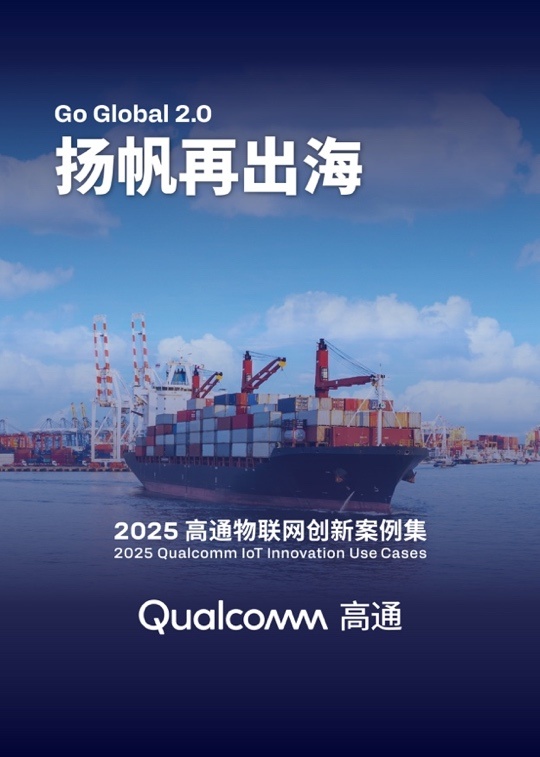
Core Insights - Qualcomm has released its fifth annual IoT innovation case study collection, featuring 22 innovative cases from 9 industries, showcasing the company's collaboration with nearly 100 partners over five years [1][3] - The case studies highlight the differentiated innovation and competitiveness of Chinese enterprises in global business expansion, demonstrating how they address user pain points and provide valuable references for industry transformation [3][13] Industry Focus - The case studies illustrate real-world applications of IoT solutions in various sectors, including agriculture, where smart agricultural robots enhance efficiency, and in Southeast Asia, where AR smart glasses revive cherished memories [3][8] - Qualcomm's Chairman for China, Meng Pu, emphasized the company's commitment to supporting over 16,000 IoT customers globally and the integration of AI and connectivity as a new industrial foundation [3][8] Technological Innovation - Qualcomm's new brand "Qualcomm Leap" was launched to integrate advanced edge AI, high-performance low-power computing, and connectivity into customized hardware and software solutions [5][7] - The "Qualcomm Leap" product suite enables businesses to make informed decisions, improve operational efficiency, and accelerate time-to-market, which is crucial for various industries [5][11] Application Scenarios - The case studies cover a wide range of applications, including smart agriculture, where intelligent equipment enhances crop planting efficiency, and embodied intelligence, where AI is integrated into robots for improved performance [8][9] - In industrial settings, AI is becoming the foundational logic for reconstructing manufacturing systems, with solutions achieving over 95% detection rates in sorting applications [11][13]

非洲手机之王净利大跌45%,盯上储能、电动车
21世纪经济报道· 2025-12-04 07:51
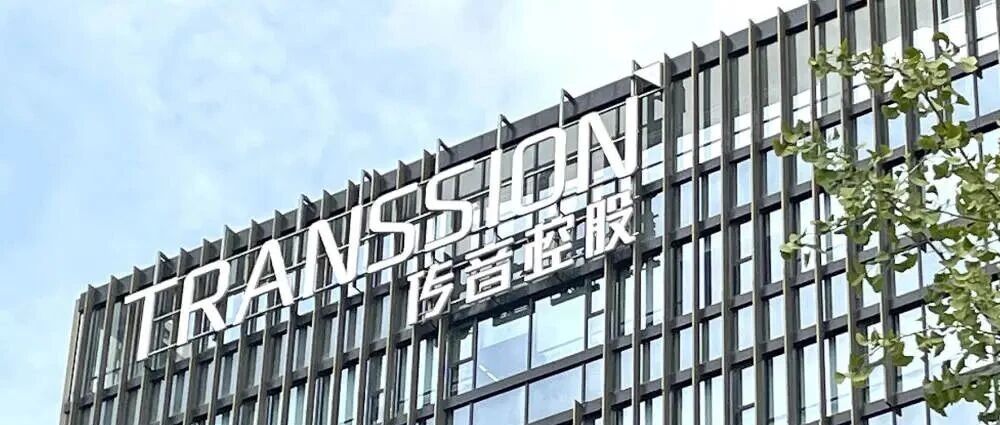
Core Viewpoint - Transsion Holdings, known as the "King of African Mobile Phones," is seeking to shed this label by applying for an H-share listing on the Hong Kong Stock Exchange, aiming to diversify its revenue streams beyond mobile phones [1]. Group 1: Market Position and Performance - Transsion Holdings has achieved a global smartphone shipment of 28.6 million units in Q3, ranking fourth globally with a year-on-year growth of 12% [1]. - The company's revenue for the first three quarters of this year was 49.543 billion yuan, a decrease of 3.33% year-on-year, with net profit dropping by 44.97% [6]. - The stock price of Transsion Holdings has fallen by 30% since reaching a peak of 104.9 yuan in September, closing at 68.62 yuan on December 3 [3][1]. Group 2: Competitive Landscape - Domestic smartphone manufacturers are increasingly targeting emerging markets, intensifying competition for Transsion [6]. - Xiaomi, Honor, and OPPO are notable competitors, with Xiaomi's market share in Africa growing by 34% year-on-year, while Honor's shipments increased by 158% [6][7]. - Omdia forecasts a 6% decline in the African smartphone market by 2026 due to rising BOM costs and supply chain pressures [7]. Group 3: New Growth Areas - Transsion is exploring new growth avenues, including energy storage and electric two-wheeled vehicles, with IoT products and other revenues reaching 2.568 billion yuan, accounting for 8.8% of total revenue [4][11]. - The company has launched energy storage products under the DYQUE Energy brand, targeting both high-end and budget markets [9][11]. - The REVOO brand for electric two-wheeled vehicles was established in 2022, with plans for expansion into South Asia and Latin America [12].

2026年值得期待的十大技术应用都有啥?
Huan Qiu Wang Zi Xun· 2025-12-04 06:38
Core Insights - The article highlights the rapid advancements in technology expected by 2026, including emotional AI, wearable health devices, renewable energy innovations, and more, which are set to transform daily life and work environments [1]. Group 1: Emotional AI and Personalization - Emotional AI assistants are evolving beyond traditional voice assistants like Siri and Alexa, becoming capable of understanding human emotions through tone and expression, thus providing personalized support [2]. - These AI systems are increasingly being integrated into mental health support and personal development, marking a significant shift in the role of technology in daily life [2]. Group 2: Wearable Health Technology - Next-generation wearable devices are anticipated to monitor vital health metrics in real-time, shifting healthcare from reactive to proactive approaches [3]. - Innovations such as smart skin patches and AI watches are expected to provide early warnings for health risks, contributing to personalized health management [3]. Group 3: Renewable Energy Innovations - New night-time solar panels that capture infrared radiation are expected to overcome previous limitations of solar energy, enabling continuous power supply even in darkness [4]. - Advances in lithium-sulfur and solid-state battery technologies are projected to enhance energy storage, significantly improving electric vehicle performance and promoting sustainable transportation [4]. Group 4: Brain-Computer Interfaces - Brain-computer interface technology is moving from medical applications to everyday use, allowing users to control devices through thought, which could revolutionize rehabilitation and enhance daily life [6]. - This technology is expected to play a role in various fields, including prosthetics and augmented reality [6]. Group 5: Space Economy - The space economy is poised for growth, with reduced costs for suborbital flights and the emergence of zero-gravity hotels, indicating a new era of space exploration and commercial opportunities [7]. - Companies are exploring asteroid mining, suggesting a potential new frontier for resource acquisition [7]. Group 6: AI in Education - AI-driven personalized education is set to replace standardized teaching methods, adapting to individual learning styles and enhancing engagement for both children and adults [8]. - This transformation in education is expected to significantly impact workforce adaptability in response to industry changes [8]. Group 7: Quantum Computing - Quantum computing is anticipated to become practical by 2026, potentially solving complex problems beyond the capabilities of classical computers [9]. - Applications in pharmaceuticals and supply chain optimization could drastically reduce costs and timeframes in various industries [9]. Group 8: Smart Cities - The integration of AI and IoT technologies is expected to create smarter cities, improving traffic management, waste collection, and security systems [10]. - These advancements aim to enhance urban living by making cities cleaner, safer, and more efficient [10]. Group 9: Robotics - Robotics technology is expected to permeate everyday life, with applications in kitchens, construction, and elder care, making robots an integral part of daily routines [11]. - The decreasing costs and advancements in AI are driving this trend, leading to widespread adoption of robotic solutions [11]. Group 10: Bioprinting - The bioprinting field is projected to experience significant advancements, enabling the creation of disease models and personalized medical treatments [12]. - This technology could revolutionize organ transplantation and food production, addressing future challenges in healthcare and food security [12].