
绿色金融

Search documents
服务区域绿色发展 交通银行浙江省分行落地辖内首笔绿色外债试点业务
Zhong Guo Jin Rong Xin Xi Wang· 2025-12-16 07:28
Core Viewpoint - The successful implementation of the first green foreign debt pilot business by Bank of Communications in Zhejiang Province marks a significant step in translating green foreign debt policies into practice, providing local enterprises with new financing channels and reducing cross-border financing costs [1][2]. Group 1: Policy Implementation - The green foreign debt pilot policy in Zhejiang Province was officially introduced in December this year, leading to the rapid establishment of a joint service team by Bank of Communications to support enterprises [1]. - The team includes marketing and professional support, with proactive engagement from customer managers to meet enterprise needs and in-depth research on policy details by the international business team [1]. Group 2: Company Profile - The borrowing enterprise, Zhejiang Kaisi Technology Development Co., Ltd., established in 2008, focuses on the research, production, and sales of cosmetic raw materials and is recognized as a national high-tech enterprise [1]. - The company is also classified as a green specialized enterprise and is committed to low-carbon transformation through technology upgrades and energy efficiency improvements [1]. Group 3: Project Details - The green foreign debt of $1.5 million will be specifically used for energy-saving upgrades and process optimization of production equipment, further reducing carbon emissions [2]. - The successful registration of this green foreign debt is a key outcome of collaboration among banks, enterprises, and government, creating a replicable and scalable service model [2].

微众银行绿色普惠贷款模型成功入选深圳金融科技创新监管工具
Zhong Guo Jing Ji Wang· 2025-12-16 06:42
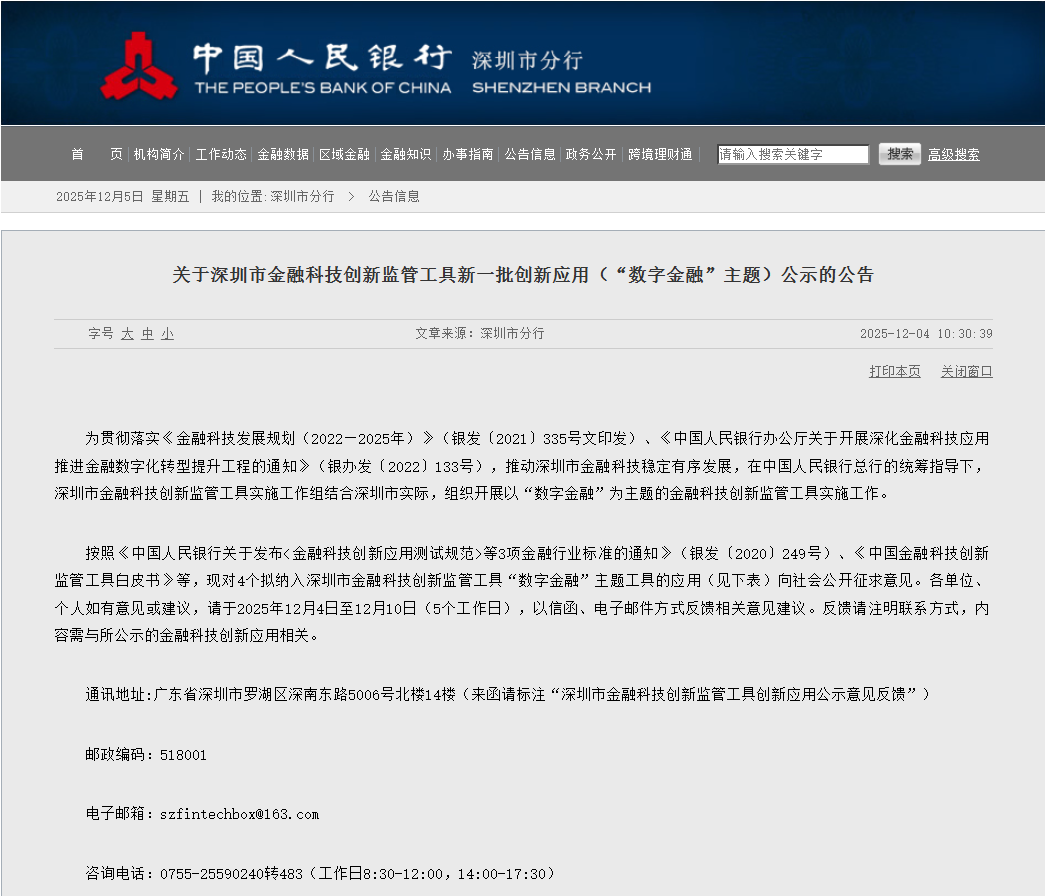
近日,微众银行与盟浪可持续数字科技(深圳)有限责任公司共同研发的"基于大数据技术的绿色普惠信贷服务"项目,已成功通过中国人民银 行深圳市分行金融科技创新监管工具的项目评审与公示,正式入选新一批创新应用,标志着微众银行在"数据科技+绿色金融"的融合应用领域再次取 得具有标杆意义的实践突破。 | | 文章来源:深圳市分行 | 2025-12-04 10:30:39 | | --- | --- | --- | | 字号 太 史 少 | | | | 序号 | 创新名称 | 应用类型 | 申请机构 附件 | 创新应用声明书及 | | --- | --- | --- | --- | --- | | | 墓于大数据技术的绿色 普 | | 深圳前海微众银行股份有限公司、盟 | | | | | 全融服务 | 浪可持续数字科技(深圳)有限责任附件1 | | | | 惠信贷服务 | | 公司 | | 图源:中国人民银行深圳市分行公示截图 金融科技创新监管工具是中国人民银行在《金融科技发展规划(2022-2025年)》等政策指引下,为引导金融科技守正创新、安全发展而构建的 重要机制。本次深圳以"数字金融"为主题组织开展实施,旨在遴选 ...

锚定国际绿色金融枢纽建设 申万宏源助力上海绿色金融高质量发展
Shang Hai Zheng Quan Bao· 2025-12-16 06:05
Core Viewpoint - The construction of Shanghai as an international green finance hub is integral to China's modernization strategy, with Shenyin Wanguo (申万宏源) playing a pivotal role in promoting green finance and sustainable development [1][2]. Group 1: Strategic Integration - The establishment of the Shanghai International Green Finance Hub requires collaboration across various market participants, with securities firms like Shenyin Wanguo serving as essential intermediaries [2]. - Shenyin Wanguo has formed a "Green Finance Service Group" to enhance coordination between different business lines, ensuring effective implementation of green finance initiatives [2]. - The company has provided nearly 100 billion yuan in financing services to green industries in the Yangtze River Delta over the past three years, demonstrating its commitment to national responsibilities [2]. Group 2: Implementation Pathways - Shenyin Wanguo leverages its full licensing advantages to offer integrated services, including financing, investment, research, and advisory, to support the transition of industries towards green and high-end development [4]. - The company has facilitated over 200 billion yuan in equity financing for nearly 20 green industry enterprises since 2022, focusing on sectors like renewable energy and high-end manufacturing [4]. - In the debt financing sector, Shenyin Wanguo has underwritten over 30 green corporate bonds totaling nearly 40 billion yuan, including a record 10 billion yuan low-carbon transition bond for China Baowu Steel Group [5]. Group 3: Future Focus - Shenyin Wanguo aims to enhance its service offerings by innovating products such as green REITs and carbon financial derivatives, expanding the boundaries of green finance [8]. - The company plans to strengthen cross-border collaboration to attract more international capital into Shanghai's green assets, thereby increasing the hub's global influence [8]. - There is a commitment to building a professional team skilled in both finance and industry to support the development of the Shanghai International Green Finance Hub [9].
中信银行呼和浩特分行扎实做好金融“五篇大文章”
Zhong Guo Jin Rong Xin Xi Wang· 2025-12-16 05:52
Core Viewpoint - China CITIC Bank Hohhot Branch is committed to implementing the spirit of the Central Financial Work Conference, focusing on high-quality development in Inner Mongolia by integrating comprehensive financial services into its management processes [1] Group 1: Technology Finance - The bank prioritizes credit for technology enterprises, enhancing its comprehensive financial service capabilities for these companies [2] - It leverages CITIC Group's unique advantages to create tailored cooperation plans and diverse service models, such as "Tech Innovation E-Loan" [2] - As of Q3 2025, the bank's technology finance loan balance reached 9.6 billion, with general loans increasing by 551 million since the beginning of the year [2] Group 2: Green Finance - The bank positions green finance as a key strategy for supporting high-quality development in the region, offering differentiated financial services based on industry characteristics [3] - It has introduced innovative products like low-carbon/zero-carbon park loans and carbon emission rights pledge financing to address financing challenges for green projects [3] - The green loan balance is nearly 3 billion, with an increase of approximately 400 million since the beginning of the year [3] Group 3: Inclusive Finance - The bank focuses on improving financial services for small and micro enterprises, agriculture, and individual businesses, addressing financing difficulties through fee reductions and process optimization [4] - It promotes the "Credit E-Loan" series and has established a dedicated approval team for inclusive finance, resulting in a nearly 600 million increase in small micro-enterprise loans since the beginning of the year [4] Group 4: Pension Finance - The bank enhances pension financial services, providing convenient options for elderly clients and promoting the establishment of corporate and personal pension plans [5] - It emphasizes innovation in pension financial products and aims to connect these services with health and elderly care [5] Group 5: Digital Finance - The bank is improving the coverage and efficiency of digital financial services, utilizing online products to extend its service reach [6] - It is advancing digital transformation in areas such as digital services, data governance, and AI+BI, while also providing nearly 900 million in loans for big data, blockchain, and cloud computing industries [6] - The bank aims to continue delivering innovative financial measures to support high-quality development in Inner Mongolia [6]

夯实文化软实力 积极履责显担当 | 江海证券党委书记、董事长赵洪波:以文铸魂,履责于行,赋能黑龙江发展新质生产力
Zhong Guo Zheng Quan Bao· 2025-12-16 04:36
Core Viewpoint - The article emphasizes the role of Jianghai Securities in promoting financial culture and social responsibility, aligning with national strategies to build a strong financial nation and support local economic development [1]. Group 1: Financial Culture and Social Responsibility - Jianghai Securities aims to strengthen cultural soft power and fulfill social responsibilities by sharing typical cases and advanced experiences in financial culture [1]. - The company focuses on creating a warm financial brand and providing services that enhance people's well-being, emphasizing the integration of financial services with local needs [2]. Group 2: Financial Services and Innovations - Jianghai Securities has developed a comprehensive financial service system for the elderly, including pension financial products and services, while also enhancing digital accessibility [3]. - The company is committed to technological innovation, implementing a digital transformation strategy to improve service quality and operational efficiency [4][6]. - Jianghai Securities is building a collaborative innovation system to provide diverse financing services for local technology enterprises, promoting a positive cycle between technology, industry, and finance [5]. Group 3: Commitment to Local Economic Development - The company actively supports green finance initiatives, integrating ESG management into its operations and contributing to the development of low-carbon industries [7]. - Jianghai Securities is involved in rural revitalization efforts, enhancing local industry dynamics and supporting public welfare projects to improve living conditions [8]. - The company aims to optimize its financial service supply structure, focusing on innovation and practical service to contribute to the development of new productive forces in the context of China's modernization [8].

2025中国ESG投资白皮书发布 揭示高质量发展新图景
Zhong Guo Jing Ji Wang· 2025-12-16 02:56
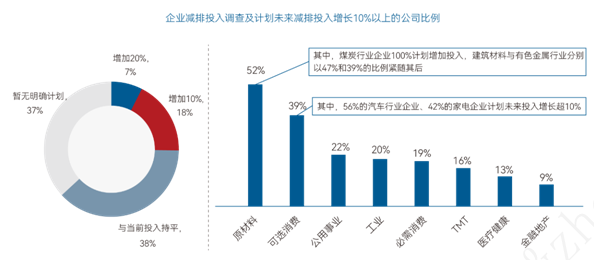
Core Viewpoint - The "White Paper on the Development and Innovation of China's ESG Investment (2025)" indicates that by 2025, China's ESG ecosystem will transition from advocacy to a new phase characterized by "policy support, corporate leadership, and capital empowerment" [1] Group 1: Policy Framework - 2025 marks a watershed year for China's ESG policy system, showcasing features such as "standard unification, coverage expansion, mandatory implementation, and institutional empowerment" [2] - The "Green Finance Support Project Directory (2025 Edition)" achieves cross-departmental standard unification [2] - The national carbon market will expand to include industries like steel, cement, and electrolytic aluminum, covering over 60% of emissions [2] - The sustainable disclosure system is expected to be largely established by 2030, with ongoing releases of corporate sustainability disclosure standards by the Ministry of Finance [2] - New regulations will institutionalize the participation of institutional investors in corporate governance [2] Group 2: Corporate Transformation - Companies are shifting their view of ESG from a cost burden to a strategic engine for cost reduction and efficiency enhancement, with over 63% planning to maintain or increase future emissions reduction investments [3][5] - Economic benefits are becoming the primary driver for increased emissions reduction investments, with 81% of companies citing "lowering energy or raw material costs" as a key motivation [5] - The example of Sinopec's Qingdao Refining and Chemical Company illustrates that an investment of 170 million yuan in energy efficiency improvements is expected to yield annual savings of approximately 30.72 million yuan [5] Group 3: Market Dynamics - 54% of surveyed companies prioritize low-carbon suppliers, and 38% have required suppliers to take carbon reduction actions, particularly in the automotive and electronics sectors [7] - 30% of companies view attracting green financing as a motivation for emissions reduction, with green loans reaching 4.351 trillion yuan and green bond issuance at 840.2 billion yuan by September 2025 [7] - Companies with overseas operations are more likely to increase emissions reduction investments due to downstream customer demands, with 55% of such companies responding positively compared to only 10% of those without overseas operations [7] Group 4: Capital Engagement - Institutional investors, represented by public funds, are evolving from mere capital providers to active participants in corporate governance and value creation [9] - The new Company Law lowers the threshold for shareholder proposals from 3% to 1%, facilitating greater participation from institutional investors [10] - 84% of listed companies recognize that institutional investors primarily focus on financial health, with a significant portion of rejected proposals related to related-party transactions, indicating institutional shareholders' vigilance in governance [10] Group 5: Industry Leadership - 华夏基金 is one of the earliest public funds to engage in ESG investment in China, having signed the UN Principles for Responsible Investment in 2017 [11] - The company has actively participated in over 170 ESG communications with more than 70 listed companies and has established a digital platform for proxy voting [11] - 紫顶股东服务 is a leader in voting rights management services in China, providing professional voting recommendations to institutional investors [11]
两部门发文明确绿色金融支持绿色工厂建设|绿金周报
2 1 Shi Ji Jing Ji Bao Dao· 2025-12-16 02:35
Group 1 - The rapid development of the green finance market has led to an increase in relevant information and data, with a focus on the latest trends and practices in green finance [1] - The Ministry of Industry and Information Technology and the People's Bank of China issued a notice to support the construction of green factories, aiming to enhance financial support for the green transformation of the manufacturing industry [2] - Guangdong has released two transformation financial standards to guide low-carbon transformation in specific high-carbon industries, resulting in over 40 billion yuan in credit agreements with 135 enterprises [3] Group 2 - The national carbon market saw a highest price of 61.45 yuan/ton and a total transaction volume of 2,317,372 tons, indicating a slight decrease in prices [4] - Tianjin successfully issued the first "green + new economy + rural revitalization" debt financing tool, raising 500 million yuan for renewable energy projects [5][6] - Shenzhen's first batch of green foreign debt pilot businesses has been implemented, with a total signed amount exceeding 17 million yuan, significantly reducing cross-border financing costs [7] - Shanghai has launched its first "green transformation" loan interest subsidy, amounting to 108 million yuan, to support energy-efficient upgrades in shipping [8] - Guangdong issued its first "urban and rural greening" loan for biodiversity, amounting to 320,000 yuan, linking ecological performance to credit evaluation [9]
锚定使命担当 赋能高质量发展
Jin Rong Shi Bao· 2025-12-16 02:35
Core Insights - The Central Economic Work Conference emphasizes the importance of aligning financial services with the high-quality development of the real economy, encouraging banks to contribute to the "14th Five-Year Plan" and the upcoming "15th Five-Year Plan" [1][2]. Group 1: Financial Institutions' Responses - Bank employees express a commitment to implementing the conference's spirit, focusing on enhancing service efficiency for small and micro enterprises and technology companies [2]. - Agricultural Bank's focus on rural development and urban-rural integration is reinforced, aiming to inject financial resources into key areas such as industry and rural construction [2]. - Postal Savings Bank plans to leverage its extensive rural network to innovate in property mortgage and digital inclusive finance, aligning with the conference's call for expanding domestic demand [3]. Group 2: Strategic Directions for Banking - The conference highlights the need for innovation-driven growth, guiding banks to deepen their involvement in technology finance and support regional industrial upgrades [4]. - Emphasis on green finance is noted, with banks encouraged to focus on sustainable development and the dual carbon goals, particularly in new energy and green industry sectors [4]. - Construction Bank aims to optimize housing finance policies to meet the needs of new citizens and families, enhancing service efficiency through financial technology [4]. Group 3: Community and Regional Development - Traffic Bank plans to collaborate with government departments to support new economy workers, utilizing its wealth management expertise [5]. - Banks are encouraged to actively participate in local economic development, with a focus on supporting unique regional industries and enhancing financial services [6]. - Postal Savings Bank aims to transform potential consumer demand into a driving force for domestic circulation, focusing on local consumption growth [7].





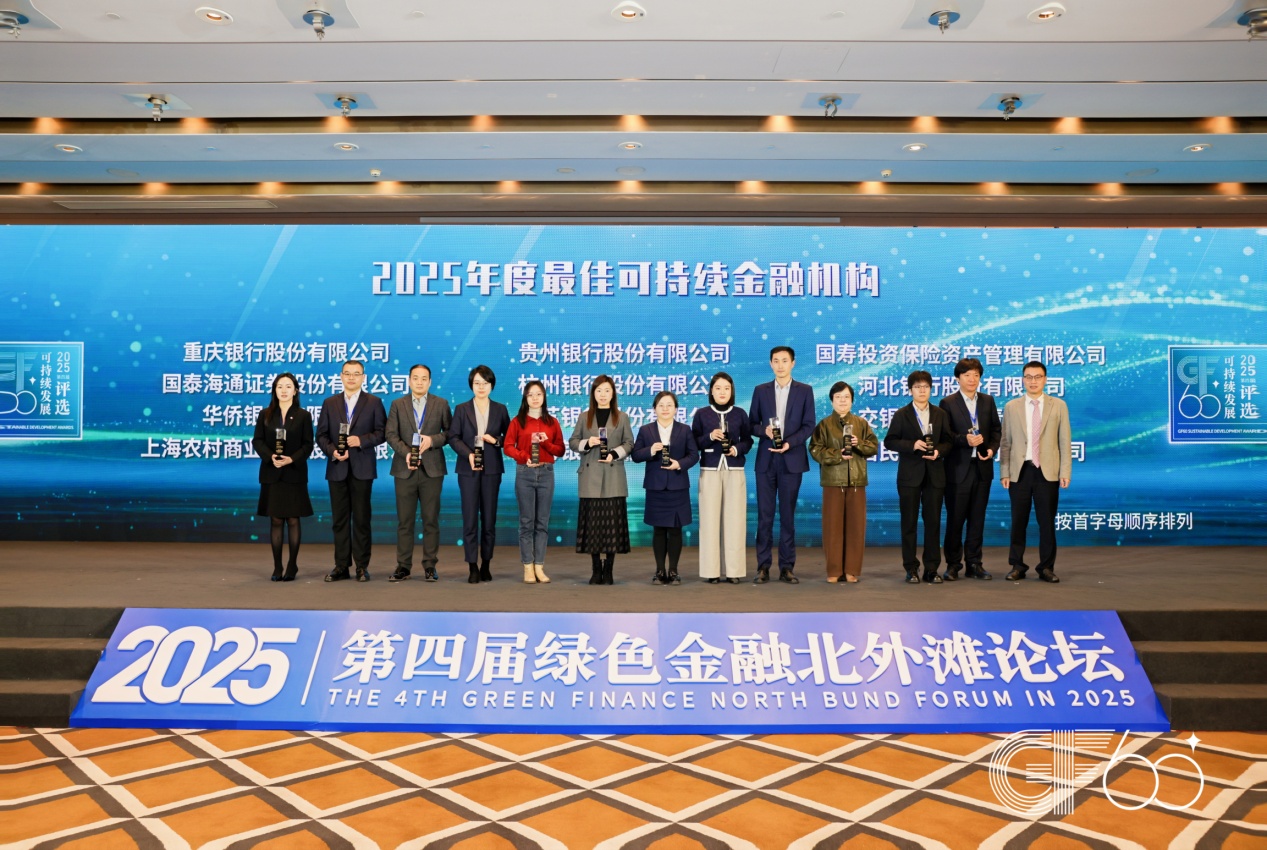
深耕绿色金融结硕果,重庆银行获评GF60最佳可持续金融机构
Jin Rong Jie· 2025-12-16 02:21
在经营层面,重庆银行将ESG治理深度融入发展战略,率先研发中西部法人银行首个ESG数字化评级系统,实现信贷资产质量全流程优化。通过气候风险压 力测试等工具,持续强化环境风险管理,同步推进绿色运营与数字化转型,不断提升资源使用效率与经营韧性。 责任编辑:栎树 在社会贡献方面,重庆银行积极服务长江经济带绿色发展,助力西部地区筑牢国家生态安全屏障,扎实书写"绿色金融"等五篇大文章,推动经济效益与社会 价值的协同共赢。截至当前,该行绿色金融业务规模已接近千亿元,并连续五年保持年均30%以上的高速增长,展现出强劲的发展动能。 (图说)GF60年度最佳可持续金融机构颁奖现场 12月11日,第四届绿色金融北外滩论坛于上海召开。重庆银行凭借在绿色金融与可持续发展领域的突出表现,获评"最佳可持续金融机构"。值得关注的是, 这已是该行连续第二年荣获GF60奖项——继2024年入选"绿色金融最佳实践案例"后再次获得认可,彰显其在该领域的持续影响力。 重庆银行相关负责人表示,此次获奖是对重庆银行坚定不移推进可持续发展银行战略、深耕绿色金融实践的再次肯定。面向未来,重庆银行将继续以"双 碳"目标为引领,全面融入重庆市绿色金融改革创新试 ...
两部门发文明确绿色金融支持绿色工厂建设
2 1 Shi Ji Jing Ji Bao Dao· 2025-12-16 02:15
Key Insights - The rapid development of the green finance market is leading to an increase in relevant information and data, with a focus on the latest trends and practices in green finance [1] Group 1: Policy Developments - The Ministry of Industry and Information Technology and the People's Bank of China issued a notice to support the construction of green factories, aiming to enhance financial support for the green transformation of the manufacturing sector [2] - The notice emphasizes using green factory evaluation results as the basis for financial support, with a goal to increase the proportion of green factories in manufacturing output from 20% to 40% by 2030 [2] - Guangdong Province released two transformation financial standards to guide low-carbon transitions in specific high-carbon industries, resulting in over 40 billion yuan in credit agreements with 135 enterprises [3] Group 2: Market Trends - The national carbon market saw a highest price of 61.45 yuan/ton and a total trading volume of 2,317,372 tons, with a total transaction value of approximately 137.5 million yuan [4] Group 3: Green Finance Practices - Tianjin successfully issued the first "green + new economy + rural revitalization" debt financing tool, raising 500 million yuan for renewable energy projects [5][6] - Shenzhen's first batch of green foreign debt pilot businesses was launched, with a total signed amount exceeding 17 million yuan, significantly reducing cross-border financing costs for local green industries [7] - Shanghai implemented its first "green transformation" loan interest subsidy, amounting to 108 million yuan, to support energy-efficient upgrades in shipping [8] - Guangdong issued its first "urban and rural greening" loan for biodiversity, amounting to 320,000 yuan, linking ecological performance to credit evaluation [9]