
城市治理

Search documents
南宁城市治理“新”力量 承载责任与温情
Xin Lang Cai Jing· 2025-12-23 00:31
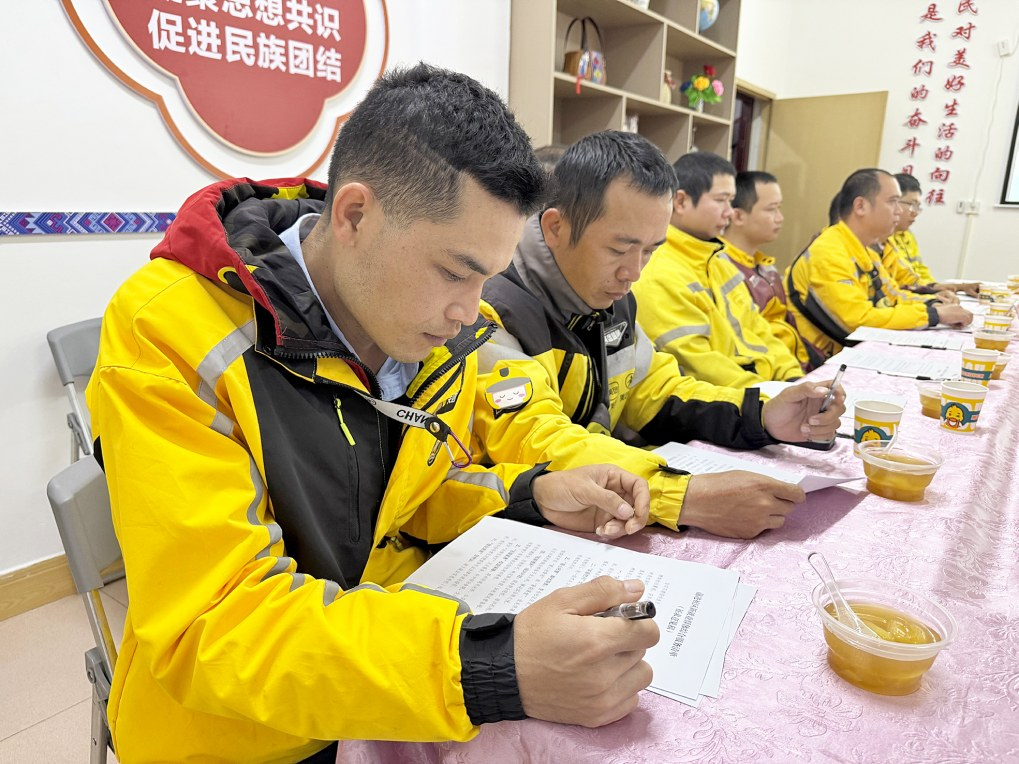
Core Viewpoint - The article highlights the significant role of delivery riders in community governance and social responsibility in Nanning, showcasing their contributions as both service providers and community guardians [5][11]. Group 1: Acts of Heroism - Delivery rider Li Jichong's heroic act of extinguishing a fire during a delivery has gained widespread attention, exemplifying the courage and responsibility of riders in emergency situations [7]. - Another rider, Huang Bin, intervened to help a boy being attacked by bees, demonstrating the willingness of riders to assist others despite personal risk [7]. Group 2: Warm-hearted Delivery - Riders are actively participating in community service initiatives, such as delivering warm meals to elderly residents, reflecting their commitment to social welfare [8]. - The "Warm Meal Delivery" program, initiated in October, customizes meals for elderly individuals based on their dietary needs, enhancing the quality of life for this demographic [8]. Group 3: Collective Strength - The establishment of the "Yongcheng Riders" volunteer service team marks a shift in the identity of delivery riders from mere service providers to community protectors, with organized training and support from local authorities [9][10]. - In just over two months, the volunteer team has conducted numerous safety patrols and community service activities, demonstrating the effectiveness of this new model in enhancing community safety and engagement [10]. Group 4: Community Co-governance - Delivery riders are transitioning from being mere "runners" to becoming active participants in community governance, reporting safety hazards and assisting in local initiatives [11]. - The "Red Riders" initiative in Jiangnan District integrates active riders into community service roles, significantly increasing their involvement in local governance and service delivery [12].

共享单车焕新归位还带“逛吃攻略”
Xin Hua Ri Bao· 2025-12-22 22:32
Core Viewpoint - The article highlights the successful implementation of a dual approach involving public representatives and the prosecution office to address the issue of shared bicycle mismanagement in Tongzhou District, resulting in significant improvements in parking order and safety for users [1][2]. Group 1: Investigation and Findings - The Tongzhou District Prosecutor's Office initiated a special investigation into shared bicycle parking issues after receiving multiple suggestions from local representatives, focusing on the root causes of improper parking [1]. - The investigation revealed various problems, including bicycles blocking traffic lanes, malfunctioning brakes, damaged helmets, and overcrowding on sidewalks, which posed safety hazards and affected urban aesthetics [1]. Group 2: Remedial Actions - Following citizen feedback regarding inconvenient parking locations, the Prosecutor's Office collaborated with urban management authorities to address vehicle management, safety hazards, and parking point planning [2]. - The urban management department implemented a strategy of "total control, dynamic adjustment, and precise deployment," which included the removal of over 1,300 improperly parked and old bicycles, the establishment of 567 new parking points, and the addition of 19 accessible ramps [2]. Group 3: Community and Government Collaboration - The successful management of shared bicycles is viewed as a collaborative effort requiring coordination between government departments, technological upgrades from companies, and civic responsibility from citizens [3].
敞开的“怀抱”,见证拔节生长(金台随笔)
Ren Min Ri Bao· 2025-12-22 22:27
城市如何让民生温度更加可感可触可及?敞开的"怀抱",恰是生动注脚。 在广东广州,第一批约800所中小学、1300多个体育场馆向市民开放预约,家门口健身有了新选择。 未来的城市会是什么样?更多的博物馆、图书馆、文化馆成为触手可及的"精神客厅",每一棵古树、每 一条河道、每一段城墙都能得其所归、化为美好生活的见证……答案,就写在老百姓舒展的笑脸里,写 在每一个"这样真好"的感叹里。期待一座座有颜值、有温度的城市敞开"怀抱",以更具活力、更接地气 的姿态拔节生长。 《 人民日报 》( 2025年12月23日 05 版) (责编:白宇、卫嘉) 在重庆荣昌,政府机关食堂节假日面向群众开放,提供卤鹅、黄凉粉、猪油泡粑等菜品,受到市民和游 客欢迎。 城市敞开"怀抱",蕴含着发展大逻辑。机关事业单位在夜间或周末向周边居民错时开放停车位,图书 馆、博物馆、美术馆、文化馆等延长开放时间或举办夜间活动,体育场、体育馆分时段对公众免费或低 收费开放……敞开一扇扇门,让公共资源造福公众,让美好生活触手可及,人与城的互动就会编织成牵 引发展的动能。 城市内涵式发展,以人为核心,向人的需求和幸福感延展"生长"。盘活存量、优化服务,开拓增量 ...
路见不平 秒级响应
Xin Lang Cai Jing· 2025-12-21 09:22
Core Viewpoint - The establishment of a WeChat work group for road issue inspection and remediation in Changsha has significantly improved the efficiency of addressing road problems, achieving a response time of less than 4 hours from issue identification to resolution [1][6]. Group 1: Implementation and Efficiency - The WeChat group includes 23 units such as public security, municipal services, and utilities, expanding from 9 members to 468, creating a closed-loop mechanism for reporting, responding, and resolving issues [1][2]. - Since its inception in July 2023, the group has coordinated the resolution of 7,458 various road issues, effectively achieving a "dynamic clearance" of road hazards [1][6]. - The traditional method of addressing similar issues often took several days due to the need for multi-department coordination, which has been streamlined through this new approach [2]. Group 2: Collaborative Governance - The initiative has broken down departmental barriers, allowing for real-time information sharing and reducing the likelihood of blame-shifting among departments [5]. - The use of a simple WeChat group for task management has proven to be a cost-effective solution, enabling full-process management without the need for complex systems [5]. - The shift in urban governance philosophy from "functional management" to "joint governance" reflects a cultural change where all departments share responsibility for urban issues [5]. Group 3: Future Developments - The city is exploring the use of AI visual technology for automatic detection of road issues, aiming to enhance the problem discovery mechanism with a more intelligent and multi-dimensional approach [4]. - The success of the WeChat group serves as a model for low-cost, high-efficiency cross-departmental collaboration in urban governance [5][6].
山东:指尖“驿站”,装下小哥的冷暖心事儿
Xin Hua Wang· 2025-12-21 02:12
Core Insights - The "New New Towards the Party" app has established a network of offline "Warm Stations" in Qingdao, enhancing convenience for delivery riders by providing charging and meal heating services, significantly improving delivery efficiency [1] - The app integrates with community access systems, allowing riders to navigate residential areas more easily, thus addressing the "entry difficulty" while ensuring safety and efficiency [2] - The app serves as a platform for new employment groups to express their needs and participate in governance, facilitating quick resolution of issues such as insurance claims through efficient communication with relevant departments [3] - The app's incentive system rewards riders for reporting community issues, allowing them to earn points that can be exchanged for various goods and services, fostering a sense of community engagement [4] Summary by Sections Warm Stations and Rider Support - The establishment of "Warm Stations" in Qingdao provides delivery riders with essential services like charging and meal heating, which has led to improved delivery times and overall satisfaction [1] - Local businesses, such as a durian seller, have taken on the role of station managers, creating a mutually beneficial relationship between riders, businesses, and the community [1] Community Integration and Services - The app's "Rider Lu Tong" feature connects with community access systems, allowing riders to enter residential areas smoothly, thus enhancing delivery efficiency [2] - The integration with the "Car Pioneer" platform helps reduce empty truck rates and offers comprehensive services for truck drivers, including legal advice and maintenance [2] Governance and Issue Resolution - The app facilitates a streamlined process for riders to report issues, with a notable case where a rider's insurance claim was resolved within three days through the app's communication channels [3] - Collaborative efforts among various departments have led to the creation of specialized insurance packages for new energy ride-hailing vehicles, reducing premiums by approximately 20% [3] Incentive Programs - The app's point system allows riders to earn rewards for community engagement, with over 700 participants in Yantai exchanging points for goods and services valued at over 30,000 yuan [4] - The points can be used for essential items and services, promoting family benefits and community involvement [4]
此心安处,是今日邯郸!
Xin Lang Cai Jing· 2025-12-20 08:45
(来源:邯郸网络广播电视台) 转自:邯郸网络广播电视台 此心安处 便是吾乡 ——2025邯郸民生实事走笔之六 "治国有常,利民为本。" 当钢筋水泥的丛林不断扩张,"安居"早已不是简单的遮风避雨,而是人们对抗城市疏离感的精神锚点;当生活节奏快到让人步履匆匆,"优居"也不再是附加 选项,而是衡量城市治理成色的核心标尺。城市发展的本质,究竟是追求天际线的高度,还是守护家门口的温度?破解老旧小区的"岁月之困"、基础保障 的"民生之惑",如何避免"重面子轻里子"的形式主义,让"住有所居"真正升级为"住有优居、居有安心"? 改造提升后的滏山花园小区一角。邯郸 从"老破小"到"幸福家": 更新的是房子,更是生活 城市的根基在民生,民生的核心在安居。一座有温度的城市,必然懂得百姓的"居住之盼"。 冬季供暖,是北方城市最直接的民生考题,考验的不仅是技术实力,更是治理者的民生情怀。供暖保障该追求"达标就行",还是"体感最优"?邯郸给出的答 案是后者。每年10月,寒意尚未浓,供暖准备已进入冲刺阶段。在果园路泵站,工作人员王福亮每天拿着巡检记录册,逐一核对管道压力、紧固螺丝,"大 网冲压阶段容不得半点马虎,确保没有滴水冒水才能让市民 ...

“为南非现代化治理提供了生动范本”
Ren Min Ri Bao· 2025-12-19 22:10
Core Insights - The article discusses the training program for South African officials in China, focusing on urban governance and modernization, highlighting the significant achievements and experiences of China in these areas [1][2][3][4][5][6][7]. Group 1: Urban Governance and Modernization - South African officials, including Mayor Nio Moseksela, are learning from China's urban governance practices, which emphasize improving public welfare, resource allocation efficiency, and reducing urban-rural disparities [1]. - The training program showcases China's success in urban governance, digital transformation, and poverty alleviation, providing a model for South Africa's modernization efforts [1][2]. - The integration of rural and urban development is emphasized, with a focus on balanced and inclusive growth through China's rural revitalization strategy [2]. Group 2: Poverty Alleviation and Economic Development - South Africa faces high unemployment and widening wealth gaps, making inclusive development a priority. China's poverty alleviation strategies serve as a valuable reference for South Africa's goals [3]. - The training highlights China's targeted poverty alleviation measures, including industry cultivation and technological support, which are seen as inspirational for South Africa's 2030 poverty eradication targets [3]. Group 3: Urban Planning and Cultural Preservation - The article discusses the importance of urban planning in maintaining historical and cultural integrity while modernizing cities, as seen in cities like Beijing and Shanghai [4]. - The integration of historical culture with modern urban development is highlighted as a key aspect of China's urban planning strategy [4]. Group 4: Digital Transformation - South African officials noted the extensive impact of China's digital transformation, which enhances public service efficiency through technologies like big data and artificial intelligence [6]. - The training emphasized the potential for South Africa to adopt similar digital governance models to improve administrative efficiency and public service delivery [6][7]. Group 5: International Cooperation and Knowledge Sharing - The article underscores China's role in fostering digital cooperation with African nations, promoting local talent development for sustainable digital transformation [7]. - The training program is viewed as a significant opportunity for South African officials to enhance their skills and knowledge, contributing to improved governance capabilities [7].
五千元奖励“意外”不意外
Xin Lang Cai Jing· 2025-12-19 07:27
Core Viewpoint - The revised "Shanghai Water and Marine Serious Violation Reporting Reward Measures" links rewards directly to the amount of fines, encouraging public participation in urban governance and transforming citizen oversight from a moral obligation to a right [1] Group 1: Reward Mechanism - The new reward system offers a maximum of 10,000 yuan for reporting violations, with a minimum reward set at 200 yuan, creating a transparent incentive structure [1] - This "responsibility pricing" approach aims to motivate citizens to become active participants rather than passive observers in urban governance [1] Group 2: Citizen Engagement - The interaction between citizens and management departments is evolving, exemplified by the case of "Measuring Brother" in Shenzhen, who actively identifies issues with public facilities [1] - The proactive response from authorities to address reported issues demonstrates a shift from being passive "complaint receivers" to active "empowerers" in urban management [1] Group 3: Social Supervision - Encouraging public participation through improved reward mechanisms helps to strengthen the social supervision network, contributing to a more secure urban environment [1]
细处发力办好百姓身边事
Jing Ji Ri Bao· 2025-12-17 00:05
为推动城市治理重心和配套资源向基层倾斜,当前各地正全面推进城市管理进社区。这并非简单的执法 延伸,而是将垃圾分类、绿化养护等领域的管理与服务深度融入社区治理,体现了城市治理理念、机 制、方式的深刻变革。 社区是城市治理的基本单元。百姓日常生活中的急难愁盼,往往就发生在社区里。 城市管理进社区,聚焦的是群众最关心的问题。违规停车、噪声扰民等问题,是居民的身边事,更是治 理者必须办实办细的"心头大事"。唯有瞄准这些痛点精准发力,才能让群众更有获得感和幸福感。 城市管理进社区,考验的是快速响应和处置能力。社区工作千头万绪,如何以最快速度接办老百姓反映 的问题,将群众急难愁盼化解在家门口?这需要健全多方协商议事机制,搭建居民、社区、职能部门联 动平台,不断探索为民服务的新路径、新方法,让治理响应速度跟上群众期待。 城市管理进社区,下沉的是优质高效服务。社区治理要将服务关口前移,走进"千家万户",听懂"千言 万语"。不仅要畅通社区居民的投诉和举报渠道,更要通过靠前服务和精准对接高效化解各类矛盾和纠 纷,让惠民便民服务直达社区。 城市管理不是单向指挥,而是共建共治共享的多元互动。要下足绣花功夫,在穿针引线中以"小切口"撬 ...
从网红流量到经典长红的辩证之道
Xin Hua Ri Bao· 2025-12-16 22:54
Core Insights - Nanjing has emerged as a prominent tourist destination during the 2025 National Day and Mid-Autumn Festival holiday, receiving over 20 million visitors and generating a total tourism revenue of 27.94 billion yuan, highlighting its status as a "internet celebrity" city [1] - The city's success is attributed to the integration of its rich historical culture with modern economic dynamics, showcasing a model for transforming transient popularity into lasting value [1] Group 1: Nanjing's Unique Appeal - Nanjing's "internet celebrity" status is derived from its unique combination of historical depth, modern aesthetics, and warm local culture, providing visitors with a profound sense of belonging [2] - The historical significance of Nanjing is evident through its cultural heritage, with nearly one million visitors to cultural and historical venues during the holiday, reflecting a deep recognition of its cultural identity [2] - Modern artistic expressions, such as the 3D immersive water curtain film at Xuanwu Lake and the immersive performances in historical districts, enhance the city's appeal by merging tradition with contemporary technology [2] Group 2: Economic and Developmental Foundations - Nanjing's robust educational and scientific resources, including 53 universities and 830,000 students, serve as a foundation for innovation and economic vitality, positioning the city as a leader in research and development [3] - The city has successfully transitioned from traditional industries to six emerging industrial clusters, establishing itself as a major software hub and attracting high-quality talent, which fosters a positive cycle of industry, talent, and urban appeal [4] Group 3: Cultural and Community Engagement - The city's governance model emphasizes community involvement and urban beautification, reflecting a commitment to enhancing the quality of life for residents and visitors alike [5] - Nanjing's high density of maternal and child facilities and initiatives like rural tourism programs demonstrate the city's inclusivity and respect for diverse community needs [6] - The friendly attitude of residents contributes significantly to the city's lasting appeal, creating a welcoming environment for tourists and fostering memorable experiences [6]