文明交流互鉴

Search documents
海内外学者共寻何为中国、何以中国
Ren Min Ri Bao· 2025-10-15 23:14
Group 1 - The Second World Sinology Conference was held in Shanghai from October 13 to 15, 2025, with approximately 500 guests from over 50 countries and regions attending [1] - The theme of the conference was "Historical China and Contemporary China from a Global Perspective," focusing on the continuity and innovation of Chinese civilization [1] - President Xi Jinping expressed hope for experts and scholars to act as bridges between Chinese and foreign civilizations, promoting the study of world Sinology and cultural exchanges [2] Group 2 - Increasing numbers of scholars are focusing their research on China, establishing world Sinology as an important academic bridge connecting China and the world [2] - The conference highlighted that understanding contemporary China requires a deep understanding of its historical context, emphasizing the importance of historical perspectives in current studies [4] - The conference also addressed the need for cooperation and dialogue among different cultures and countries to foster a comprehensive understanding of China [6] Group 3 - The conference featured discussions on the significant changes in China over the past decades, with scholars noting the importance of firsthand experiences in understanding the country [3][4] - The release of the "Shanghai Initiative" emphasized that world Sinology is not only a research area but also a platform for civilizational dialogue, encouraging collaboration among experts from various fields [6]
重温千年交往历史 感受人文交流脉动
人民网-国际频道 原创稿· 2025-10-14 01:48
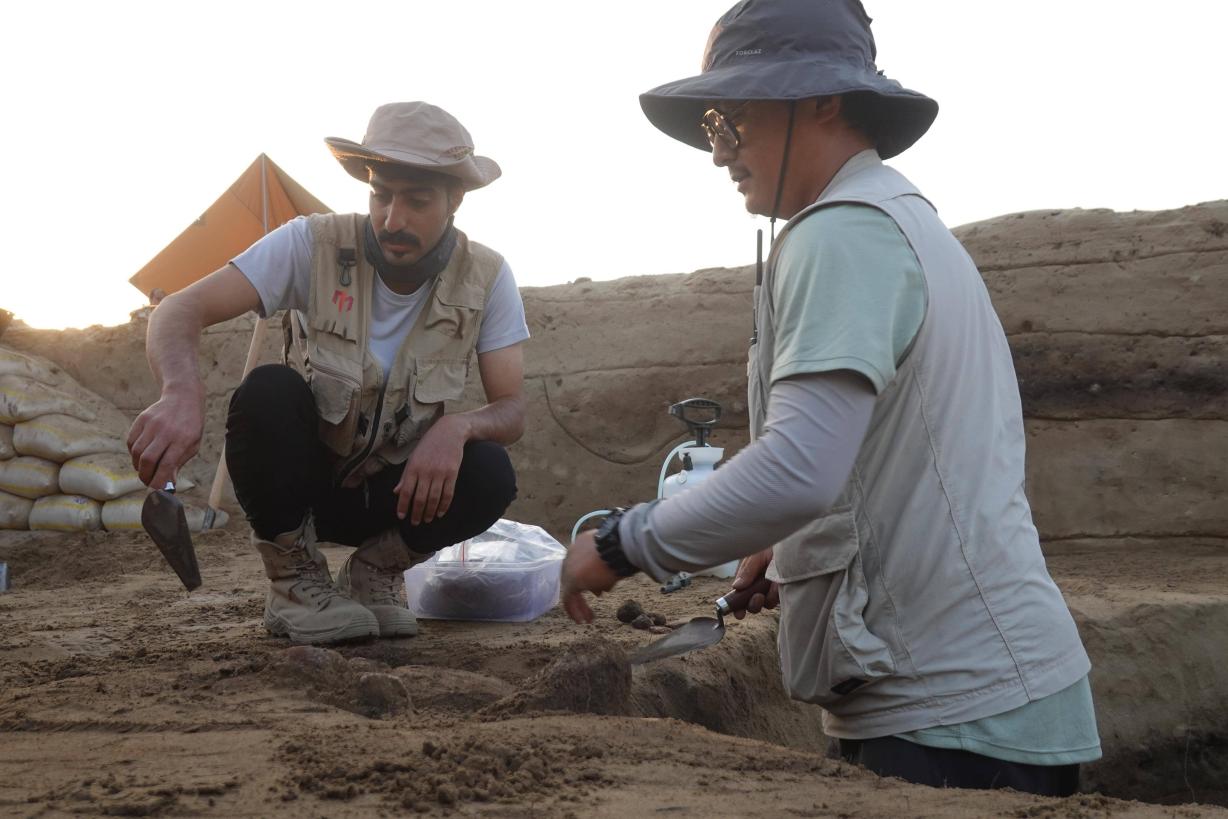
Core Viewpoint - The joint archaeological project between China and Saudi Arabia at the Selin Port site highlights the historical maritime exchanges between the two civilizations, showcasing significant discoveries that enhance understanding of ancient trade routes and cultural interactions [1][2][3]. Group 1: Archaeological Discoveries - The archaeological team has uncovered two pottery jars and a unique type of stove, indicating cooking practices of the time, with evidence of soot found inside [2]. - Significant artifacts have been discovered, including a coin from the Abbasid dynasty, which corresponds to China's Tang and Song dynasties, and various other relics such as bronze plates and porcelain fragments [2][3]. - The Selin Port site has revealed multiple layers of historical activity, indicating its long-term significance as a trading hub due to its strategic location for maritime and land transportation [2]. Group 2: Collaborative Efforts - The joint archaeological efforts began in 2016, formalized through a cooperation agreement, and have involved multiple excavations leading to important findings [2][3]. - The project has fostered collaboration between young archaeologists from both countries, enhancing cultural exchange and mutual learning [3]. - The archaeological work is conducted during the winter months to avoid extreme heat, with daily meetings to discuss progress and plan future activities [3].

“《文明宣言》——人类命运共同体的美好画卷Ⅰ”国际展示并全球首发的意义
Bei Jing Qing Nian Bao· 2025-10-12 11:24
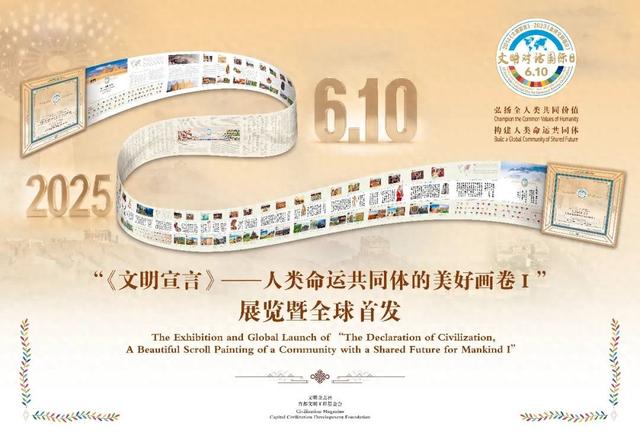
Core Points - The "Scroll of Civilization I" is a significant achievement of China's initiative for global civilization dialogue, showcasing the importance of cultural exchange and mutual understanding among nations [2][9][51] - The scroll embodies President Xi Jinping's vision of a community with a shared future for mankind, emphasizing the continuity and diversity of human civilization [2][5][41] Group 1: Conceptual Framework - The scroll materializes the concepts of "civilization exchange and mutual learning" and "community with a shared future," making them more accessible and relatable to the public [3][9] - It is based on Xi Jinping's 2014 "Civilization Declaration" and 2023 "Global Civilization Initiative," which advocate for respect for cultural diversity and the promotion of common human values [5][36] Group 2: Cultural Representation - The scroll features nearly 700 images of world heritage and intangible cultural heritage from 195 countries, creating a visual representation of human civilization [6][18] - It integrates traditional Chinese philosophy with modern visual art, presenting a three-tiered structure that highlights the diversity of global civilizations [14][20] Group 3: Global Impact - The launch of the scroll marks the establishment of the "International Day for Dialogue Among Civilizations," transforming the concept into a practical framework for ongoing cultural exchange [9][51] - It aims to reduce ideological conflicts through cultural empathy and aesthetic sharing, providing a new pathway for international cooperation [9][36] Group 4: Future Significance - The scroll serves as a long-term tool for promoting dialogue and understanding among civilizations, embedding the concept of "civilization dialogue" into global governance [44][50] - Future initiatives, such as the "Civilization Flame Relay," will further enhance the influence of Xi Jinping's cultural thoughts and encourage broader participation in global civilization exchanges [37][49]
书写美美与共的时代新篇
Shan Xi Ri Bao· 2025-10-12 00:13
文明因交流而多彩,文明因互鉴而丰富。推进人类各种文明交流交融、互学互鉴,是让世界变得更 加美丽、各国人民生活得更加美好的必由之路。 在习近平文化思想指引下,今日之中国呈现一派生机盎然的文明气象,在世界文化激荡中岿然挺 立,在与不同文明的相遇相知中交融互鉴,续写时代华章,奏响文明交响,推动共建美美与共的世界文 明百花园。 "我们要继续促进文明交流互鉴,书写不同历史文化、不同社会制度、不同发展阶段国家和平和睦 和谐相处的璀璨篇章。"这是新征程上中国向世界发出的真诚呼吁。 沿着人类文明发展的正确道路前进 "当前,国际形势变乱交织,人类站在新的十字路口,迫切需要以文明交流超越文明隔阂,以文明 互鉴超越文明冲突。" 2025年7月10日,习近平总书记在致全球文明对话部长级会议的贺信中,再次为共创人类文明美好 未来指引方向。 真挚的话语里,蕴含着对人类文明发展的深刻洞察。 当今,世界之变、时代之变、历史之变以前所未有的方式展开,国际政治经济秩序和全球治理体系 发生深刻变化,世界文化、人类文明的发展格局和演进态势也在经历调整和重塑。 放眼世界,复杂矛盾叠加碰撞—— 世界进入新的动荡变革期,保护主义、孤立主义、民粹主义思潮不 ...
书写美美与共的时代新篇——习近平文化思想的生动实践系列述评之四
Xin Hua She· 2025-10-11 15:21
Core Viewpoint - The article emphasizes the importance of cultural exchange and mutual learning among civilizations as a pathway to a more beautiful world and better lives for people across nations [1][2][3]. Group 1: Cultural Exchange and Mutual Learning - The current international situation is marked by complexity and turmoil, necessitating the transcendence of cultural barriers through dialogue and mutual learning [2][4]. - The rise of protectionism, isolationism, and populism poses threats to human society, highlighting the need for a unified approach to cultural understanding [4][5]. - The increasing desire for common development and peace among people globally underscores the urgency of promoting cultural diversity and cooperation [5][6]. Group 2: China's Role in Global Civilization - Under the guidance of Xi Jinping's cultural thought, China is committed to promoting a civilization view that emphasizes equality, mutual learning, dialogue, and inclusiveness [6][11]. - The establishment of the International Day of Civilizational Dialogue reflects a global desire for cultural dialogue and human progress, receiving widespread support from the international community [6][10]. - China's cultural confidence and soft power are on the rise, as evidenced by the increasing number of foreign tourists and the global popularity of Chinese cultural products [7][8]. Group 3: Promoting Global Cooperation - The article highlights the significance of cultural exhibitions and events that showcase the richness of both Chinese and foreign civilizations, fostering mutual appreciation [10][12]. - China aims to build a community with a shared future for humanity by promoting common values and engaging in multilateral cooperation frameworks [10][11]. - The Nanshan World Civilization Forum serves as a platform for discussing harmonious coexistence among different civilizations, emphasizing the importance of dialogue and collaboration [11][12].
第三届良渚论坛10月18日启幕
Mei Ri Shang Bao· 2025-10-11 02:03
Core Points - The third Liangzhu Forum will be held from October 18 to 20 in Hangzhou, focusing on the theme "Civilization Reillumination: Cultural Heritage and Human Cultural Diversity" [1] - Approximately 400 participants, including leaders from the Ministry of Culture and Tourism, the National Cultural Heritage Administration, and representatives from UNESCO and the UN World Tourism Organization, will attend the opening ceremony [1] - The forum will feature four sub-forums and six supporting activities, with prominent experts and scholars from around the world delivering keynote speeches [1][3] Sub-Forum Summaries - Sub-Forum 1: "Civilization Roots: Historical Wisdom and Contemporary Value of Ancient Civilizations" will focus on comparative studies of world civilizations and deepen the understanding of the origins and early development of Chinese civilization [1] - Sub-Forum 2: "Practical Innovation: Site Archaeology, Major Site Protection, and Urban-Rural Coordinated Development" will share archaeological achievements and explore new paths and models for major site protection [1] - Sub-Forum 3: "Passing the Torch: Museum Function Expansion and Cultural Relics Activation" will discuss innovative paths for museums in promoting mutual understanding and sustainable development, particularly along the Belt and Road [1] - Sub-Forum 4: "Civilization Future: World Cultural Heritage and New Forms of Human Civilization" will delve into the protection, inheritance, and utilization of world heritage, emphasizing the importance of cultural exchange [1] Supporting Activities - The forum will host six supporting activities, including an international academic seminar on "Chinese Ancient Painting Art's Aesthetic Connotation and Civilization Transmission" and a themed exhibition on Song Dynasty painting [2] - The "Liangzhu Light" concert will feature a collaboration between the Philadelphia Orchestra and the Zhejiang Symphony Orchestra [2] - The China (Hangzhou) Art and Technology International Biennale will present the reconstruction trajectory of cultural ecology amid technological iterations [2] - A calligraphy art exhibition highlighting the Belt and Road cooperation theme will showcase artworks from China and the UAE [2] International Collaboration - The forum aims to enhance international influence through deep cooperation with UNESCO and the UN World Tourism Organization, inviting nearly 100 guests from around 60 countries, including renowned experts and scholars [3] - The event will showcase Zhejiang's cultural achievements and integrate "culture + technology," "culture + tourism," and "culture + livelihood" themes [3]
伟大文明向新而行(现场评论)
Ren Min Ri Bao· 2025-10-08 22:11
Core Viewpoint - The article emphasizes the continuous innovation and evolution of Chinese civilization, highlighting the significance of archaeological discoveries, particularly in the context of the Majiayao culture and its contributions to understanding early Chinese society and craftsmanship [1][2]. Group 1: Archaeological Discoveries - The Tsiwa site in Gansu's Dingxi City is identified as the largest Neolithic settlement west of the Longshan Mountains, revealing extensive evidence of housing, pottery kilns, and exquisite painted pottery [1]. - Significant findings include the first discovery of a triple rectangular layout of moats, a large-scale pottery production area, and the confirmation of a high-status, central settlement of the Majiayao culture [1][2]. Group 2: Cultural Continuity and Development - The Majiayao culture is recognized as a successor and promoter of the Yangshao culture, showcasing the development level and civilization of early societies in the western Loess Plateau around 5000 years ago [2]. - The article notes that the continuity of civilization is often intangible and requires archaeological efforts to make it visible and tangible [2]. Group 3: Economic and Social Evolution - Researchers suggest that the painted pottery of the Majiayao culture indicates a trend towards commodification and the importance of commercial development within the society [2]. - The evolution of social forms in the Majiayao culture reflects the adaptation to advancements in productivity, showcasing the dynamic nature of Chinese civilization [2]. Group 4: Cultural Exchange and Integration - The Majiayao culture is positioned at the forefront of East-West cultural exchanges, with its painted pottery influencing various regions, indicating a pre-Silk Road exchange of civilization [3]. - The article highlights the openness and inclusivity of Chinese civilization, which has absorbed various elements from other cultures, contributing to its enduring vitality [3].
“在互学互鉴中赓续文明薪火”——访纳米比亚前总统姆本巴
Ren Min Ri Bao· 2025-10-08 10:20
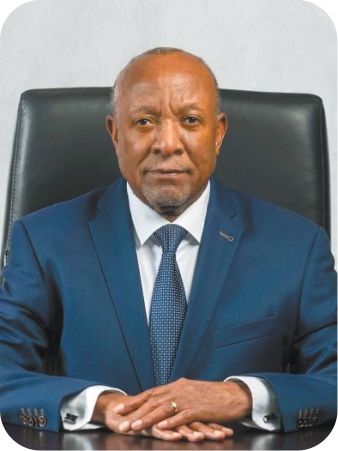
Group 1 - The Global Civilization Initiative proposed by China is seen as wise and visionary, promoting mutual understanding, cooperation, and common development among nations [1] - Civilizational dialogue is emphasized as a crucial path for human civilization progress and world peace, advocating for mutual respect among different civilizations and opposing the theory of civilizational conflict [1] - Namibia's former president expressed admiration for China's rapid technological advancements and governance experience, highlighting the importance of learning from China's development model [1] Group 2 - Namibia has maintained a strong partnership with China since establishing diplomatic relations, with mutual support during Namibia's independence struggle [2] - The comprehensive strategic partnership between Namibia and China has led to significant cooperation across various fields, with recent agreements signed during the China-Africa Cooperation Forum [2] - Agricultural cooperation is identified as a new highlight in the partnership, with Namibia aiming to enhance product quality for export to the Chinese market, which is expected to significantly increase local farmers' incomes [2]
“在互学互鉴中赓续文明薪火”(高端访谈)
Ren Min Ri Bao· 2025-10-07 21:51
Group 1 - The global civilization initiative proposed by China is seen as wise and forward-looking, promoting mutual understanding and cooperation among nations [2] - The former President of Namibia, Mbumba, emphasizes that deepening friendship and understanding is essential for achieving peace, stability, and development [2] - Mbumba highlights the importance of civilizational dialogue as a path to human progress and world peace, advocating for mutual respect among different civilizations [2] Group 2 - Namibia has received significant support from China during its independence struggle, establishing diplomatic relations immediately after independence [3] - The strategic partnership between Namibia and China has led to enhanced cooperation across various fields, with notable achievements in agricultural collaboration [3] - Namibia aims to improve the quality of its agricultural products to access the vast Chinese market, which is expected to significantly increase local farmers' incomes [3]
“洋学生”中国说|丹青送祝福!多国留学生学习体验中国书法:“我爱你中国”
Huan Qiu Wang· 2025-10-01 08:49
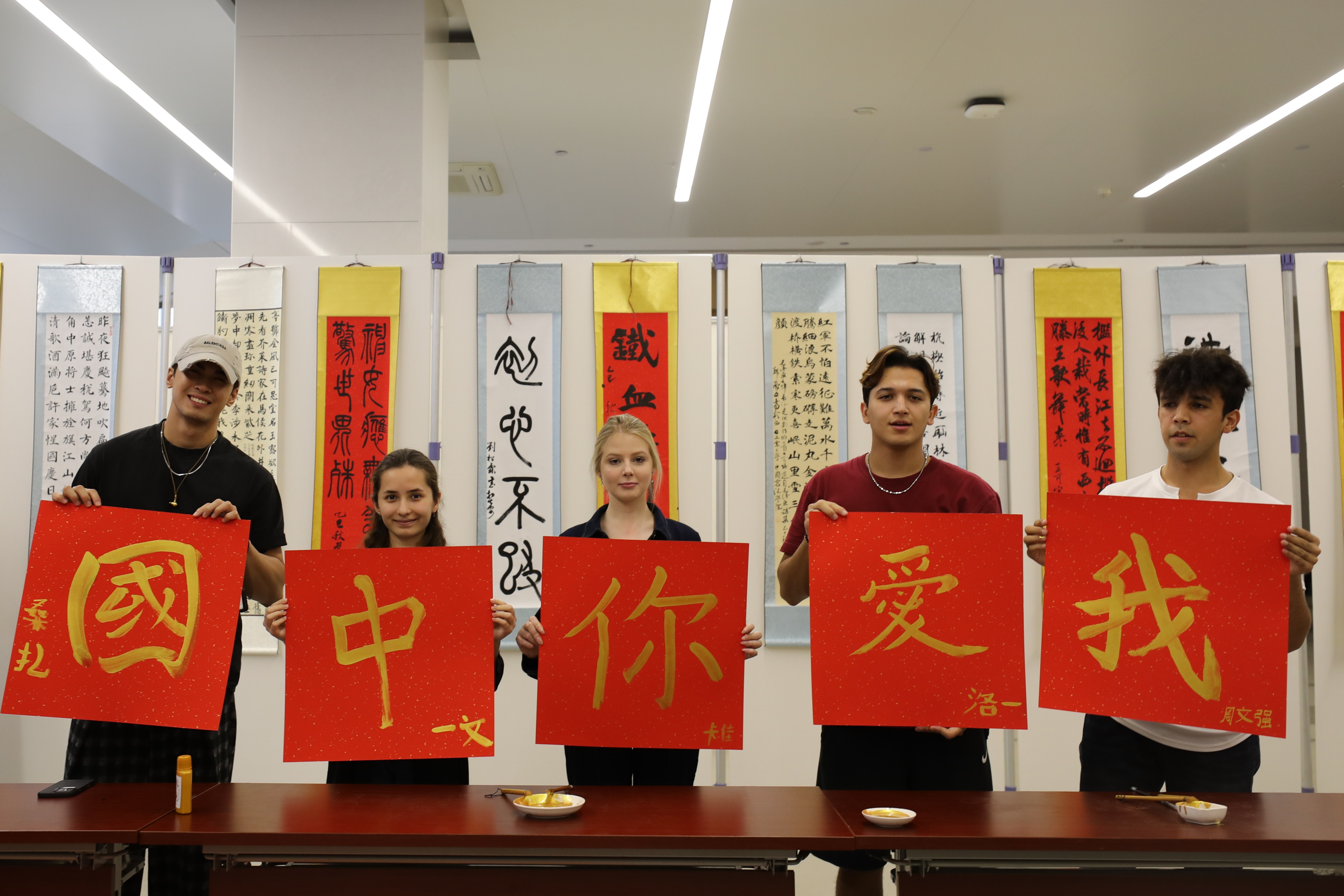
Core Points - The article highlights the growing interest and appreciation for Chinese calligraphy among international students, particularly during the National Day and Mid-Autumn Festival celebrations [1][6] - Chinese calligraphy is recognized as an important part of traditional Chinese culture and was included in UNESCO's list of Intangible Cultural Heritage in 2009, reflecting its global significance [4] - The practice of calligraphy serves as a bridge for cultural exchange, enhancing international understanding and cooperation [8] Group 1 - International students at Xi'an University of Technology are engaging in hands-on experiences with Chinese calligraphy, expressing their love for China through their art [1][6] - A student from Kyrgyzstan expressed her admiration for Chinese culture and the significance of each brushstroke in calligraphy, indicating a personal connection to the art form [6] - The article emphasizes the role of cultural exchange in fostering friendships among nations and promoting social progress [8] Group 2 - The development of Chinese calligraphy is intertwined with the evolution of Chinese characters, showcasing its historical depth and cultural richness [4] - The increasing global influence of China and its commitment to cultural exchange are contributing to the international appreciation of Chinese calligraphy [4][8] - The future of cultural exchange is seen as a means to enhance global stability and cooperation, with Chinese initiatives playing a crucial role [8]