民营经济促进法

Search documents
立白集团董事长陈泽滨:民营经济促进法让我们更加坚定做百年企业的信心
Zhong Guo Jing Ji Wang· 2025-07-07 02:10
Core Viewpoint - The implementation of the Private Economy Promotion Law marks a significant milestone for the development of the private economy in China, providing both opportunities and responsibilities for companies like Liby Technology Group [1] Group 1: Legal Support and Industry Development - The Private Economy Promotion Law clarifies the legal status of the private economy and protects the legitimate rights and interests of private enterprises in market access, technological innovation, financing support, and law enforcement [2] - The law emphasizes principles of equal treatment and fair competition, positively impacting Liby's operations and allowing the company to focus on enhancing core competitiveness [2][4] - The law provides a sense of security for enterprises, enabling them to concentrate on business development without distractions [2] Group 2: Technological Innovation and Transformation - Liby has been focusing on digital transformation and green development since 2015, with the law providing institutional support for technological innovation [3] - The company invests over 3% of its sales revenue in R&D, aiming to overcome key technological challenges and enhance market competitiveness [4] - Liby is actively pursuing a strategy of "digitalization + greening + globalization," aiming to build a globally competitive industrial cluster [4][5] Group 3: Market Competition and Consumer Demand - The increasing competition in the daily chemical industry has led to more refined consumer demands, requiring companies to innovate continuously [7] - Liby emphasizes autonomous innovation as a key strategy to break through market challenges, maintaining a leading position in R&D investment among domestic peers [7][8] - The company is developing a comprehensive digital service platform, "Daily Chemical Intelligence Cloud," to enhance collaboration within the industry and improve product offerings [8] Group 4: Globalization and Brand Development - Liby is accelerating its internationalization efforts by leveraging innovative products and services, aiming to enhance brand recognition globally [5] - The company is committed to integrating brand culture with local cultures in various countries to strengthen its international presence [5]
第三十三期山东干部讲堂开讲
Da Zhong Ri Bao· 2025-07-05 00:22
Group 1 - The 33rd session of the Shandong Cadre Lecture Hall commenced on July 4, featuring key provincial leaders and a report by Li Zhaoqian on the development of the private economy [2][3] - Li Zhaoqian emphasized the legislative background, principles, and significance of the Private Economy Promotion Law, providing a systematic interpretation of its main content [2] - The report highlighted the importance of understanding and implementing the Private Economy Promotion Law to enhance the quality, efficiency, and core competitiveness of private enterprises [3] Group 2 - Provincial leaders stressed the need to deepen understanding of Xi Jinping's important discourse on the development of the private economy and to implement relevant policies effectively [3] - There is a call to create a supportive atmosphere for the development of the private economy through improved mechanisms for addressing enterprise demands and policy implementation [3] - The focus is on accelerating the implementation of the Private Economy Promotion Law to protect the legal rights of private enterprises and entrepreneurs [3]
菏泽鹿鸣宴技术开发中心董事长刘学仁:民营经济促进法实施 企业研发创新更安心
Zhong Guo Jing Ji Wang· 2025-07-03 09:16
Core Points - The implementation of the "Private Economy Promotion Law" on May 20 marks a significant change for private enterprises in China, addressing their concerns and providing legal protections for their rights and interests [1][2] - The law ensures that the personal rights, property rights, and operational autonomy of private economic organizations and their operators are legally protected, preventing infringement by any individual or entity [1] - The law encourages private enterprises to engage more actively in product research and development, particularly in the health food sector, which is gaining popularity due to rising public health awareness [1] Group 1 - The "Private Economy Promotion Law" aims to eliminate policies that hinder fair competition and the unified national market, allowing private enterprises more opportunities in major project construction and emerging industry development [2] - Financial institutions are expected to increase support for private enterprises, broadening financing channels and reducing costs, which will alleviate long-standing financial pressures [2] - The law reflects the government's commitment to supporting the private economy, providing a sense of security for private entrepreneurs to pursue innovation and development [2]
★促制度闭环、强执法威慑 推动民营经济促进法实现良法善治
Zheng Quan Shi Bao· 2025-07-03 01:56
Core Viewpoint - The implementation of the "Private Economy Promotion Law" on May 20, 2025, is expected to encourage private enterprises and entrepreneurs to take bold actions, but its effectiveness relies on the refinement of related laws and strong judicial practices [1][2]. Legal Coordination and Improvement - The "Private Economy Promotion Law" emphasizes the need for coordination with existing laws such as the Company Law, Anti-Monopoly Law, and others to create a comprehensive legal framework [1][2]. - Specific articles in the new law require alignment with other regulations, such as Article 15 addressing anti-monopoly measures and Article 20 mandating differentiated supervision for small and micro enterprises [2][3]. - There are existing ambiguities in the coordination between the new law and other regulations, necessitating further clarification in legislative processes [2][3]. Policy Environment Construction - A series of supporting mechanisms have been introduced to create a stable policy environment for private enterprises, including a negative list for market access and fair competition review regulations [3][4]. - The National Development and Reform Commission is working on mechanisms to facilitate private enterprises' participation in major national projects, addressing barriers such as industry qualification restrictions and information asymmetry [4]. Legal Enforcement and Deterrence - The "Private Economy Promotion Law" aims to address issues of arbitrary charges and enforcement irregularities, but lacks detailed implementation guidelines and punitive measures [5][6]. - Experts suggest that the law's effectiveness will depend on the establishment of a robust enforcement mechanism, including a unified platform for complaints and feedback related to administrative enforcement [5][6]. - There is a call for the development of implementation regulations that detail supervision procedures, appeal channels, and accountability mechanisms to ensure compliance and deter violations [6].
名创优品创始人叶国富谈民营经济促进法:民企要将政策红利转化为创新动力
Zhong Guo Jing Ji Wang· 2025-07-01 07:53
Core Viewpoint - The introduction of the Private Economy Promotion Law signifies the government's commitment to supporting the development of the private economy, providing a legal framework that enhances confidence and promotes high-quality growth for private enterprises [1][3]. Group 1: Importance of the Private Economy Promotion Law - The law establishes equal status for private enterprises, addressing issues such as policy uncertainty, hidden market entry barriers, and insufficient protection of innovation outcomes [3]. - It provides a solid legal guarantee for the high-quality development of the private economy, reflecting the government's genuine support for private enterprises [3][4]. Group 2: Innovation and Global Strategy - Private enterprises are encouraged to maintain their innovative spirit and require a stable institutional environment to support long-term strategies, as exemplified by the "interest consumption" concept and the "China supply chain + global IP" strategy of a leading private company [3]. - The law ensures equal status for private enterprises in technological and cultural innovation, responding to the innovation needs of private enterprises [3]. Group 3: Fair Competition and Market Dynamics - The law emphasizes the principle of fair competition, mandating enforcement agencies to prevent and address monopolistic and unfair competition practices [5]. - It positions technological innovation as a key pathway to avoid market "involution," promoting differentiated development and preventing homogenization in traditional sectors [5]. Group 4: New Opportunities and Responsibilities - The implementation of the law presents new development opportunities for private enterprises while also imposing new requirements for innovation and quality [5]. - Companies are urged to focus on quality and innovation rather than price competition, aiming to create new consumer demands and enhance the quality of retail [5].



民营经济人士谈民营经济促进法:助力企业行稳致远
Zhong Guo Xin Wen Wang· 2025-07-01 04:09
Group 1 - The "Private Economy Promotion Law" provides a stable legal and policy environment for private enterprises, enhancing their confidence in innovation and development [1][2][3] - The law includes measures to support technological innovation, such as funding subsidies and tax incentives, which alleviate the financial burden on companies like Xiaopeng Motors [1] - Stronger intellectual property protection under the law allows companies to focus on R&D without fear of losing competitive advantages [1] Group 2 - The law creates a fair competitive environment for private enterprises, allowing them to compete on equal footing with state-owned enterprises [2] - Companies like Jintanglang have already experienced benefits from the law, such as improved project payment speeds [2] - The concept of "co-opetition" is emphasized, where companies should collaborate while competing to enhance the overall industry ecosystem [2] Group 3 - The law enhances certainty in the development of the private economy, encouraging entrepreneurs to focus on solving operational challenges [3] - Compliance with regulations is highlighted as essential for the sustainable development of companies, particularly in the context of new employment models [3] - The law aims to protect the rights and interests of laborers, ensuring that businesses operate within legal boundaries [3]
安永黄寅:制度性“刚性保障”护航民企行稳致远|新粤商
2 1 Shi Ji Jing Ji Bao Dao· 2025-06-30 14:33
Core Points - The implementation of the Private Economy Promotion Law provides institutional "rigid guarantees" for the development of private enterprises in China [1][2] - The law supports private enterprises in participating in major national scientific research projects and data factor market construction, enhancing their innovation capabilities [2][3] - The law establishes a comprehensive support system covering policy formulation, service guarantees, and compliance management for private enterprises [2][5] Group 1: Benefits of the Private Economy Promotion Law - The law ensures fair treatment of private enterprises in market access and promotes their participation in technological innovation [2][3] - It includes measures to improve the financing risk-sharing mechanism and address issues like delayed payments, providing financial support to private enterprises [3][4] - The law encourages private enterprises to enhance their governance structures and compliance management, fostering a modern enterprise system [3][4] Group 2: Strategic Adjustments for Private Enterprises - Private enterprises should leverage legal guarantees and policy support to deepen technological innovation and integrate into industrial ecosystems [3][6] - They are encouraged to embrace sustainable development and incorporate ESG (Environmental, Social, Governance) factors into their strategic planning [4][6] - The law aims to create a unified market access negative list, ensuring equal competition among private and state-owned enterprises [5][6] Group 3: Observations on Changes in the Private Economy - Over the past 20 years, the private economy has evolved significantly, supported by a series of favorable policies that have broadened development opportunities [6][7] - The shift towards high-end manufacturing and renewable energy sectors presents new transformation opportunities for private enterprises [6][7] - The current global economic landscape requires private enterprises to refine their development strategies and optimize resource allocation for high-quality growth [7][8] Group 4: Role of Professional Service Institutions - Professional service institutions like Ernst & Young play a crucial role in assisting private enterprises in enhancing their international operations and market expansion [8][9] - The law facilitates a comprehensive support system for private enterprises' daily operations, including overseas investment and compliance [8][9] - Ernst & Young aims to provide strategic planning, market entry, compliance management, and other professional services to support private enterprises in their international endeavors [9]
佳都科技集团董事长兼CEO刘伟:民营经济促进法为民企提供坚实保障
Zhong Guo Jing Ji Wang· 2025-06-30 02:48
Core Viewpoint - The introduction of the Private Economy Promotion Law is seen as a significant boost for the development of private enterprises, particularly in the smart transportation sector, by providing stronger policy support and encouraging innovation and capital investment [1][2]. Group 1: Impact on Private Enterprises - The Private Economy Promotion Law offers fair competition opportunities for private enterprises, encouraging private capital participation in major projects and eliminating hidden barriers in bidding processes [2]. - The law emphasizes the importance of data sharing and collaboration, which is crucial for the development of smart transportation, addressing the issue of data silos that hinder efficient decision-making and service quality [2]. Group 2: Challenges and Solutions in Smart Transportation - The smart transportation industry faces challenges such as data sharing barriers, infrastructure upgrades, and the need for unified technical standards, which require sustainable business models to attract investment [3]. - Innovative policy measures are suggested to address financing difficulties, including long-term financing support and innovative financial tools to attract more social capital into smart transportation projects [3]. Group 3: Technological Advancements and Future Directions - The company plans to enhance its research and development efforts in artificial intelligence, big data, and industrial control technologies, aiming to strengthen collaboration with upstream and downstream enterprises in the industry [4]. - The company aspires to play a leading role in the industry ecosystem, promoting deep cooperation among government, enterprises, and research institutions to drive innovation and development in smart transportation technologies [5].

中小企业多项指标回升向好,工信部明确下一步政策举措
第一财经· 2025-06-29 06:34
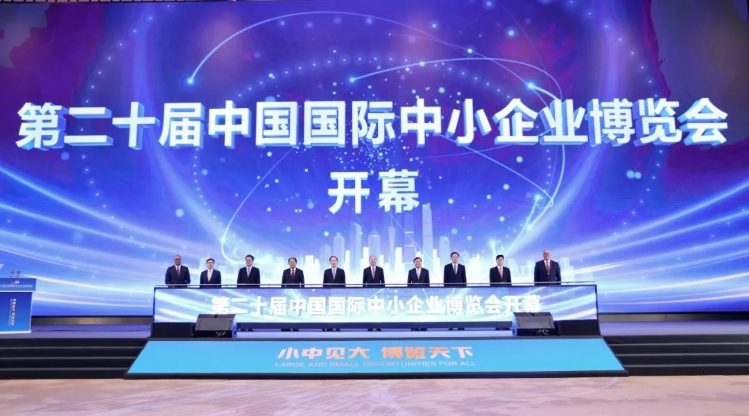
Core Viewpoint - The article emphasizes the importance of small and medium-sized enterprises (SMEs) as a vital support for the resilience of the Chinese economy, highlighting government initiatives to enhance their competitive environment and promote their specialized and innovative development [1][9]. Group 1: Government Initiatives and Support - The 20th China International Small and Medium Enterprises Expo was held from June 27 to 30 in Guangzhou, where the Minister of Industry and Information Technology, Li Lecheng, called for optimizing the competitive environment for SMEs and promoting an open world economy [1]. - Li Lecheng proposed three key initiatives: optimizing the competitive environment, strengthening the specialized and innovative development of SMEs, and deepening practical exchanges and cooperation among SMEs [10][11]. - The government is actively deploying measures to support SMEs in areas such as market expansion, financing, digital transformation, and technological empowerment [1][12]. Group 2: Economic Performance of SMEs - In the first five months of the year, the added value of industrial SMEs increased by 8.0% year-on-year, with 28 out of 31 manufacturing sectors showing growth [3][2]. - The revenue of industrial SMEs reached 32.6 trillion yuan, with profits continuing to grow, particularly in sectors like computer and communication equipment and electrical machinery [4]. - The export index for SMEs was 50.7% in May, indicating a strong export momentum and remaining in the expansion zone for 14 consecutive months [5]. Group 3: Digital Transformation and Innovation - The pace of digital transformation among SMEs is accelerating, with over 3,500 digital service providers selected and more than 10,000 technology products developed to support over 40,000 SMEs in digital upgrades [6]. - The China SME Development Index (SMEDI) rose to 89.5 in May, indicating a recovery in business expectations, with significant improvements in the industrial, construction, transportation, and accommodation sectors [6]. Group 4: Future Prospects and Challenges - The article notes that while there are positive trends in SME development, challenges remain, including external uncertainties and the need for further domestic demand and consumption revitalization [6]. - The government aims to create more market opportunities for SMEs and consolidate the upward trend in their development [6].

中小企业多项指标回升向好,工信部明确下一步政策举措
Di Yi Cai Jing· 2025-06-29 05:03
Core Viewpoint - The Chinese government emphasizes the importance of supporting the specialized, refined, unique, and innovative development of small and medium-sized enterprises (SMEs) to enhance their competitiveness and innovation capabilities [2][6]. Group 1: Policy Support for SMEs - The Ministry of Industry and Information Technology (MIIT) is implementing favorable policies to help SMEs focus on their core businesses and achieve high-end, digital, green, and international development [2][6]. - A series of measures are being introduced to optimize the competitive environment for SMEs, including eliminating institutional barriers, improving market access rules, and strengthening intellectual property protection [2][6][4]. - The "2025 Together to Benefit Enterprises" initiative has been launched, involving 17 departments to provide 73 service measures aimed at stabilizing expectations and invigorating SMEs [8]. Group 2: Economic Performance of SMEs - In the first five months of this year, the added value of industrial SMEs increased by 8.0% year-on-year, with 28 out of 31 manufacturing sectors showing growth [3]. - The revenue of industrial SMEs reached 32.6 trillion yuan, with profits continuing to grow, particularly in the computer, telecommunications, and electrical machinery sectors [3]. - The SME Development Index (SMEDI) rose to 89.5 in May, indicating a recovery in business expectations, with the macroeconomic sentiment index also increasing to 98.9 [3]. Group 3: Future Development and Challenges - The number of SMEs in China is expected to exceed 60 million by the end of 2024, with revenues from industrial SMEs projected to reach 81 trillion yuan [6]. - Despite positive trends, SMEs still face challenges due to external uncertainties and the need for further domestic demand and consumption revitalization [4][6]. - The MIIT is advocating for enhanced international cooperation among SMEs to support global supply chain efficiency and resilience [7].