
海外投资

Search documents
肇民科技拟在新加坡、泰国投资设立子公司
Zhi Tong Cai Jing· 2025-11-19 11:47
Core Viewpoint - The company plans to establish subsidiaries in Singapore and Thailand, leveraging regional advantages to enhance international market cooperation and expand overseas business [1] Group 1 - The company intends to invest in the establishment of Zhaomin (Singapore) Industrial Co., Ltd., Zhaomin (Singapore) New Materials Co., Ltd., and Zhaomin Technology (Thailand) Co., Ltd. [1] - The investment will utilize the company's own or raised funds [1] - This move is aimed at broadening the company's investment pathways and strengthening its international market presence [1]
沙特王储:同意在美国投资6000亿美元,将扩大至1万亿美元。特朗普:那个数字可以扩大
Hua Er Jie Jian Wen· 2025-11-18 17:39
Core Viewpoint - Saudi Crown Prince agrees to invest $600 billion in the U.S., with potential expansion to $1 trillion, indicating a strong commitment to U.S. markets and economic collaboration [1] Group 1 - The initial investment commitment from Saudi Arabia is set at $600 billion [1] - There is a possibility for this investment to increase to $1 trillion, showcasing the potential for significant economic engagement [1] - Former President Trump has indicated that the investment figure could be further expanded, reflecting optimism about future U.S.-Saudi relations [1]
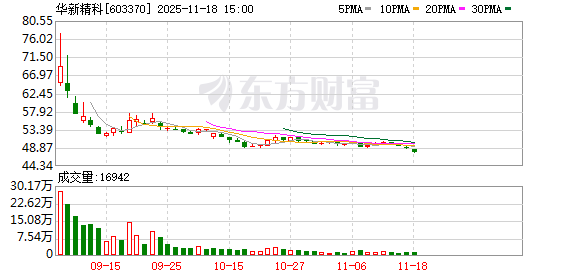
华新精科:公司积极在海外建设生产基地
Zheng Quan Ri Bao· 2025-11-18 13:38
Core Viewpoint - The company is actively expanding its overseas production capabilities by establishing a factory in Mexico to enhance its competitiveness and reduce supply chain costs [2] Group 1: Overseas Expansion - The company is investing in a factory in Mexico through its subsidiary, Huasheng Chuangyan Precision Technology (Jiangsu) Co., Ltd [2] - The goal of the investment is to shorten the distance to American customers and achieve localized support [2] - The Mexican facility is currently in the trial production phase, and the overseas business is progressing in an orderly manner [2] Group 2: Information Disclosure - The company will fulfill its information disclosure obligations in a timely manner if there are relevant developments that meet legal disclosure standards [2]

鲁泰A(000726.SZ):公司前三季度海外基地营收占公司营收的42%
Ge Long Hui· 2025-11-14 08:35
Core Viewpoint - The company has established a complete industrial chain from spinning to garment processing in Southeast Asia since 2014, and most projects are now in a stable profit cycle, with the impact of the US tariff dispute being multi-regional and comprehensive [1] Group 1 - The company has invested in production bases in Southeast Asia, achieving a complete industrial chain [1] - Most projects, except for a few new ones, have entered a stable profit cycle [1] - The revenue from overseas bases accounted for 42% of the company's total revenue in the first three quarters [1] Group 2 - The easing of tariffs and the tariff advantages of Southeast Asia in the EU market will become more apparent [1]

美盈森(002303) - 2025年11月13日投资者关系活动记录表
2025-11-14 00:49
Group 1: Domestic Business Overview - The distribution of domestic downstream customers shows that the consumer electronics sector accounts for approximately 40%, while furniture and home appliances together account for about 25%. The automotive and new energy vehicle supply chain accounts for around 15% [3] - Other sectors include liquor, medical devices, food and beverage, health products, express packaging, and label and electronic functional material die-cut products [3] Group 2: Overseas Operations - The company has six factories in Vietnam, Thailand, Malaysia, and Mexico, with additional capacity available for expansion based on market demand [4] - Compared to local competitors, the company has strong advantages in product quality, service, R&D design, and customer resources, enabling it to meet global supply chain management needs effectively [4] Group 3: Market Challenges and Risks - The packaging industry has relatively low barriers to entry, but leading companies possess significant competitive advantages in R&D, product quality, customer resources, and service [5] - The company faces risks if overseas market expansion does not meet expectations, which could impact overall development goals [7] Group 4: Pricing and Profitability - Product pricing is determined by considering costs and customer demands for design and service [7] - The company has developed higher value-added customers and reduced low-margin orders, contributing to overall profit improvement [8] Group 5: Financial Health and Future Plans - The company aims for stable domestic growth and rapid overseas business growth in 2026 [7] - Cash dividends are emphasized as an important way to return value to shareholders, with future amounts depending on operational and financial conditions [8]

谷歌公司将在德国数据中心和办公室投资55亿欧元
Hua Er Jie Jian Wen· 2025-11-11 16:03
Core Points - Google plans to invest €5.5 billion in data centers and offices in Germany [1] Group 1 - The investment is aimed at expanding Google's infrastructure in Germany [1] - This move reflects Google's commitment to the European market and its growth strategy [1] - The investment is expected to create numerous job opportunities in the region [1]

德科立(688205.SH):拟向德科立新加坡追加投资3亿元
Ge Long Hui A P P· 2025-11-11 09:08
Core Viewpoint - Dekoli (688205.SH) announced the establishment of a wholly-owned subsidiary in Singapore to enhance its overseas R&D, market system construction, and production capacity expansion [1] Group 1 - The company will hold a general manager office meeting on May 16, 2024, to approve the establishment of the subsidiary in Singapore with a registered capital of 3 million USD and a total investment of 8 million USD [1] - The company plans to invest an additional 300 million RMB into Dekoli Singapore to support its overseas operations [1]

德科立(688205.SH)拟向子公司德科立新加坡追加投资3亿元
智通财经网· 2025-11-11 09:05
Core Viewpoint - Dekoli (688205.SH) announced the establishment of a wholly-owned subsidiary in Singapore to enhance its overseas R&D, market system construction, and production capacity expansion [1] Group 1 - The company will hold a general manager office meeting on May 16, 2024, to approve the establishment of the subsidiary with a registered capital of 3 million USD and a total investment of 8 million USD [1] - The company plans to invest an additional 300 million RMB in Dekoli Singapore to support its overseas operations [1]
德科立拟向子公司德科立新加坡追加投资3亿元
Zhi Tong Cai Jing· 2025-11-11 09:04
Core Points - Dekoli (688205.SH) announced the establishment of a wholly-owned subsidiary in Singapore with a registered capital of 3 million USD and a total investment of 8 million USD [1] - The decision was made during a general manager meeting held on May 16, 2024, to enhance the company's overseas R&D, market system development, and production capacity expansion [1] - The company plans to invest an additional 300 million RMB into Dekoli Singapore [1]
银行理财大事记:养老理财试点扩全国,数据基建升级
HWABAO SECURITIES· 2025-11-11 07:49
Investment Rating - The report does not explicitly state an investment rating for the banking wealth management industry Core Insights - The banking wealth management market is experiencing steady growth, with the total market size reaching 31.60 trillion yuan in October, reflecting a 1.16% month-on-month increase and a 7.50% year-on-year increase [4][9] - The annualized yield of wealth management products has generally increased, with pure fixed-income products recording an annualized yield of 3.09%, up by 1.60 percentage points month-on-month [4][9] - The report highlights the expansion of pension wealth management trials nationwide, with a new mechanism for automatic connection to enhance product accessibility [11][17] Summary by Sections 1. Market Overview - As of October, the total market size of wealth management products is 31.60 trillion yuan, with a month-on-month increase of 1.16% and a year-on-year increase of 7.50% [4][9] - The market is seeing a shift in product types, with cash management products decreasing while fixed-income products maintain steady growth [4][9] 2. Product Performance - The annualized yield for cash management products is recorded at 1.29%, down by 2.73 basis points month-on-month, while pure fixed-income products have an annualized yield of 3.09%, up by 1.60 percentage points [4][9] - The report indicates a decrease in the net value ratio of wealth management products to 3.10%, down by 2.3 percentage points month-on-month [4][9] 3. New Product Launches - In October, the issuance of new wealth management products decreased, consistent with seasonal trends, with the majority of new products being fixed-income and closed-end products [4][9] - The report notes that many new products have seen a downward adjustment in performance benchmarks, reflecting a consensus on the long-term low interest rate environment [4][9] 4. Regulatory Developments - The National Financial Supervision Administration has expanded the pilot areas for pension wealth management products nationwide, enhancing the scale and accessibility of these products [11][17] - The report discusses the approval of regulatory measures to support the development of pension wealth management, including the establishment of an automatic connection mechanism for product compliance [11][17] 5. Industry Innovations - Several wealth management companies are innovating their product offerings, such as introducing multi-subscription wealth management products to improve capital efficiency [4][9] - The report highlights partnerships between leading wealth management firms and technology platforms to enhance service capabilities and investor education [11][17]