社会保障

Search documents
美国总统特朗普承诺不会削减医疗保险和社会保障。
news flash· 2025-04-29 23:37
Core Viewpoint - President Trump has pledged not to cut Medicare and Social Security, indicating a commitment to maintaining these essential social programs [1] Group 1 - The promise not to reduce Medicare and Social Security may influence public sentiment and voter behavior in upcoming elections [1] - This commitment could have implications for federal budget allocations and healthcare spending [1] - Maintaining these programs may also affect the financial stability of the healthcare industry and related sectors [1]
美国总统特朗普表示,将在未来几周和几个月内通过减税法案。特朗普承诺不会削减医疗保险和社会保障。
news flash· 2025-04-29 23:29
Core Viewpoint - President Trump announced plans to implement a tax reduction bill in the coming weeks and months, while assuring that Medicare and Social Security will not be cut [1] Group 1 - The tax reduction bill is expected to be a significant legislative focus for the administration in the near future [1] - The commitment to not cut Medicare and Social Security indicates a protective stance towards these programs, which may influence public sentiment and voter support [1]
专家热议:形成提振消费与社会保障相互促进的正向循环
Zhong Guo Jing Ji Wang· 2025-04-29 21:40
中山大学教授申曙光表示,提振消费应该以稳定就业、促进就业为导向,瞄准受到影响的重点人群、区 域和行业,精准实施政策,同时,要在提振物质消费的同时重视服务消费,尤其在人口老龄化背景下, 大力促进医疗健康服务消费,并注重疾病预防等健康消费。 近日,中国社会保障学会主办的"提振消费与社会保障有效作为座谈会"在北京举行,来自中国社会科学 院、中国人民大学、南京大学、中山大学、浙江大学等多所高校专家学者展开热烈讨论。 社会保障具有经济运行减震器的作用。中国社会保障学会会长郑功成表示,要发挥社会保障解民忧、聚 民心、稳预期、振消费、促平等、护安全的功能。"一方面,应当通过扩大社会保障支出来切实减轻人 民群众的后顾之忧,进而释放居民特别是中低收入群体的消费潜力;另一方面,通过加快优化现行社会 保障制度安排来提供清晰、稳定的安全预期。" 中国社会科学院学部委员周弘认为,国内本身即为一个巨大的消费市场,而中低收入群体更是提振消费 的重要人群,未来应重点分析并提高社会保障改革的精准度,比如在医保领域,精准衡量个体医疗消费 的负担和收益比,化解群众后顾之忧。 "提振消费要把握三个基本点:一是有能力消费,二是敢于消费,三是乐于消费。 ...
送外卖的北大博士揭露:“京东美团之争取决于一个关键变量”
Hu Xiu· 2025-04-25 02:51
Core Viewpoint - The rapid development of the internet economy has led to the emergence of delivery and courier services, highlighting the precarious employment conditions faced by workers in these sectors. Recent announcements by companies like JD.com, Meituan, and Ele.me to provide social insurance for their delivery riders have reignited public discourse on the social security of gig economy workers [1][11][12]. Group 1: Employment and Social Security - The discussion centers around the social security for gig economy workers, particularly delivery riders, and the implications of recent policies by major platforms [1][11]. - Experts express concerns about the effectiveness and feasibility of implementing social security for riders, given the complexities of labor relations and the diverse operational models of different platforms [11][13]. - The current social security system in China is characterized by a dual structure, which complicates the integration of gig workers into the existing framework [13][14]. Group 2: Platform Operations and Algorithm Management - The algorithms used by delivery platforms are described as neutral tools that can either enhance efficiency or impose undue pressure on workers, depending on how they are applied [2][32]. - Recent adjustments in algorithm management reflect a shift towards more humane practices, allowing for greater flexibility and consideration of real-world challenges faced by riders [32][35]. - The operational differences between platforms, such as JD.com's direct employment model versus Meituan's complex subcontracting system, significantly impact the implementation of social security measures [13][20]. Group 3: Labor Relations and Employment Models - The labor relations in the courier industry are categorized into direct employment and franchised models, with the latter often leading to less formal agreements and protections for workers [18][19]. - The distinction between gig work and traditional employment is blurred, as many gig workers engage in full-time work without the associated benefits, raising questions about the classification of their employment status [30][31]. - The high turnover rates among delivery riders indicate a need for improved labor protections and recognition of their contributions to the economy [29][30]. Group 4: Future of Work and Social Protection - The potential impact of artificial intelligence on labor markets is acknowledged, with a focus on how institutions can adapt to protect workers in the face of technological change [3][25]. - The necessity for innovative social protection systems that accommodate the flexible nature of gig work is emphasized, as current frameworks struggle to keep pace with evolving employment models [17][25]. - The discussion highlights the importance of recognizing gig workers as integral to the labor force, advocating for their rights and protections in the face of market pressures [25][31].


人工智能时代:如何稳住、提升就业基本盘
Jing Ji Guan Cha Wang· 2025-04-22 08:38
Core Viewpoint - Artificial intelligence (AI) is profoundly transforming global industrial structures and employment markets, presenting both opportunities and challenges for China, particularly for low- and mid-skilled labor groups facing job displacement due to automation [1] Group 1: Challenges Faced by China - China has a large low- and mid-skilled labor force that is vulnerable to automation, leading to structural unemployment [1] - There is an imbalance in regional development, with coastal areas upgrading industries faster than central and western regions, which face significant technological transition and employment pressures [1] - The existing skill training and social security systems are inadequate for covering emerging employment forms, leaving gig economy workers without sufficient social security, resulting in job instability and re-employment challenges [1] Group 2: U.S. Strategies for Addressing AI Impact - The U.S. employs a multi-faceted approach to address AI's impact on employment, focusing on education and skill training, social security, innovation, and regulatory frameworks [2][4][5][6] - The U.S. government has invested $265 million since 2021 to enhance community college training programs, with states implementing AI training projects in vocational education [2] - The National Science Foundation allocated approximately $1.377 billion in 2023 to promote K-12 STEM education, emphasizing early exposure to programming and robotics [3] Group 3: Recommendations for China - China should enhance skill training and education transformation to cultivate a high-quality workforce for the AI era, including large-scale, tiered training programs for low- and mid-skilled workers [7] - Establish a unified skill certification and credit recognition system to facilitate flexible career advancement for workers [8] - Reform basic education to integrate STEM subjects and improve teacher quality, fostering early mastery of essential skills for the AI era [9] Group 4: Social Security and Employment Stability - China needs to expand social security coverage for new employment forms, ensuring gig workers have access to insurance and benefits [9] - Integrate unemployment insurance with re-employment services, combining basic support with mandatory training to enhance job readiness [9] - Explore dynamic subsidy mechanisms for workers in industries heavily impacted by AI, providing targeted training and transition support [9] Group 5: Promoting Industrial Collaboration and Regional Balance - Encourage deep integration of AI in traditional manufacturing and service industries, promoting digital transformation while creating new job opportunities [10] - Implement differentiated support for central and western regions to ensure equitable access to AI infrastructure and resources [10] - Establish industry clusters and talent mobility channels to facilitate AI application and innovation across regions [10] Group 6: Legal and Regulatory Frameworks - Develop regulations to ensure algorithm transparency and prevent discrimination in hiring processes, protecting workers' rights [11] - Adopt a dynamic regulatory approach, allowing for pilot testing and iterative adjustments to laws governing AI technologies [11] - Promote industry standards and transparency in algorithm usage to safeguard workers' rights and enhance compliance [11] Group 7: Multi-Department Coordination and International Cooperation - Establish a cross-departmental coordination mechanism to assess the impact of technological changes on employment and adjust policies accordingly [12] - Create a real-time monitoring and early warning system to track employment trends and respond swiftly to emerging challenges [12] - Encourage social participation and international dialogue to share best practices in AI employment management [13]
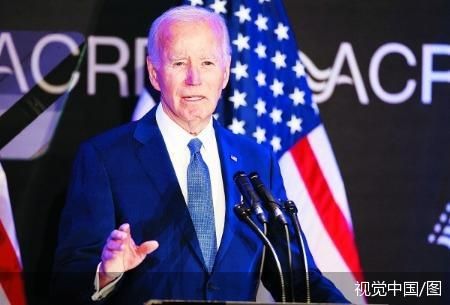
拜登卸任后首次公开抨击特朗普政府
Bei Jing Shang Bao· 2025-04-16 15:48
Group 1 - Former President Biden criticized the Trump administration for causing significant damage in under 100 days, highlighting unprecedented societal division in the U.S. [1] - Biden specifically targeted the "tech startup culture" of the new government, accusing it of creating unnecessary suffering through its "break the norm" approach and large-scale layoffs in federal agencies [1] - The Social Security Administration plans to lay off 7,000 employees, approximately 12% of its workforce, which Biden linked to issues with the agency's website and access problems for users [1] Group 2 - Biden's speech in Chicago may mark the beginning of a paid speaking tour, with expectations for more public appearances in the future [2] - White House Press Secretary expressed surprise at Biden's evening speech, indicating a belief that he would prefer to retire quietly [2] - The event in Chicago was part of a bipartisan conference focused on issues related to individuals with disabilities [3]