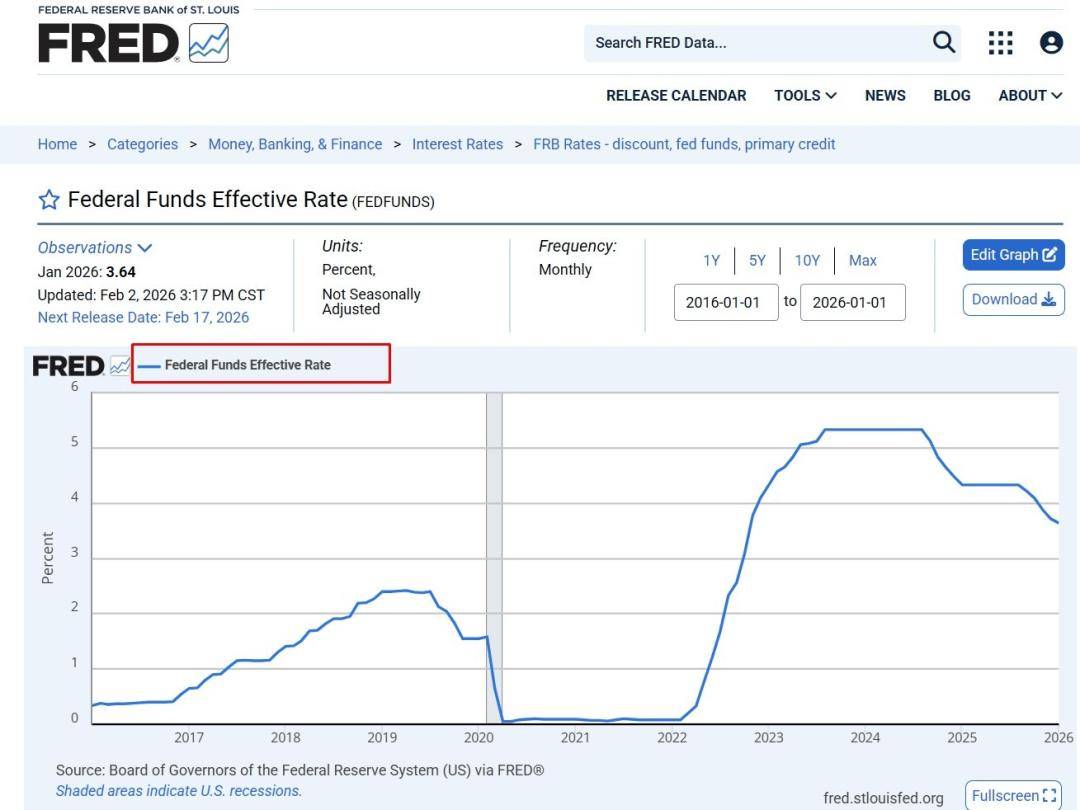
就业

Search documents
Former Cleveland Fed Pres. Mester: The path of the Iran war will determine the path of the economy
Youtube· 2026-03-27 13:35
分组1 - The current market sentiment leans towards a likelihood of interest rate hikes by the Fed, despite some analysts arguing for a potential cut based on rising household delinquencies, which reached 4.8% [2] - The Fed's monetary policy will be influenced by the ongoing war and its economic implications, with a focus on inflation risks stemming from oil price shocks and supply constraints [4][5] - Higher oil prices are expected to exert upward pressure on inflation while simultaneously posing risks to economic growth and employment, necessitating careful monitoring by the Fed [5][7] 分组2 - The Fed has been dealing with inflation above its target for five consecutive years, and firms are facing margin pressures due to higher tariffs and oil prices [6] - The labor market is currently balanced but at a low hiring rate, indicating that any economic shock could disrupt this balance, prompting the Fed to reassess its policies [8] - The Fed is expected to maintain its current interest rates while closely monitoring inflation expectations and other economic indicators to inform future decisions [9][10] 分组3 - The Fed utilizes various data sources, including surveys and advisory councils, to gauge real-time economic conditions and firm responses to energy price changes [14][16] - The Fed's approach includes both hard data and forward-looking indicators, allowing for a more comprehensive understanding of economic trends rather than relying solely on historical data [17]


全球崩了,真凶是……
凤凰网财经· 2026-03-22 14:39
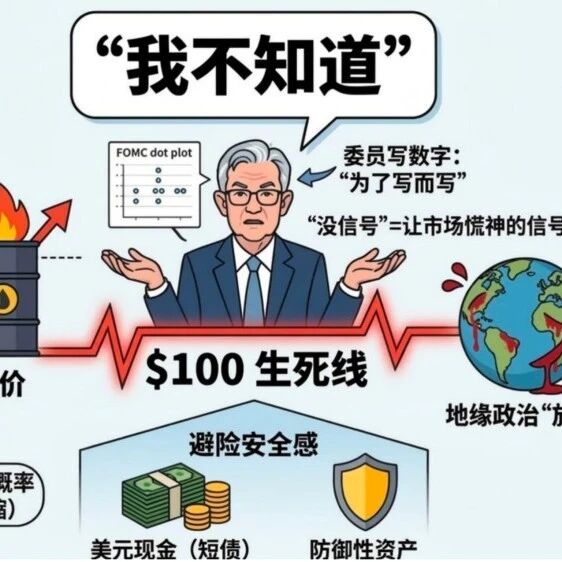
Group 1 - The Federal Reserve's recent meeting maintained interest rates at 3.5%-3.75%, reflecting internal and external pressures, including rising inflation, job losses, and escalating oil prices due to Middle Eastern tensions [8][9][10] - The Fed's communication indicated uncertainty about the impact of geopolitical events, with Chairman Powell expressing a lack of clarity on the situation, which unsettled the markets [13] - The dot plot suggests a narrowing path for interest rate cuts, with even the most dovish members adjusting their rate expectations upward, indicating prolonged high rates [16][18] Group 2 - The AI technology sector is expected to face downward pressure as the Fed's decision impacts high-growth stock valuations, leading to a potential market correction [23] - The US dollar index has risen above 100, not due to a strong US economy, but rather as a safe haven amid weaker currencies like the yen and euro [25] - Gold prices are under pressure in the short term due to the Fed's stance on interest rates, while geopolitical tensions provide long-term support for gold [27]
3月美联储议息会议点评:政策观望延续,降息路径延后
China Post Securities· 2026-03-20 03:13
Monetary Policy - The Federal Open Market Committee (FOMC) decided to maintain the federal funds rate target range at 3.5%-3.75%, aligning with market expectations[1] - Only one committee member opposed the decision, advocating for a 25 basis point rate cut[1] - The economic projections indicate that most members expect one rate cut this year, with the median forecast being a single cut[2] Inflation and Employment - Current core inflation is around 3%, with 50% to 75% driven by tariff factors[2] - Powell expressed optimism about inflation, suggesting that any negative impacts on employment and economic activity would be offset by improved profits in the oil sector[1] - The labor market remains tight, with employment growth slowing due to reduced immigration and declining labor participation rates[2] Geopolitical and Economic Risks - The statement included a note on the uncertain impact of Middle Eastern developments on the U.S. economy[1] - Risks to the Fed's rate cut timeline include rapid geopolitical resolution, faster-than-expected inflation decline, significant labor market deterioration, or unexpected tightening of financial conditions[4] Future Outlook - The Fed is adopting a cautious wait-and-see approach regarding the current economic situation and geopolitical landscape[3] - The timing of potential rate cuts may be further delayed, but this does not signify the end of the easing cycle[3]
今晚,鲍威尔会给市场扔炸弹吗?
华尔街见闻· 2026-03-18 10:05
Group 1 - The core viewpoint of the article indicates that the Federal Reserve is likely to maintain its current interest rate policy, with a focus on balancing inflation risks and employment data, leaning towards a pause or later rate cuts rather than rate hikes [2][3][8] - The market's attention has shifted from "when to cut rates" to "whether to cut rates," with Morgan Stanley suggesting that due to weak employment data, the risk of monetary policy is asymmetrical [3][8] - The upcoming Federal Open Market Committee (FOMC) meeting is expected to maintain the federal funds rate target range at 3.50% to 3.75%, with little disagreement among major institutions [8][10] Group 2 - The macroeconomic backdrop is complex, with rising energy prices due to geopolitical tensions, pushing inflation indicators above the Fed's 2% target [11][12] - February's non-farm payrolls showed a decline of 92,000 jobs, raising concerns about stagflation and prompting scrutiny during the post-meeting press conference [12][13] - The Fed's preferred inflation measure, core PCE, has reached a year-on-year growth of 3.1%, indicating persistent inflationary pressures [11] Group 3 - The dot plot and Summary of Economic Projections (SEP) are expected to show limited changes, with Goldman Sachs predicting a slight upward revision in inflation forecasts and a downward adjustment in GDP growth [14][15][18] - The number of votes supporting rate cuts is anticipated to increase from two to three, reflecting a growing dovish sentiment among committee members [19][20][22] - The uncertainty surrounding the new chairperson's appointment adds complexity to future policy directions, with potential implications for the Fed's cohesion and decision-making [23][25] Group 4 - Market reactions are expected across various sectors, with interest rates, foreign exchange, stock, and credit markets all showing distinct responses to the Fed's decisions and geopolitical developments [27] - In the interest rate market, inflation shocks from geopolitical events have influenced short-term dollar rates, while the stock market's performance may hinge on evolving uncertainties [27] - Credit spreads have widened due to macroeconomic weaknesses and concerns over stagflation, indicating a potential new normal for credit risk premiums [27]


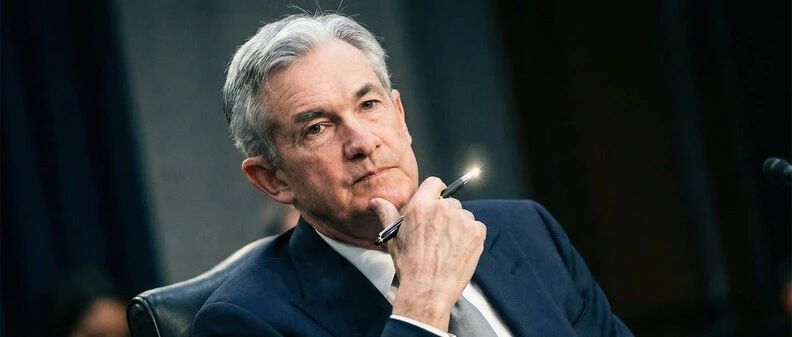
广发宏观:经济开年数据简析
GF SECURITIES· 2026-03-16 08:33
Economic Performance - In January-February 2026, exports increased by 21.8% year-on-year, significantly higher than December 2025's 6.6% and the annual value of 5.5%[2] - Industrial added value grew by 6.3% year-on-year, surpassing December 2025's 5.2% and the annual value of 5.9%[2] - Fixed asset investment rose by 1.8% year-on-year, compared to December 2025's -16% and the annual value of -3.8%[3] Sectoral Insights - High-tech industry added value increased by 13.1% year-on-year, up from 9.4% in the previous year[4] - Cement production turned positive with a year-on-year growth of 6.8%, compared to -6.9% last year[4] - Retail sales of consumer goods grew by 2.8% year-on-year, but were lower than the annual growth of 3.7%[5] Real Estate and Investment - Real estate sales area decreased by 13.5% year-on-year, an improvement from December 2025's -15.5%[7] - Real estate investment fell by 11.1% year-on-year, better than the previous year's -17.2%[9] - Infrastructure investment surged by 11.4% year-on-year, contrasting with last year's -1.5%[7] Employment and Consumer Behavior - Urban unemployment rate in February 2026 was 5.3%, a slight decrease of 0.1 percentage points year-on-year[9] - Consumer retail growth excluding automobiles and fuel was 4.7%, higher than last year's 3.7%[5] - Notable retail growth in categories such as tobacco and alcohol (19.1%) and communication equipment (17.8%)[6]
The Fed's Stagflation Problem Is Getting Harder to Ignore
FX Empire· 2026-03-12 18:45
Economic Environment - The Federal Reserve is facing a challenging situation where its dual mandate of controlling inflation and maintaining a healthy labor market is pulling policy in opposite directions [2][4] - Recent labor market figures indicate a cooling momentum, with February's Non-Farm Payrolls report showing a decline of 92,000 jobs and an increase in the unemployment rate to 4.4% [3][4] - Inflation remains elevated, with the Fed's preferred measure, the Personal Consumption Expenditures index, at 2.9% for the headline figure and 3.0% for core PCE, both above the central bank's 2% target [3][4] Stagflation Concerns - The combination of slowing growth and persistent inflation has raised concerns about a stagflationary environment, complicating the policy response for the Federal Reserve [4] - Actions aimed at addressing inflation could further slow economic activity, while policies supporting growth risk keeping price pressures elevated [4] Energy Prices Impact - A recent surge in energy prices, particularly oil, has the potential to exacerbate inflation, affecting transportation, manufacturing, and consumer spending [5] - Elevated energy prices could create ripple effects across the economy, complicating the Federal Reserve's policy decisions [5] Monetary Policy Outlook - Federal Reserve officials are responding cautiously, with some indicating that holding interest rates steady while gathering more data may be the most appropriate course of action [6] - Market expectations reflect uncertainty, with futures pricing suggesting that rate cuts remain possible later in the year, dependent on incoming inflation and growth data [6] Future Considerations - The path for monetary policy may largely hinge on energy markets; if oil prices remain high, inflation risks could delay easing [7] - Conversely, if energy pressures ease while the labor market continues to soften, the case for rate cuts would strengthen [7]
The Fed's biggest fear has always been having to choose between fighting inflation and protecting jobs. Friday's employment report brought that dilemma a step closer
WSJ· 2026-03-06 18:39
Core Viewpoint - The central bank faces conflicting pressures from a softening labor market and rising energy prices, complicating its policy decisions [1] Group 1: Labor Market - The labor market is showing signs of softening, which may influence the central bank's approach to interest rates [1] - Job growth has slowed down, indicating potential challenges for economic stability [1] Group 2: Energy Prices - Rising energy prices are exerting upward pressure on inflation, which could lead the central bank to consider tightening monetary policy [1] - The increase in energy costs is contributing to overall inflationary trends, complicating the economic outlook [1]

2025年国内生产总值增长5%,总量140.19万亿元
21世纪经济报道· 2026-03-05 01:22
Core Viewpoint - The government work report highlights that China's economy has shown strong resilience over the past year, with a GDP growth of 5%, reaching a total of 140.19 trillion yuan [1]. Economic Performance - The overall economic operation is stable, with steady progress, and the GDP growth rate is reported at 5% [1]. - The total GDP has reached 140.19 trillion yuan, indicating significant economic scale [1]. Employment and Unemployment - Employment remains generally stable, with 12.67 million new urban jobs created [1]. - The average urban survey unemployment rate stands at 5.2% [1]. Trade and International Balance - Foreign trade has experienced rapid growth, with notable diversification in exports [1]. - The international balance of payments is reported to be basically balanced [1]. Social Welfare and Living Standards - There has been a stronger guarantee of people's livelihoods, with resident income growth synchronized with economic growth [1]. - The achievements in poverty alleviation have been consolidated and expanded [1]. - A free education policy for the year before primary school has been implemented, benefiting 14 million children [1]. - A comprehensive childcare subsidy system has been fully implemented, benefiting over 30 million infants and toddlers [1]. Agricultural Production - Grain production has reached 1.43 trillion jin [1]. Risk Management - Positive progress has been made in risk resolution in key areas, contributing to social stability [1].

春风送暖,“职”等你来!
Xin Lang Cai Jing· 2026-02-27 20:32
Core Viewpoint - Jiangsu province is actively enhancing employment opportunities through various recruitment initiatives, focusing on sectors such as new energy, smart manufacturing, digital economy, and modern services [1] Group 1: Employment Initiatives - Jiangsu is hosting numerous online and offline job fairs to connect job seekers with employers [1] - The province is implementing multiple measures, including specialized recruitment events and live-streaming job fairs, to facilitate employment [1] - Employment guidance and policy support are being provided to help individuals secure stable jobs in Jiangsu [1]
美国经济数据重燃“软着陆”希望,但下一阶段要看联储新主席?
Sou Hu Cai Jing· 2026-02-18 01:29
Economic Overview - The U.S. economy is showing the clearest combination of indicators since pre-pandemic: declining inflation, stable employment, and solid growth, reigniting hopes for a "soft landing" [1] - Recent data suggests inflation may gradually return to the Federal Reserve's 2% target without triggering a recession, although policymakers remain cautious about declaring victory too early [1] Inflation and Employment - The January inflation report indicates that core consumer prices rose by 2.5% year-over-year, the lowest since 2021, suggesting a reduction in potential price pressures [2] - The unemployment rate has decreased to 4.3%, with approximately 130,000 new non-farm jobs added, indicating a cooling labor market that has not yet "broken" [2] Concerns and Risks - Confidence remains limited due to the Federal Reserve's preferred inflation measure (PCE) being closer to 3% rather than 2%, and the uneven progress in inflation reduction since mid-2025 [3] - Some forecasters predict that inflation may be stickier this year due to tariff-related costs being passed down the supply chain into retail pricing [3] - The resilience of the labor market is questioned, as revised data shows that job creation last year was not strong by historical standards and concentrated in a few sectors [3] Future Outlook - Overall, the U.S. economy is closer to a soft landing than many anticipated a few years ago, but the outcome is not guaranteed [4] - If growth remains resilient, political pressure for interest rate cuts may increase, even if traditional reasons for lowering rates are insufficient [4] - The upcoming leadership changes at the Federal Reserve may also influence the next phase of policy direction, depending on choices made rather than just future data [4]